
Chef Lupita
Arroz Jarocho con Plátanos Fritos
Veracruz's Gulf-side white rice, toasted with garlic and onion, cooked until each grain stands apart, then crowned with ripe plátano macho fried in lard.
A cooking platform built around craft, culture, and the stories behind what we eat.
Created by
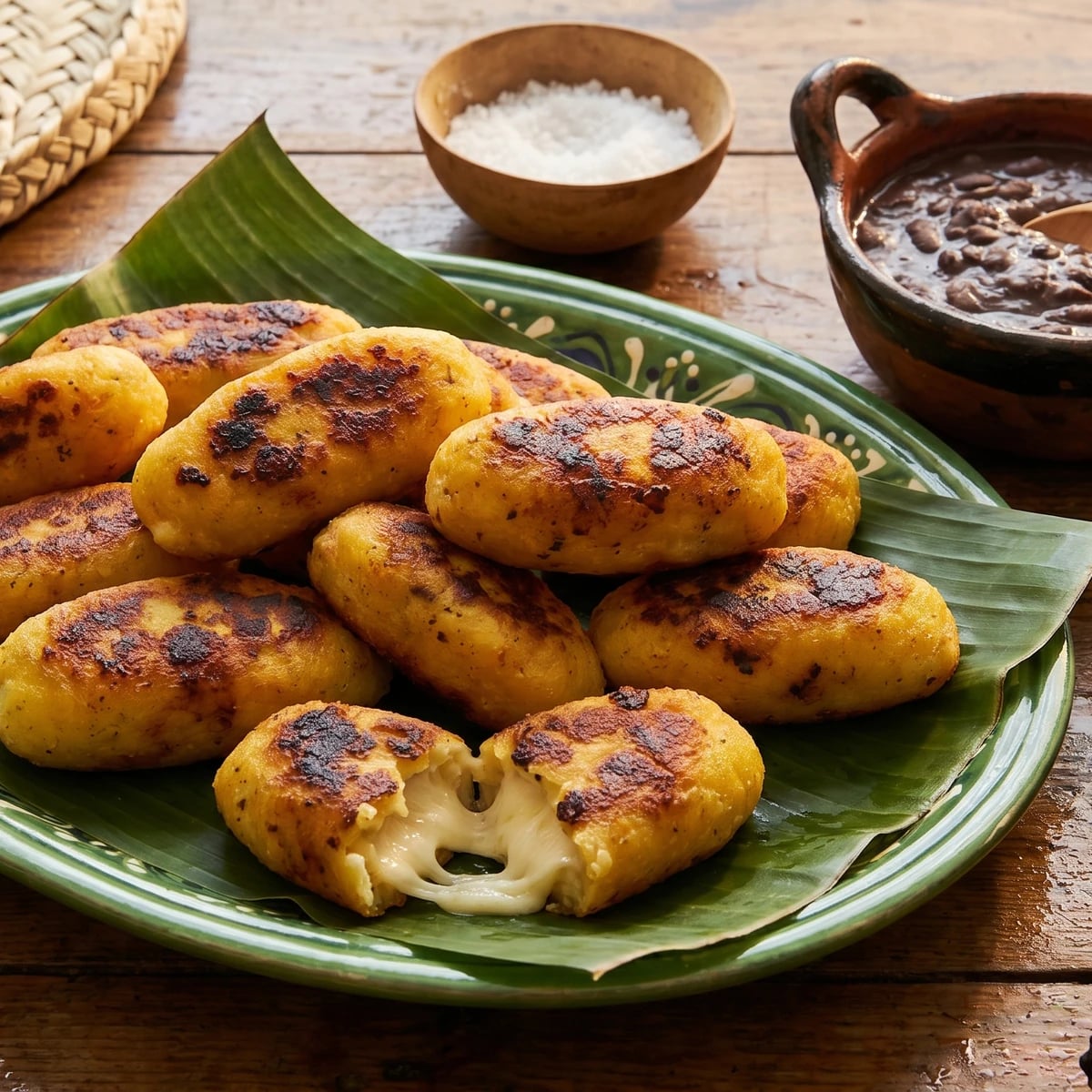
Veracruz's Gulf-side plantain croquettes, boiled ripe plátano macho mashed while warm, stuffed with queso de hebra, and fried in manteca until the outside turns gold.
Veracruz, especially the Sotavento and Los Tuxtlas, knows what to do with plátano macho. This is the lowland Gulf kitchen, humid, green, and practical, where plantain, yuca, malanga, black beans, and rice sit closer to the table than potatoes ever did. Cada estado, su propia cocina.
These plátanos rellenos belong to the Afromestiza line of Veracruz cooking. The plantain is boiled in its peel until the flesh softens, mashed while still warm, filled with queso de hebra, sealed like a small torpedo, and fried in manteca de cerdo. Not butter. Not a polite drizzle of oil. La manteca es el sabor, and in Veracruz it gives fried plantain that deep golden skin and clean savory edge against the sweetness.
I learned a version like this from a woman near Santiago Tuxtla who served them beside frijoles negros refritos with epazote, in a cazuela de barro from Naolinco. She pressed the mash with her hands, not because she was being romantic, but because fingers know when the plantain is ready better than a machine does. If the dough cracks, it needs more working. If it sticks, it is too wet. La cocina no es decoración, es trabajo.
Do not turn this into dessert unless that is what you mean to make. This version is a side dish, salty from the cheese, rich from the lard, and sweet only because ripe plantain is sweet by nature. It belongs on a Veracruz table next to black beans, arroz blanco, fish in tomato sauce, or picadillo with olives and raisins. Así se hace y punto.
Plantains arrived in Mexico through Spanish colonial trade routes connected to Africa and the Caribbean, and Veracruz became one of the places where they entered daily cooking most deeply. In the Sotavento and Los Tuxtlas, Afromestiza cooks folded plantain into fried sides, dumplings, stews, and market antojitos, alongside Indigenous staples like beans, corn, yuca, and squash. Cheese-stuffed plantains show that Veracruz food is not one line of influence, but Totonac and Huastec foundations, Spanish ingredients, and African technique working in the same kitchen.
Quantity
4
skins mostly black with some yellow
Quantity
1 teaspoon, plus more for boiling water
Quantity
1 tablespoon
plus more only if the mash is wet
Quantity
8 ounces
pulled into short strands
Quantity
2 cups
for frying
Quantity
1 cup
for serving
| Ingredient | Quantity |
|---|---|
| very ripe plátanos machosskins mostly black with some yellow | 4 |
| kosher salt | 1 teaspoon, plus more for boiling water |
| masa harinaplus more only if the mash is wet | 1 tablespoon |
| queso de hebrapulled into short strands | 8 ounces |
| pork lard (manteca de cerdo)for frying | 2 cups |
| frijoles negros refritos with epazote (optional)for serving | 1 cup |
Cut the tips from the plátanos machos but leave the skins on. Place them in a pot, cover with water by one inch, and add a good pinch of salt. Simmer for 18 to 22 minutes, until a knife slips through the skin and into the flesh without resistance. The peel protects the plantain from getting watery. That matters.
Drain the plantains and let them cool just until you can handle them. Peel while warm. Mash the flesh with 1 teaspoon salt until smooth and heavy, like a soft dough. Work in 1 tablespoon masa harina. The masa harina gives the mash enough body to seal around the cheese without making it taste like bread.
Wet your hands lightly. Take about 1/4 cup of warm plantain dough and flatten it into an oval in your palm. Place a small bundle of queso de hebra in the center. Fold the plantain around the cheese and seal the edges completely, shaping it into a short oval croquette. No cheese should show. Exposed cheese leaks into the lard and makes a mess.
Set the shaped plátanos on a tray and chill for 15 minutes. This is not a shortcut. It helps the dough firm up so the croquettes hold their shape in the hot lard. Use the time to warm your frijoles negros if serving them.
Melt the manteca de cerdo in a wide heavy skillet over medium heat until it reaches 350F. Fry the plátanos in batches, turning gently, for 3 to 4 minutes per side. They should turn deep gold with darker caramelized spots where the natural sugar meets the fat. Do not crowd the pan. Crowding drops the temperature and makes greasy plantains.
Lift the plátanos out with a slotted spoon and drain on a rack or brown paper. Let them sit for 3 minutes so the cheese settles instead of running out at the first cut. Serve warm, with frijoles negros refritos with epazote if you want the Veracruz table complete. Recetas probadas y garantizadas.
1 serving (about 115g)
Culinary guides, cultural storytelling, and the editorial depth that makes cooking meaningful.
Discover Culinary Explorer
Chef Lupita
Veracruz's Gulf-side white rice, toasted with garlic and onion, cooked until each grain stands apart, then crowned with ripe plátano macho fried in lard.

Chef Lupita
Veracruz's tropical lowland calabaza guisada, squash stewed in manteca de cerdo with jitomate, onion, garlic, and epazote, served beside black beans and warm corn tortillas.

Chef Lupita
Veracruz's Totonacapan dry-season guiso of cleaned flor de izote, tomato, chile jalapeño, epazote, and pork lard, bittersweet enough to remind you this plant came from the monte before the market.

Chef Lupita
Veracruz's black bean pot from the Gulf lowlands, simmered with epazote, finished in manteca with jitomate and chile chipotle meco, and served thick enough to hold a spoon.