
Chef Lupita
Arroz a la Oaxaqueña
Oaxaca's red rice, stained with tomato and fried in lard, steamed with carrots, ejotes, black beans, and epazote. The side that anchors a Oaxacan family meal and earns its place beside the main.
A cooking platform built around craft, culture, and the stories behind what we eat.
Created by
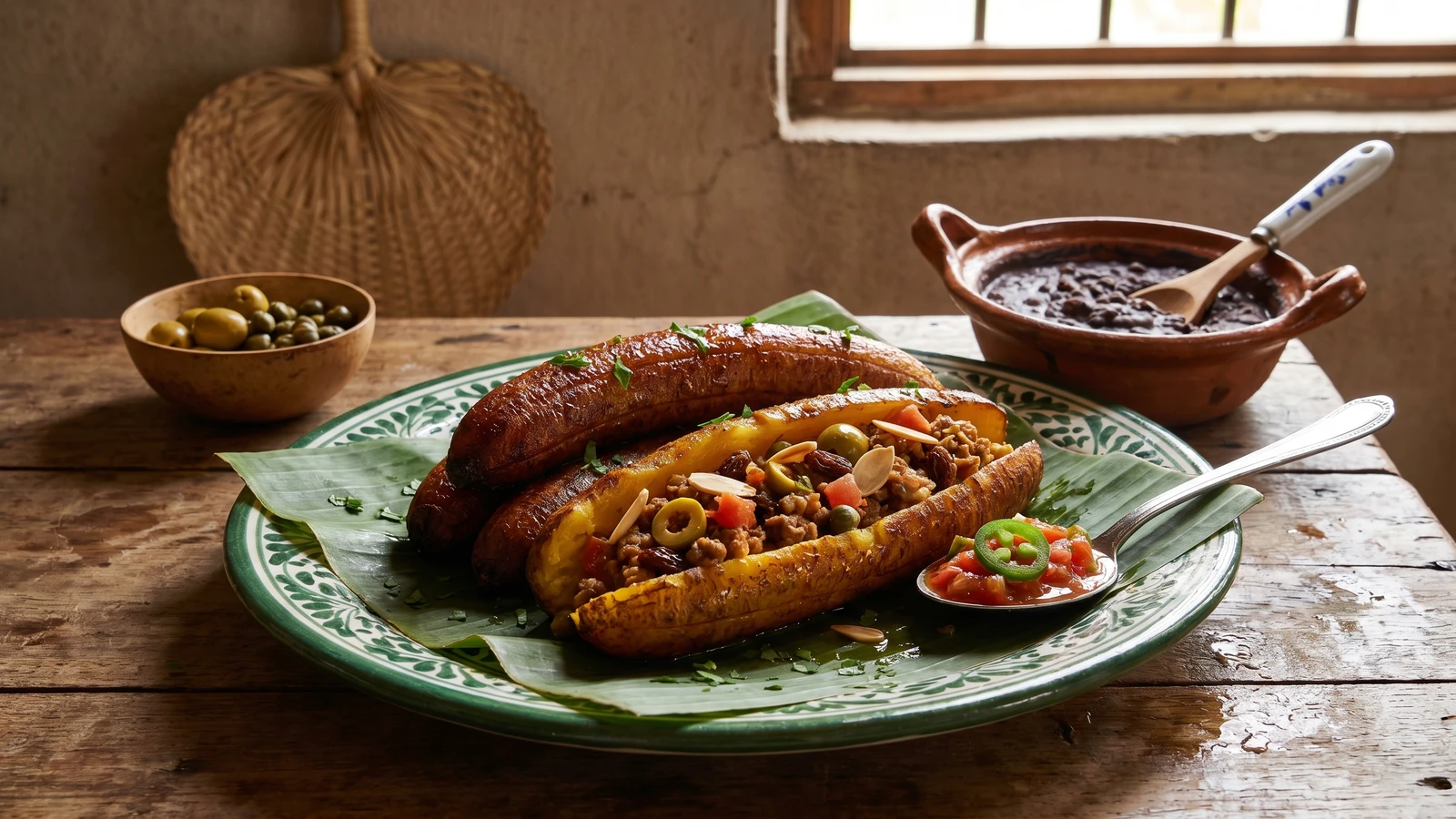
Veracruz's Sotavento kitchen puts sweet platano macho around picadillo with olives, capers, raisins, tomato, and chile ancho, then fries it until the outside turns dark and crisp at the edges.
Veracruz, especially the Sotavento lowlands around Tlacotalpan, Alvarado, and the port, is where this dish makes sense. Platano macho belongs to the humid Gulf kitchen, the same table that knows yuca, malanga, black beans, and fish cooked with olives and capers. This is not a northern flour-tortilla kitchen. This is Veracruz, with the doors open, the table damp from the air, and the plantains ripening fast because the coast doesn't wait for anybody.
The filling tells you who passed through the port. Beef and pork picadillo, tomato, chile ancho, olives, capers, raisins, a little canela, one breath of clove. That is the Spanish Mediterranean hand in a Veracruz home kitchen. Then the plantain wraps around it, sweet and dense, carrying the African line that runs through the south of the state and into Los Tuxtlas. Esto no es comida de un solo Mexico. This is a 32-state cuisine, and Veracruz has its own vocabulary.
I learned a version of these from a woman in the market at Tlacotalpan who pressed the mashed platano with her palm like she was making a tortilla, filled it, sealed it, and looked at me as if daring me to let it open in the lard. The plantain has to be ripe, the picadillo has to be almost dry, and the frying fat has to be manteca de cerdo. Vegetable oil will fry it, yes. It will not give you the same flavor. Asi se hace y punto.
Serve them as a side with black beans or as part of a dinner table where people are allowed to take seconds without asking. The outside should be deep brown, the inside sweet, the picadillo briny and a little sweet from the raisins. Saber cocinar es saber vivir.
Veracruz's cooking was shaped by the port founded by the Spanish in 1519, where Mediterranean ingredients such as olives, capers, raisins, almonds, and spices entered local kitchens and stayed because they worked with Gulf tomatoes, fish, meats, and tropical starches. Plantains arrived in Mexico through Atlantic trade routes tied to Africa and the Caribbean, and in southern Veracruz they became part of the Afromestiza cooking vocabulary of the Sotavento and Los Tuxtlas. Platanos rellenos de picadillo show that meeting clearly: a tropical plantain shell around a European-style picadillo adapted by Veracruz home cooks.
Quantity
4
skins mostly black with yellow patches
Quantity
3 tablespoons, divided, plus more for frying
Quantity
1/2 pound
not extra lean
Quantity
1/2 pound
Quantity
1/2 medium
finely chopped
Quantity
3
finely chopped
Quantity
2 medium
grated or finely chopped
Quantity
1
stemmed, seeded, toasted, soaked, and blended with 1/4 cup soaking water
Quantity
1/4 teaspoon
Quantity
1 pinch
Quantity
1/2 teaspoon
Quantity
1
Quantity
1/3 cup
sliced
Quantity
2 tablespoons
rinsed
Quantity
1/4 cup
Quantity
2 tablespoons
toasted
Quantity
1 tablespoon
finely chopped
Quantity
1 teaspoon, plus more to taste
Quantity
1/4 teaspoon
Quantity
1
beaten
Quantity
1/2 cup
Quantity
1/2 cup
for shaping
Quantity
for serving
Quantity
for serving
| Ingredient | Quantity |
|---|---|
| very ripe platanos machosskins mostly black with yellow patches | 4 |
| manteca de cerdo | 3 tablespoons, divided, plus more for frying |
| ground beefnot extra lean | 1/2 pound |
| ground pork | 1/2 pound |
| white onionfinely chopped | 1/2 medium |
| garlic clovesfinely chopped | 3 |
| Roma tomatoesgrated or finely chopped | 2 medium |
| dried chile anchostemmed, seeded, toasted, soaked, and blended with 1/4 cup soaking water | 1 |
| ground canela | 1/4 teaspoon |
| ground clove | 1 pinch |
| dried Mexican oregano | 1/2 teaspoon |
| bay leaf | 1 |
| green olives stuffed with pimientosliced | 1/3 cup |
| capersrinsed | 2 tablespoons |
| raisins | 1/4 cup |
| slivered almondstoasted | 2 tablespoons |
| flat-leaf parsleyfinely chopped | 1 tablespoon |
| kosher salt | 1 teaspoon, plus more to taste |
| black pepper | 1/4 teaspoon |
| large eggbeaten | 1 |
| fine dry breadcrumbs or ground bolillo crumbs | 1/2 cup |
| all-purpose flourfor shaping | 1/2 cup |
| salsa de jitomate with chile jalapeno (optional) | for serving |
| black refried beans cooked with epazote and manteca (optional) | for serving |
Cut the ends off the platanos machos and score the skins lengthwise. Leave the fruit whole inside the peel. Place them in a pot, cover with water, and simmer for 18 to 22 minutes, until a knife slides through the flesh without resistance. The skins will split and the plantain will smell sweet and heavy. Drain well. Watery plantain makes weak dough.
Peel the plantains while they are still warm enough to mash. Put the flesh in a bowl with 1 tablespoon manteca de cerdo and 1/4 teaspoon salt. Mash until smooth but not gluey. If you beat it like cake batter, it turns elastic. You want a soft masa that can wrap around the picadillo without cracking.
Heat a dry comal over medium. Toast the chile ancho for about 20 seconds per side, just until it softens and smells fruity. Do not blacken it. Soak it in hot water for 15 minutes, then blend it with 1/4 cup of the soaking water until smooth. The ancho gives the picadillo color and depth, not brute heat. Not all Mexican food is trying to punish you.
Melt 1 tablespoon manteca de cerdo in a wide skillet or cazuela over medium-high heat. Add the beef and pork with 1/2 teaspoon salt and the black pepper. Cook until the meat loses its raw color and starts to brown at the edges, 7 to 9 minutes. Break it up with a wooden spoon, but do not turn it into paste. Picadillo should have texture.
Add the onion and cook until translucent, about 4 minutes. Add the garlic and cook for 30 seconds, just until it smells sharp and sweet. Stir in the tomatoes, blended chile ancho, canela, clove, Mexican oregano, and bay leaf. Lower the heat and cook until the tomato tightens and the fat begins to show at the edges, 10 to 12 minutes. That is how you know the raw tomato has left the pan.
Stir in the olives, capers, raisins, and toasted almonds. Cook 5 minutes more, until the raisins plump and the mixture looks moist but not wet. Remove the bay leaf. Stir in the parsley and taste for salt. The filling must be assertive because the plantain is sweet. This is the Veracruz Spanish-Mediterranean hand: briny olives, capers, raisins, and meat in one spoonful.
Let the picadillo cool until it is warm, not hot. Dust your hands lightly with flour. Divide the mashed plantain into 8 portions. Flatten one portion into an oval about 1/3 inch thick, spoon 2 tablespoons picadillo into the center, and fold the plantain around it. Seal the seam with your fingers and shape it into a fat torpedo. Repeat with the rest. No me vengas con atajos. If the filling is hot, the plantain will tear.
Brush each stuffed plantain lightly with beaten egg, then roll in fine breadcrumbs or ground bolillo crumbs. Press gently so the coating adheres. This thin crust protects the plantain in the lard and gives you a deep brown outside without losing the soft center.
Melt enough manteca de cerdo in a heavy skillet to come 1/2 inch up the sides. Heat over medium until a breadcrumb sizzles immediately when dropped in. Fry the stuffed plantains in batches, turning carefully, 2 to 3 minutes per side, until dark golden brown with mahogany spots. Do not crowd the pan. La manteca es el sabor, especially in Veracruz fried sides.
Drain on a wire rack or brown paper, not a stack of paper towels that traps moisture underneath. Serve warm on a banana leaf or green talavera plate with salsa de jitomate and a spoonful of black refried beans cooked with epazote and manteca. The black bean rules in Veracruz, not the pinto. Cada estado, su propia cocina.
1 serving (about 320g)
Culinary guides, cultural storytelling, and the editorial depth that makes cooking meaningful.
Discover Culinary ExplorerChef Lupita
Oaxaca's red rice, stained with tomato and fried in lard, steamed with carrots, ejotes, black beans, and epazote. The side that anchors a Oaxacan family meal and earns its place beside the main.
Chef Lupita
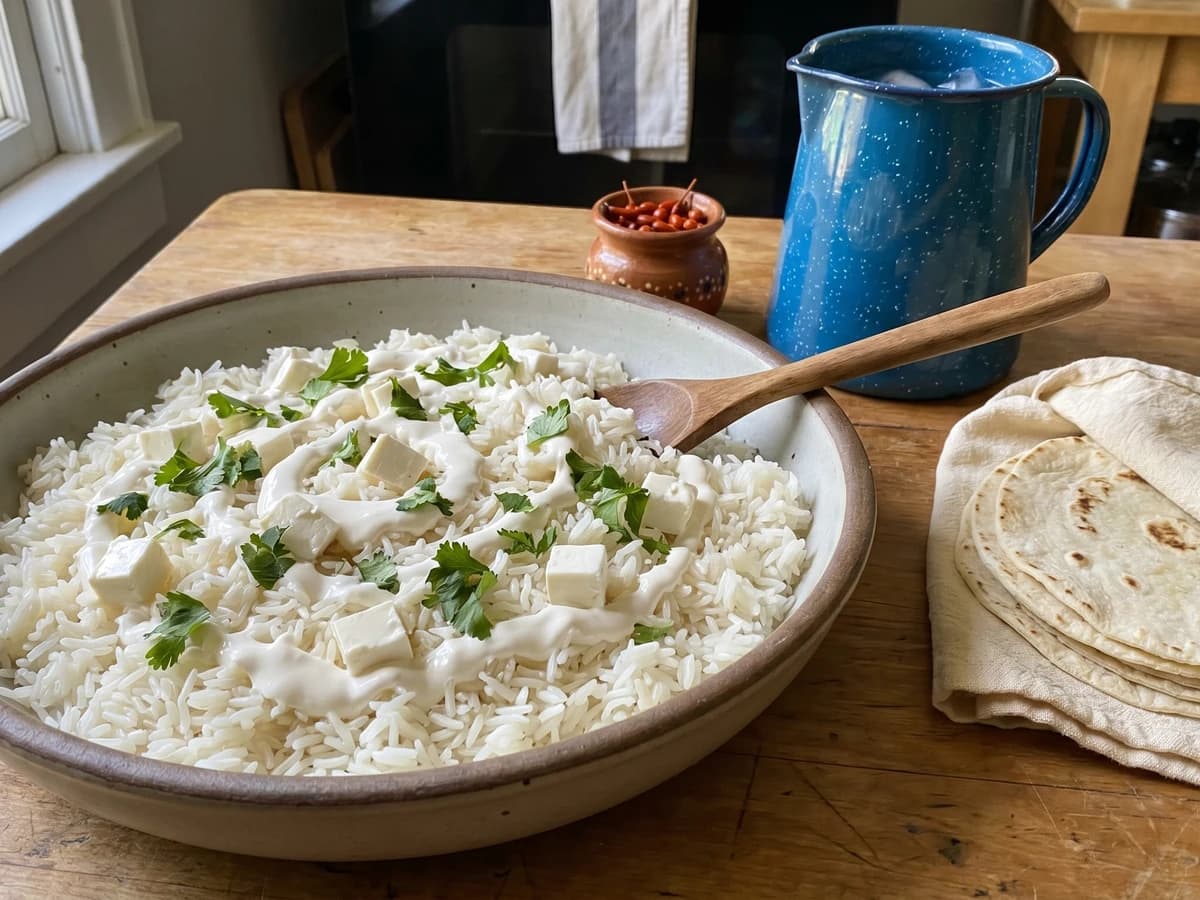
Sinaloa's home-cook white rice topped with cold cubes of cream cheese that soften into the warm grain, finished with crema and a sprinkle of chiltepin at the table. The trick that makes a side dish feel like a small luxury.
Chef Lupita
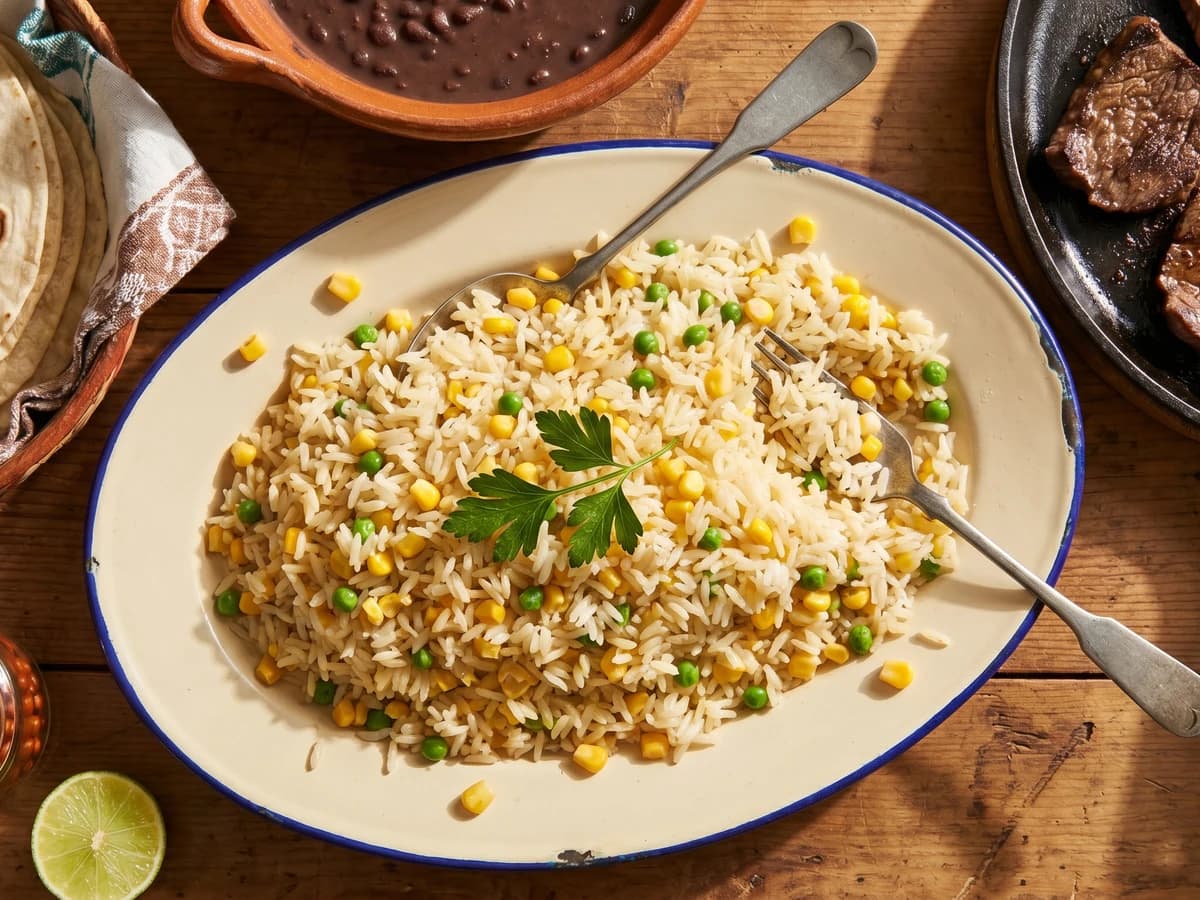
Sonora's white rice, toasted in butter and steamed with sweet corn and tender peas. The clean, quiet partner to a plate of carne asada, not the red rice of central Mexico.

Chef Lupita
Yucatán's white rice with sweet corn kernels, toasted in lard with garlic and onion. The quiet base that holds up against the peninsula's bold achiote-stained stews.