
Chef Lupita
Arroz a la Oaxaqueña
Oaxaca's red rice, stained with tomato and fried in lard, steamed with carrots, ejotes, black beans, and epazote. The side that anchors a Oaxacan family meal and earns its place beside the main.
A cooking platform built around craft, culture, and the stories behind what we eat.
Created by
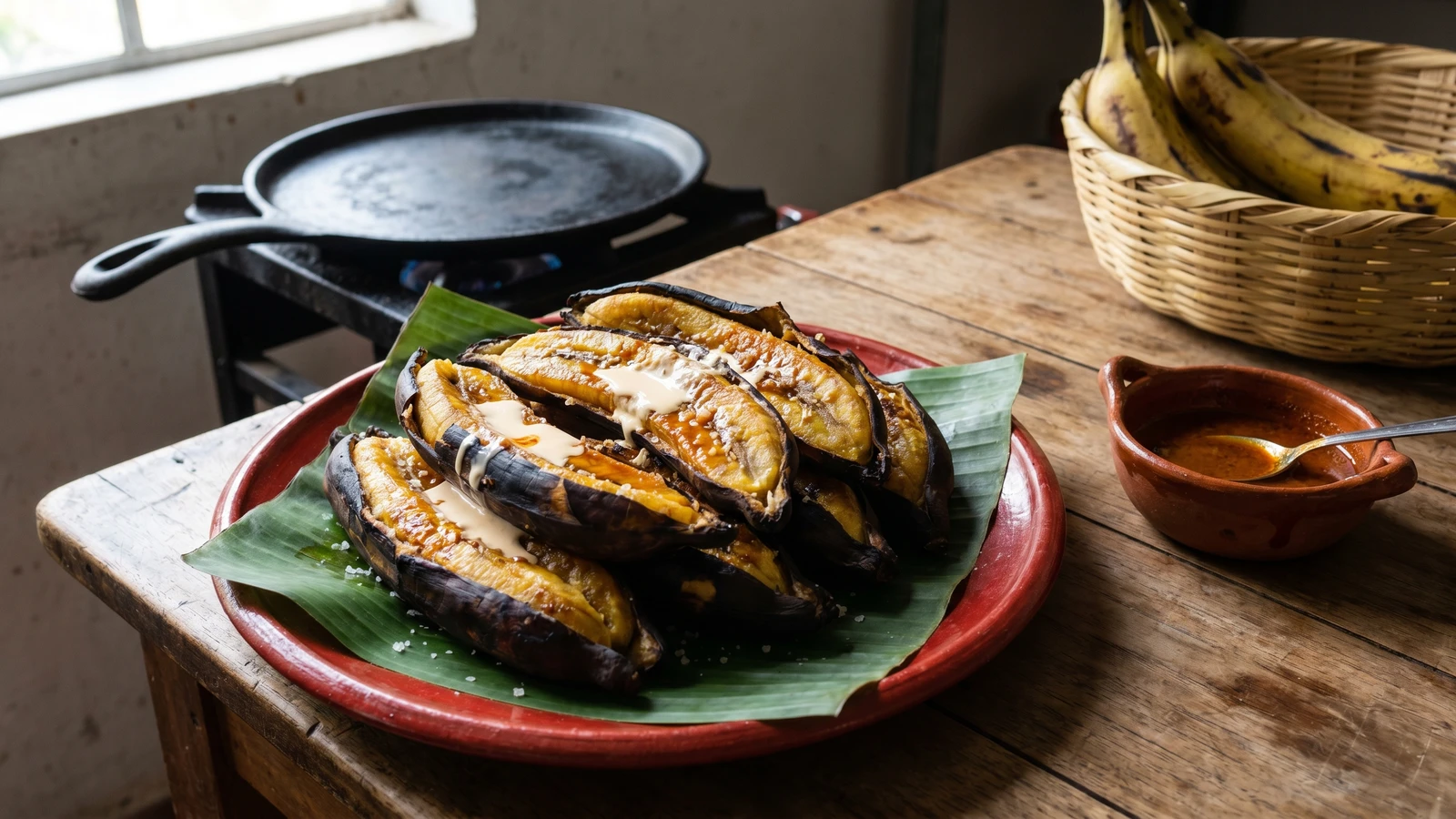
Veracruz's Sotavento plantain, tatemado whole on a blackened comal until the peel chars and the flesh turns syrupy, then served with crema de rancho, sal de grano, and sharp achiote garlic mojo.
Veracruz, the Sotavento coast from the port through Alvarado, Tlacotalpan, and the Papaloapan basin, is where this plátano tatemado lives. I learned the timing from señoras near Mercado Hidalgo in the port, women who could turn a plantain with tongs while arguing the price of fish and still pull it off the comal at the exact second the inside went soft. That is not luck. That is repetition.
The ingredient is plátano macho, ripe enough that the peel looks almost ruined. Good. Ugly skin is what you want here. The peel protects the flesh while the comal blackens it, and the sugars inside turn deep and honeyed without needing piloncillo, cinnamon, or any dessert costume. No me vengas con atajos. A yellow table banana will not behave the same way.
This is Jarocho cooking with Afro-Mexican memory in the starch: plantain, yuca, malanga, the foods that crossed oceans and took root in hot coastal soil. The finish can be only sal de grano and crema de rancho, the way many homes serve it for supper, or a small mojo of achiote, ajo, vinegar, and coconut oil when the table wants that Veracruz port sharpness. My mother wrote in her notebook, wait until the skin is ugly. She was right. Cada estado, su propia cocina.
Plátano macho is not native to Mesoamerica; bananas and plantains were domesticated in Southeast Asia, moved through Africa, and reached New Spain through 16th-century Atlantic trade routes that included Veracruz. In coastal Veracruz, African-descended cooks made plantain, yuca, and malanga everyday starches alongside corn, while the Nahuatl technique of tatemar, from tlatemati, kept the cooking tied to Mexican fire and comal practice. The achiote-garlic-vinegar mojo belongs to the Jarocho port register, related to Afro-Caribbean and Iberian sauces but adapted to Veracruz ingredients; Veracruz is not Cuba, and it is not Cartagena.
Quantity
4
yellow peels heavily freckled with black spots but still firm
Quantity
1 teaspoon, plus more to taste
Quantity
1/2 cup
for serving
Quantity
2 tablespoons
Quantity
2
finely grated or pounded
Quantity
1 teaspoon
Quantity
1 tablespoon
| Ingredient | Quantity |
|---|---|
| ripe plátano machoyellow peels heavily freckled with black spots but still firm | 4 |
| sal de grano | 1 teaspoon, plus more to taste |
| crema de rancho or thick Mexican cremafor serving | 1/2 cup |
| unrefined coconut oil | 2 tablespoons |
| garlic clovesfinely grated or pounded | 2 |
| achiote paste | 1 teaspoon |
| cane vinegar (vinagre de caña) | 1 tablespoon |
Use plátano macho, not the small sweet banana for cereal. The peel should be yellow with many black freckles, or mostly black, but the fruit should still feel firm when you press it. Green plátano macho is for frying crisp. Leaking, collapsed plátano is past the best point for tatemar.
Set a dry cast iron comal or heavy skillet over medium heat for five minutes. Do not oil the comal. The plantain cooks inside its own peel, and the dry metal gives you the blackened skin that protects the sweet flesh. Oil only makes smoke and confusion.
Lay the whole unpeeled plátanos on the hot comal. Turn them with tongs every 3 to 4 minutes, cooking all sides until the peel is nearly black, split in a few places, and the kitchen smells like piloncillo and roasted fruit. This takes 18 to 25 minutes depending on ripeness and thickness. The flesh should give softly under the tongs but not collapse into paste.
Move the blackened plátanos to a cutting board and let them rest for 5 minutes. The trapped heat finishes the center and makes the peel easier to pull back. Slit each peel lengthwise with a paring knife and open it carefully. Do not scrape the bitter char onto the flesh.
While the plátanos rest, warm the coconut oil in a small clay cazuelita or skillet over low heat. Add the garlic and achiote paste. Stir for 30 to 45 seconds, just until the oil turns orange and the garlic smells sharp and sweet. Keep the garlic pale. Take the pan off the heat and stir in the cane vinegar and sal de grano. That vinegar bite is Jarocho. Veracruz is not Cuba, and it is not Cartagena.
Split the peeled plátanos lengthwise or cut them into thick diagonal pieces. Brush the warm flesh with the achiote garlic mojo. Spoon crema de rancho over the top and finish with sal de grano. If the plátano is perfect, salt alone is enough. The crema makes it supper. No sugar. The fruit already did that work.
Serve on a red barro plate or a banana leaf-lined platter, family-style, while the cut sides are glossy from the mojo and the crema pools in the soft center. Put it next to frijoles negros de olla, eggs, grilled fish, or rice. This is weeknight Veracruz cooking: cheap, direct, and serious. Saber cocinar es saber vivir.
1 serving (about 210g)
Culinary guides, cultural storytelling, and the editorial depth that makes cooking meaningful.
Discover Culinary ExplorerChef Lupita
Oaxaca's red rice, stained with tomato and fried in lard, steamed with carrots, ejotes, black beans, and epazote. The side that anchors a Oaxacan family meal and earns its place beside the main.
Chef Lupita
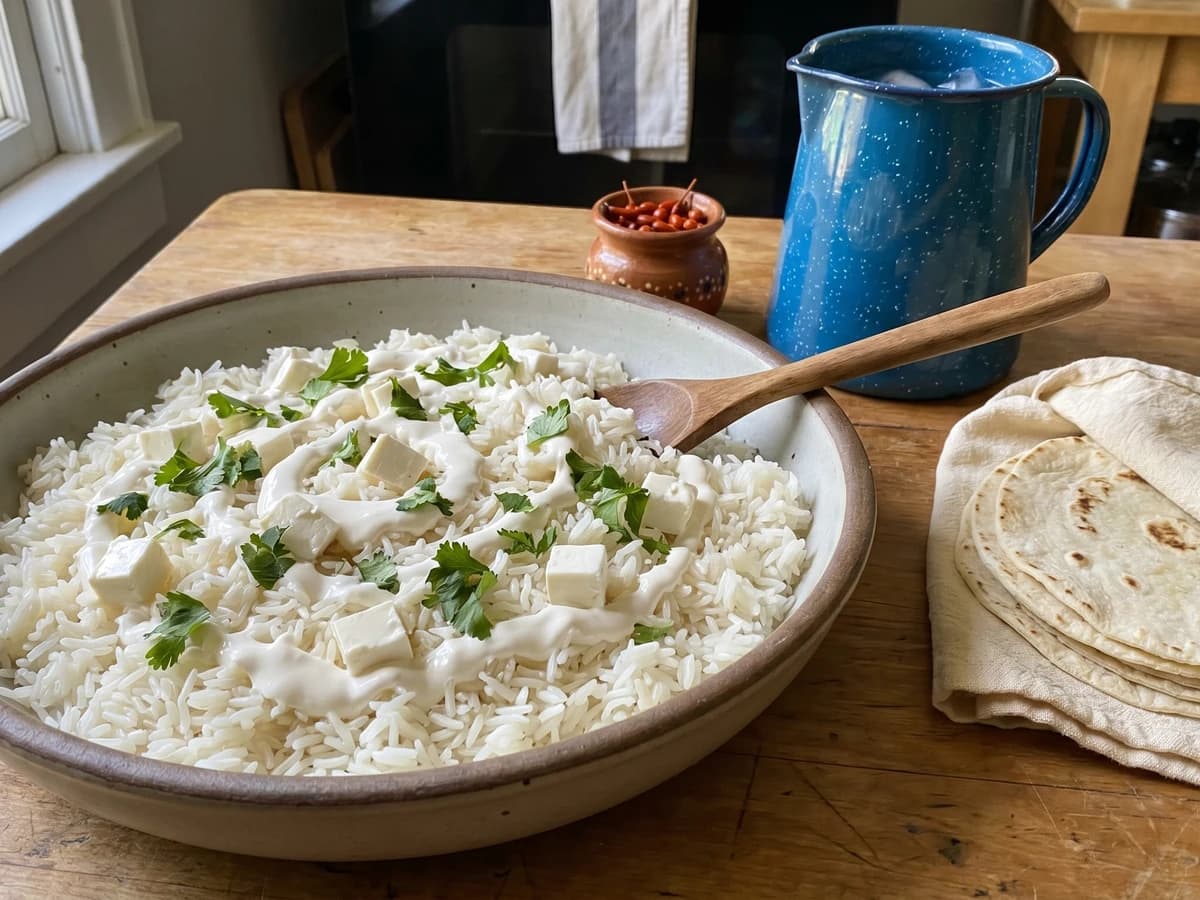
Sinaloa's home-cook white rice topped with cold cubes of cream cheese that soften into the warm grain, finished with crema and a sprinkle of chiltepin at the table. The trick that makes a side dish feel like a small luxury.
Chef Lupita
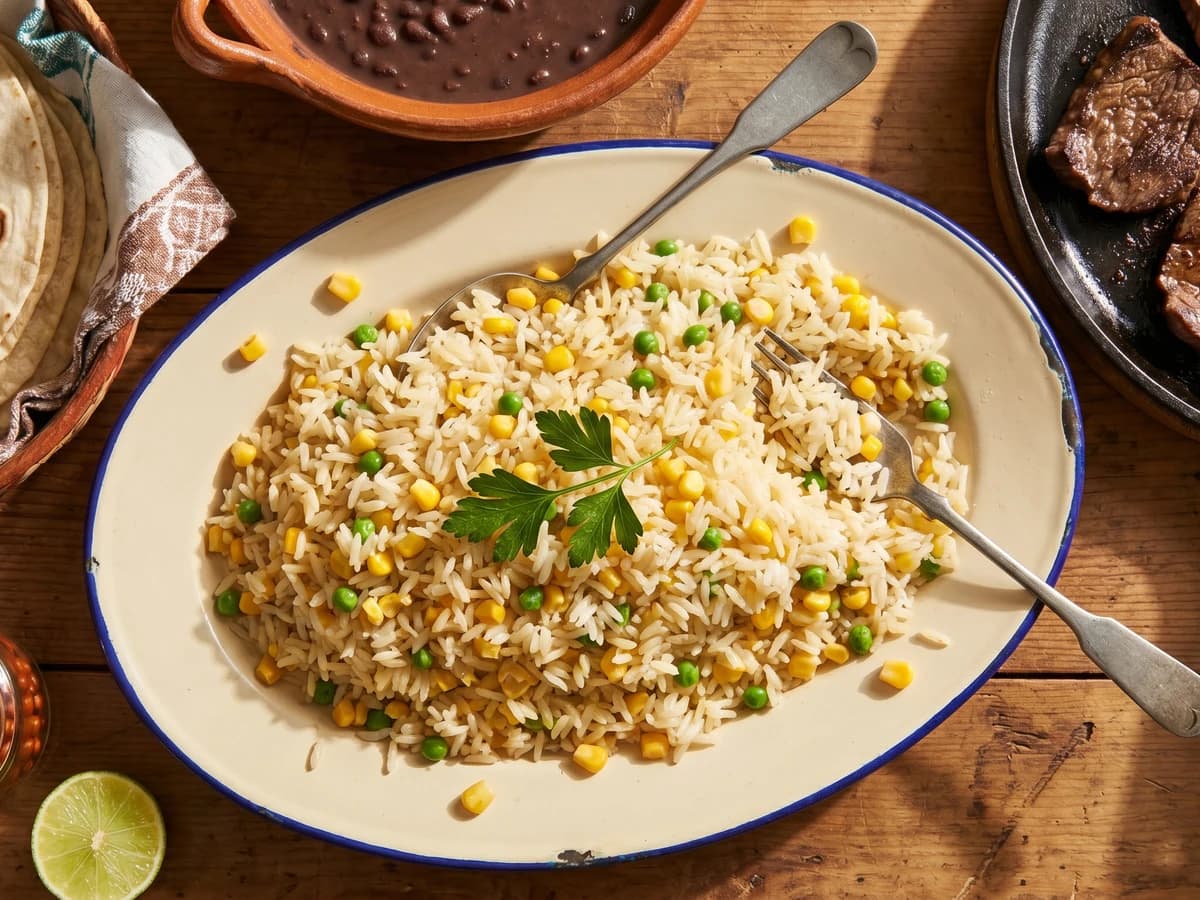
Sonora's white rice, toasted in butter and steamed with sweet corn and tender peas. The clean, quiet partner to a plate of carne asada, not the red rice of central Mexico.

Chef Lupita
Yucatán's white rice with sweet corn kernels, toasted in lard with garlic and onion. The quiet base that holds up against the peninsula's bold achiote-stained stews.