
Chef Lupita
Arroz a la Oaxaqueña
Oaxaca's red rice, stained with tomato and fried in lard, steamed with carrots, ejotes, black beans, and epazote. The side that anchors a Oaxacan family meal and earns its place beside the main.
A cooking platform built around craft, culture, and the stories behind what we eat.
Created by
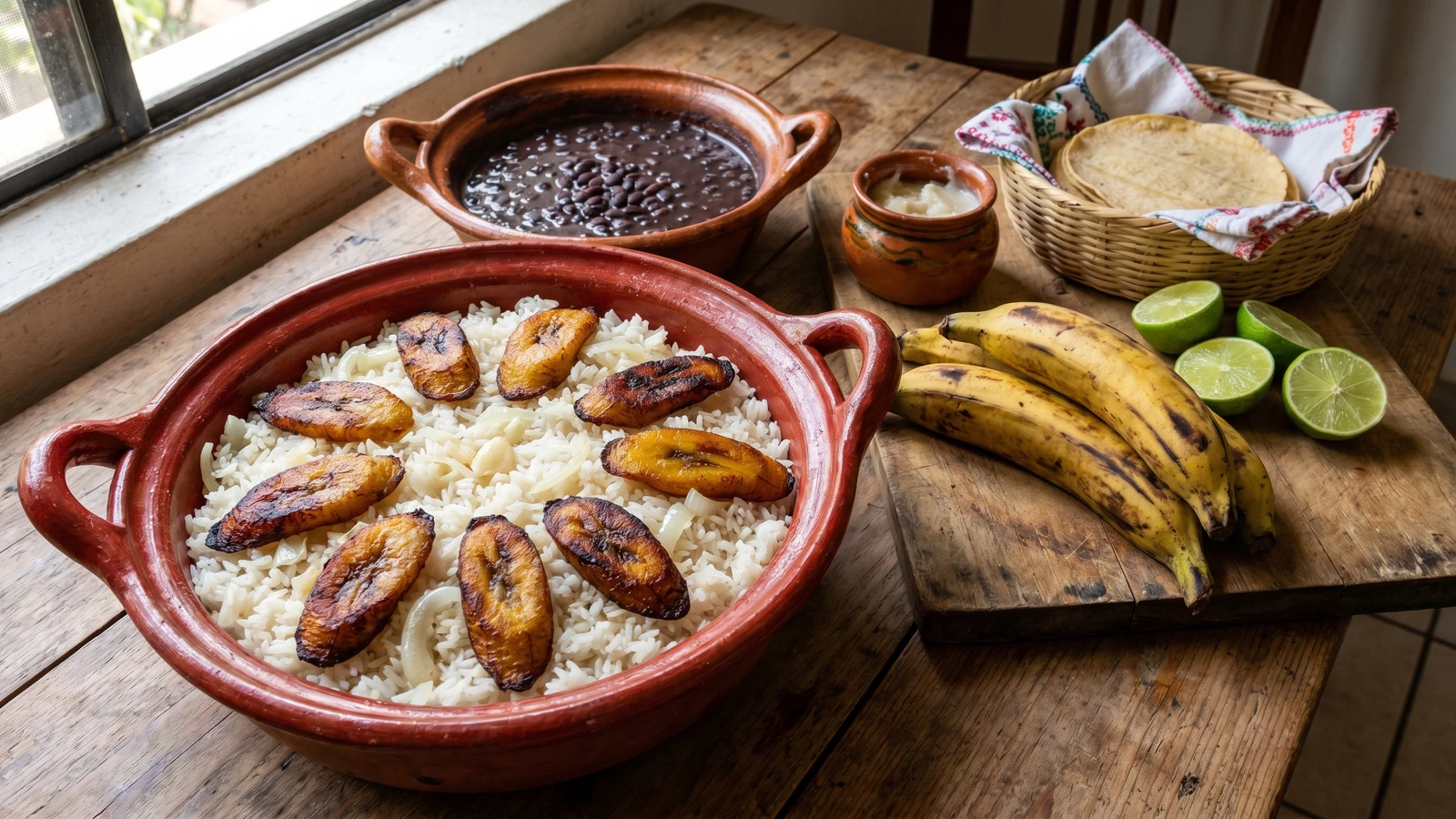
Veracruz's coastal rice, cooked white with onion, garlic, and broth, then finished with sweet plátano macho fried in manteca until the edges turn dark and caramelized.
Veracruz, especially the jarocho coast from the port down through Sotavento, knows what to do with rice and plátano macho. This is not northern rice. This is Gulf rice, white, loose, fragrant with onion and garlic, finished with ripe plantain fried in manteca until the edges go dark and sweet. Cada estado, su propia cocina.
The plátano macho is the ingredient that tells you where you are. Plantain, yuca, malanga, coconut, rice, these starches carry African and Caribbean memory on Mexican soil, but Veracruz is not Cuba and Veracruz is not Cartagena. The jarocho hand uses garlic, pork lard, broth, and the black beans waiting in the cazuela beside it. Not everything in Mexican cooking needs chile. If you think it does, you have not paid attention.
I first wrote this version in Alvarado, from a woman who served it beside frijoles negros so dark they looked almost blue in the clay pot. She fried the plantains last, never first, because she wanted the lard fresh and the edges glossy when the rice came to the table. She tapped the spoon on the cazuela and told me, "el arroz debe quedar suelto." Loose grains. Sweet plantain. Black beans. Así se hace y punto.
Veracruz became one of Mexico's main points of exchange after the Spanish founded the port in 1519, and its cooking absorbed Indigenous, Spanish, African, and Caribbean techniques through centuries of trade and forced migration. Plantains originated in Southeast Asia, traveled through Africa, and entered the Americas through Iberian colonial routes, where African-descended cooks helped make them central to coastal cuisines from the Gulf to the Caribbean. In Veracruz, rice with fried ripe plantain is part of the Afro-jarocho table, commonly served with frijoles negros rather than treated as a sweet garnish.
Quantity
1 1/2 cups
Quantity
2 tablespoons, plus 3 tablespoons
divided
Quantity
1/2 medium
finely chopped
Quantity
2
finely chopped
Quantity
2 1/2 cups
Quantity
1 teaspoon, plus more to taste
Quantity
1
for the beans if serving alongside
Quantity
2
yellow with black spots, peeled and sliced diagonally into 1/2-inch pieces
Quantity
1 cup
for serving
Quantity
for the table
| Ingredient | Quantity |
|---|---|
| long-grain white rice | 1 1/2 cups |
| manteca de cerdodivided | 2 tablespoons, plus 3 tablespoons |
| white onionfinely chopped | 1/2 medium |
| garlic clovesfinely chopped | 2 |
| hot chicken broth or light pork broth | 2 1/2 cups |
| kosher salt | 1 teaspoon, plus more to taste |
| fresh epazote sprig (optional)for the beans if serving alongside | 1 |
| ripe plátanos machosyellow with black spots, peeled and sliced diagonally into 1/2-inch pieces | 2 |
| warm frijoles negros de ollafor serving | 1 cup |
| lime halves (optional) | for the table |
Rinse the rice in a bowl of cool water, changing the water three or four times, until it runs mostly clear. Drain it well in a sieve for 10 minutes. Veracruz cooks want this rice loose, not sticky. If you leave surface starch clinging to the grains, the pot will tell on you.
Melt 2 tablespoons manteca de cerdo in a heavy saucepan over medium heat. Add the onion and cook until translucent, about 3 minutes. Add the garlic and stir for 30 seconds, just until it smells alive. Do not brown the garlic. This is white rice, not a roasted salsa.
Add the drained rice to the pan and stir for 2 to 3 minutes, until every grain is glossy with lard and the rice sounds dry against the spoon. This step keeps the grains separate. La manteca es el sabor, and here it is also the structure.
Pour in the hot broth and add the salt. Stir once, bring to a gentle simmer, then cover tightly and lower the heat to the smallest flame. Cook for 15 minutes. Do not lift the lid to inspect it. Rice needs quiet. After 15 minutes, turn off the heat and let it rest, covered, for 10 minutes more.
While the rice rests, melt 3 tablespoons manteca de cerdo in a skillet over medium heat. Add the plátano macho slices in one layer. Fry 2 to 3 minutes per side, until the edges turn dark gold and the centers soften. Ripe plantain should smell sweet, almost like caramel. If it is still pale and firm, it was not ripe enough.
Fluff the rice with a fork. Fold in half of the fried plantain gently, so you do not crush the grains. Spoon the rice into a barro rojo cazuela and arrange the remaining plantain on top. Serve with warm frijoles negros de olla, ideally cooked with epazote. The beans are not decoration. They belong on the table with this rice.
1 serving (about 240g)
Culinary guides, cultural storytelling, and the editorial depth that makes cooking meaningful.
Discover Culinary ExplorerChef Lupita
Oaxaca's red rice, stained with tomato and fried in lard, steamed with carrots, ejotes, black beans, and epazote. The side that anchors a Oaxacan family meal and earns its place beside the main.
Chef Lupita
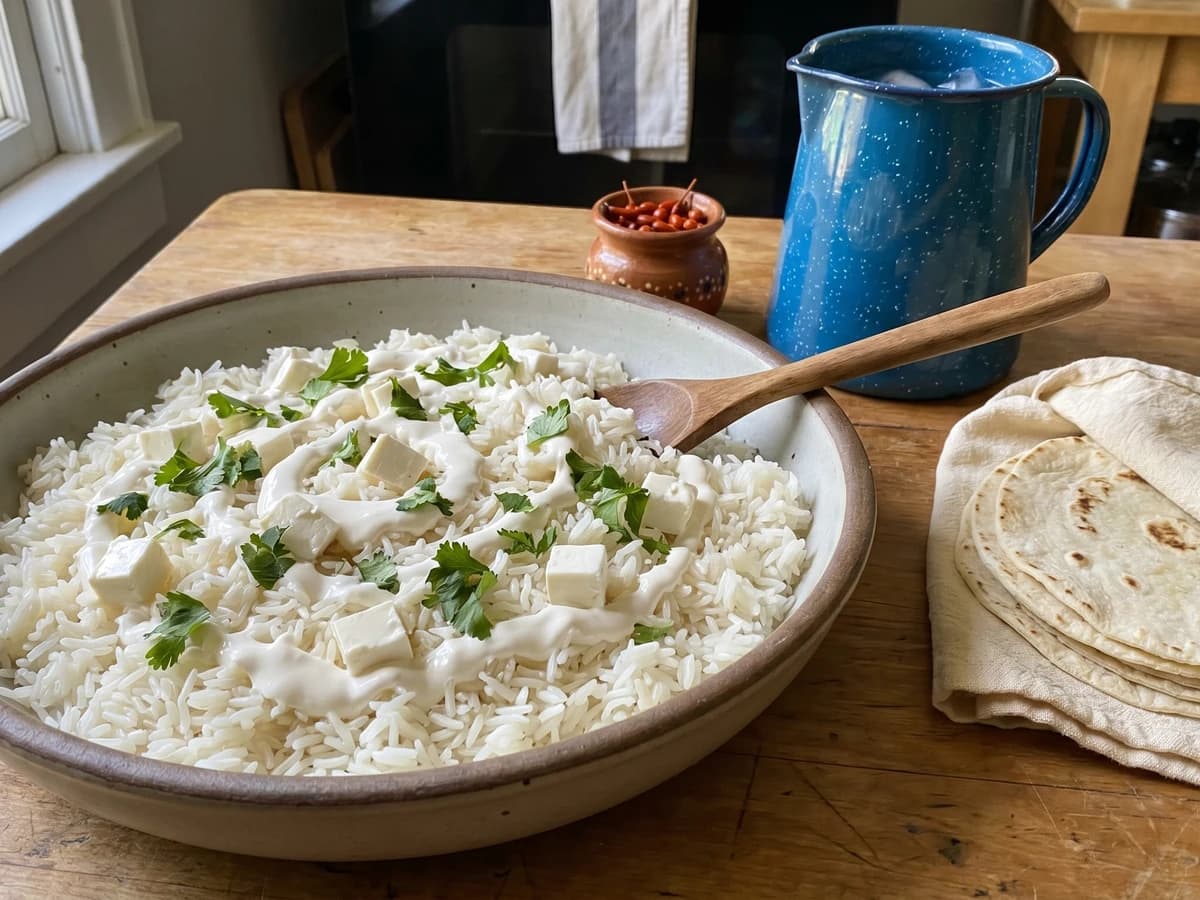
Sinaloa's home-cook white rice topped with cold cubes of cream cheese that soften into the warm grain, finished with crema and a sprinkle of chiltepin at the table. The trick that makes a side dish feel like a small luxury.
Chef Lupita
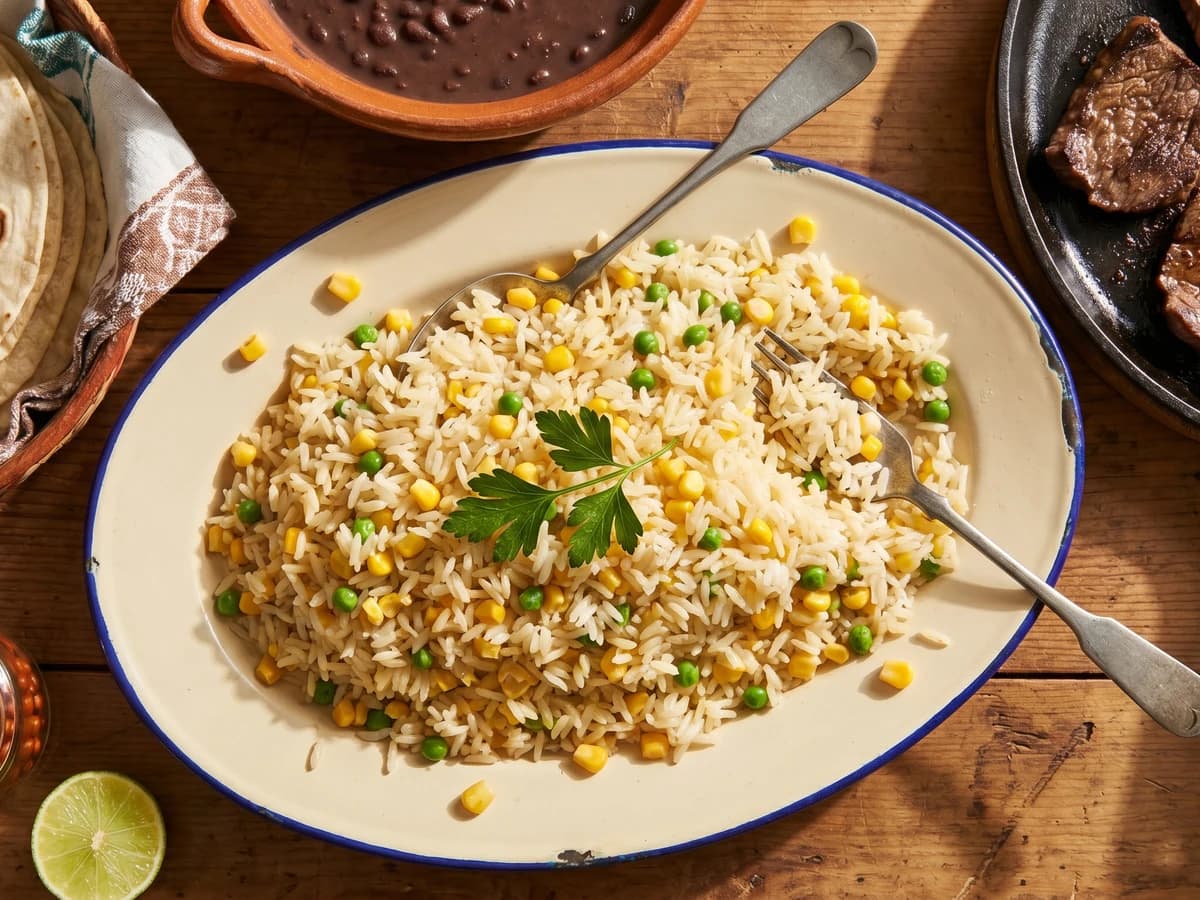
Sonora's white rice, toasted in butter and steamed with sweet corn and tender peas. The clean, quiet partner to a plate of carne asada, not the red rice of central Mexico.

Chef Lupita
Yucatán's white rice with sweet corn kernels, toasted in lard with garlic and onion. The quiet base that holds up against the peninsula's bold achiote-stained stews.