
Chef Lupita
Arroz a la Oaxaqueña
Oaxaca's red rice, stained with tomato and fried in lard, steamed with carrots, ejotes, black beans, and epazote. The side that anchors a Oaxacan family meal and earns its place beside the main.
A cooking platform built around craft, culture, and the stories behind what we eat.
Created by
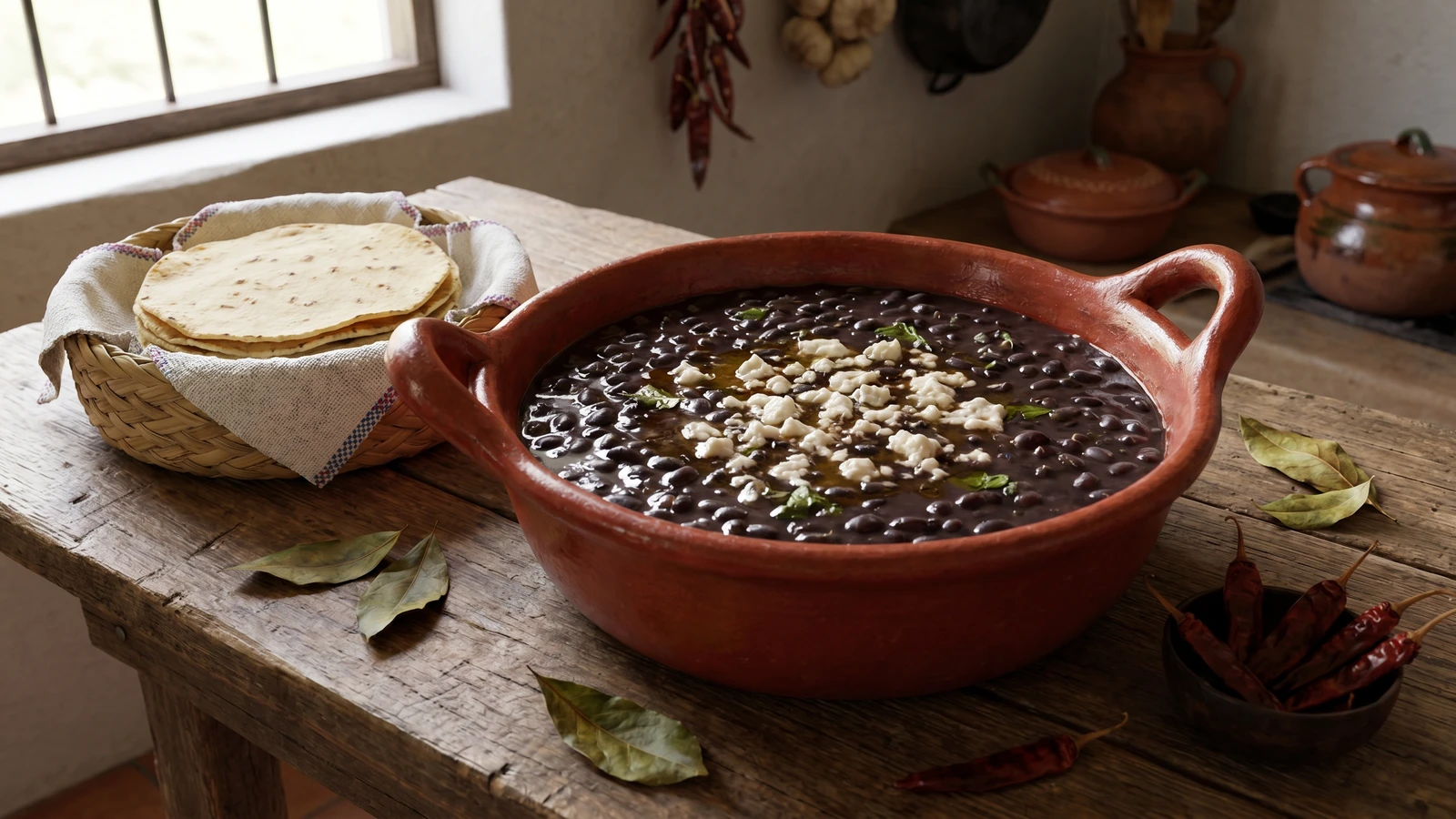
Guerrero's Costa Chica black beans, simmered until thick and brothy with epazote, hoja de aguacate, onion, garlic, and manteca de cerdo.
Guerrero, Costa Chica. These are the black beans you find from Cuajinicuilapa toward the Oaxacan line, where Afro-Mexican kitchens know how to make a pot of beans taste like more than beans. Epazote, hoja de aguacate, garlic, and a little chile costeño rojo. That is the map in the pot.
This is not Veracruz, not Cuba, not Cartagena. The Costa Chica has its own register. The same coast that keeps plátano macho, yuca, and malanga in the daily kitchen also keeps these beans close: thick, dark, brothy, served from clay with queso de cincho and tortillas made by hand. Cada estado, su propia cocina.
The technique belongs to women who understood economy before anyone called it a lesson. Cook the beans gently. Salt them when they begin to soften. Add epazote late. Fry garlic in manteca de cerdo and return that fat to the pot so the broth gains body. No me vengas con atajos. Beans are humble only to people who don't know how to cook them.
I learned a version like this from a señora in Cuajinicuilapa who kept her avocado leaves tied in a bundle above the stove. She did not measure the epazote. She smelled the pot and knew. That is not magic. That is practice. Saber cocinar es saber vivir.
The Costa Chica of Guerrero and Oaxaca is one of Mexico's historic Afro-Mexican regions, shaped by enslaved Africans, Indigenous Mixtec and Amuzgo communities, and Spanish colonial cattle economies from the 16th century onward. Black beans, epazote, and avocado leaves belong to Mesoamerican cooking, while the coastal use of plantain, yuca, malanga, and coconut reflects African and Afro-Caribbean foodways adapted to Mexican soil. Guerrero officially recognized its Afro-Mexican population in state law before national constitutional recognition arrived in 2019, but the cooking had carried that history for centuries.
Quantity
1 pound
picked over and rinsed
Quantity
8 cups, plus more as needed
Quantity
1/2 medium
Quantity
4
2 whole and 2 finely chopped
Quantity
1 sprig, plus more to finish if needed
Quantity
2
lightly toasted
Quantity
1
stemmed but left whole
Quantity
2 tablespoons
Quantity
1 teaspoon, plus more to taste
Quantity
for serving
crumbled
Quantity
for serving
warm
| Ingredient | Quantity |
|---|---|
| dried black beanspicked over and rinsed | 1 pound |
| water | 8 cups, plus more as needed |
| white onion | 1/2 medium |
| garlic cloves2 whole and 2 finely chopped | 4 |
| fresh epazote | 1 sprig, plus more to finish if needed |
| dried avocado leaveslightly toasted | 2 |
| dried chile costeño rojostemmed but left whole | 1 |
| pork lard (manteca de cerdo) | 2 tablespoons |
| kosher salt | 1 teaspoon, plus more to taste |
| queso de cincho (optional)crumbled | for serving |
| handmade corn tortillas (optional)warm | for serving |
Spread the black beans on a tray and remove stones, broken beans, and anything that does not belong in the pot. Rinse well. Do not skip this because you trust the bag. Ask the women at the market: beans are field food, and field food carries bits of the field.
Put the beans in a clay bean pot or heavy Dutch oven with 8 cups water, the half onion, 2 whole garlic cloves, the toasted avocado leaves, and the whole chile costeño rojo. Bring to a gentle simmer. The chile is there for depth, not for punishment. Not all Mexican food is trying to burn your mouth.
Cook uncovered or loosely covered over low heat for 1 hour and 30 minutes, adding hot water when the beans start showing above the surface. The broth should stay dark and moving, not dry and angry. Stir from the bottom now and then so the beans cook evenly.
When the beans are almost tender, add the fresh epazote sprig and 1 teaspoon salt. Epazote goes in late because its flavor turns dull if you punish it for two hours. Cook 30 to 45 minutes more, until the beans are soft inside and the broth has body.
In a small skillet, melt the manteca de cerdo over medium heat. Add the 2 finely chopped garlic cloves and cook until pale gold, not brown. Pour in one ladle of bean broth carefully, stir, then scrape everything back into the bean pot. La manteca es el sabor. Vegetable oil gives you grease. Lard gives you memory.
Mash one cup of beans against the side of the pot with a wooden spoon and stir them back into the broth. Simmer 10 minutes more. You want beans that are brothy but not watery, thick enough to coat a tortilla when you drag it through the cazuela.
Remove the onion, spent garlic cloves, avocado leaves, and chile if you do not want them at the table. Taste for salt. Serve the beans in the clay cazuela with crumbled queso de cincho and warm handmade corn tortillas. Nothing more is needed. Así se hace y punto.
1 serving (about 350g)
Culinary guides, cultural storytelling, and the editorial depth that makes cooking meaningful.
Discover Culinary ExplorerChef Lupita
Oaxaca's red rice, stained with tomato and fried in lard, steamed with carrots, ejotes, black beans, and epazote. The side that anchors a Oaxacan family meal and earns its place beside the main.
Chef Lupita
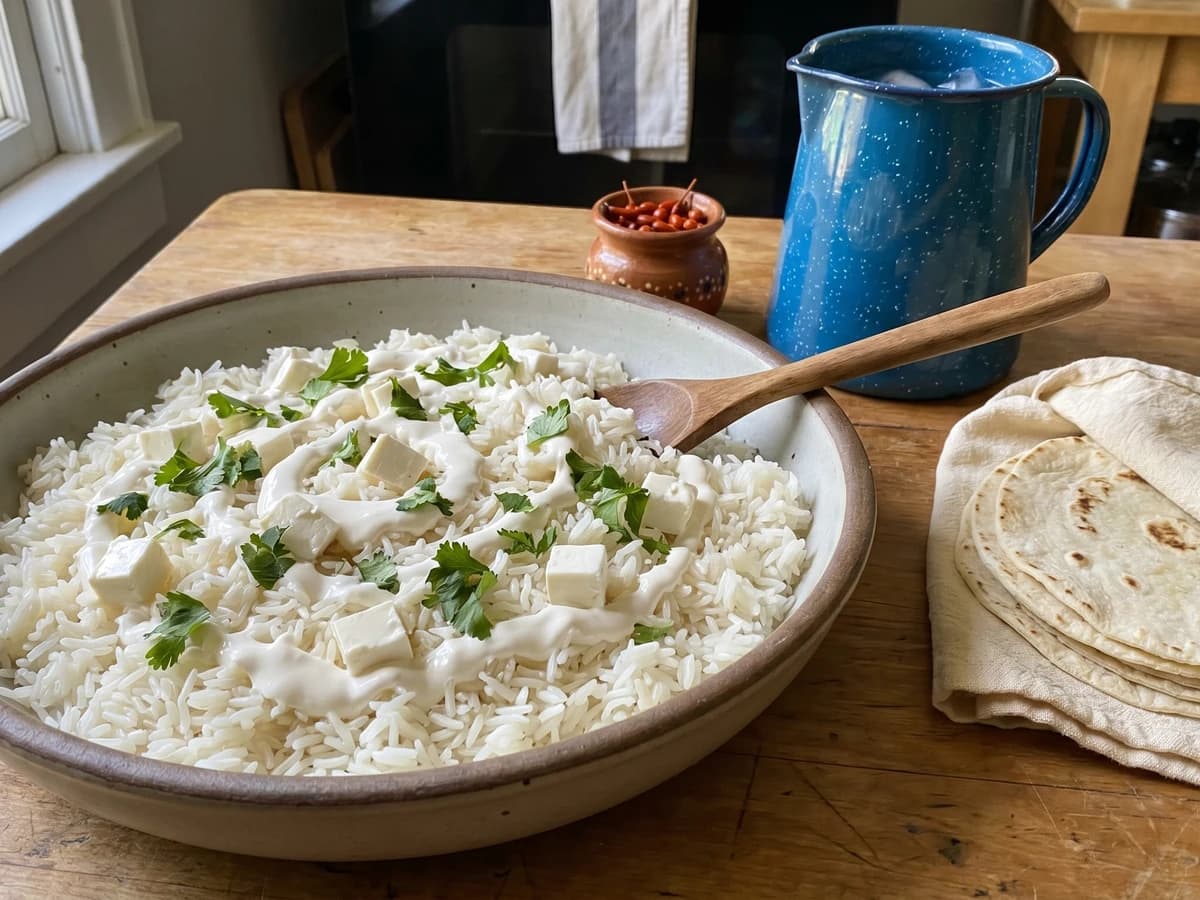
Sinaloa's home-cook white rice topped with cold cubes of cream cheese that soften into the warm grain, finished with crema and a sprinkle of chiltepin at the table. The trick that makes a side dish feel like a small luxury.
Chef Lupita
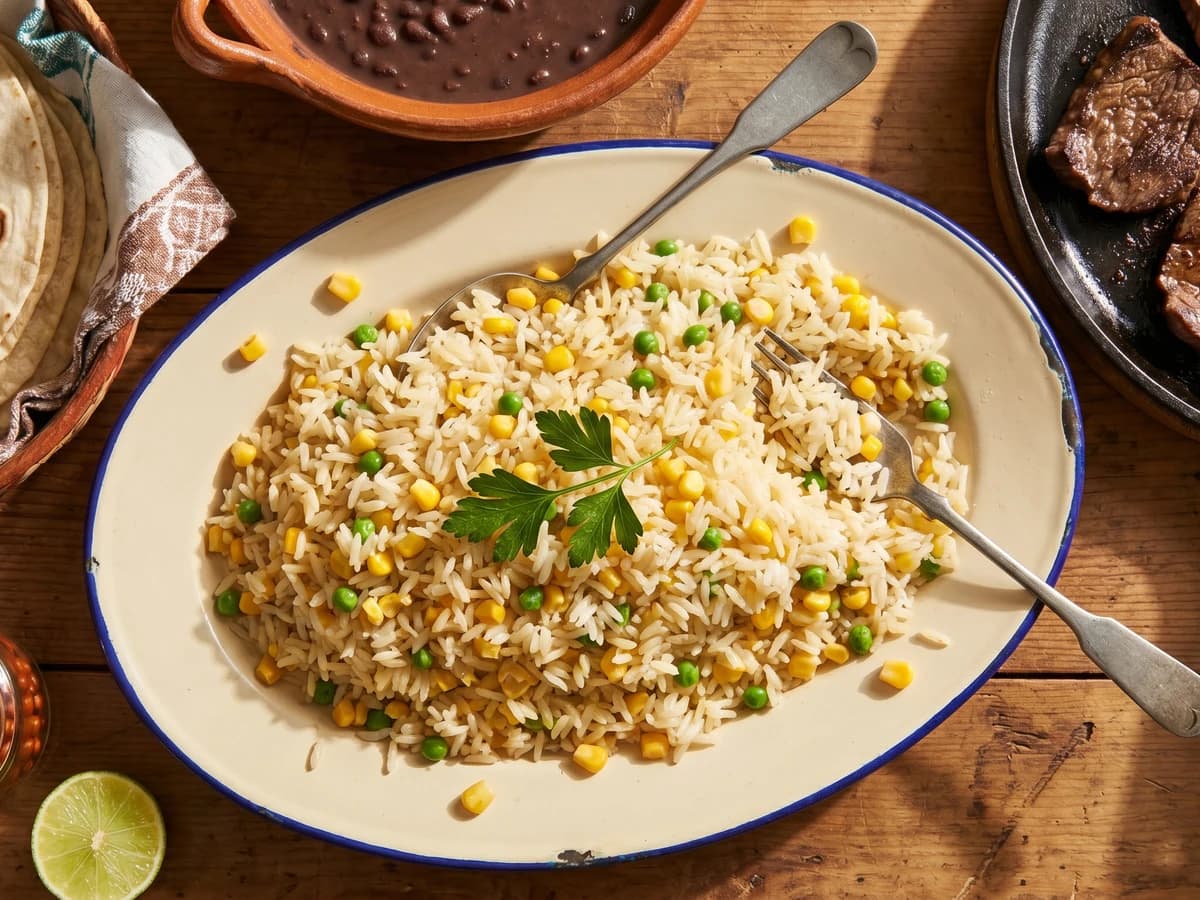
Sonora's white rice, toasted in butter and steamed with sweet corn and tender peas. The clean, quiet partner to a plate of carne asada, not the red rice of central Mexico.

Chef Lupita
Yucatán's white rice with sweet corn kernels, toasted in lard with garlic and onion. The quiet base that holds up against the peninsula's bold achiote-stained stews.