Culinary Explorer

A cooking platform built around craft, culture, and the stories behind what we eat.
Discover Culinary Explorer
Frijoles Colados Oaxaqueños

Frijoles Colados Oaxaqueños

Created by

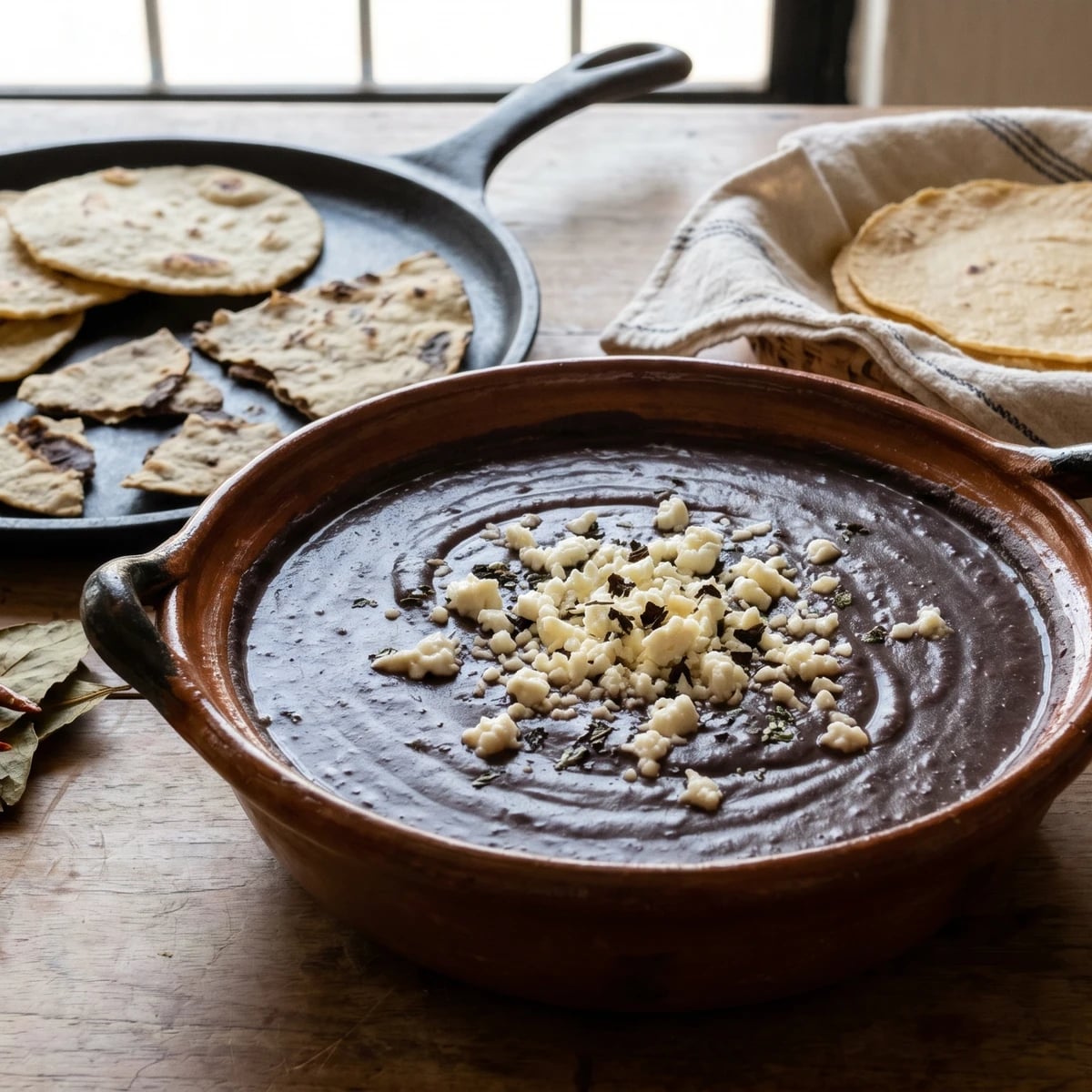
Valles Centrales black beans, simmered with hoja de aguacate, strained until satin-smooth, then fried in asiento or pork lard so they spread cleanly across memelas, tlayudas, and enfrijoladas.

Side Dishes
Mexican
Make Ahead
Comfort Food
Freezer Friendly
20 min
Active Time
2 hr 30 min cook10 hr 50 min total
Yield6 cups, enough for 8 to 10 servings

Oaxaca, especially the Valles Centrales, is where these frijoles live: on memelas at the Tlacolula market, under quesillo on a tlayuda in Oaxaca de Juárez, folded into enfrijoladas in kitchens from Etla to Ocotlán. They are black beans, yes, but not any pot of black beans. The hoja de aguacate tells you where you are.

The leaf must be dried Mexican avocado leaf, toasted until it smells faintly of anise. The chile is chile de árbol, just enough to sharpen the bean, not to bully it. The fat is asiento oaxaqueño if you can get it, or manteca de cerdo if you can't. Vegetable oil makes a paste, not this paste. La manteca es el sabor.

The women who work the comales before dawn know the texture by the drag of the spoon: smooth, glossy, thick enough to cling to a tortilla without tearing it. That texture comes from straining. Blender alone is not enough. Colados means passed through, skins left behind, patience in the bowl. Cada estado, su propia cocina, and Oaxaca puts its avocado leaf right where you can taste it.

Black beans and maize were paired in Oaxaca long before the Spanish arrived; archaeological work in the Tehuacán-Cuicatlán region documents domesticated beans in Mesoamerican diets thousands of years before the 16th century. The strained, fried paste now used on tlayudas and memelas took its present market form after Spanish pigs made manteca de cerdo a common cooking fat, while hoja de aguacate, from Mexican criollo avocado trees, remained the defining local perfume. In the markets of Tlacolula and Ocotlán, the debate is not whether to use the leaf, it is whether the beans should pass through a sieve, a molino, or both before the frying.

The technique, the tradition, and the story behind every dish.

Discover Culinary Explorer

Ingredients

dried frijol negro criollo or dried black beans

Quantity

1 pound

sorted and rinsed

water

Quantity

10 cups, plus more as needed

white onion

Quantity

1/2 medium

left whole

garlic cloves

Quantity

3

peeled

dried Mexican avocado leaves (hojas de aguacate)

Quantity

3

divided

dried chile de árbol

Quantity

3

stemmed

kosher salt

Quantity

1 1/2 teaspoons, plus more to taste

asiento oaxaqueño or manteca de cerdo

Quantity

1/3 cup

white onion

Quantity

1/4 medium

finely chopped

reserved bean cooking liquid

Quantity

1/2 cup, plus more as needed

crumbled queso fresco (optional)

Quantity

for serving as a side

warm memelas, tlayudas, or corn tortillas (optional)

Quantity

for serving

Equipment Needed

  • 5-quart olla de barro or heavy Dutch oven
  • Cast iron comal or heavy dry skillet
  • High-powered blender
  • Fine-mesh strainer or food mill
  • Wide clay cazuela and wooden spoon

Instructions

  1. 1

    Sort and soak

    Pick through the beans and remove stones or broken pieces. Rinse well, place in a large bowl, and cover with water by three inches. Soak for 8 hours or overnight, then drain. Old beans from a supermarket shelf need this help. Fresh beans from a good mercado cook faster because they have not been sitting around losing their strength.

    If your beans are newly harvested and you know your vendor, you can shorten the soak to 4 hours. If you do not know the age of the beans, soak overnight. Pregúntale a las señoras del mercado.
  2. 2

    Simmer the beans

    Put the drained beans in an olla de barro or heavy pot with 10 cups water, the half onion, and the garlic. Bring to a simmer over medium heat, then lower the heat so the bubbles stay gentle. Cook partially covered for 1 1/2 to 2 hours, adding hot water as needed to keep the beans covered by one inch. The beans are ready for seasoning when you can press one between your fingers and it gives way without a hard center.

  3. 3

    Toast leaf and chile

    Heat a dry comal over medium. Toast two avocado leaves for about 10 seconds per side, just until they darken slightly and release that anise smell. Toast the chile de árbol for 5 to 8 seconds per side. Watch them. Blackened chile turns bitter and you will taste that mistake in every spoonful. Add the two toasted leaves, the toasted chiles, and the salt to the tender beans. Simmer 20 minutes more.

    Use food-grade dried Mexican avocado leaves sold for cooking. Do not pull leaves from a random backyard avocado tree. The Oaxacan leaf has the aroma this dish needs, and guessing at the tree is not cooking, it is carelessness.
  4. 4

    Blend the beans

    Remove and discard the half onion and the whole avocado leaves. Keep the garlic and chiles in the pot. Let the beans cool for 10 minutes so the blender does not fight you. Blend the beans in batches with enough cooking liquid to make a smooth, loose puree. Do not make it watery. You need it loose enough to pass through a sieve, not thin enough to drink.

  5. 5

    Strain the puree

    Set a fine-mesh strainer over a large bowl. Push the bean puree through with a ladle or flexible spatula, scraping the underside of the strainer as you work. The skins stay behind. This is the part people skip and then they wonder why their beans feel heavy on the tortilla. Colados means strained. Así se hace y punto.

    A food mill works well here if you have one. A blender alone does not finish the job. No me vengas con atajos.
  6. 6

    Fry the onion

    Warm the asiento or manteca de cerdo in a wide clay cazuela or heavy skillet over medium heat. Add the finely chopped onion and cook 6 to 8 minutes, stirring often, until it softens and turns pale gold at the edges. Toast the remaining avocado leaf on the comal, crumble it into the hot fat, and stir for 15 seconds. The fat carries that leaf through the whole pot.

  7. 7

    Thicken the paste

    Pour the strained bean puree into the hot fat. It will sputter, so stir with a wooden spoon and stand back from the first splash. Cook 20 to 25 minutes, stirring from the bottom so it does not stick, until the beans turn glossy and the spoon leaves a clean path across the cazuela. For memelas and tlayudas, keep the paste thick. For enfrijoladas, loosen it with reserved bean cooking liquid until it coats a tortilla like sauce.

    If the beans taste flat, they need salt or fat, not a handful of random spices. Oaxaca built this flavor with black beans, hoja de aguacate, chile de árbol, and pork lard. Respect the structure.
  8. 8

    Serve and store

    Taste for salt. Spoon the beans into a barro negro cazuela and top with a little crumbled queso fresco if you are serving them as a side. For tlayudas, spread them warm over the tortilla after the asiento. For memelas, smear them over the masa while it is still hot from the comal. Cool leftovers completely before refrigerating or freezing. Recetas probadas y garantizadas.

Chef Tips

  • Frijol negro criollo from Oaxaca gives the deepest flavor. If you use generic black beans, the recipe still works, but you lose some of the earthy depth. A substitution is a compromise, not an upgrade.
  • Asiento oaxaqueño is the browned sediment-rich pork fat used on tlayudas. If you cannot find it, use clean manteca de cerdo. Do not use vegetable oil and expect the same beans. La manteca es el sabor.
  • Chile de árbol gives a clean point of heat. Some coastal Oaxacan cooks reach for chile costeño, especially closer to the Costa Chica, but this Valles Centrales version keeps the chile de árbol because it sharpens without smoking up the leaf.
  • Do not flatten Oaxaca into one pot. On the Costa Chica, epazote can join hoja de aguacate and the table may include plátano macho or yuca. These frijoles are the Valles Centrales paste for memelas and tlayudas, so the bean, leaf, chile, and pork fat stay in front.
  • If you cannot find food-grade hojas de aguacate, make plain frijoles negros and call them that. The leaf is not decoration. It is the thing that tells your mouth you are in Oaxaca. This is a 32-state cuisine.

Advance Preparation

  • Soak the beans the night before. That turns this from an all-day decision into a steady morning task.
  • The cooked, unstrained beans can be refrigerated in their liquid for up to 2 days. Strain and fry them when you are ready to serve.
  • Finished frijoles colados keep refrigerated for 5 days. Reheat gently with a splash of bean cooking liquid or water and a spoonful of manteca to bring back the gloss.
  • Freeze in 1-cup portions for up to 3 months. Thaw overnight in the refrigerator, then reheat in a cazuela and loosen with bean liquid for enfrijoladas or cook thicker for tlayudas.

Frequently Asked Questions

Nutrition Information

1 serving (about 170g)

Calories
260 calories
Total Fat
10 g
Saturated Fat
3 g
Trans Fat
0 g
Unsaturated Fat
6 g
Cholesterol
10 mg
Sodium
450 mg
Total Carbohydrates
32 g
Dietary Fiber
9 g
Sugars
2 g
Protein
11 g

Note: Chef personas and recipes are created with AI assistance. Cook with care: follow safe food-handling practices, check doneness with a thermometer when needed, and adapt for allergies and your kitchen.

Where cooking meets culture.

Culinary guides, cultural storytelling, and the editorial depth that makes cooking meaningful.

Discover Culinary Explorer

More from Plátano & Yuca: Acompañamientos Afrodescendientes

Browse the full collection