
Chef Lupita
Arroz a la Oaxaqueña
Oaxaca's red rice, stained with tomato and fried in lard, steamed with carrots, ejotes, black beans, and epazote. The side that anchors a Oaxacan family meal and earns its place beside the main.
A cooking platform built around craft, culture, and the stories behind what we eat.

Created by
Oaxaca's Costa Chica black beans, slow-simmered with toasted hojas de aguacate, epazote, chile costeño, and manteca de cerdo until the broth turns dark, fragrant, and serious.
Oaxaca's Costa Chica has its own register: black beans, epazote, toasted hojas de aguacate, chile costeño when the cook wants a little edge. This is not the bean pot of the north, and it is not Veracruz with its garlic-vinegar mojo. Cada estado, su propia cocina.
The avocado leaf is the signature. Not bay leaf. Not oregano. Hoja de aguacate, toasted on the comal until it smells faintly of anise and warm wood. In the coastal towns where Oaxaca meets Guerrero, cooks know that the leaf does not shout. It perfumes the beans from underneath. That restraint is part of the intelligence of the dish.
I learned this pot from a señora near Pinotepa Nacional who kept her beans in a red barro cazuela and corrected me before I reached for oil. Manteca de cerdo, she said. Or coconut oil in some coastal kitchens, when the household cooks that way. But not vegetable oil. No me vengas con atajos. The fat carries the garlic, onion, and chile into the beans, and the beans carry the leaf back to you.
These frijoles are made ahead because beans have memory. Cook them today, eat them tomorrow, and the broth will be deeper. Serve them from the cazuela with corn tortillas, fried plátano macho if the table is coastal, and queso fresco if you have it. Saber cocinar es saber vivir.
Black beans have been cultivated in Mesoamerica for thousands of years and remain one of Oaxaca's foundation foods alongside maize, squash, and chile. The use of toasted avocado leaves is especially associated with central and southern Oaxaca, where Mexican avocado varieties have aromatic leaves safe for cooking, unlike some commercial varieties grown elsewhere. On the Oaxaca and Guerrero Costa Chica, Afro-Mexicano foodways also preserve diasporic starches such as plátano macho, yuca, and malanga, served alongside Mexican beans without turning the cooking into a single generic coastal cuisine.
Quantity
1 pound
picked over and rinsed
Quantity
8 cups, plus more for soaking
Quantity
1/2 medium
Quantity
3
2 whole and 1 finely chopped
Quantity
3 fresh or dried
toasted on a comal
Quantity
1 large sprig
Quantity
1
stemmed and toasted
Quantity
2 tablespoons
Quantity
1/2 cup
finely chopped
Quantity
1 1/2 teaspoons, plus more to taste
Quantity
for serving
crumbled
Quantity
for serving
warmed
Quantity
for serving
fried
| Ingredient | Quantity |
|---|---|
| dried Mexican black beanspicked over and rinsed | 1 pound |
| water | 8 cups, plus more for soaking |
| white onion | 1/2 medium |
| garlic cloves2 whole and 1 finely chopped | 3 |
| hojas de aguacatetoasted on a comal | 3 fresh or dried |
| fresh epazote | 1 large sprig |
| dried chile costeño rojostemmed and toasted | 1 |
| manteca de cerdo | 2 tablespoons |
| white onionfinely chopped | 1/2 cup |
| kosher salt | 1 1/2 teaspoons, plus more to taste |
| queso fresco (optional)crumbled | for serving |
| hand-pressed corn tortillas (optional)warmed | for serving |
| plátano macho maduro (optional)fried | for serving |
Put the black beans in a large bowl and cover with water by three inches. Soak 8 hours or overnight. Drain them before cooking. Yes, you can cook unsoaked beans if you have the whole afternoon, but soaking gives you a steadier pot and a better broth.
Put the drained beans in a heavy pot or clay cazuela with 8 cups water, the half onion, and 2 whole garlic cloves. Bring to a gentle boil, then lower the heat until the beans simmer quietly. Do not add salt yet. Cook uncovered for 45 minutes, skimming any foam from the surface.
Heat a dry comal over medium. Toast the hojas de aguacate one at a time for a few seconds per side, just until they darken slightly and smell like anise. Toast the chile costeño until fragrant, about 10 seconds per side. Do not blacken either one. Burned leaf tastes medicinal, and nobody at the mercado will forgive you for that.
Add the toasted hojas de aguacate, epazote, and toasted chile costeño to the pot. Keep simmering until the beans are tender and creamy inside, 1 to 1 1/2 hours more. Add hot water if the liquid drops below the beans. The broth should stay generous, dark, and loose.
In a small skillet, melt the manteca de cerdo over medium heat. Add the finely chopped onion and cook until translucent, about 5 minutes. Add the chopped garlic and cook 30 seconds, just until it smells sweet. Scrape this into the bean pot. La manteca es el sabor, and this is where the pot stops tasting flat.
Add the salt and simmer 15 minutes more. Taste the broth, not just the beans. It should taste rounded, earthy, and lightly perfumed by the avocado leaf. Remove the half onion, garlic cloves, epazote stem, chile, and leaves if they are still whole. Let the beans rest 20 minutes before serving so the fat and broth come together.
Serve the beans from a red barro or barro negro cazuela with a little broth in every spoonful. Add crumbled queso fresco if using, and set warm corn tortillas on the table. Fried plátano macho maduro belongs beside this pot on the Costa Chica. That black bean broth against the sweet plantain is not decoration, it is memory.
1 serving (about 310g)
Culinary guides, cultural storytelling, and the editorial depth that makes cooking meaningful.
Discover Culinary ExplorerChef Lupita
Oaxaca's red rice, stained with tomato and fried in lard, steamed with carrots, ejotes, black beans, and epazote. The side that anchors a Oaxacan family meal and earns its place beside the main.
Chef Lupita
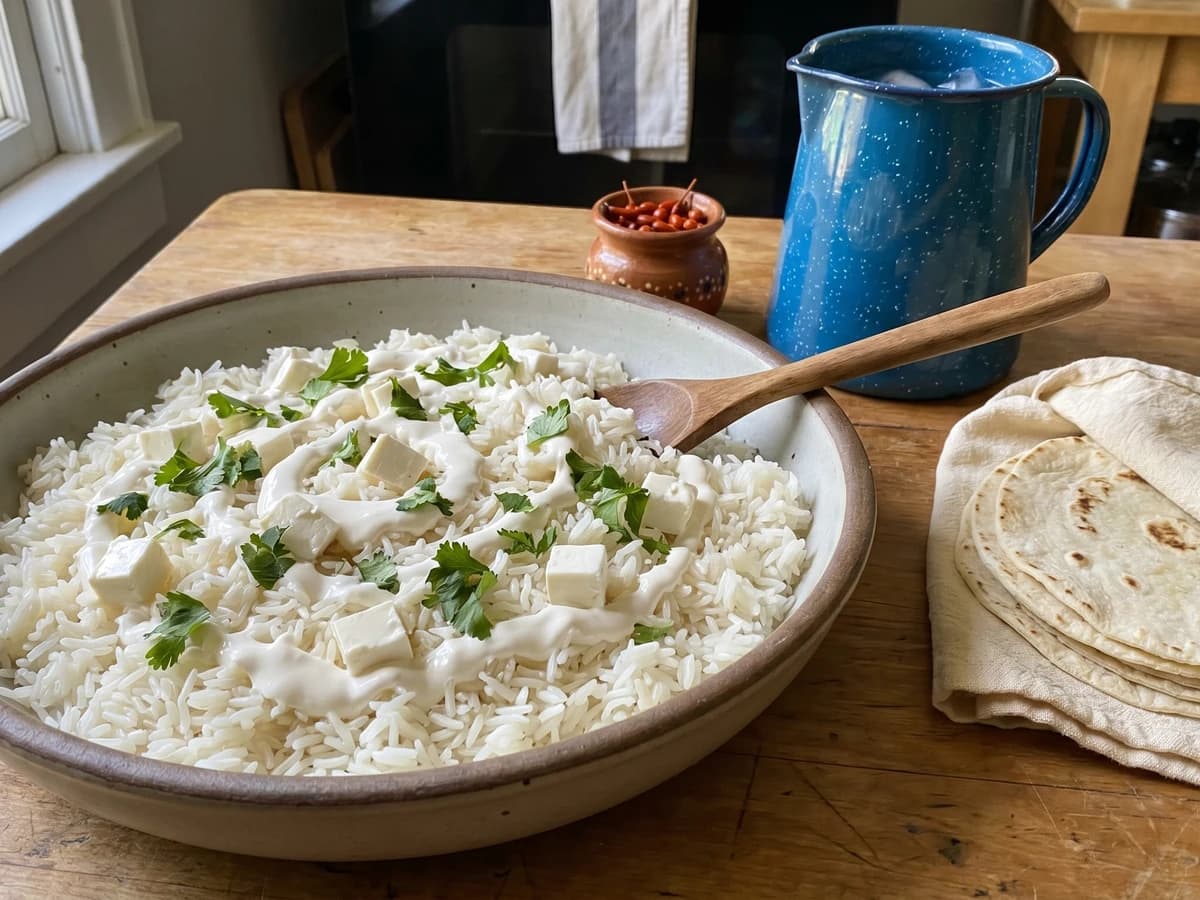
Sinaloa's home-cook white rice topped with cold cubes of cream cheese that soften into the warm grain, finished with crema and a sprinkle of chiltepin at the table. The trick that makes a side dish feel like a small luxury.
Chef Lupita
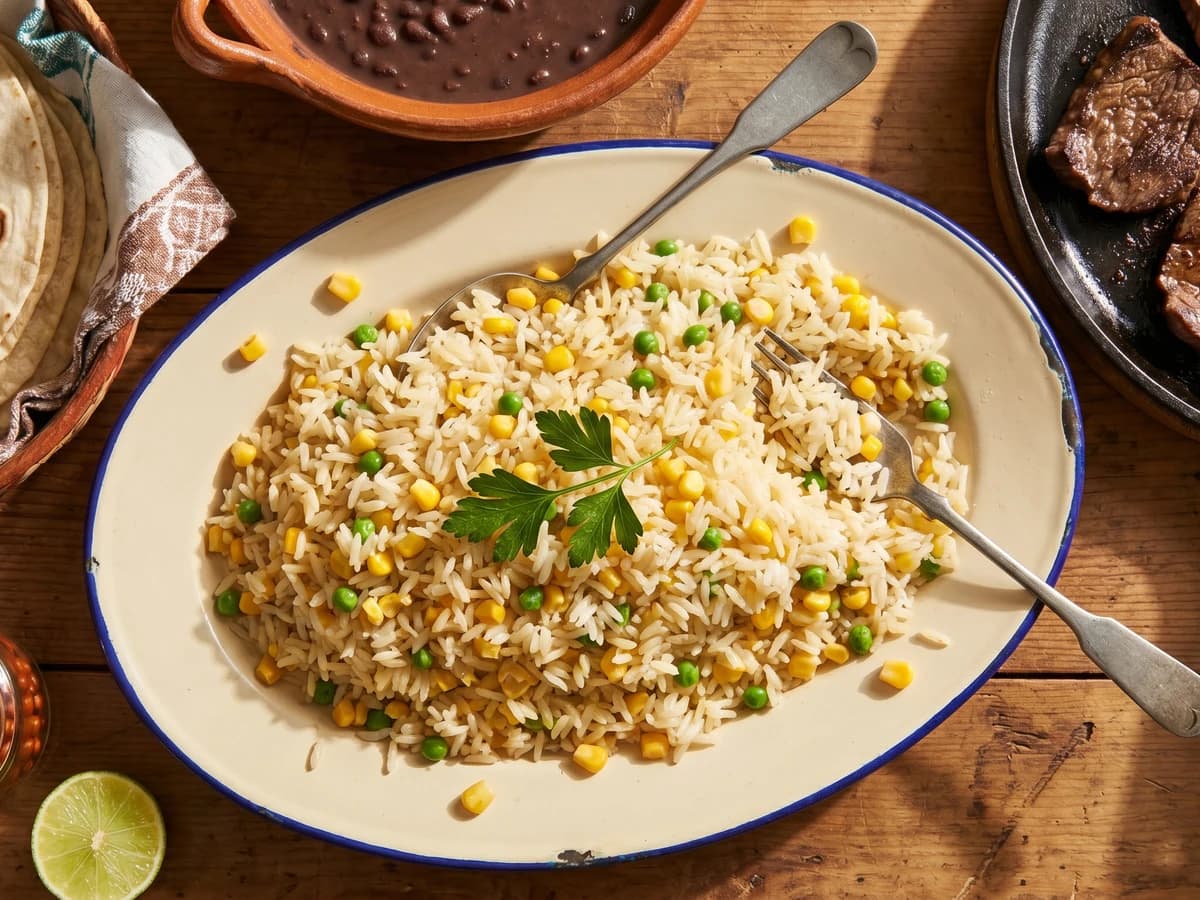
Sonora's white rice, toasted in butter and steamed with sweet corn and tender peas. The clean, quiet partner to a plate of carne asada, not the red rice of central Mexico.

Chef Lupita
Yucatán's white rice with sweet corn kernels, toasted in lard with garlic and onion. The quiet base that holds up against the peninsula's bold achiote-stained stews.