
Chef Lupita
Arroz a la Oaxaqueña
Oaxaca's red rice, stained with tomato and fried in lard, steamed with carrots, ejotes, black beans, and epazote. The side that anchors a Oaxacan family meal and earns its place beside the main.
A cooking platform built around craft, culture, and the stories behind what we eat.
Created by
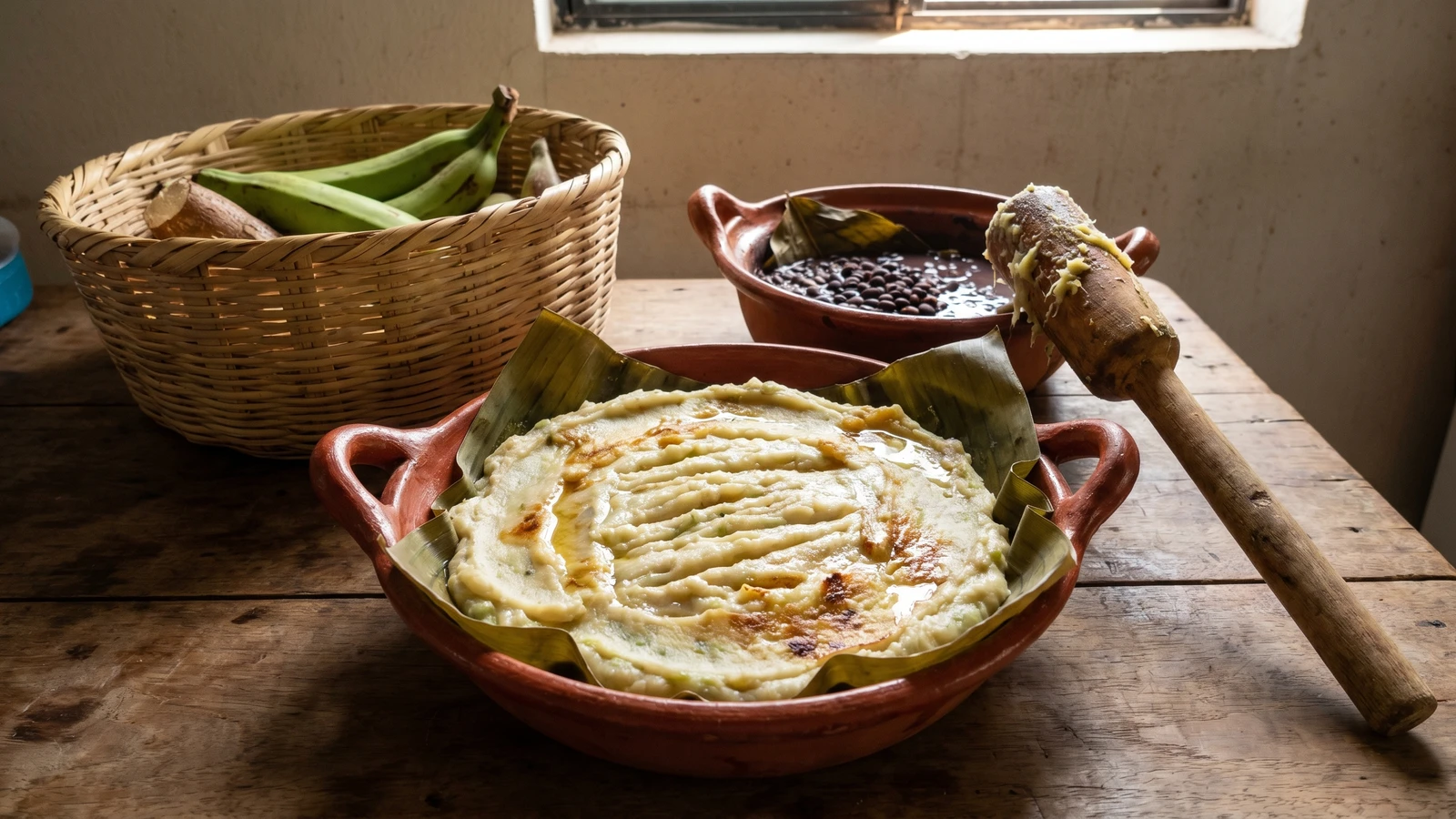
Oaxaca's Papaloapan plantain mash from Tuxtepec, green plátano macho pounded hot with manteca de cerdo and salt, built to sit beside black beans before the meat reaches the table.
Oaxaca, in the Cuenca del Papaloapan around San Juan Bautista Tuxtepec, is where plátano machuco lives. This is not the Oaxaca of the postcard, no mole negro, no mezcal speech, no one city pretending to stand for a whole state. This is river country, rain-heavy and close to Veracruz, where plátano macho grows into the daily pantry and fills the plate before the meat arrives.
The plátano must be green. Not yellow with good intentions. Green, hard, starchy, stubborn. You simmer it until a knife enters cleanly, then pound it while it is still hot with manteca de cerdo and sal de grano. The women who taught me in Tuxtepec did it in a heavy bowl with a wooden machacador, scraping the sides, turning the mass, adding only enough cooking water to make it hold together. Machuco means crushed. It does not mean whipped.
The geography is in the starch and the fat. Plantain, yuca, and malanga carry West African memory on Mexican soil, and in the Papaloapan they sit beside Indigenous corn, beans, and herbs like hoja de aguacate without needing permission from anyone. This dish has no chile because it does not need one. Serve it with frijoles negros, a spoonful of lard shining on top, and warm corn tortillas. Cada estado, su propia cocina.
My mother did not write plátano machuco in her Jalisco notebook. Good. It was not hers. I learned it in Oaxaca from women who cooked by weight in the hand, not by cups, and every one of them would tell you the same thing: if the plantain cools before you pound it, you made the work harder for no reason. Saber cocinar es saber vivir.
San Juan Bautista Tuxtepec sits in Oaxaca's Cuenca del Papaloapan, a river basin historically tied to Veracruz by trade in plantain, sugarcane, rice, cattle, and maize. Plantains reached New Spain in the 16th century after moving from Southeast Asia through Africa and Portuguese and Spanish colonial routes; in Afro-Mexican and Indigenous kitchens of the Gulf and southern coasts they joined yuca and malanga as practical starches for feeding many people. Plátano machuco is distinct from Caribbean mofongo and from Veracruzano garlic-vinegar mojo traditions: the Tuxtepec base is boiled green plátano macho pounded with manteca de cerdo and salt, then served as a side for beans, pork, or poultry.
Quantity
4 large
firm and fully green
Quantity
2 teaspoons, divided, plus more to taste
Quantity
4 tablespoons
divided
Quantity
1/2 cup
reserved as needed
Quantity
1
passed over the flame and wiped clean, for lining the serving dish
Quantity
for serving
Quantity
for serving
| Ingredient | Quantity |
|---|---|
| green plátano machofirm and fully green | 4 large |
| sal de grano or kosher salt | 2 teaspoons, divided, plus more to taste |
| pork lard (manteca de cerdo)divided | 4 tablespoons |
| hot plantain cooking waterreserved as needed | 1/2 cup |
| banana leaf square (optional)passed over the flame and wiped clean, for lining the serving dish | 1 |
| frijoles negros cooked with hoja de aguacate (optional) | for serving |
| warm hand-pressed corn tortillas (optional) | for serving |
Use plátanos machos that are hard, green, and stubborn under your thumb. Yellow plantains belong to plátanos maduros, not this dish. Score each peel along three ridges with a knife and pry the peel away. Cut the fruit into 1 1/2-inch chunks. If the sap sticks to your hands, rub your fingers with a little lard. Pregúntale a las señoras del mercado, ask for plátano macho verde para machuco.
Put the plantain chunks in a 4-quart pot and cover with water by one inch. Add 1 teaspoon salt. Bring to a steady simmer and cook 18 to 22 minutes, until a knife slips through the center without resistance but the pieces still hold their shape. Do not boil them to pieces. Waterlogged plantain makes weak machuco.
While the plantain cooks, melt the manteca de cerdo over low heat in a small cazuela or skillet. Fresh lard smells clean and lightly porky. If it smells stale, throw it out. Bad fat ruins good plantain faster than bad technique. La manteca es el sabor.
Drain the plantain and reserve 1/2 cup of the hot cooking water. Move the plantain immediately to a large molcajete, heavy bowl, or wide cazuela. Add 2 tablespoons melted lard and 1 teaspoon salt. Pound and fold while the plantain is still hot, scraping the sides and turning the mass over itself. Add the remaining lard a spoonful at a time. If the mash crumbles, add hot cooking water 1 tablespoon at a time. You want a dense, cohesive mash with ridges from the pounding, not fluffy mashed potatoes. Machuco means crushed. It does not mean whipped.
Heat a wide red barro cazuela or heavy skillet over medium-low. If using clay, warm it slowly so it does not crack. Spread the machuco into the pan and fold it for 3 to 5 minutes, just until the lard coats the starch and a few pale golden patches appear where the plantain touched the clay. This is not frying for a crust. It is drying the mash and waking up the fat.
If using a banana leaf, pass it quickly over a low flame until it turns flexible and glossy, then wipe it clean. Line a red barro serving cazuela with the leaf and mound the machuco in the center. Serve it warm beside frijoles negros cooked with hoja de aguacate and hand-pressed corn tortillas. Do not bury it under crema, cheese, or random chile. The dish is plantain, lard, and salt. Así se hace y punto. Recetas probadas y garantizadas.
1 serving (about 160g)
Culinary guides, cultural storytelling, and the editorial depth that makes cooking meaningful.
Discover Culinary ExplorerChef Lupita
Oaxaca's red rice, stained with tomato and fried in lard, steamed with carrots, ejotes, black beans, and epazote. The side that anchors a Oaxacan family meal and earns its place beside the main.
Chef Lupita
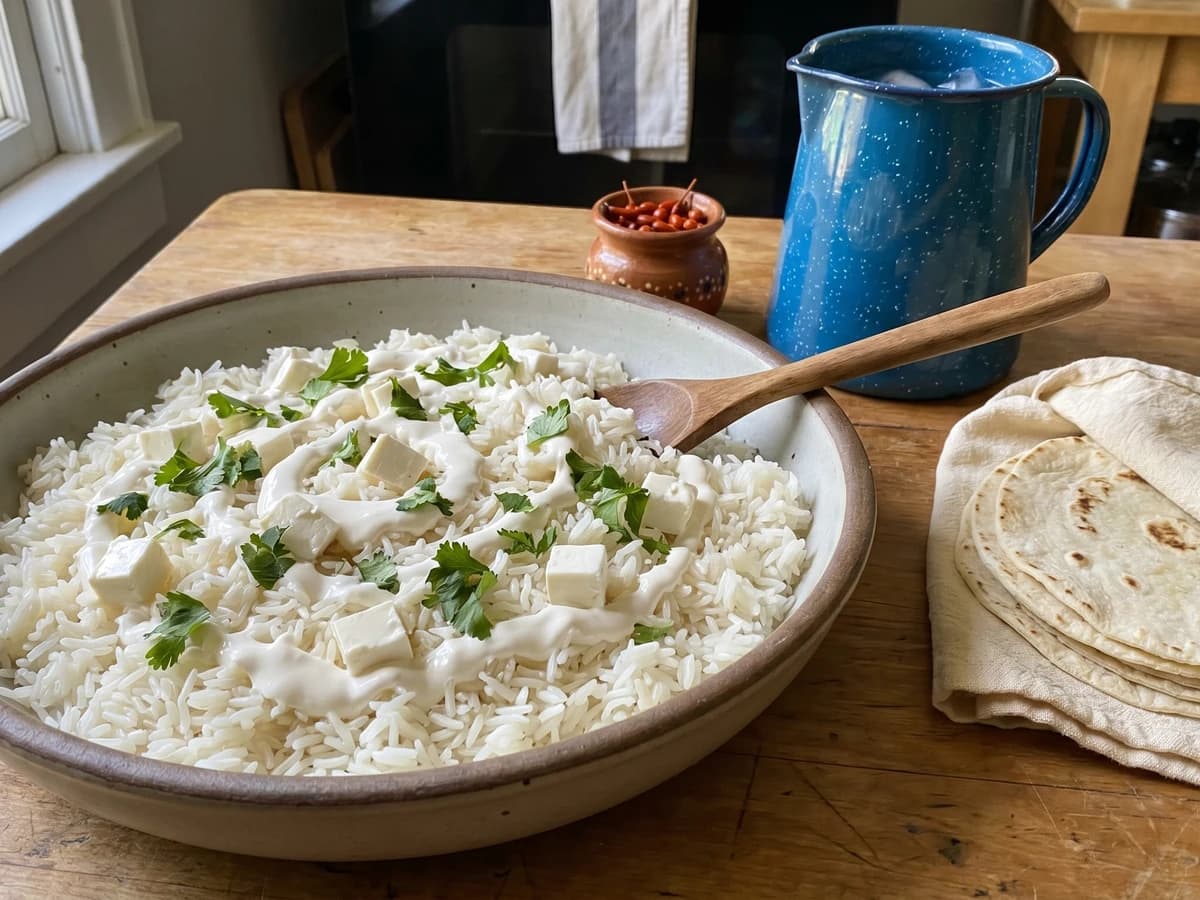
Sinaloa's home-cook white rice topped with cold cubes of cream cheese that soften into the warm grain, finished with crema and a sprinkle of chiltepin at the table. The trick that makes a side dish feel like a small luxury.
Chef Lupita
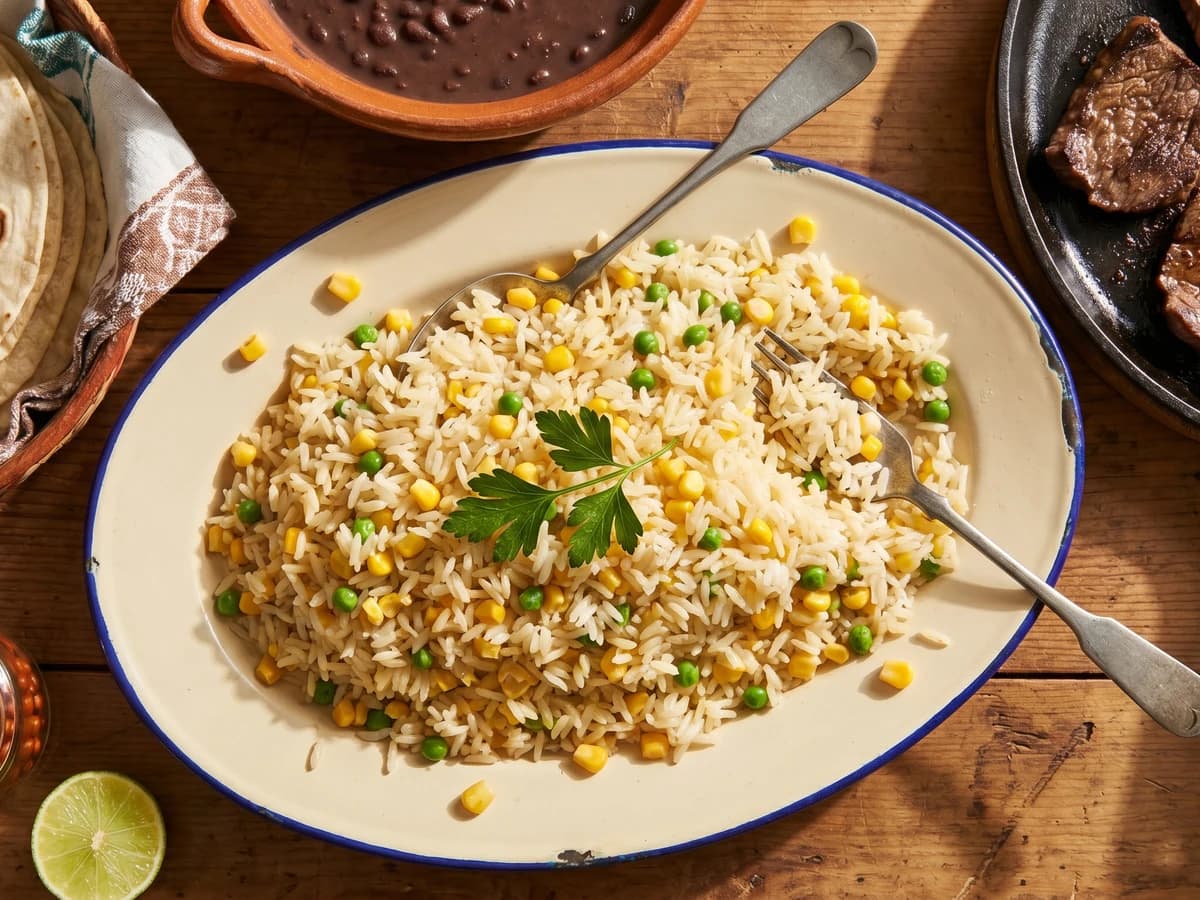
Sonora's white rice, toasted in butter and steamed with sweet corn and tender peas. The clean, quiet partner to a plate of carne asada, not the red rice of central Mexico.

Chef Lupita
Yucatán's white rice with sweet corn kernels, toasted in lard with garlic and onion. The quiet base that holds up against the peninsula's bold achiote-stained stews.