
Chef Lupita
Arroz con Plátano Jarocho
Veracruz's coastal rice, cooked white with onion, garlic, and broth, then finished with sweet plátano macho fried in manteca until the edges turn dark and caramelized.
A cooking platform built around craft, culture, and the stories behind what we eat.
Created by
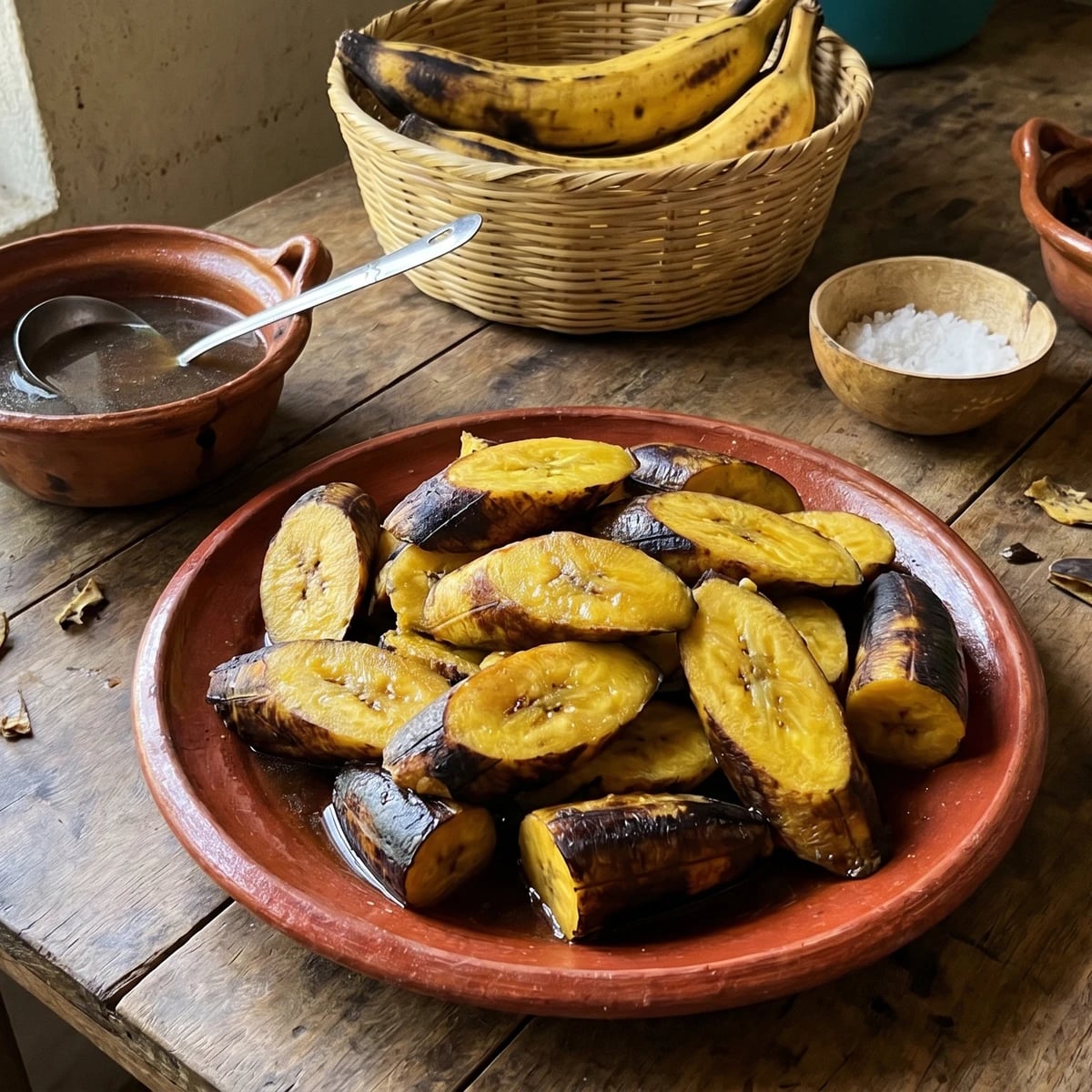
Guerrero's Costa Chica side of ripe plátano macho, boiled gently with salt until tender and sweet, then served beside beef caldo, barbacoa, or black beans.
Guerrero's Costa Chica, from Cuajinicuilapa toward Ometepec and the Oaxaca line, knows what to do with plátano macho. This is Afro-Mexican cooking on Mexican soil, not a garnish and not dessert. The plantain sits next to beef caldo, barbacoa, or frijoles negros, soaking up broth the way a good tortilla does in another state.
The ingredient tells you the map. Plátano macho, yuca, and malanga are diasporic starches carried through West African food memory and made costeño by Mexican hands, Mexican water, Mexican salt, and the daily discipline of women cooking for families before anyone had time to make a performance of it. No chile is needed here. Not all Mexican food has to announce itself with heat. Sweet starch against rich broth is the point.
You boil the plantain in its peel because the peel protects the flesh. Cut it too early and it drinks water, turns ragged, and loses its body. Choose plantains that are yellow with black patches, soft but not collapsing. If they are green, they belong to another preparation. If they are completely black and leaking sugar, fry them in manteca or coconut oil another day. Cada estado, su propia cocina.
The Costa Chica of Guerrero and Oaxaca has one of Mexico's strongest Afro-Mexican food traditions, shaped by colonial-era African, Indigenous Amuzgo and Mixtec, and Spanish coastal communities. Plantains reached New Spain through Atlantic trade routes after the conquest and took root in humid coastal regions where they became daily starches alongside corn, yuca, and beans. In Guerrero's Costa Chica, boiled ripe plantain is commonly served beside brothy dishes because its sweetness balances beef, chile, herbs, and salt without turning the meal into dessert.
Quantity
4
yellow with black patches but still firm
Quantity
8 cups, or enough to cover
Quantity
1 tablespoon
Quantity
1 small leaf
lightly toasted
Quantity
1 small sprig
Quantity
1 tablespoon
for glossing after boiling
| Ingredient | Quantity |
|---|---|
| ripe plátanos machoyellow with black patches but still firm | 4 |
| water | 8 cups, or enough to cover |
| sal de grano or kosher salt | 1 tablespoon |
| hoja de aguacate (optional)lightly toasted | 1 small leaf |
| epazote (optional) | 1 small sprig |
| manteca de cerdo or coconut oil (optional)for glossing after boiling | 1 tablespoon |
Use ripe plátanos macho that are yellow with black patches and give slightly when pressed. They should not be green and they should not be collapsing. Green plantain boils up starchy and strict. Overripe plantain falls apart in the pot. For this Costa Chica side, you want sweetness with structure.
Rinse the plantains well because they cook in their peel. Trim off only the hard tips. Do not peel them. Make one shallow lengthwise slit through the peel of each plantain, just enough to keep the skin from bursting wildly as it softens.
Put the water and salt in a medium pot. Add the toasted hoja de aguacate and epazote if you are using them. They should perfume the water lightly, not turn this into an herbal tea. Bring the water to a steady simmer.
Lower the plantains into the salted water. Keep the water at a gentle simmer, not a violent boil, for 20 to 25 minutes. The peels will darken and pull away from the flesh at the slit. A knife should slide through the center with no resistance. That is done. No me vengas con atajos. Hard plantain next to caldo is just punishment.
Lift the plantains out with tongs and let them cool just until you can handle them. Peel while still warm. Slice each plantain into thick diagonal pieces or split lengthwise, depending on how your table serves it. If you want the surface glossy, rub the pieces with a little manteca de cerdo or coconut oil while they are warm.
Serve warm beside caldo de res, barbacoa de res, or frijoles negros cooked with hoja de aguacate. Spoon a little rich broth over the plantain at the table. The plantain should hold its shape, taste sweet and salted, and soak up the caldo without turning to mush. Así se hace y punto.
1 serving (about 170g)
Culinary guides, cultural storytelling, and the editorial depth that makes cooking meaningful.
Discover Culinary Explorer
Chef Lupita
Veracruz's coastal rice, cooked white with onion, garlic, and broth, then finished with sweet plátano macho fried in manteca until the edges turn dark and caramelized.

Chef Lupita
Valles Centrales black beans, simmered with hoja de aguacate, strained until satin-smooth, then fried in asiento or pork lard so they spread cleanly across memelas, tlayudas, and enfrijoladas.

Chef Lupita
Guerrero Costa Chica black beans simmered with carne oreada, epazote, hoja de aguacate, and chile costeño, the Afro-Mexican preserved-meat pot Cuajinicuilapa puts on the Sunday table.

Chef Lupita
Guerrero's Costa Chica black beans, simmered until thick and brothy with epazote, hoja de aguacate, onion, garlic, and manteca de cerdo.