
Chef Lupita
Arroz a la Oaxaqueña
Oaxaca's red rice, stained with tomato and fried in lard, steamed with carrots, ejotes, black beans, and epazote. The side that anchors a Oaxacan family meal and earns its place beside the main.
A cooking platform built around craft, culture, and the stories behind what we eat.
Created by
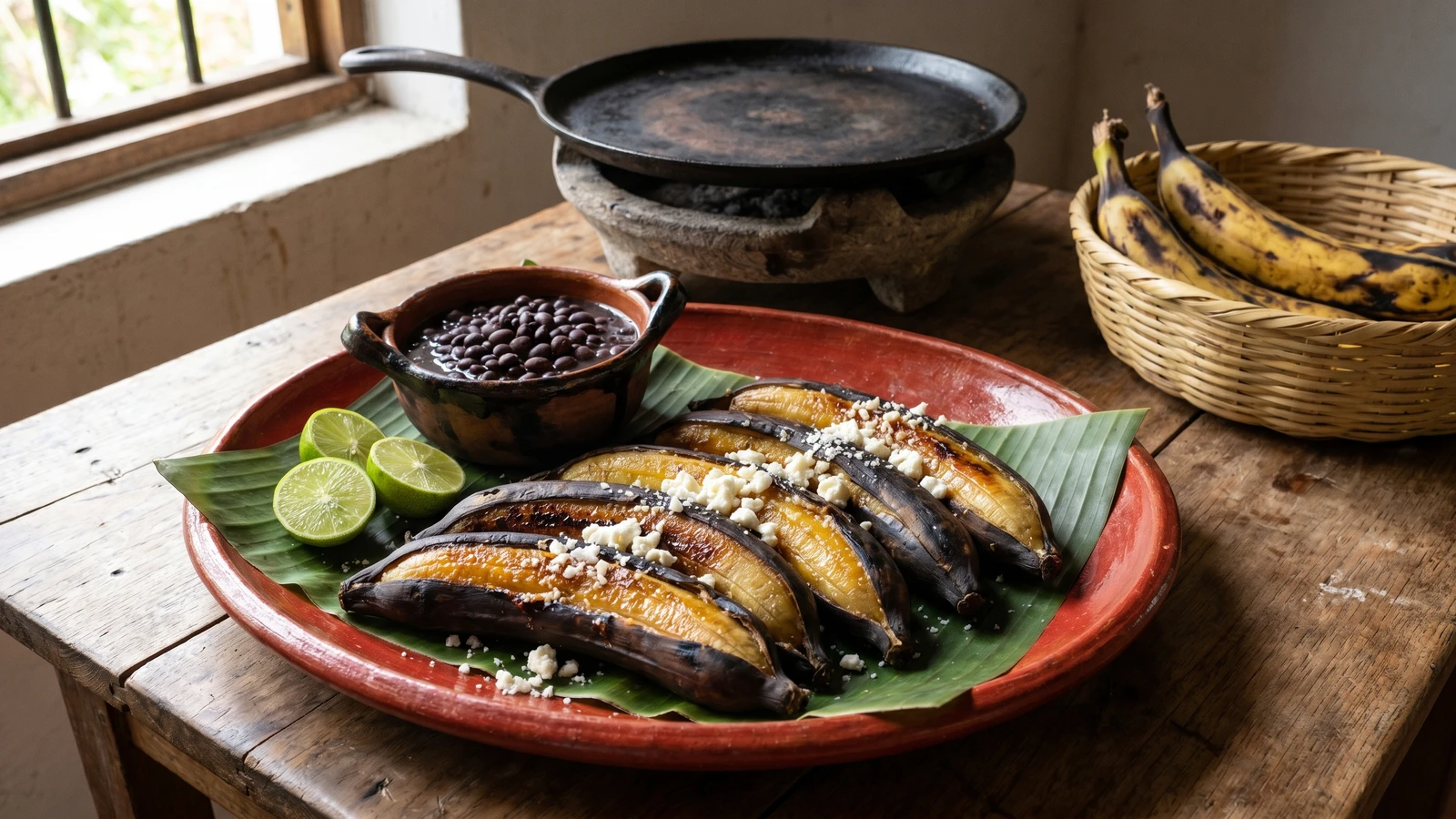
Veracruz's coastal plantain, roasted whole on the comal until the peel blackens and the flesh turns soft, caramel-dark, and ready for frijoles negros or fish.
Veracruz, especially the Sotavento coast from Alvarado toward Tlacotalpan, knows what to do with plátano macho. This is not dessert dressed up as a side dish. This is a coastal starch, the sweet balance beside black beans, fish, eggs, or a plate of arroz a la tumbada when the kitchen is feeding people with what the mercado gives.
The plantain has to be ripe. Yellow skin with black patches, heavy in the hand, slightly soft when you press it. Green plátano macho is for tostones and soup. This one needs sugar in the flesh so the dry comal can do its work. No oil. No lard. No butter. The peel becomes its own wrapper, the heat moves slowly through it, and the inside turns silky without frying. No me vengas con atajos. If the plantain is not ripe, wait.
I learned this from a señora in the Mercado Hidalgo in Veracruz puerto who sold plátanos by the crate and laughed when someone asked if they needed sugar. She put one directly on the comal, turned it with her fingers like she had no nerves left in them, and said, 'El plátano ya trae lo suyo.' The plantain brings its own sweetness. Your job is not to decorate it. Your job is to cook it properly. Cada estado, su propia cocina.
Plátano macho became central to Veracruz cooking through the colonial Caribbean trade routes that connected the Gulf coast with West African, Spanish, and island foodways. Along Mexico's Afro-descended coastal communities, plantain joined yuca and malanga as practical starches that could be boiled, fried, roasted, or tucked beside beans and seafood. The Veracruz habit of pairing sweet ripe plantain with black beans, garlic, vinegar, and achiote belongs to the jarocho register, not to a generic 'Latin' pantry.
Quantity
4
yellow with black patches, unpeeled
Quantity
1/2 teaspoon
for finishing
Quantity
1
halved, for serving
Quantity
1/4 cup
crumbled
Quantity
1 tablespoon
| Ingredient | Quantity |
|---|---|
| very ripe plátanos machosyellow with black patches, unpeeled | 4 |
| sea saltfor finishing | 1/2 teaspoon |
| limehalved, for serving | 1 |
| queso fresco (optional)crumbled | 1/4 cup |
| piloncillo syrup or miel de caña (optional) | 1 tablespoon |
Use plátanos machos with yellow skins marked heavily with black. They should give slightly when pressed but not collapse. If they are green, they will roast starchy and dry. If they are fully black and leaking, they are too far gone for the comal. The market decides the recipe before the stove does.
Set a dry cast iron comal or heavy skillet over medium-low heat for five minutes. Do not oil it. This Veracruz method depends on slow heat through the peel, not frying. The comal should be hot enough to darken the skin steadily without burning the flesh before it softens.
Lay the unpeeled plantains on the comal. Cook for 20 to 25 minutes, turning every 4 to 5 minutes, until the skins are blackened in patches, split in places, and the plantains feel soft all the way through when pressed with tongs. The smell should be deep and sweet, like caramel and warm banana leaf. That is the sugar in the flesh doing its work.
Move the plantains to a board and let them rest for 3 minutes. Split each peel lengthwise with a small knife and open it like a jacket. The flesh should be golden, glossy, and soft enough to spoon. If the center is still firm, close the peel and return it to the comal for another 5 minutes. Así se hace y punto.
Sprinkle lightly with sea salt and serve with lime halves. For a Veracruz table, set them beside frijoles negros or grilled fish. If serving as merienda, add a little queso fresco or a thin line of piloncillo syrup. Do not bury the plantain. It already did the work.
1 serving (about 185g)
Culinary guides, cultural storytelling, and the editorial depth that makes cooking meaningful.
Discover Culinary ExplorerChef Lupita
Oaxaca's red rice, stained with tomato and fried in lard, steamed with carrots, ejotes, black beans, and epazote. The side that anchors a Oaxacan family meal and earns its place beside the main.
Chef Lupita
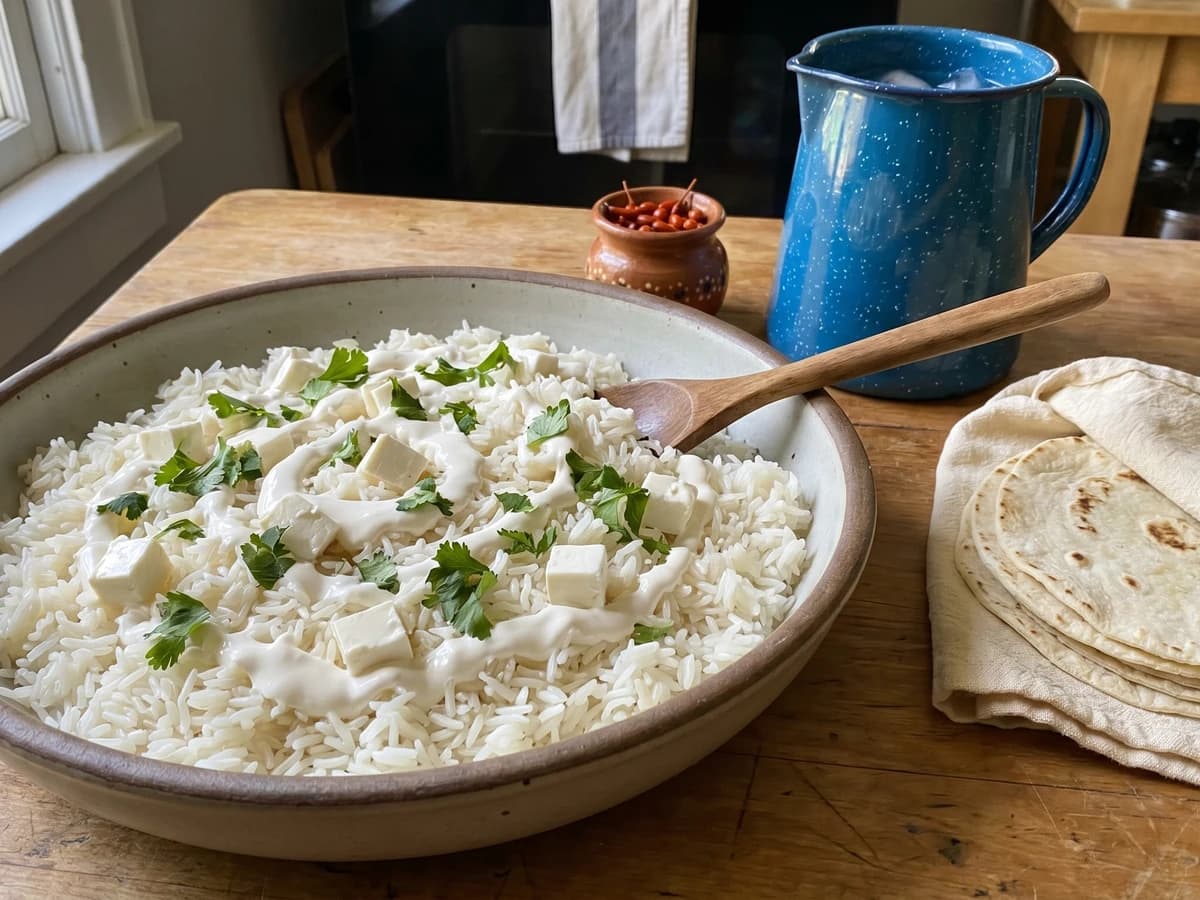
Sinaloa's home-cook white rice topped with cold cubes of cream cheese that soften into the warm grain, finished with crema and a sprinkle of chiltepin at the table. The trick that makes a side dish feel like a small luxury.
Chef Lupita
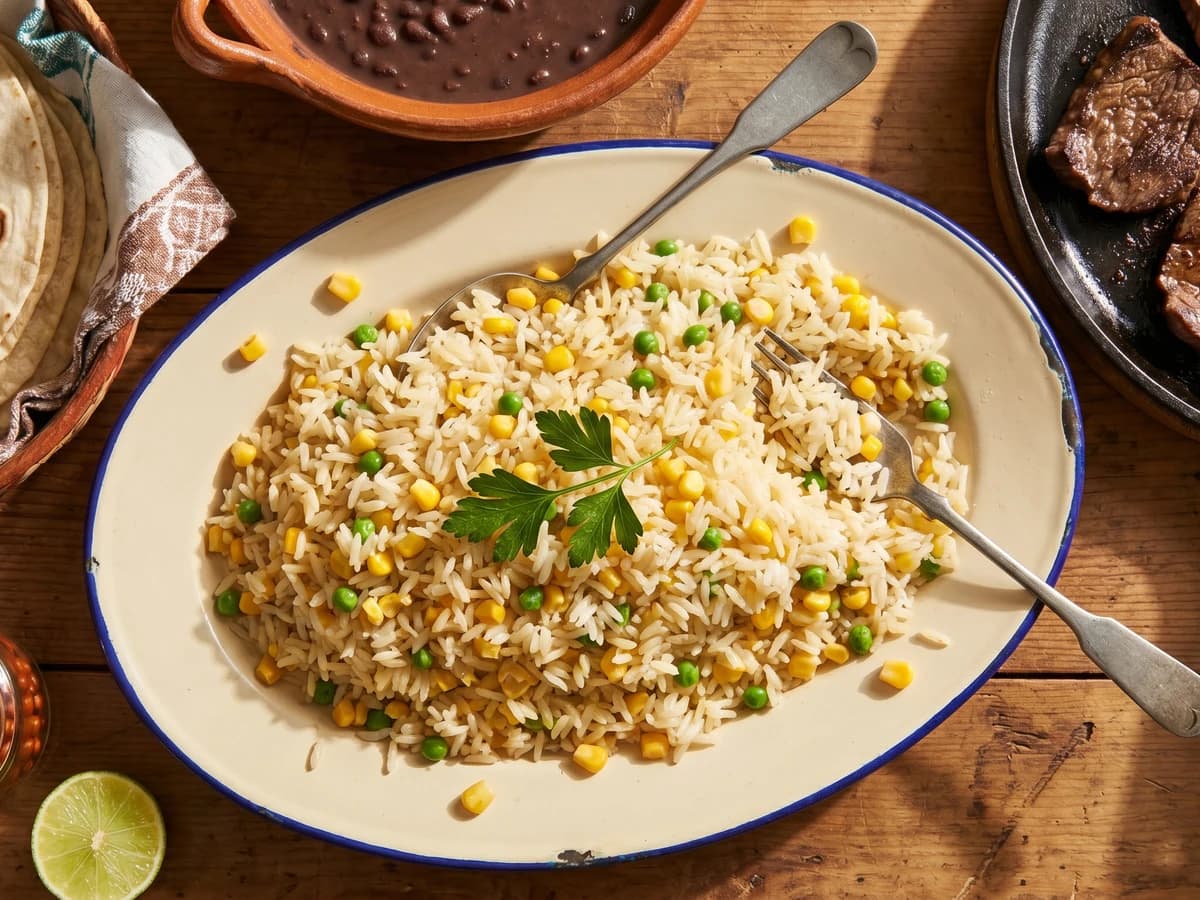
Sonora's white rice, toasted in butter and steamed with sweet corn and tender peas. The clean, quiet partner to a plate of carne asada, not the red rice of central Mexico.

Chef Lupita
Yucatán's white rice with sweet corn kernels, toasted in lard with garlic and onion. The quiet base that holds up against the peninsula's bold achiote-stained stews.