
Chef Juliana
Beiju de Mandioca
You don't need yeast, wheat, or courage. Grate sweet cassava, press it dry, sieve the crumbs, and toast them into a flatbread that belongs beside beans, greens, and whatever solves dinner.
A cooking platform built around craft, culture, and the stories behind what we eat.
Created by
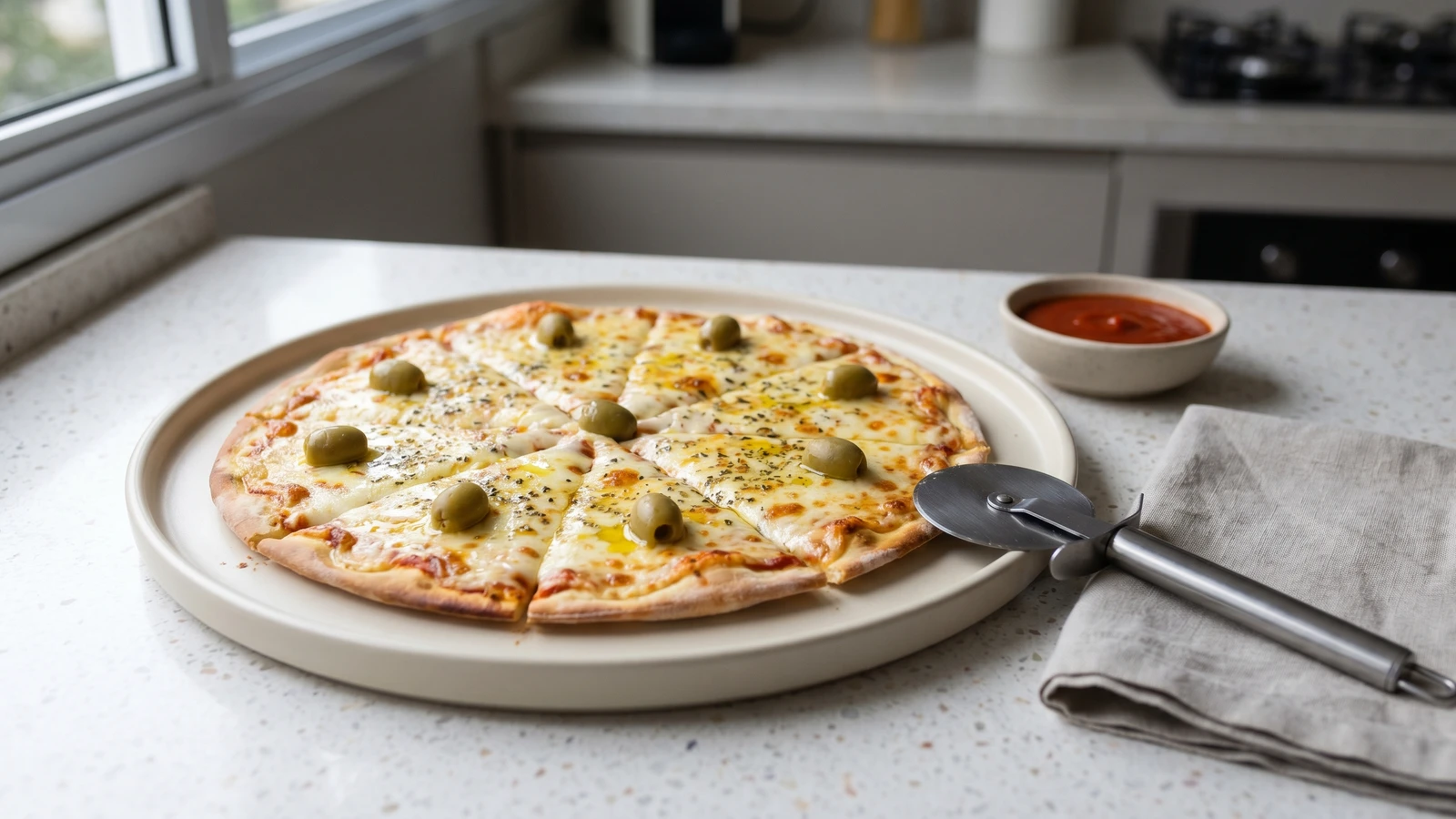
You don't need a wood oven or a secret hand gesture. Learn one thin dough, bake it hot, and the plainest pizza becomes the lesson that keeps paying you back.
You look at dough and hear that little voice: isso não é pra mim. I know. I used to hear it too, standing there with flour on the counter and panic in my chest, as if bread had chosen other people and left me with a notebook. Anota aí: dough is not a personality test. It's flour, water, yeast, salt, time, and your hands learning what soft and elastic feel like.
Pizza de mussarela is where São Paulo teaches you to stop being afraid. No mountain of toppings to hide behind. Just a thin base, tomato sauce, a good layer of mussarela, oregano, and a hot oven doing its job. The method matters because there's nowhere for laziness to disappear. Knead until the dough smooths out, rest it until it relaxes, stretch it thin, and bake it on a very hot surface so the bottom crisps before the cheese dries out.
The everyday Brazilian plate, the pê-efe, is still the center of the house: rice, beans, something from the pan, something green. But a house that cooks also knows how to resolver o jantar when Tuesday arrives with no mercy. This pizza belongs to that same fight for comida de verdade. Not powder, not a frozen disc pretending to be dinner, not the delivery box as a life plan. Real dough. Real tomato. Real cheese.
Make one and you'll understand the trick. Make three and you'll stop calling it a trick.
São Paulo's pizza culture grew with Italian immigration in the late nineteenth and early twentieth centuries, especially in neighborhoods such as Brás, Bixiga, and Mooca. The paulistana mussarela pizza became its own local habit: thin crust, tomato sauce, plenty of cheese, oregano, and often a green olive on each slice. Pizza on Sunday night is so fixed in São Paulo that the city is often described as one of the great pizza capitals outside Italy, though the style is entirely local by now.
Quantity
3 cups, plus more for dusting
Quantity
1 teaspoon
Quantity
1 teaspoon
Quantity
1 1/2 teaspoons
Quantity
1 cup
warm to the touch, not hot
Quantity
2 tablespoons, plus more for the bowl
Quantity
1 cup
Quantity
1 small clove
grated
Quantity
1 tablespoon
Quantity
1/2 teaspoon
Quantity
2 cups
grated or thinly sliced
Quantity
1 teaspoon
Quantity
8
| Ingredient | Quantity |
|---|---|
| all-purpose flour | 3 cups, plus more for dusting |
| instant yeast | 1 teaspoon |
| sugar | 1 teaspoon |
| fine salt | 1 1/2 teaspoons |
| warm waterwarm to the touch, not hot | 1 cup |
| olive oil | 2 tablespoons, plus more for the bowl |
| tomato passata or crushed tomatoes | 1 cup |
| garlicgrated | 1 small clove |
| olive oil for the sauce | 1 tablespoon |
| salt for the sauce | 1/2 teaspoon |
| mussarela cheesegrated or thinly sliced | 2 cups |
| dried oregano | 1 teaspoon |
| green olives (optional) | 8 |
Put the flour, yeast, sugar, and salt in a large bowl and stir so the yeast and salt are not sitting in one angry little corner. Add the warm water and olive oil, then mix with a spoon until no dry flour is left. The dough should look rough and a little sticky. Good. Dry dough bakes tough, and nobody needs a cracker with cheese on top pretending to be pizza.
Turn the dough onto a lightly floured counter and knead for 8 to 10 minutes. Push it away with the heel of your hand, fold it back, turn it, and repeat. At first it will grab your fingers like a needy child. Keep going. When it turns smoother, springier, and only lightly tacky, the flour has hydrated and the dough has learned to stretch without tearing.
Rub a clean bowl with a little oil, put the dough inside, turn it once to coat, and cover it. Let it rest in a warm spot until it looks puffy and nearly doubled, about 1 hour. This rest is not decoration. It gives the yeast time to make the dough lighter and gives the flour time to relax, so you can stretch it thin instead of fighting it like a bedsheet with opinions.
Stir the tomato passata, grated garlic, olive oil, and salt in a small bowl. Taste it. It should be bright, lightly salty, and clean. Don't cook it to death before the oven even sees it. The sauce will concentrate as the pizza bakes, and a fresh tomato taste is what keeps the cheese from feeling heavy.
Put a pizza stone, baking steel, or upside-down heavy baking tray on the middle rack and heat the oven to 260°C (500°F) for at least 30 minutes. You need the surface properly hot before the dough lands. A hot base sets and crisps the bottom fast; a lukewarm tray gives you pale, soft pizza that bends sadly under the cheese.
Divide the dough in half. Keep one piece covered while you work with the other. On a floured counter, press the dough from the center outward, leaving the edge just a little thicker, then stretch it into a 25 to 30 cm round. If it snaps back, stop for 5 minutes and let it relax. Force it and it tears. Wait, and it cooperates. Cooking is like that, annoyingly often.
Move the stretched dough to a floured pizza peel or a sheet of parchment. Spread on half the sauce in a thin layer, leaving a small border. Add half the mussarela, scatter with oregano, and add olives if using. Don't bury the dough. Too much sauce makes the center wet, too much cheese leaks oil, and then the pizza teaches you the lesson by collapsing in your hand.
Slide the pizza onto the hot stone, steel, or tray and bake for 8 to 12 minutes, until the rim is browned in spots, the bottom is crisp, and the cheese is melted with small golden blisters. Look underneath with a spatula. The bottom should have color, not just confidence. Repeat with the second pizza and let each one sit 2 minutes before slicing so the cheese settles instead of running away.
1 serving (about 245g)
Culinary guides, cultural storytelling, and the editorial depth that makes cooking meaningful.
Discover Culinary ExplorerChef Juliana
You don't need yeast, wheat, or courage. Grate sweet cassava, press it dry, sieve the crumbs, and toast them into a flatbread that belongs beside beans, greens, and whatever solves dinner.

Chef Juliana
You don't need a bakery, a special hand, or courage. You need real goma de mandioca, fresh coconut, a hot pan, and the sense to let the beiju firm before turning.

Chef Juliana
You don't knead it, roll it, or fear it. Hydrate the goma, sieve it fine, and let the hot pan teach cassava to hold together.

Chef Juliana
You don't need a bakery arm or a family secret. Mix rye with wheat, let time do its quiet work, and bake a dark, close-crumb loaf that feeds the week.