Chef Juliana
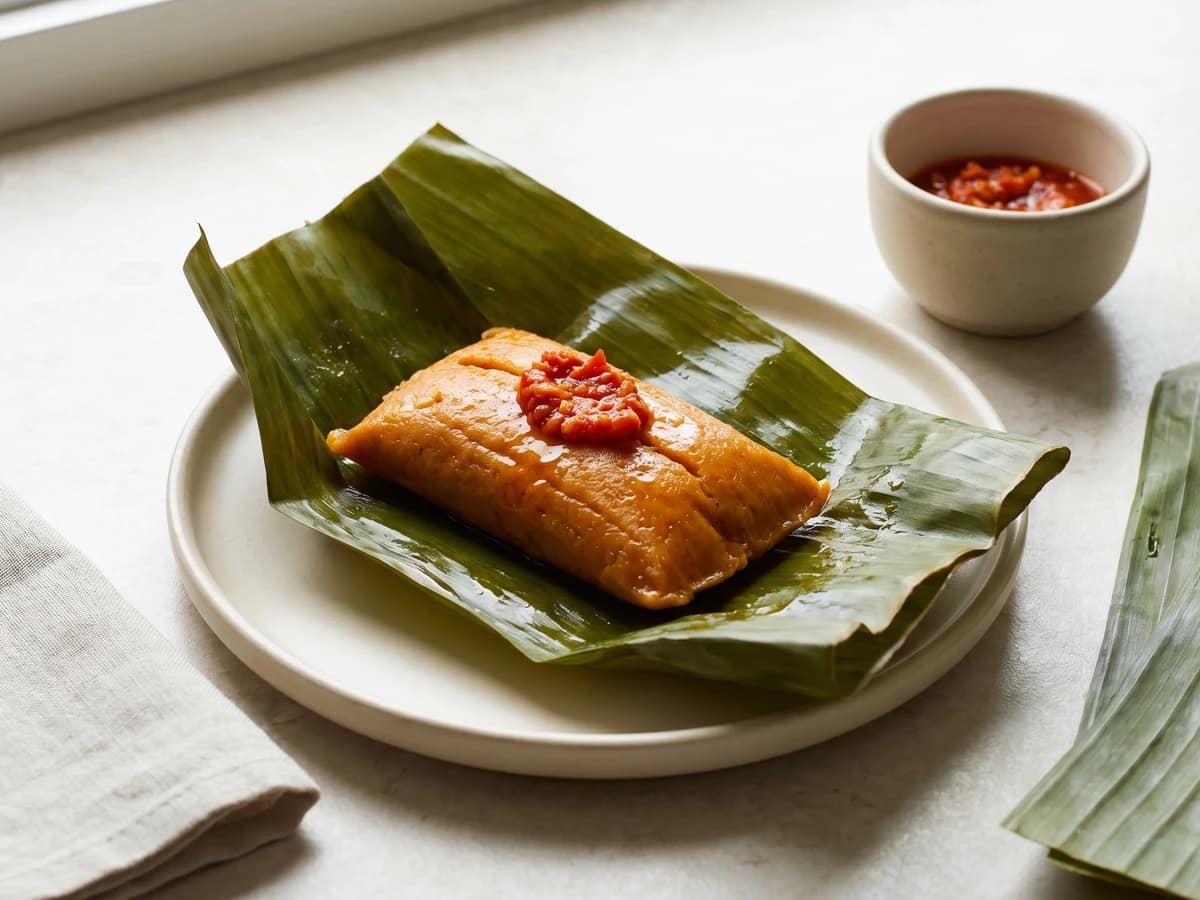
Abará
You think banana leaves and hand-whipped bean massa mean “isso não é pra mim.” Wrong. Soak, peel, beat, wrap, steam. Abará is learned by touch, not inherited by magic.
A cooking platform built around craft, culture, and the stories behind what we eat.
Created by
You don't need a special hand for this. Yogurt, salt, a cloth, and patience turn into a bright, creamy spread that solves the snack table and helps a pê-efe feel complete.
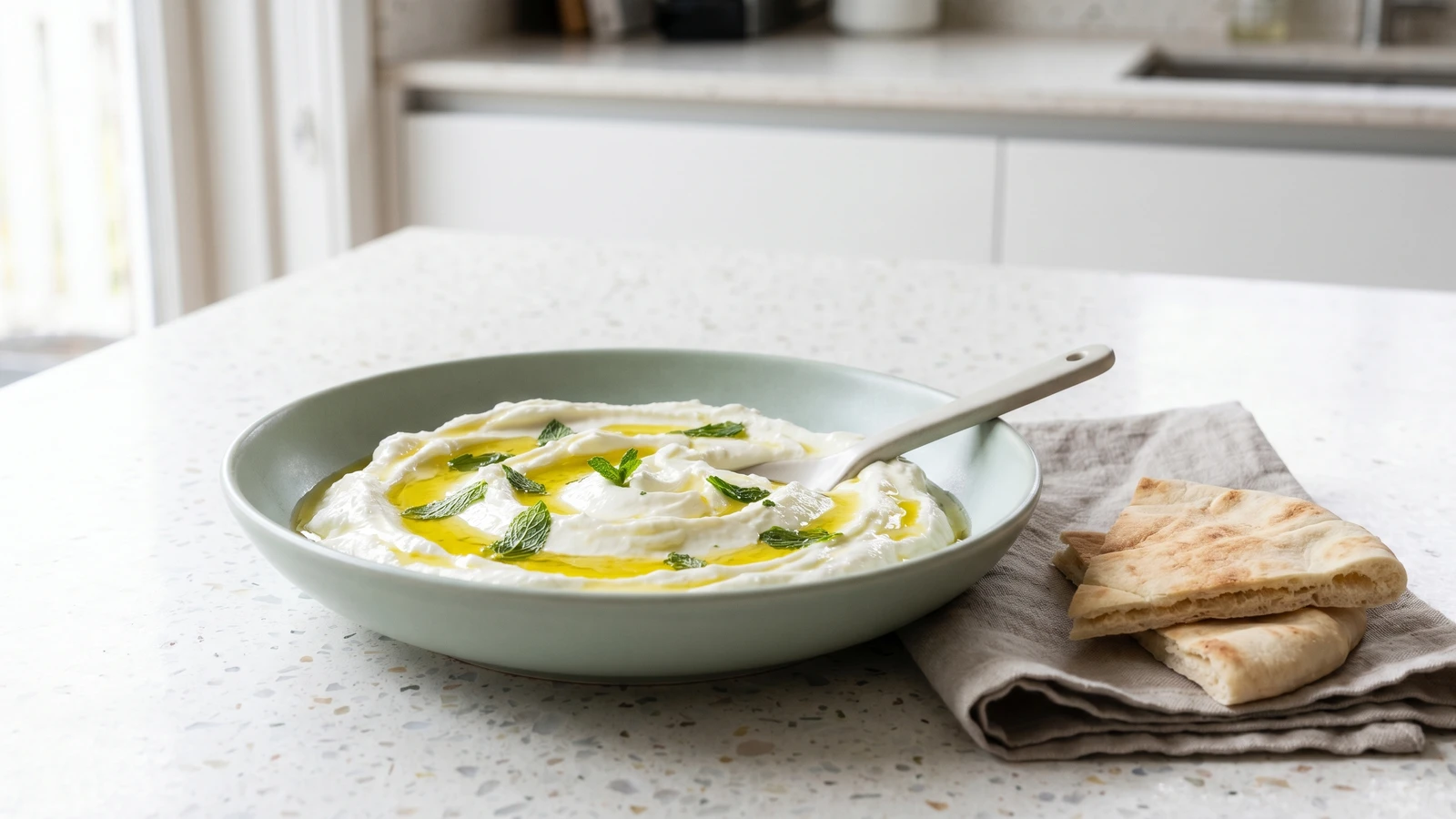
You look at a little bowl of coalhada seca on the table and think, quietly, isso não é pra mim. Too smooth. Too tidy. The kind of thing someone else knows how to make. Anota aí: it's yogurt in a cloth. Cooking isn't a gift, it's something you learn, and this one mostly learns while you sleep.
What matters here is water. Plain yogurt has plenty of it. Hang it or set it in a lined sieve, let the whey drip away overnight, and what stays behind is thick, tangy, spreadable coalhada. Salt wakes it up. Olive oil softens the sharpness. Mint makes it fresh. No packet, no powder pretending to be flavor, no industrial shortcut wearing a little hat.
On a Brazilian table, especially in cities shaped by Arab immigration, coalhada seca became one of those quiet foods a gente puts beside everything: pão sírio, toast, kibbeh, vegetables, a spoonful near rice and beans when dinner needs something cool and bright. It's not the whole pê-efe, of course. Rice, beans, something from the pan, something green, that's the plate that keeps a country itself. But a bowl like this helps resolver o jantar without drama.
Expect almost no action and one real decision: stop straining when it holds ridges from a spoon but still looks creamy. Too loose and it slips off the bread. Too far and it turns chalky. That's the ponto. See? Learnable.
Coalhada seca comes from the Levantine tradition of strained yogurt, often called labneh, and reached Brazilian tables with Syrian and Lebanese immigrants who arrived in large numbers from the late nineteenth century into the twentieth. In Brazil it settled especially into urban home cooking, bakeries, and snack tables, served with pão sírio, esfihas, kibbeh, olive oil, and mint. The Brazilian name says exactly what happened to it: coalhada, yogurt curd, made seca, dry, by draining away the whey.
Quantity
4 cups
unsweetened
Quantity
3/4 teaspoon, plus more to taste
Quantity
2 tablespoons
divided
Quantity
1 tablespoon
finely chopped, plus small leaves for garnish
Quantity
1 small
finely grated
Quantity
as needed
for serving
| Ingredient | Quantity |
|---|---|
| plain whole-milk yogurtunsweetened | 4 cups |
| fine salt | 3/4 teaspoon, plus more to taste |
| extra-virgin olive oildivided | 2 tablespoons |
| fresh mintfinely chopped, plus small leaves for garnish | 1 tablespoon |
| garlic clove (optional)finely grated | 1 small |
| pão sírio, toast, or raw vegetables (optional)for serving | as needed |
Set a fine sieve over a bowl and line it with a clean thin kitchen towel, cheesecloth, or a coffee filter. Make sure the bottom of the sieve sits above the bowl, not in it, because the whey needs somewhere to drip. If the yogurt sits in its own liquid, it won't thicken properly.
Stir the yogurt with 3/4 teaspoon salt until smooth, then spoon it into the lined sieve. The salt seasons the yogurt from the inside and helps draw out water, so the finished coalhada tastes rounded instead of salty only on the surface.
Fold the cloth over the yogurt, cover loosely, and refrigerate for 10 to 12 hours. In the morning, the whey in the bowl will look pale and watery, and the yogurt will hold soft ridges when you pull a spoon through it. That's the point: thick enough to spread, still creamy enough to swoop.
Scrape the strained yogurt into a bowl and stir it once. If it slumps like sour cream, strain it 2 more hours. If it feels stiff and dry, loosen it with 1 or 2 teaspoons of the collected whey. Ponto is not a clock bossing you around. It's the texture in front of you.
Stir in 1 tablespoon olive oil, the chopped mint, and the grated garlic if you're using it. Taste and adjust the salt. The flavor should be tangy, cool, and a little rich from the oil. Garlic is optional because raw garlic gets louder as it sits, and not every Tuesday needs that speech.
Spoon the coalhada into a shallow bowl and make a few soft swirls with the back of the spoon. Drizzle the remaining 1 tablespoon olive oil into the ridges and scatter mint leaves over the top. Serve with pão sírio, toast, vegetables, or beside the everyday plate when dinner needs something cool and sharp.
1 serving (about 65g)
Culinary guides, cultural storytelling, and the editorial depth that makes cooking meaningful.
Discover Culinary ExplorerChef Juliana
You think banana leaves and hand-whipped bean massa mean “isso não é pra mim.” Wrong. Soak, peel, beat, wrap, steam. Abará is learned by touch, not inherited by magic.

Chef Juliana
You think food of Iansã from the baianas' tabuleiro is not for your stove. Anota aí: soaked feijão-fradinho, real dendê, and hand-whipping make a home version learnable.

Chef Juliana
You think fried salgados belong to the birthday table you buy, not the one you make. Wrong. Learn the dough, seal the cheese, and the freezer starts working for you.

Chef Juliana
You think stuffed fried bolinhos are for the boteco cook, not your kitchen. Wrong. Mash the aipim warm, keep the filling dry, fry in small batches, and the tray disappears.