Chef Klaus
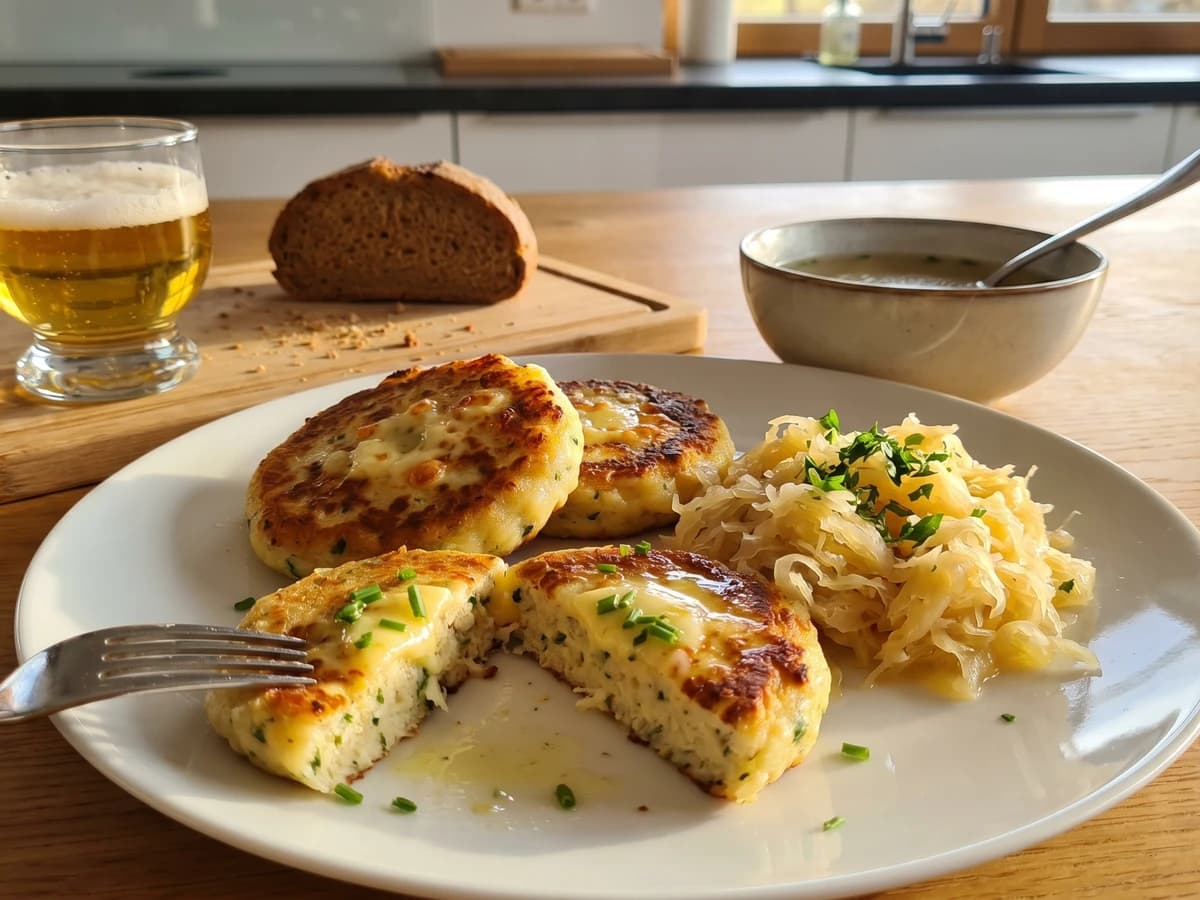
Allgäuer Kaspressknödel
Pressed bread dumplings from the Alpine south, fried until the cheese catches at the edges and the middle stays soft enough for broth, kraut, or a weekday plate.
A cooking platform built around craft, culture, and the stories behind what we eat.
Created by
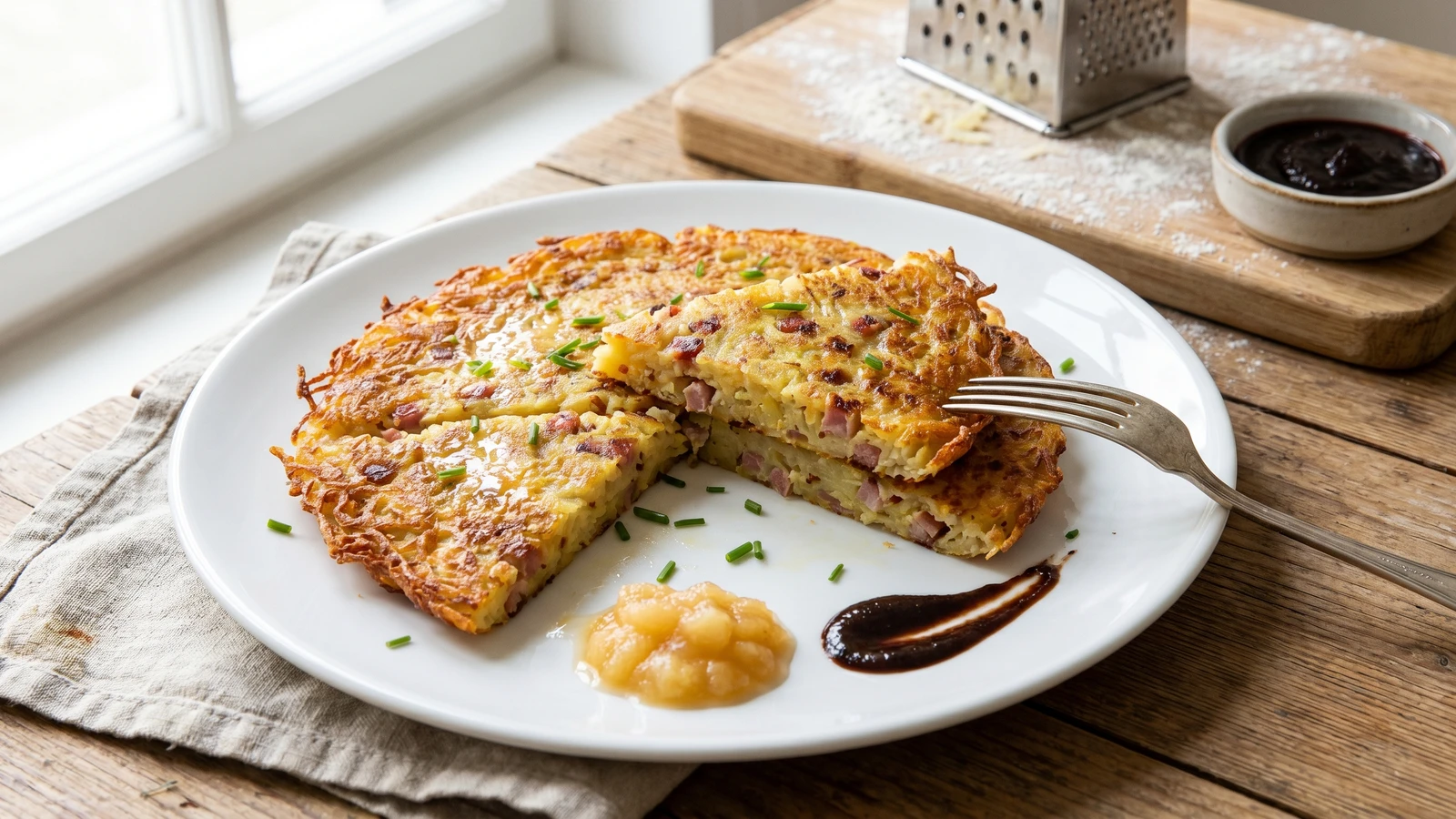
Bergisches Land takes the small Reibekuchen and makes it supper: one pan-wide potato cake, smoky with ham, crisp at the rim, soft enough in the middle to cut in wedges.
Pillekuchen belongs to the Bergisches Land, around Wuppertal, Solingen, and Remscheid, where a cellar potato and a heel of smoked ham can carry a weeknight table. It isn't feast cooking, and it doesn't need to be. This is Hausmannskost, home cooking that feeds people without fuss, especially in the colder months when the larder is doing its work.
The region matters. In Köln they fry Reibekuchen small and crisp, often three to a plate with Apfelmus, apple sauce. In the Bergisches Land the same idea grows into one pan-wide cake, with ham or Speck in the batter, cut into wedges like something you mean to share. North and south will call cousins of it Kartoffelpuffer or Reiberdatschi, but this one sits on the Rhenish edge. Im Norden anders, im Süden anders.
The one move that decides it is this: squeeze the grated potato, then give the starch back. The liquid makes the pancake steam and slump; the white starch settled at the bottom of the bowl is what binds it without turning it into paste. Throw that starch away and you'll chase the batter with flour, and then you've made a dull cake. Weggeworfen wird nichts.
Keep the pan at a steady medium heat. Too hot, and the outside browns before the raw potato in the middle cooks. Too low, and the cake drinks fat and goes limp. Runter mit der Temperatur when the edge darkens too fast, leave it alone until a crust forms, then turn it with a plate. Don't toss it like a show-off. This is dinner, not circus work.
Pillekuchen is a later potato dish of the Bergisches Land, a region named for the old Counts and Duchy of Berg, not simply for hills. The potato became a German staple only after the eighteenth century; Frederick II's Prussian Kartoffelbefehl of 1756 is the famous dated marker, though the Bergisches Land did not become Prussian until the Congress of Vienna in 1815. By the nineteenth century, potato cakes of this kind suited the working kitchens of the Wupper towns, where cheap potatoes, smoked trim, and a hot pan made a full plate.
Quantity
1kg
peeled
Quantity
1
peeled
Quantity
2
Quantity
80g
diced small
Quantity
40g
Quantity
1 teaspoon, plus more to finish
Quantity
to taste
freshly ground
Quantity
1 pinch
freshly grated
Quantity
3 tablespoons
divided
Quantity
to serve
Quantity
to serve
Quantity
a small handful
snipped
| Ingredient | Quantity |
|---|---|
| floury potatoespeeled | 1kg |
| medium onionpeeled | 1 |
| large eggs | 2 |
| smoked ham or Speckdiced small | 80g |
| plain flour | 40g |
| fine salt | 1 teaspoon, plus more to finish |
| black pepperfreshly ground | to taste |
| nutmegfreshly grated | 1 pinch |
| clarified butter, lard, or neutral oildivided | 3 tablespoons |
| apple sauce (optional) | to serve |
| Rübenkraut, German sugar beet syrup (optional) | to serve |
| chives (optional)snipped | a small handful |
Grate the potatoes and onion on the coarse side of a box grater, or use the coarse grating disk of a food processor. Gather the mixture in a clean tea towel and squeeze it hard over a bowl. The water has to come out because wet potato steams in the pan instead of browning.
Let the squeezed liquid stand for 5 minutes, then pour off the brown water carefully and keep the white starch settled at the bottom. Scrape that starch back into the grated potatoes. It is the potato's own binder, and it holds the pancake cleaner than extra flour.
Add the eggs, flour, diced ham, salt, pepper, and nutmeg to the potatoes and mix just until the batter clings together. Stop there. Overmixing bruises more starch out of the potato, and the cake turns heavy instead of crisp at the edge.
Heat a 24 to 26cm heavy skillet over medium heat with half the fat. Drop in one shred of potato; it should sizzle steadily, not spit hard. Too fierce a pan burns the outside before the centre cooks, and too cool a pan gives you a greasy pancake.
Spread half the batter into the pan in an even cake about 1.5cm thick and press the edge tidy with a spatula. Leave it alone for 8 to 10 minutes, until the rim is deep gold and the underside has formed a real crust. Move it too early and it tears, because the crust is the hinge that holds the whole thing together.
Slide the pancake onto a flat plate, put the pan over the plate, and invert them together so the raw side lands back in the pan. Use a cloth and keep your wrists steady. This is a Bergisch Pillekuchen, not a crêpe, and a plate is the right tool.
Cook the second side for 7 to 8 minutes, until the centre feels set when pressed and the outside is crisp and brown. Repeat with the remaining fat and batter. Cut each Pillekuchen into wedges, finish with a little salt while the surface is still glossy, and serve with apple sauce, Rübenkraut, or a sharp green salad. Schön ist, was schmeckt.
1 serving (about 260g)
Culinary guides, cultural storytelling, and the editorial depth that makes cooking meaningful.
Discover Culinary ExplorerChef Klaus
Pressed bread dumplings from the Alpine south, fried until the cheese catches at the edges and the middle stays soft enough for broth, kraut, or a weekday plate.

Chef Klaus
The Bavarian potato salad that works because warm waxy slices drink hot broth first, then oil last, until the bowl turns glossy without mayonnaise.

Chef Klaus
White cabbage shaved thin, wilted with hot caraway vinegar, and finished with crisp Speck fat: the Bavarian salad that belongs beside bread, sausages, and roast pork.

Chef Klaus
The south's sweet-sour white cabbage, cooked from fresh Kraut rather than sauerkraut, soft enough for roast pork and sharp enough to wake the plate.