Chef Lupita
Acúmara Tatemada al Comal
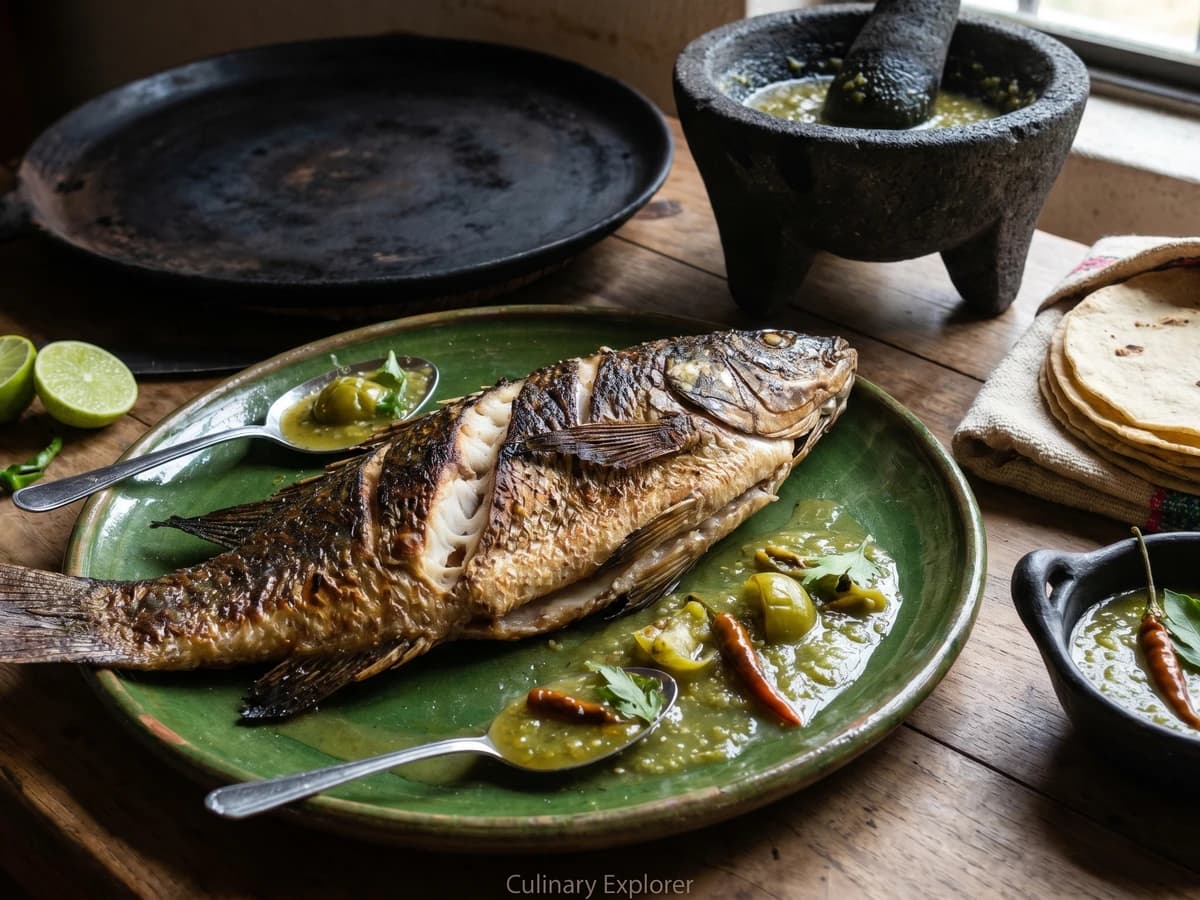
Michoacán's Lake Pátzcuaro acúmara, a whole kurucha from the lago tatemada on a comal de leña and served with chile perón atápakua, corn tortillas, and P'urhépecha discipline.
A cooking platform built around craft, culture, and the stories behind what we eat.
Created by
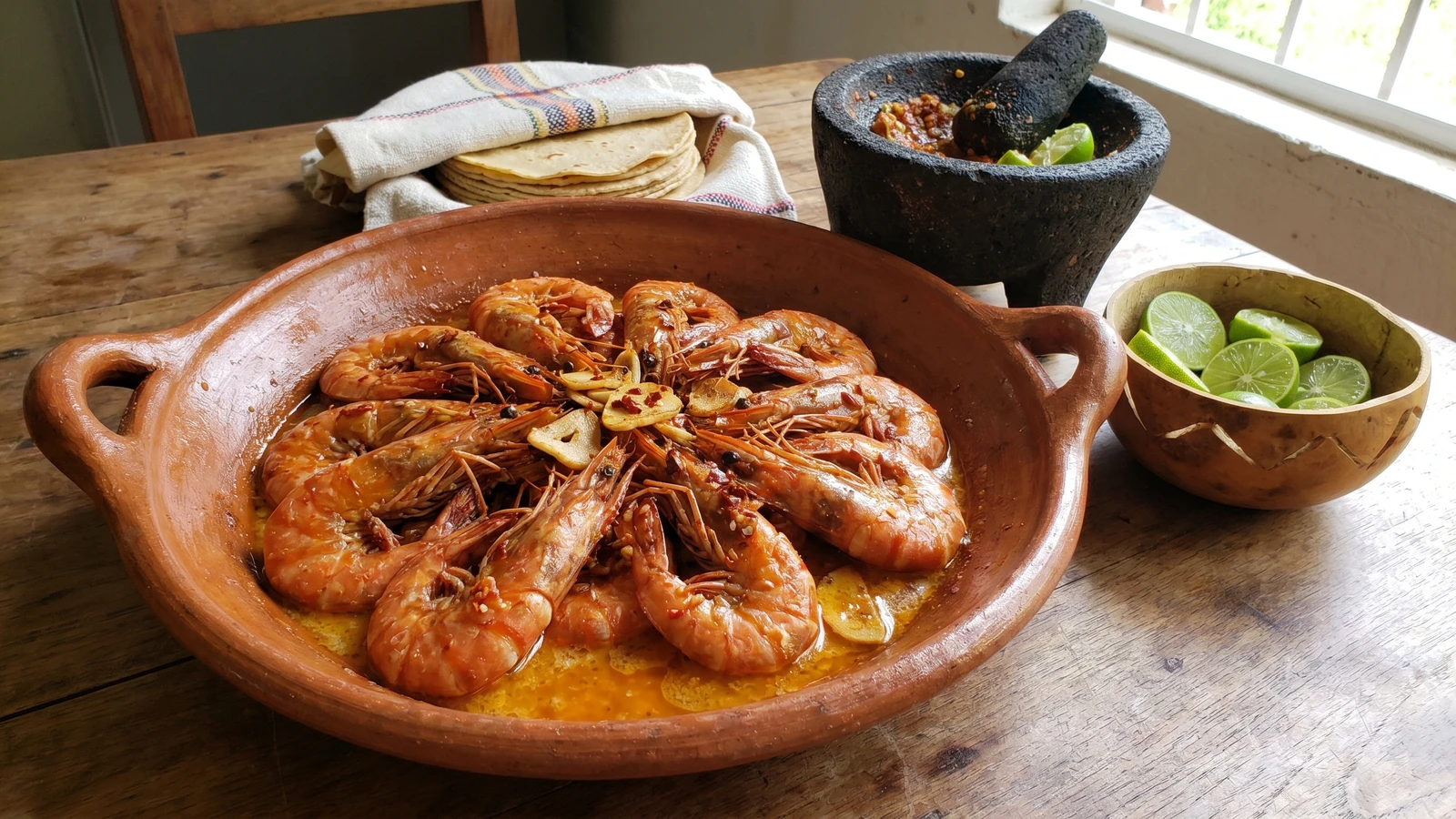
Tabasco's river piguas from the Grijalva lowlands, cooked whole in butter, olive oil, chile amashito, and garlic toasted slowly until the shells turn red and the sweet meat tastes like the river.
Tabasco, the Grijalva-Usumacinta lowlands, is where this dish lives. Not the beach, the river. Piguas are the big freshwater langostinos pulled from the brown water around Villahermosa, Centla, and the Chontal villages near Nacajuca, and when they arrive at Mercado Pino Suárez with the heads still heavy, you don't bury them under sauce. You cook them whole.
The defining ingredient is the pigua itself, but the technique is garlic discipline. The women who taught me in Tabasco cut the shell just enough to clean it, kept the head on, and toasted the garlic in butter until it turned straw-colored, not brown. Burn garlic and the whole pan tastes bitter. Rush the pigua and the meat tightens. La cocina no es decoración, es trabajo.
Chile amashito belongs here, tiny and sharp, used with control. This is not a dish trying to prove heat. The chile wakes up the butter, the lime cuts the richness, and the head juices stain the mojo orange. Serve it in a wide clay cazuela with white rice and corn tortillas, because that garlic butter must be dragged through something.
My mother did not cook this in Colonia Roma. She was Jalisco, and she knew what was hers. But in Tabasco, a señora at Pino Suárez market tapped my notebook and told me, keep the shell, niña, that's where the river is. She was right. Cada estado, su propia cocina.
Pigua is the Tabasco name for large freshwater prawns of the genus Macrobrachium, especially Macrobrachium carcinus, native to the Grijalva-Usumacinta basin and Gulf coastal rivers. The ajo-and-fat technique comes from Spanish colonial mojo de ajo after garlic, olive oil, and dairy entered New Spain in the 16th century, but the ingredient stayed local: Tabasco cooks applied it to river crustaceans rather than sea shrimp. In the 20th century, as Villahermosa's Mercado Pino Suárez and river restaurants made piguas a special-occasion dish, al mojo de ajo became one of the state's clearest examples of wetland food meeting the colonial pantry.
Quantity
2 pounds
heads and shells on
Quantity
1 1/2 teaspoons
divided
Quantity
1/2 teaspoon
Quantity
1
about 16 cloves total, 12 thinly sliced and 4 lightly crushed
Quantity
6 tablespoons
Quantity
2 tablespoons
Quantity
4 to 6
lightly crushed
Quantity
2 tablespoons
Quantity
2 tablespoons
only if the pan goes dry
Quantity
for serving
Quantity
for serving
Quantity
for serving
Quantity
for serving
| Ingredient | Quantity |
|---|---|
| whole fresh piguas (freshwater langostinos)heads and shells on | 2 pounds |
| fine sea saltdivided | 1 1/2 teaspoons |
| freshly ground black pepper | 1/2 teaspoon |
| large head garlicabout 16 cloves total, 12 thinly sliced and 4 lightly crushed | 1 |
| unsalted butter | 6 tablespoons |
| olive oil | 2 tablespoons |
| fresh chile amashitolightly crushed | 4 to 6 |
| fresh Mexican lime juice | 2 tablespoons |
| water (optional)only if the pan goes dry | 2 tablespoons |
| lime halves (optional) | for serving |
| warm corn tortillas (optional) | for serving |
| cooked white rice (optional) | for serving |
| chile amashito crushed with lime and salt (optional) | for serving |
Keep the piguas on ice until the moment you clean them. Rinse under cold water and pat dry. With kitchen scissors, trim only the longest antennae if they make the pan impossible to manage. Cut a shallow line down the back through the shell and pull out the dark vein. Keep the heads, claws, and shells. That is where the river flavor lives.
Sprinkle the piguas with 1 teaspoon of the salt and the black pepper. Let them sit for 10 minutes while you prepare the garlic. Do not marinate them in lime now. Acid tightens the meat before the pan has a chance to do its work.
Set a wide heavy skillet or cured clay cazuela over medium-low heat. Add the butter and olive oil. When the butter has melted, add the 4 crushed garlic cloves and cook for 2 minutes to perfume the fat. Add the sliced garlic and cook slowly, stirring often, until the slices turn pale gold, 5 to 7 minutes. Lift the sliced garlic onto a small plate and leave the garlic fat in the pan.
Raise the heat to medium-high. Lay the piguas in the pan in one layer, working in batches if needed. Cook about 2 minutes on the first side and 1 to 2 minutes on the second, until the shells turn brick red and the meat visible through the cut shell turns opaque. Move each batch to a platter. Do not crowd the pan. Crowding makes them leak instead of sear.
Lower the heat to medium. Return all the piguas to the pan with the reserved toasted garlic and the crushed chile amashito. Toss carefully so the shells are coated in the garlic butter. Add the lime juice and the remaining 1/2 teaspoon salt. If the pan looks dry, add 2 tablespoons water and scrape the bottom gently. The mojo should cling to the shells, not drown them.
Transfer the piguas to a wide clay cazuela and pour every spoonful of garlic butter over the top. Set lime halves, warm corn tortillas, white rice, and chile amashito crushed with lime and salt on the table. Eat with your hands. A fork will only make you polite and slower. Recetas probadas y garantizadas.
1 serving (about 400g)
Culinary guides, cultural storytelling, and the editorial depth that makes cooking meaningful.
Discover Culinary ExplorerChef Lupita
Michoacán's Lake Pátzcuaro acúmara, a whole kurucha from the lago tatemada on a comal de leña and served with chile perón atápakua, corn tortillas, and P'urhépecha discipline.

Chef Lupita
Puebla's weekday adobo of pork shoulder braised in a thick guajillo and ancho sauce sharpened with vinegar, cumin, and clove. The deep red of a market spice stall, the dish a poblana cooks without thinking.

Chef Lupita
Loreto's pit-roasted clams, planted hinge-up in beach sand and tatemadas under a fast fire of dried romerillo brush, the resinous Baja desert shrub that gives this dish its smoke.

Chef Lupita
Oaxaca's eighth mole, the silky, almond-and-cinnamon almendrado, served over poached chicken. Mild, sweet, restrained, and a quiet rebuttal to anyone who thinks Mexican food has to be hot to be Mexican.