
Chef Lupita
Acambaritas de Acámbaro
Guanajuato's daily bread from Acámbaro, a small glazed roll built on pata, enriched with manteca de cerdo, and baked until the top shines lightly for merienda.
A cooking platform built around craft, culture, and the stories behind what we eat.
Created by
Jalisco's western pan dulce from Poncitlán, built with harina de trigo, egg, anise, manteca de cerdo, and the Guadalajara pata that gives the crumb its old panadería character.
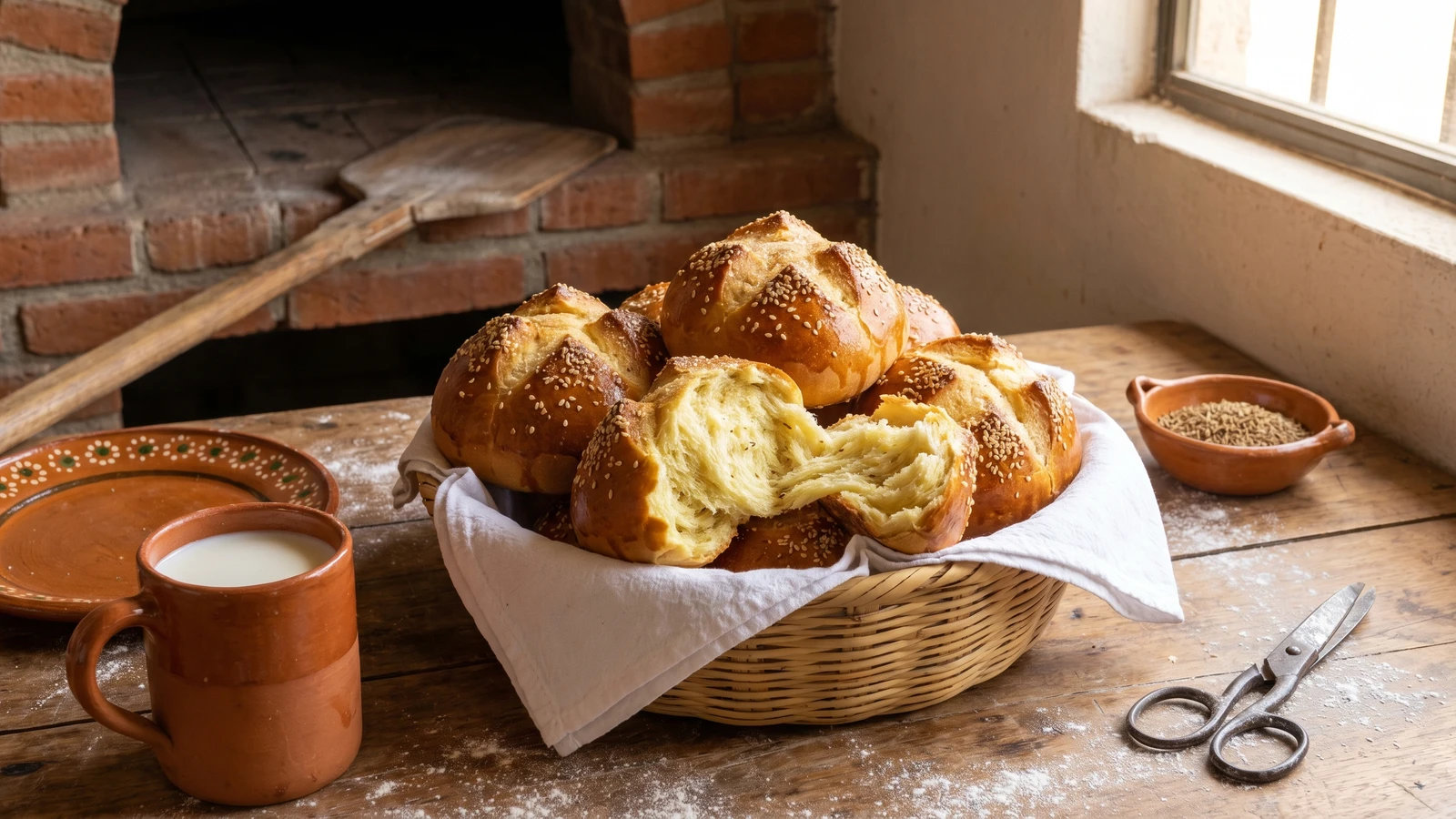
Jalisco, the Ribera de Chapala, Poncitlán. That is where this bread stands. Picón is not a concha with a different hat. It is a big western pan dulce, egg-rich, lightly scented with anise, snipped with scissors into three peaks before it goes into the oven.
In Guadalajara and the towns around Lake Chapala, the old panaderos work with pata, the fermented dough that gives birote its backbone and gives sweet breads like this one more depth than straight commercial yeast. Birote is a sourdough, not a bolillo. Picón is its sweeter cousin, not the same bread, but the family resemblance is there in the ferment and the chew.
My mother, being jalisciense, knew this bread as something you dunked in hot milk or café de olla, not something you decorated for a bakery window. The dough takes harina de trigo, eggs, sugar, anise, and manteca de cerdo. If you want a pale, cottony bun, use shortening. If you want picón with memory, use manteca. La manteca es el sabor.
The peaks matter. You cut them with scissors after the final proof, three clean snips that open in the heat and make the crown. A home cook in Poncitlán would recognize that shape before tasting the crumb. Cada estado, su propia cocina.
Picón is part of Jalisco's western pan dulce tradition, especially associated with Poncitlán and the Guadalajara baking corridor where wheat breads developed alongside the region's famous birote salado. The use of pata, a fermented dough starter maintained by panaderos, reflects an older bakery system in which one batch fed the next before commercial yeast became common in the 20th century. The three scissor-cut peaks distinguish picón from central Mexican conchas and from northern semitas, marking it as a jalisciense bread with its own shape, crumb, and table ritual.
Quantity
150 grams
Quantity
500 grams
plus more for dusting
Quantity
120 grams
Quantity
10 grams
Quantity
8 grams
Quantity
1 tablespoon
lightly crushed
Quantity
4
room temperature
Quantity
120 milliliters
lukewarm
Quantity
80 grams
softened
Quantity
60 grams
softened
Quantity
1 teaspoon
Quantity
1 large egg beaten with 1 tablespoon milk
Quantity
2 tablespoons
for topping
Quantity
2 tablespoons
for topping
| Ingredient | Quantity |
|---|---|
| active masa madre de trigo or Guadalajara-style pata | 150 grams |
| harina de trigo de fuerzaplus more for dusting | 500 grams |
| granulated sugar | 120 grams |
| fine sea salt | 10 grams |
| instant yeast | 8 grams |
| anise seedlightly crushed | 1 tablespoon |
| large eggsroom temperature | 4 |
| whole milklukewarm | 120 milliliters |
| manteca de cerdosoftened | 80 grams |
| unsalted buttersoftened | 60 grams |
| vanilla extract | 1 teaspoon |
| egg wash | 1 large egg beaten with 1 tablespoon milk |
| sesame seedsfor topping | 2 tablespoons |
| coarse sugarfor topping | 2 tablespoons |
The night before baking, feed your masa madre de trigo or pata so it is active by morning: domed, elastic, and smelling lightly sour, not sharp like vinegar. This is the old Guadalajara bakery habit. The ferment gives the bread structure and a quiet acidity under the sugar. No me vengas con atajos.
In the bowl of a stand mixer, combine the harina de trigo, sugar, salt, instant yeast, and crushed anise. Add the pata, eggs, lukewarm milk, and vanilla. Mix on low until the flour disappears, then knead on medium for 6 to 8 minutes, until the dough starts pulling from the sides. It will be sticky. Sweet egg dough is sticky before it becomes obedient.
Add the softened manteca de cerdo in small pieces, then the butter, letting each addition disappear before adding more. Knead 8 to 10 minutes more. The dough should become smooth, elastic, and glossy, with anise seeds speckled through it. Manteca gives tenderness. Butter gives aroma. Together they make the crumb rich without turning it heavy.
Scrape the dough into a lightly greased bowl, cover, and let it rise at room temperature for 1 hour. Fold it over itself once, cover again, and refrigerate overnight, 8 to 12 hours. The cold rest lets the pata work slowly and makes the dough easier to shape. A rushed picón tastes like sugar and yeast. A rested one tastes like panadería.
The next morning, turn the cold dough onto a lightly floured table. Divide into 8 pieces, about 125 grams each. Cup each piece under your palm and roll it against the table until the top tightens into a smooth round. Place the rounds on parchment-lined baking sheets, leaving space. They should look hand-shaped, not machine-perfect.
Cover the shaped rolls with a clean cloth and proof at warm room temperature for 2 to 3 hours, until puffy and almost doubled. Press one gently with a floured finger. The dent should spring back slowly. If it snaps back fast, wait. If it collapses, you waited too long. Pan dulce teaches patience because it has no interest in your schedule.
Heat the oven to 375F. Brush each roll with egg wash. With clean kitchen scissors held almost vertical, make three deep snips across the top of each roll, forming the picón crown. Sprinkle with sesame seeds and coarse sugar. The cuts must be decisive. Little timid scratches will close in the oven and you will lose the shape.
Bake 22 to 25 minutes, rotating the pans once, until the rolls are deep golden, glossy, and sound hollow when tapped underneath. In Poncitlán, a horno de leña gives the crust a deeper color and a faint smoke from the oven walls. At home, use a hot oven and a preheated baking stone if you have one. The crumb should tear in long, soft strands, not crumble.
Move the picones to a rack and let them cool at least 30 minutes. Eat warm or at room temperature with hot milk, café de olla, or chocolate de metate. Do not frost them. Do not fill them. This is picón from Jalisco, and the bread already knows what it is. Así se hace y punto.
1 serving (about 150g)
Culinary guides, cultural storytelling, and the editorial depth that makes cooking meaningful.
Discover Culinary ExplorerChef Lupita
Guanajuato's daily bread from Acámbaro, a small glazed roll built on pata, enriched with manteca de cerdo, and baked until the top shines lightly for merienda.

Chef Lupita
Michoacan's Tinguindin aguacatas are flat, leaf-scored sweet breads made with harina de trigo, piloncillo, anise, and manteca de cerdo, shaped by hand for the wood oven.

Chef Lupita
From Ajijic on Lake Chapala, Pan Tachihual is a lightly sweet wedding loaf built with harina de trigo, harina de maiz, piloncillo, manteca, anise, and the old Guadalajara pata.

Chef Lupita
Comitán's pan de yema shaped into little pigs, birds, and rabbits, a Chiapas bakery bread rich with egg yolks, manteca de cerdo, and anís, baked golden on hoja de plátano.