
Chef Lupita
Acambaritas de Acámbaro
Guanajuato's daily bread from Acámbaro, a small glazed roll built on pata, enriched with manteca de cerdo, and baked until the top shines lightly for merienda.
A cooking platform built around craft, culture, and the stories behind what we eat.
Created by
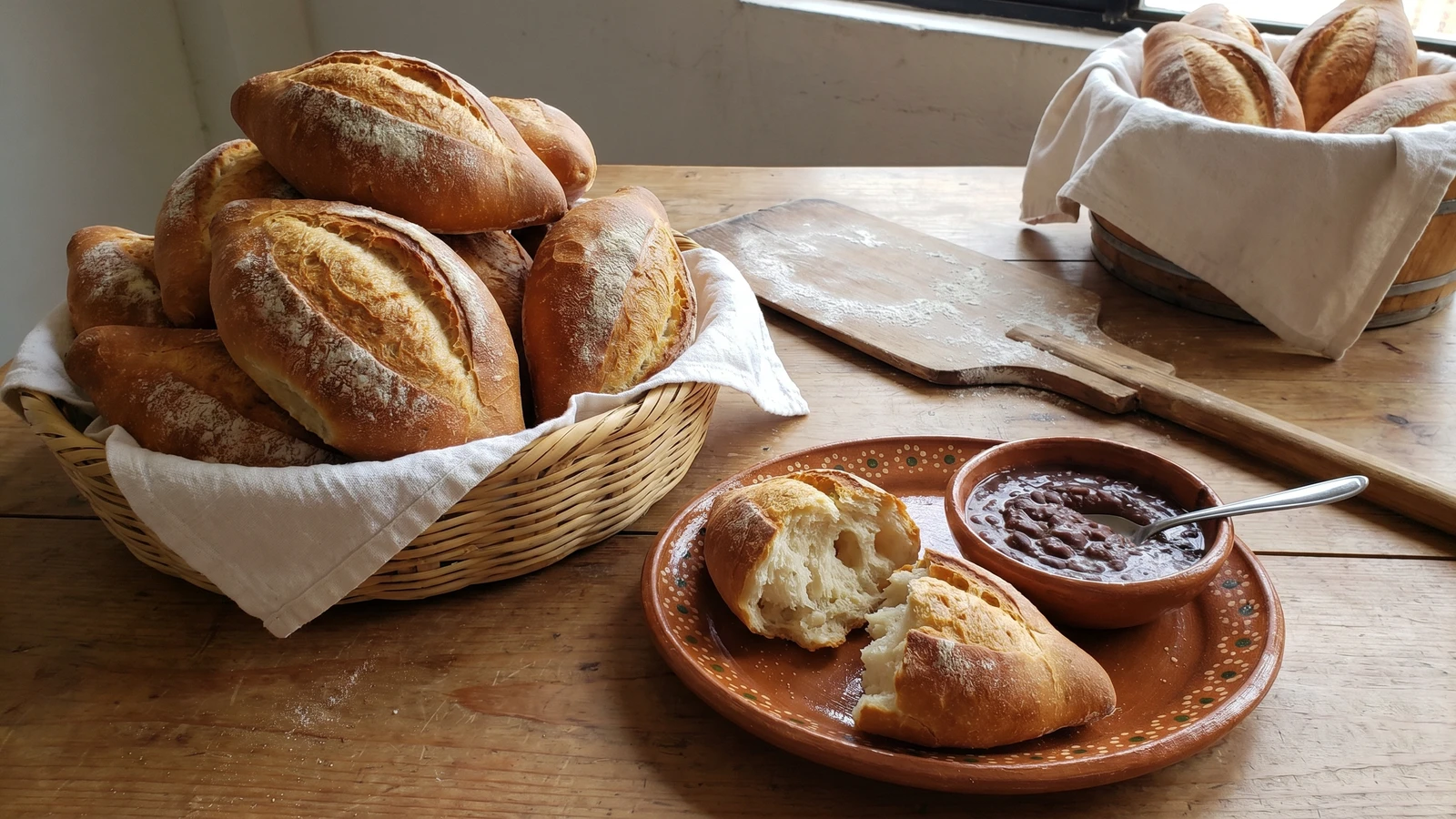
Jalisco's everyday bolillo is a crisp wheat roll with a soft white crumb, made for lonches, molletes, and the panaderia basket before the city has finished waking up.
Jalisco, especially Guadalajara and the towns that feed its panaderias before dawn, knows the difference between bolillo and birote. The bolillo is the everyday wheat roll, crisp enough to hear when you press it, soft enough inside to split for frijoles, queso, or a lonche. The birote salado is sour, tougher, built for tortas ahogadas. Do not confuse them. Cada estado, su propia cocina.
This bolillo uses harina de trigo panadera, a little piloncillo to wake the ferment, and a spoonful of manteca de cerdo for a crumb that stays tender after the crust cools. In old Guadalajara bakeries the sourdough starter for birote is called pata, the foot of the dough, because it carries yesterday into today. Here we use a small overnight pre-ferment in that same discipline, not to make sour birote, but to give an everyday bolillo more flavor than the rushed supermarket roll.
I learned this shape from a panadero in Atemajac who worked with a long wooden peel and a flour sack tied at his waist. He scored each roll with the same movement, fast and clean, no performance. The cut controls the expansion. The hot stone and water pan give the crust its bite. La cocina no es decoración, es trabajo. Bread proves it.
The bolillo descends from French-style wheat breads that entered Mexican urban baking during the 19th century and became common during the Porfiriato, when panaderias adapted European forms to Mexican ovens, wheat, and daily eating habits. In Guadalajara, the bolillo lives beside but separate from birote salado, a sourdough roll associated with Jalisco's humid climate and the torta ahogada. The Guadalajara starter known as pata is part of that birote tradition, while the bolillo usually carries a milder ferment and a softer crumb for everyday use.
Quantity
1 cup
for the overnight pata-style pre-ferment
Quantity
1/2 cup
for the overnight pata-style pre-ferment
Quantity
1/8 teaspoon
for the overnight pata-style pre-ferment
Quantity
3 1/2 cups
plus more for dusting
Quantity
1 cup
about 95F
Quantity
1 teaspoon
Quantity
1 tablespoon
Quantity
2 teaspoons
Quantity
1 tablespoon
softened
Quantity
1 tablespoon
for the bowl
Quantity
1/2 cup
for the oven pan
| Ingredient | Quantity |
|---|---|
| harina de trigo panadera or bread flourfor the overnight pata-style pre-ferment | 1 cup |
| room-temperature waterfor the overnight pata-style pre-ferment | 1/2 cup |
| instant yeastfor the overnight pata-style pre-ferment | 1/8 teaspoon |
| harina de trigo panadera or bread flourplus more for dusting | 3 1/2 cups |
| warm waterabout 95F | 1 cup |
| instant yeast | 1 teaspoon |
| grated piloncillo or dark brown sugar | 1 tablespoon |
| fine sea salt | 2 teaspoons |
| manteca de cerdosoftened | 1 tablespoon |
| neutral oilfor the bowl | 1 tablespoon |
| hot waterfor the oven pan | 1/2 cup |
The night before baking, mix 1 cup harina de trigo panadera, 1/2 cup room-temperature water, and 1/8 teaspoon instant yeast until no dry flour remains. Cover and leave at room temperature for 10 to 12 hours. In Guadalajara they call the sour starter for birote pata. This is not that full sourdough, but it borrows the same idea: yesterday's dough gives today's bread character.
In a large bowl, dissolve the piloncillo and yeast in the warm water. Tear the overnight pre-ferment into pieces and add it to the bowl. Add the harina de trigo panadera and salt. Mix until a rough dough forms, then knead in the softened manteca de cerdo. The dough should feel firm, elastic, and slightly tacky, not sticky like tamal masa.
Knead by hand for 10 to 12 minutes, or in a stand mixer on medium-low for 6 to 7 minutes. The dough is ready when it stretches without tearing immediately and the surface looks smooth. Do not drown it in flour. A tight bolillo crumb comes from strong kneading, not from making the dough dry.
Rub a bowl lightly with oil, set the dough inside, cover, and let it rise until doubled, about 1 hour 30 minutes. A warm kitchen will move faster. A cold kitchen will take longer. Watch the dough, not the clock.
Turn the dough onto a lightly floured table and divide it into 10 equal pieces, about 95 grams each if you use a scale. Roll each piece into a loose ball, cover with a cloth, and let rest for 15 minutes. This rest lets the gluten relax so the bolillos shape cleanly instead of fighting your hands.
Flatten one piece into a small oval. Fold the top third toward the center, press with the heel of your hand, then fold the bottom third over it and seal. Roll gently from the center outward until the ends taper and the middle stays plump. The shape should look hand-made, not machine-perfect. Set seam side down on a parchment-lined tray dusted with flour.
Cover the shaped bolillos with a dry cloth and proof for 45 to 60 minutes, until puffy but still holding their shape. Heat the oven to 450F with a baking stone or heavy sheet pan inside and an empty metal pan on the lower rack. Right before baking, slash each roll lengthwise with a sharp blade at a shallow angle. One confident cut. No sawing.
Slide the bolillos onto the hot stone or tray. Pour 1/2 cup hot water into the lower metal pan and close the oven door immediately. Bake for 20 to 22 minutes, until the crust is deep golden, dry to the touch, and crisp when tapped. The water gives the crust time to expand before it hardens. A horno de leña does this with retained heat and humidity. In a home oven, the pan of water does the work.
Move the bolillos to a rack and let them cool at least 20 minutes. Hot bread tears instead of slicing. Once cooled, split for molletes, fill for lonches, or carry them to the table in a cloth-lined basket. Recetas probadas y garantizadas.
1 bolillo (about 85g)
Culinary guides, cultural storytelling, and the editorial depth that makes cooking meaningful.
Discover Culinary ExplorerChef Lupita
Guanajuato's daily bread from Acámbaro, a small glazed roll built on pata, enriched with manteca de cerdo, and baked until the top shines lightly for merienda.

Chef Lupita
Michoacan's Tinguindin aguacatas are flat, leaf-scored sweet breads made with harina de trigo, piloncillo, anise, and manteca de cerdo, shaped by hand for the wood oven.

Chef Lupita
From Ajijic on Lake Chapala, Pan Tachihual is a lightly sweet wedding loaf built with harina de trigo, harina de maiz, piloncillo, manteca, anise, and the old Guadalajara pata.

Chef Lupita
Comitán's pan de yema shaped into little pigs, birds, and rabbits, a Chiapas bakery bread rich with egg yolks, manteca de cerdo, and anís, baked golden on hoja de plátano.