
Chef Lupita
Acambaritas de Acámbaro
Guanajuato's daily bread from Acámbaro, a small glazed roll built on pata, enriched with manteca de cerdo, and baked until the top shines lightly for merienda.
A cooking platform built around craft, culture, and the stories behind what we eat.
Created by
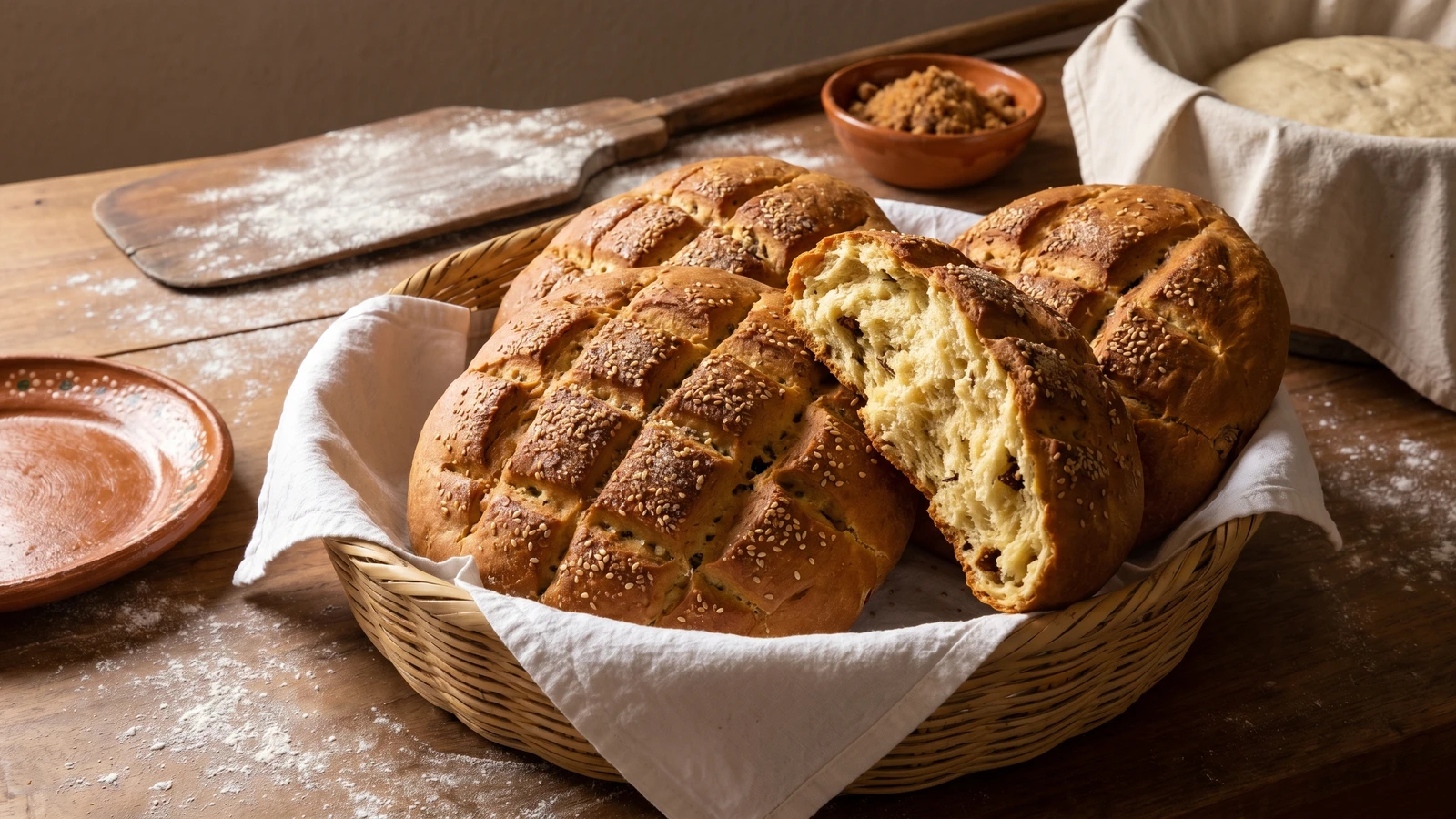
From Ajijic on Lake Chapala, Pan Tachihual is a lightly sweet wedding loaf built with harina de trigo, harina de maiz, piloncillo, manteca, anise, and the old Guadalajara pata.
Jalisco, the ribera de Chapala, Ajijic. That is where this bread lives. Not in a generic panaderia case and not beside conchas pretending all Mexican bread is the same. Pan Tachihual belongs to the lake towns, to wedding tables, to families that still remember when the bread went to the horno de lena before dawn.
The dough is wheat flour strengthened with a little harina de maiz, sweetened with piloncillo, enriched with manteca de cerdo, and lifted with masa madre, the Guadalajara pata that panaderos keep alive from one bake to the next. The flavor is not sugar first. It is grain, lard, anise, piloncillo, and the faint sourness of a living ferment. La manteca es el sabor. Say it until you stop reaching for butter where it does not belong.
I learned this kind of bread from panaderos who worked with wooden peels longer than my arm, and from women who shaped loaves by feel while the wedding kitchen was already full of mole, rice, beans, and borrowed chairs. The scoring matters because tachihual refers to a loom, to woven work. The bread should look touched by hands, pressed, crossed, and marked. Machine-perfect rounds have no business here.
Proof it overnight. Bake it hot. If you have a horno de lena, use it. If you do not, heat a baking stone hard and stop apologizing. A home oven can teach you the bread, but it cannot give you the smoke and clay of Ajijic before sunrise. A substitution is a compromise, not an upgrade. Cada estado, su propia cocina.
Pan Tachihual is associated with Ajijic, a Nahua-rooted town on Lake Chapala in Jalisco, where ceremonial breads were tied to weddings and communal ovens before commercial panaderias standardized daily bread. The name is commonly connected locally to a Nahuatl idea of woven work or a loom, which explains the pressed and crossed decoration on the loaf. Jalisco's bread culture is often reduced to birote from Guadalajara, but birote is a sourdough with its own crust and acidity, not this lightly sweet wedding bread from the lake region.
Quantity
500 grams
plus more for dusting
Quantity
150 grams
fine ground, not masa harina for tortillas
Quantity
180 grams
active and at peak strength
Quantity
220 milliliters
Quantity
120 grams
finely grated
Quantity
90 grams
soft but not melted
Quantity
2
room temperature
Quantity
10 grams
Quantity
1 tablespoon
lightly crushed
Quantity
1 teaspoon
Quantity
1 teaspoon
only if your pata is weak
Quantity
1 egg beaten with 1 tablespoon milk
Quantity
2 tablespoons
for topping
Quantity
1 tablespoon
for topping
| Ingredient | Quantity |
|---|---|
| harina de trigoplus more for dusting | 500 grams |
| harina de maizfine ground, not masa harina for tortillas | 150 grams |
| masa madre de trigo, Guadalajara pataactive and at peak strength | 180 grams |
| warm water | 220 milliliters |
| piloncillofinely grated | 120 grams |
| manteca de cerdosoft but not melted | 90 grams |
| large eggsroom temperature | 2 |
| fine sea salt | 10 grams |
| anise seedlightly crushed | 1 tablespoon |
| ground cinnamon | 1 teaspoon |
| instant yeast (optional)only if your pata is weak | 1 teaspoon |
| egg wash | 1 egg beaten with 1 tablespoon milk |
| sesame seedsfor topping | 2 tablespoons |
| coarse sugarfor topping | 1 tablespoon |
Feed your masa madre de trigo, the pata, 6 to 8 hours before mixing. It should be domed, bubbly, and smell cleanly sour, like wheat and fruit, not alcohol. If it has collapsed, feed it again. Wedding bread is not where you use a tired ferment.
Stir the grated piloncillo into the warm water until mostly dissolved. Piloncillo brings mineral depth that white sugar does not have. If a few small bits remain, leave them. They will melt into the dough and give the crumb those small dark flecks that tell you the bread was made properly.
In a large bowl, combine the harina de trigo, harina de maiz, salt, anise seed, and cinnamon. Add the pata, piloncillo water, eggs, and instant yeast if using. Mix until no dry flour remains. The dough will feel sticky and heavy at first because the corn flour drinks slowly. Let it sit 20 minutes before kneading. No me vengas con atajos. Resting is part of the work.
Knead the dough for 8 to 10 minutes by hand, or 6 minutes on low speed in a stand mixer. Add the soft manteca in three additions, kneading until each one disappears before adding the next. The dough should become smooth, elastic, and slightly tacky, with a soft sheen from the fat. If you dump in melted lard, the dough turns greasy and weak. Soft lard, patient hands. Asi se hace y punto.
Place the dough in a lightly greased bowl, cover it well, and let it rise at cool room temperature for 8 to 10 hours, until expanded by about half and fragrant with anise and piloncillo. This is not a fast pan dulce. The pata needs time to season the dough. If your kitchen is hot, refrigerate after 3 hours and finish the rise in the morning.
Turn the dough onto a lightly floured table. Divide it into two equal pieces. Shape each into a tight round, then flatten gently into a thick disk about 8 inches across. Place on parchment or a floured wooden peel. Press the top lightly with your palm so it is broad and steady, not tall like a brioche. Pan Tachihual should look generous and grounded.
With a sharp knife or bench scraper, press shallow crossed lines over the top of each loaf, making a woven pattern without cutting too deep. Brush with egg wash, then scatter sesame seeds and coarse sugar over the surface. Let the loaves proof 60 to 90 minutes, until puffy and slow to spring back when pressed.
For a horno de lena, fire the oven until the clay floor is hot and the flame has burned down to clean embers. For a home oven, set a baking stone or steel on the middle rack and heat to 425F for at least 45 minutes. The first heat sets the shape. A timid oven gives you pale bread and a tight crumb.
Slide the loaves onto the hot stone or clay floor. Bake 10 minutes at 425F, then lower to 375F and bake 20 to 25 minutes more, until the crust is deep golden, the sesame is toasted, and the loaf sounds hollow when tapped underneath. The internal temperature should be about 195F. If the top browns too fast, cover loosely with foil for the last 10 minutes.
Cool the loaves on a rack for at least 1 hour before cutting. Do not slice hot enriched bread unless you want a gummy crumb. Serve in thick wedges with cafe de olla, chocolate de metate, or at a celebration table beside savory food. This bread holds its dignity next to mole. That is why it belongs at weddings.
1 serving (about 650g)
Culinary guides, cultural storytelling, and the editorial depth that makes cooking meaningful.
Discover Culinary ExplorerChef Lupita
Guanajuato's daily bread from Acámbaro, a small glazed roll built on pata, enriched with manteca de cerdo, and baked until the top shines lightly for merienda.

Chef Lupita
Michoacan's Tinguindin aguacatas are flat, leaf-scored sweet breads made with harina de trigo, piloncillo, anise, and manteca de cerdo, shaped by hand for the wood oven.

Chef Lupita
Comitán's pan de yema shaped into little pigs, birds, and rabbits, a Chiapas bakery bread rich with egg yolks, manteca de cerdo, and anís, baked golden on hoja de plátano.

Chef Lupita
The Noroeste sourdough roll from Sonora and Sinaloa, built on pata starter laced with Mexican lager and lime, with a dark crackling crust and a dense sour crumb that drinks capirotada syrup without falling apart.