
Chef Lupita
Acambaritas de Acámbaro
Guanajuato's daily bread from Acámbaro, a small glazed roll built on pata, enriched with manteca de cerdo, and baked until the top shines lightly for merienda.
A cooking platform built around craft, culture, and the stories behind what we eat.
Created by
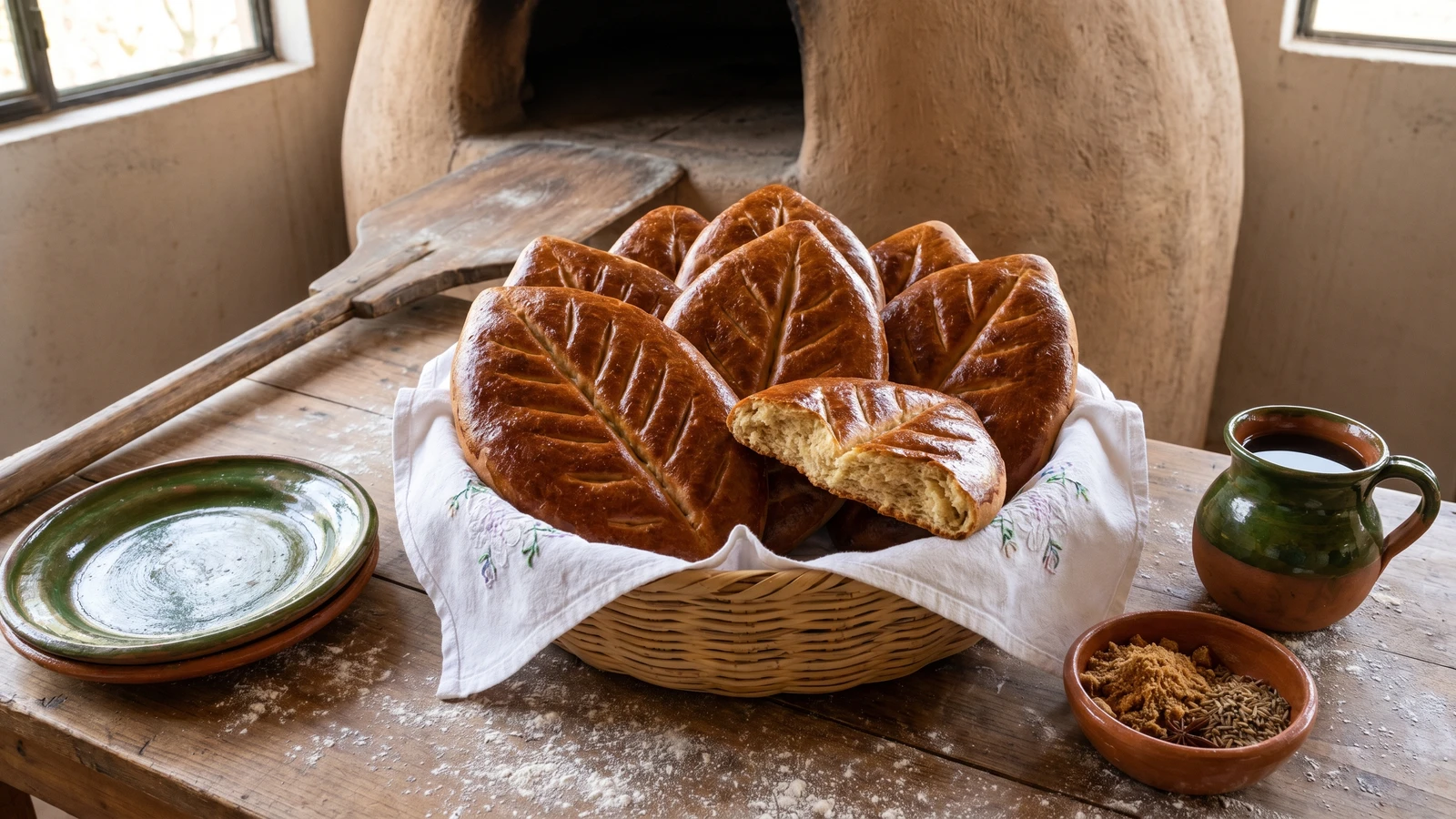
Michoacan's Tinguindin aguacatas are flat, leaf-scored sweet breads made with harina de trigo, piloncillo, anise, and manteca de cerdo, shaped by hand for the wood oven.
This comes from Tinguindin, Michoacan, in the Purépecha region west of the lake country and below the cold highlands where wheat bread became a serious craft. Not a concha. Not a bolillo. Aguacatas are flat sweet breads, shaped and scored like avocado leaves, baked until the lard and piloncillo give the surface that deep brown shine.
The name confuses people. There is no avocado in the dough. The leaf shape is the point. In the panaderias of Tinguindin, women and men shape them fast on flour-dusted tables, marking the veins by hand before the breads go toward the horno de leña. That scoring is regional memory. Machine-perfect rounds would miss the lesson.
The dough is harina de trigo, piloncillo miel, anise, eggs, and manteca de cerdo. No me vengas con atajos. Butter makes a different bread. Vegetable shortening makes a dull one. Lard gives tenderness, flavor, and keeping power, the reason these breads travel well wrapped in cloth for visits, holidays, and altar season.
My mother did not make aguacatas in Colonia Roma. She wrote one note in the margin of her notebook after a trip through Michoacan: 'the bread looks like a leaf, but tastes like the oven.' She was right. Cada estado, su propia cocina.
Tinguindin's bread tradition developed after wheat and masonry ovens arrived in western Mexico during the colonial period, when Spanish grain culture met Purépecha community labor and local baking systems. Aguacatas are commonly described in Michoacan as a centuries-old regional bread, tied to Tinguindin's identity as a panadero town and to the practice of baking in communal or family wood-fired ovens. The leaf scoring connects the bread to local visual language, while the use of piloncillo and manteca de cerdo reflects the colonial-era ingredients that became ordinary in Mexican pan dulce.
Quantity
1 cup
grated or chopped
Quantity
1 cup
Quantity
1
Quantity
1 teaspoon
lightly crushed
Quantity
4 cups, plus more for dusting
Quantity
2 teaspoons
Quantity
1 teaspoon
Quantity
3/4 cup
softened
Quantity
2
room temperature
Quantity
1/2 cup, plus more as needed
Quantity
1 egg beaten with 1 tablespoon milk
for glazing
Quantity
2 tablespoons
for topping
| Ingredient | Quantity |
|---|---|
| piloncillograted or chopped | 1 cup |
| water | 1 cup |
| cinnamon stick | 1 |
| anise seedlightly crushed | 1 teaspoon |
| harina de trigo | 4 cups, plus more for dusting |
| instant yeast | 2 teaspoons |
| fine sea salt | 1 teaspoon |
| manteca de cerdosoftened | 3/4 cup |
| large eggsroom temperature | 2 |
| warm whole milk | 1/2 cup, plus more as needed |
| egg washfor glazing | 1 egg beaten with 1 tablespoon milk |
| sesame seeds (optional)for topping | 2 tablespoons |
Combine the piloncillo, water, cinnamon stick, and crushed anise in a small saucepan. Simmer over medium heat until the piloncillo dissolves and the liquid smells dark and warm, about 8 minutes. Strain and cool until just warm. Do not pour hot syrup into dough unless you want to kill the yeast. The syrup should feel like bath water.
In a wide bowl, mix the harina de trigo, yeast, and salt. Rub in the softened manteca de cerdo with your fingers until the flour feels sandy and rich. Add the eggs, 3/4 cup of the warm piloncillo miel, and the warm milk. Mix until a rough dough forms. It should be soft, a little tacky, and fragrant with anise. La manteca es el sabor.
Knead the dough on a lightly floured table for 8 to 10 minutes, pushing it forward with the heel of your hand and folding it back. If it tears dry, add milk one tablespoon at a time. If it sticks like paste, dust with a little flour, not a handful. The finished dough should be elastic and heavy from the lard, not fluffy like a bolillo.
Set the dough in a lightly greased bowl, cover with a clean cloth, and let it rise at room temperature until it looks swollen and relaxed, about 2 hours. In Tinguindin, the old panaderias work with the rhythm of the horno de leña before dawn. If your kitchen is cold, give it time. Bread does not care about your schedule.
Divide the dough into 12 equal pieces. Roll each piece into an oval, then press and stretch it into a flat avocado-leaf shape, about 7 inches long and 1/2 inch thick. Taper one end slightly. Set the pieces on parchment-lined baking sheets or a floured wooden peel if you are using a baking stone.
Use the back of a knife or a clean razor to mark one long center vein and angled side veins across each bread. Do not cut all the way through. The scoring is not decoration for a photograph. It controls how the bread opens and gives the aguacata its Purépecha hand. Press firmly enough that the lines remain after the final proof.
Cover the shaped breads with a cloth and let them rest 45 to 60 minutes, until slightly puffed but still flat. Heat the oven to 400F with a baking stone or heavy sheet pan inside. A horno de leña gives better bottom heat and a deeper crust. At home, a hot stone is the honest compromise.
Brush each aguacata lightly with egg wash and scatter a few sesame seeds over the surface if using. Bake 18 to 25 minutes, rotating once, until the tops are deep golden, the scored veins are visible, and the bottoms sound firm when tapped. The lard and piloncillo should leave the crust glossy, not pale.
Cool on a rack for at least 20 minutes before eating. The crumb needs time to settle. Serve in a woven basket lined with cloth, with cafe de olla or atole. These keep well because the lard protects the crumb. Recetas probadas y garantizadas.
1 serving (about 100g)
Culinary guides, cultural storytelling, and the editorial depth that makes cooking meaningful.
Discover Culinary ExplorerChef Lupita
Guanajuato's daily bread from Acámbaro, a small glazed roll built on pata, enriched with manteca de cerdo, and baked until the top shines lightly for merienda.

Chef Lupita
From Ajijic on Lake Chapala, Pan Tachihual is a lightly sweet wedding loaf built with harina de trigo, harina de maiz, piloncillo, manteca, anise, and the old Guadalajara pata.

Chef Lupita
Comitán's pan de yema shaped into little pigs, birds, and rabbits, a Chiapas bakery bread rich with egg yolks, manteca de cerdo, and anís, baked golden on hoja de plátano.

Chef Lupita
The Noroeste sourdough roll from Sonora and Sinaloa, built on pata starter laced with Mexican lager and lime, with a dark crackling crust and a dense sour crumb that drinks capirotada syrup without falling apart.