
Chef Lupita
Coditos con Camaron Sinaloenses
Sinaloa's pinata-and-wedding pasta salad. Elbow macaroni, small Pacific shrimp, mayo, crema, and the brine from a can of pickled jalapenos. Always cold. Always next to the frijoles puercos.
A cooking platform built around craft, culture, and the stories behind what we eat.
Created by
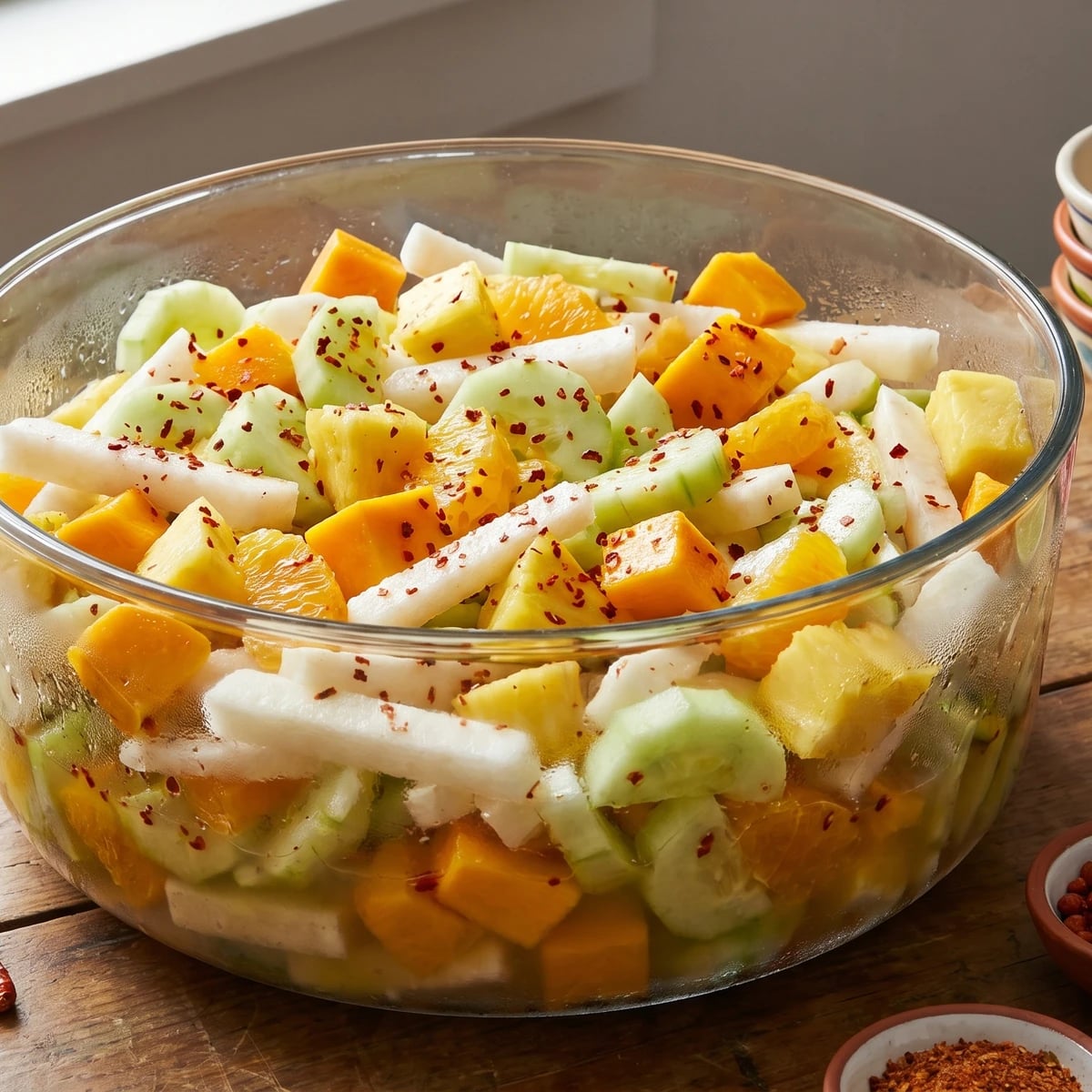
Sonora's pico de gallo, jícama and cucumber and seasonal fruit cut cold, dressed in lime and salt, finished with crushed wild chiltepín. Crunch and chill against the heat of the desert.
This is from Sonora. The Noroeste. And the first thing to clear up: in Sonora, pico de gallo is not a salsa. It is a fruit salad. The chopped tomato-onion-cilantro thing you know from elsewhere is called salsa bandera up here, or just salsa fresca. If you order pico de gallo in Hermosillo or Ciudad Obregón, what arrives is a glass cazuela of jícama, cucumber, orange, mango, and pineapple, dressed with lime and salt, dusted with crushed chiltepín. Cada estado, su propia cocina, and this is the proof.
The chile is the point. Chiltepín is the wild chile of the Sonoran desert, a tiny round fruit no bigger than a peppercorn, picked by hand from shrubs that grow on their own in the Sierra Madre Occidental. Sonora declared chiltepín its Oro Rojo, its red gold, and recognized it as cultural heritage in 2009. It is fiercely hot but the heat is fast, sharp, and clean. It hits, it leaves, and what stays behind is the taste of the desert, smoky and herbaceous and impossible to fake. Do not substitute cayenne. Do not substitute Tajín alone. The chiltepín is the dish.
This is what Sonoran families pack for the picnic at the river, what gets served at the carne asada while the meat is still on the grill, what comes out cold from a glass jar at a kid's birthday party in July when it is 45 degrees Celsius outside. The fruit changes by season: more mango in summer, more orange in winter, sometimes watermelon or cantaloupe in August. Cook with what the mercado is selling today. Saber cocinar es saber vivir.
Chiltepín (Capsicum annuum var. glabriusculum) is the only wild chile native to what is now the United States and northern Mexico, and it is the genetic ancestor of every domesticated chile in the world. The Comcaac (Seri) and Tohono O'odham peoples of the Sonoran desert harvested and traded chiltepín for centuries before European contact, and the wild harvest in the Sierra Madre Occidental remains the primary source today, as the plant resists conventional cultivation. In 2009 the state of Sonora officially declared chiltepín an element of cultural and gastronomic heritage, and the term Oro Rojo (red gold) entered formal use to reflect both its market value and its identity as a regional symbol. The Sonoran convention of calling fruit salad pico de gallo, distinct from the central and southern Mexican salsa fresca, is documented in regional cookbooks dating to the early 20th century and reflects the Noroeste's broader culinary independence from the central Mexican mainstream.
Quantity
1 medium (about 1 1/2 pounds)
peeled and cut into 1/2-inch batons
Quantity
2
cut into 1/2-inch half-moons
Quantity
2
peeled, segmented, and cut into bite-sized pieces
Quantity
1
peeled and cut into 1/2-inch cubes
Quantity
1/2 small
peeled, cored, and cut into 1/2-inch cubes
Quantity
1/2 cup (about 5 to 6 limes)
Quantity
1 1/2 teaspoons, plus more to taste
Quantity
1 to 2 teaspoons
crushed (start with 1, add more to taste)
Quantity
1 teaspoon, plus more for serving
Quantity
for serving
| Ingredient | Quantity |
|---|---|
| jícamapeeled and cut into 1/2-inch batons | 1 medium (about 1 1/2 pounds) |
| Persian cucumbers (or 1 English cucumber)cut into 1/2-inch half-moons | 2 |
| navel orangespeeled, segmented, and cut into bite-sized pieces | 2 |
| firm-ripe mangopeeled and cut into 1/2-inch cubes | 1 |
| pineapplepeeled, cored, and cut into 1/2-inch cubes | 1/2 small |
| fresh lime juice | 1/2 cup (about 5 to 6 limes) |
| fine sea salt | 1 1/2 teaspoons, plus more to taste |
| whole dried chiltepíncrushed (start with 1, add more to taste) | 1 to 2 teaspoons |
| Tajín (optional) | 1 teaspoon, plus more for serving |
| lime halves (optional) | for serving |
Keep everything cold from the start. Pull the jícama, cucumbers, oranges, mango, and pineapple straight from the refrigerator. A pico de gallo sonorense is about crunch and chill. Warm jícama is sad jícama. Cut the jícama into 1/2-inch batons or thick half-moons, the cucumbers into half-moons of the same thickness, and the oranges, mango, and pineapple into bite-sized cubes. Same size across the board. Every spoonful should land balanced.
Place the dried chiltepín in a small molcajete or wooden chiltepinero and crush them coarsely with the pestle. Not to powder. You want flecks, little red shards that show up against the white jícama and the orange of the mango. Chiltepín is the wild chile of Sonora, picked by hand off shrubs in the Sierra Madre. It is hot, fast, and clean, gone in seconds, not the lingering burn of a habanero. Sonora declared it Oro Rojo and cultural heritage in 2009. Treat it that way.
In a wide glass cazuela or a thick ceramic bowl, combine the jícama, cucumber, orange, mango, and pineapple. Pour the lime juice over the top. Sprinkle the salt evenly. Toss gently with your hands so nothing breaks. The lime and salt will start drawing juice out of the fruit within a minute. That juice, the chilito that pools at the bottom of the bowl, is the best part of the dish. Sonoran kids drink it straight at the end.
Scatter the crushed chiltepín over the top. Add the Tajín if using. Toss once more, lightly. Taste a piece of jícama. It should land sweet, then sour, then salty, then the chiltepín hits at the back of the throat. If the heat is shy, crush more chiltepín and add it now. If the salt is shy, add more. The fruit dictates the seasoning, not the recipe card. Asi se hace y punto.
Serve immediately in the same bowl, family-style, with a slotted spoon so people can lift fruit out of the lime juice without flooding their plate. Set extra crushed chiltepín, Tajín, and lime halves alongside for the cooks at the table who want more heat. Eat within 30 minutes of dressing. After that the cucumber goes limp and the jícama loses its snap. Pico de gallo sonorense waits for nobody.
1 serving (about 315g)
Culinary guides, cultural storytelling, and the editorial depth that makes cooking meaningful.
Discover Culinary Explorer
Chef Lupita
Sinaloa's pinata-and-wedding pasta salad. Elbow macaroni, small Pacific shrimp, mayo, crema, and the brine from a can of pickled jalapenos. Always cold. Always next to the frijoles puercos.

Chef Lupita
Tijuana's 1924 original from Caesar Cardini, whole romaine hearts dressed tableside with coddled egg, Mexican lime, Worcestershire, garlic, and Parmigiano. No anchovies. Eaten with the hands, leaf by leaf.

Chef Lupita
Mexicali's Chinese-Mexican slaw from a century of border kitchens. Crisp shredded cabbage and carrot in a sweet-sour rice vinegar and soy dressing, served cold with blistered chiles toreados.

Chef Lupita
Sinaloa's pantry salad of canned tuna, peas, white onion, and tomato bound with mayonnaise and the brine from a jar of pickled jalapeños. Eaten on saltines or stuffed into a bolillo, the way the coast has done it for generations.