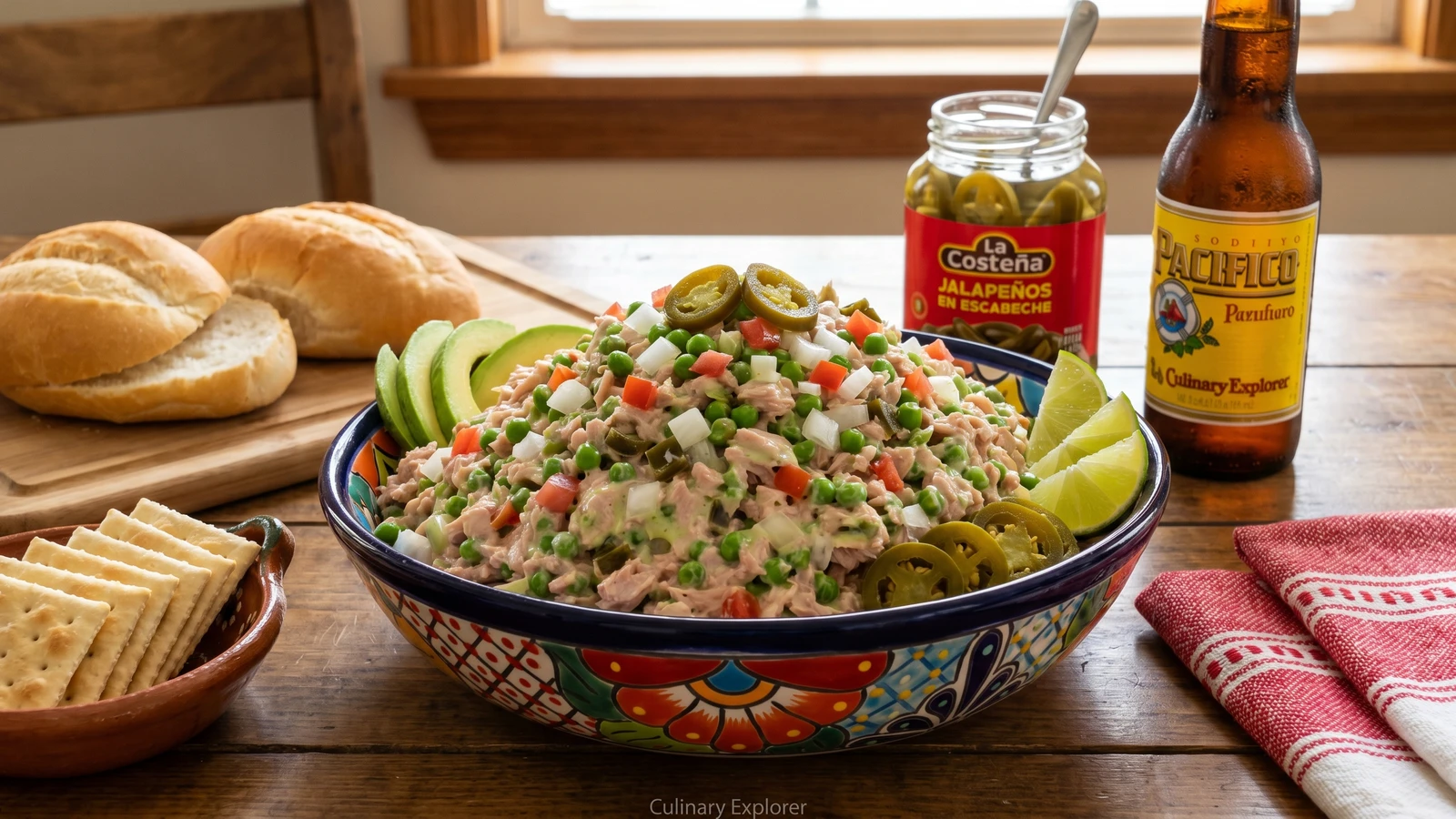
Sinaloa's pantry salad of canned tuna, peas, white onion, and tomato bound with mayonnaise and the brine from a jar of pickled jalapeños. Eaten on saltines or stuffed into a bolillo, the way the coast has done it for generations.
Salads
Mexican
Quick Meal
Weeknight
Budget Friendly
15 min
Active Time
0 min cook•15 min total
Yield4 to 6 servings
This is from Sinaloa. The Pacific coast, the state of Culiacán and Mazatlán, where the sea sets the rhythm of the kitchen and where a hot afternoon calls for something cold, bracing, and easy. Ensalada de atún is what a Sinaloan home cook makes when she does not feel like cooking. Three cans, half an onion, the jar of pickled jalapeños from the back of the refrigerator. Lunch is on the table in fifteen minutes.
The brine is the trick. Not the chiles, the brine. That vinegary liquid from the jar of jalapeños en escabeche carries the flavor of carrots, onion, garlic, bay leaf, and oregano that the chiles were pickled with, and it cuts through the mayonnaise the way no plain vinegar can. Leave it out and you have a sad American tuna salad. Add three tablespoons and you have something that tastes like a Sinaloan kitchen on a Tuesday afternoon. Recetas probadas y garantizadas.
My mother did not make this. She was from Jalisco and she made other things. But I learned this version from a woman named Rosa in Mazatlán who ran a fonda two blocks from the Olas Altas malecón. She served it on saltines as a botana while you waited for your aguachile. She told me the brine was the only thing that mattered and laughed when I wrote it down. Cada estado, su propia cocina, and this one is Sinaloa's.
This is not a fancy salad. It does not pretend to be. It is the kind of practical, intelligent food that working kitchens make when the sun is high and the pantry is what you have. Saber cocinar es saber vivir, and sometimes that means knowing what to do with three cans of tuna.
Canned tuna entered the Mexican Pacific coast pantry in the early 20th century when industrial canneries opened in Ensenada, Mazatlán, and later Manzanillo, processing yellowfin and skipjack from Mexico's Pacific fleet for both domestic and export markets. By the 1950s, Mexican brands like Atún Dolores and later Tuny had made oil-packed tuna a household staple in coastal states, and home cooks in Sinaloa and Nayarit folded it into salads dressed with whatever pickled chiles the pantry held. The use of escabeche brine as a dressing component is a distinctly Mexican adaptation, drawing on the colonial-era Spanish technique of preserving vegetables in vinegar with bay leaf and oregano, which arrived in Mexico in the 16th century and was indigenized through the addition of jalapeño and carrot.
The technique, the tradition, and the story behind every dish.
bottled hot sauce (Valentina or Huichol) (optional)
Quantity
for serving
Ingredient
Quantity
tuna in oilwell drained
3 cans (5 ounces each)
frozen peasthawed and drained
1 cup
white onionfinely diced
1/2 medium
Roma tomatoesseeded and finely diced
2 medium
pickled jalapeños (jalapeños en escabeche)finely chopped
1/3 cup
brine from the pickled jalapeño jar
3 tablespoons
Mexican mayonnaise (Mayonesa McCormick con Limón)
1/2 cup
fresh lime juice
1 tablespoon
kosher salt
1/2 teaspoon, plus more to taste
freshly ground black pepper
to taste
saltine crackers (optional)
for serving
bolillos or teleras (optional)split
for serving
sliced avocado (optional)
for serving
bottled hot sauce (Valentina or Huichol) (optional)
for serving
Equipment Needed
•Wide ceramic mixing bowl
•Sharp chef's knife for fine dicing
•Wooden spoon for folding
Instructions
1
Drain the tuna properly
Open the cans and press the lid down hard against the tuna over the sink. Get every drop of oil out. Wet tuna makes a wet salad and a wet salad runs out the bottom of the bolillo before you finish it. Flake the drained tuna into a wide ceramic bowl with a fork. Keep the texture rough. You want flakes, not paste.
Tuna in oil, not in water. The oil-packed tuna has more flavor and stands up to the mayonnaise. Atún Dolores or Tuny are the brands you want from a Mexican grocery.
2
Prep the vegetables
Dice the white onion as finely as you can. The onion has to disappear into the salad, not bite back. Seed the Roma tomatoes before you dice them. The seeds carry water and water is the enemy here. Chop the pickled jalapeños fine. Reserve the brine. The brine is the secret. No me vengas con atajos and do not skip it.
3
Build the salad
Add the diced onion, tomato, peas, and chopped jalapeños to the bowl with the tuna. Spoon in the mayonnaise, the lime juice, and the three tablespoons of jalapeño brine. Season with salt and black pepper. Fold gently with a wooden spoon until everything is coated and the color turns a uniform pale green-pink from the brine cutting the mayonnaise. Do not whip it. You want chunks, not a paste.
4
Taste and adjust
Taste it now. The salad should be bright, salty, and have a clean acidic snap from the brine. If it tastes flat, add another tablespoon of brine. If it tastes too sharp, another spoonful of mayonnaise rounds it out. The balance is yours to set. Esto no es comida de un solo Mexico, but in Sinaloa, this salad leans bright and acidic, never heavy.
If you have time, cover the bowl and chill the salad for thirty minutes before serving. The flavors marry and the brine gets into the tuna properly. Asi se hace y punto.
5
Serve two ways
On the coast, this salad goes onto saltine crackers eaten with a cold beer in the afternoon. For dinner, split a bolillo or telera, pull out some of the crumb to make room, and stuff it generously. Add sliced avocado if you want, a few drops of Valentina if your table likes it hot. Eat it standing up at the kitchen counter the way Sinaloan cooks have been doing it forever.
Chef Tips
•Use Mexican mayonnaise, not American. McCormick con Limón has the lime built into it and the texture is looser, which is what this salad needs. Hellmann's will work in a pinch but you will have to add more lime juice to compensate.
•The pickled jalapeños should be the standard Mexican brand: La Costeña, San Marcos, or Clemente Jacques. The brine in those jars carries the flavor of carrots, garlic, and oregano. A jar of plain pickled chiles does not have the same depth.
•If your Roma tomatoes are watery and pale, leave them out. A bad tomato makes the salad weep liquid and ruins the texture. Cook with what the market is selling today, not what the recipe says you should have.
Advance Preparation
•The salad keeps refrigerated for two days in a covered glass container. The flavor improves overnight as the brine works into the tuna. Past two days the tomato breaks down and the texture suffers.
•The vegetables can be diced and held separately in the refrigerator several hours ahead. Combine with the tuna and dressing within thirty minutes of serving for the best texture.
Frequently Asked Questions
Nutrition Information
1 serving (about 200g)
Calories
345 calories
Total Fat
23 g
Saturated Fat
3 g
Trans Fat
0 g
Unsaturated Fat
19 g
Cholesterol
35 mg
Sodium
970 mg
Total Carbohydrates
9 g
Dietary Fiber
2 g
Sugars
3 g
Protein
27 g
Where cooking meets culture.
Culinary guides, cultural storytelling, and the editorial depth that makes cooking meaningful.