
Chef Lupita
Aceite de Chiltepin Bajacaliforniano
Baja California's wild chiltepin steeped in olive oil with garlic, orejon, and lime peel, until the oil turns ruby-amber and carries the slow, sneaky burn of the desert coast.
A cooking platform built around craft, culture, and the stories behind what we eat.

Created by
Chiapas highland picles from Comitán, a clean vinegar pickle of red onion, carrot, garlic, oregano, and bay that cuts through pan compuesto with discipline.
Chiapas, the Comitán region, is where these picles live. Not Yucatán. Not Oaxaca. Comitán de Domínguez sits in the highlands near the Guatemalan border, and its kitchen has its own accent: vinegar, bread, herbs, preserved vegetables, and practical food built for feast days and market tables.
These picles are not a fiery salsa. They are a sharp pickle of red onion and carrot, with garlic, Mexican oregano, bay leaf, black pepper, and white vinegar. The point is brightness. On a pan compuesto coleto, especially during the August festivities around San Cristóbal de las Casas, the pickle wakes up the bread, the meat, and the chicharrón. Not everything in Mexican cooking needs to burn your mouth. Learn that first.
I learned this style from Chiapas women who made jars ahead of the fiestas, stacked beside rough highland clay bowls and loaves waiting to be split. The vegetables must stay crisp. The vinegar must taste clean, not harsh. You blanch, season, pack, and wait. No me vengas con atajos. The resting time is when the pickle becomes itself.
Cada estado, su propia cocina. This is Chiapas on the table: practical, tart, organized, and ready before the house fills with people.
Pickled vegetables entered many regional Mexican kitchens through Spanish escabeche techniques, but Chiapas adapted the method to local feast foods, especially breads and composed plates from the highland towns. Comitán's picles are tied to the comiteco and coleto habit of serving vinegar-cut vegetables with pan compuesto, a bread-based festive dish associated with local fairs and August celebrations. The name 'picles' reflects a regional borrowing from 'pickles,' but the seasoning, oregano, bay, garlic, and the way it is served, belongs to the Chiapas highlands.
Quantity
2 medium
thinly sliced into half-moons
Quantity
3 medium
peeled and sliced into thin coins
Quantity
4
peeled and lightly crushed
Quantity
1 1/2 cups
Quantity
1/2 cup
Quantity
1 tablespoon
Quantity
1 teaspoon
Quantity
2
Quantity
1 teaspoon
Quantity
1/2 teaspoon
Quantity
2
slit lengthwise
Quantity
1 tablespoon
for a softer market-style finish
| Ingredient | Quantity |
|---|---|
| red onionsthinly sliced into half-moons | 2 medium |
| carrotspeeled and sliced into thin coins | 3 medium |
| garlic clovespeeled and lightly crushed | 4 |
| white vinegar | 1 1/2 cups |
| water | 1/2 cup |
| kosher salt | 1 tablespoon |
| sugar | 1 teaspoon |
| bay leaves | 2 |
| dried Mexican oregano | 1 teaspoon |
| whole black peppercorns | 1/2 teaspoon |
| fresh chile serrano (optional)slit lengthwise | 2 |
| neutral oil (optional)for a softer market-style finish | 1 tablespoon |
Wash a 1-quart glass jar and lid with hot soapy water, then rinse well. The jar does not need to be fancy. It needs to be clean. Picles are make-ahead food, and careless jars ruin good vegetables.
Slice the red onions into thin half-moons and the carrots into thin coins, about 1/8 inch thick. Keep the cuts even so the vinegar reaches everything at the same pace. Thick carrot pieces stay raw in the center. Thin ones bend without turning soft.
Bring a small pot of water to a boil. Add the carrot coins and cook for 90 seconds, just until their orange color brightens. Drain immediately. Do not cook them tender. The carrot should still snap under your teeth. That crispness is the point.
In a small saucepan, combine the white vinegar, water, salt, sugar, bay leaves, Mexican oregano, black peppercorns, crushed garlic, and chile serrano if using. Bring just to a simmer, stirring until the salt dissolves. The smell should be sharp with vinegar and rounded by oregano. If it smells flat, your oregano is old. Buy better oregano.
Layer the red onion and blanched carrot into the clean jar. Pour the hot brine over the vegetables, making sure the garlic, bay, peppercorns, and oregano go in too. Press the vegetables down with a clean spoon so they sit under the liquid. Add the optional oil now if you want the softer finish some Chiapas market cooks use.
Let the jar cool uncovered until it reaches room temperature, then seal it and refrigerate for at least 24 hours. The onions will turn pink, the carrots will take the vinegar, and the garlic will stop shouting. Eat them too soon and you taste separate ingredients. Wait and you taste picles. Así se hace y punto.
Serve cold or cool, spooned over pan compuesto, tortas, grilled meats, beans, or a plate of chicharrón. Use a clean spoon every time. The vegetables should be glossy, tart, crisp, and fragrant with bay and oregano.
1 serving (about 120g)
Culinary guides, cultural storytelling, and the editorial depth that makes cooking meaningful.
Discover Culinary ExplorerChef Lupita
Baja California's wild chiltepin steeped in olive oil with garlic, orejon, and lime peel, until the oil turns ruby-amber and carries the slow, sneaky burn of the desert coast.

Chef Lupita
Puebla's Lenten convent adobo, a brick-red vinegar chile paste of ancho, guajillo, garlic, oregano, and comino made to dress fish for the meatless calendar.
Chef Lupita
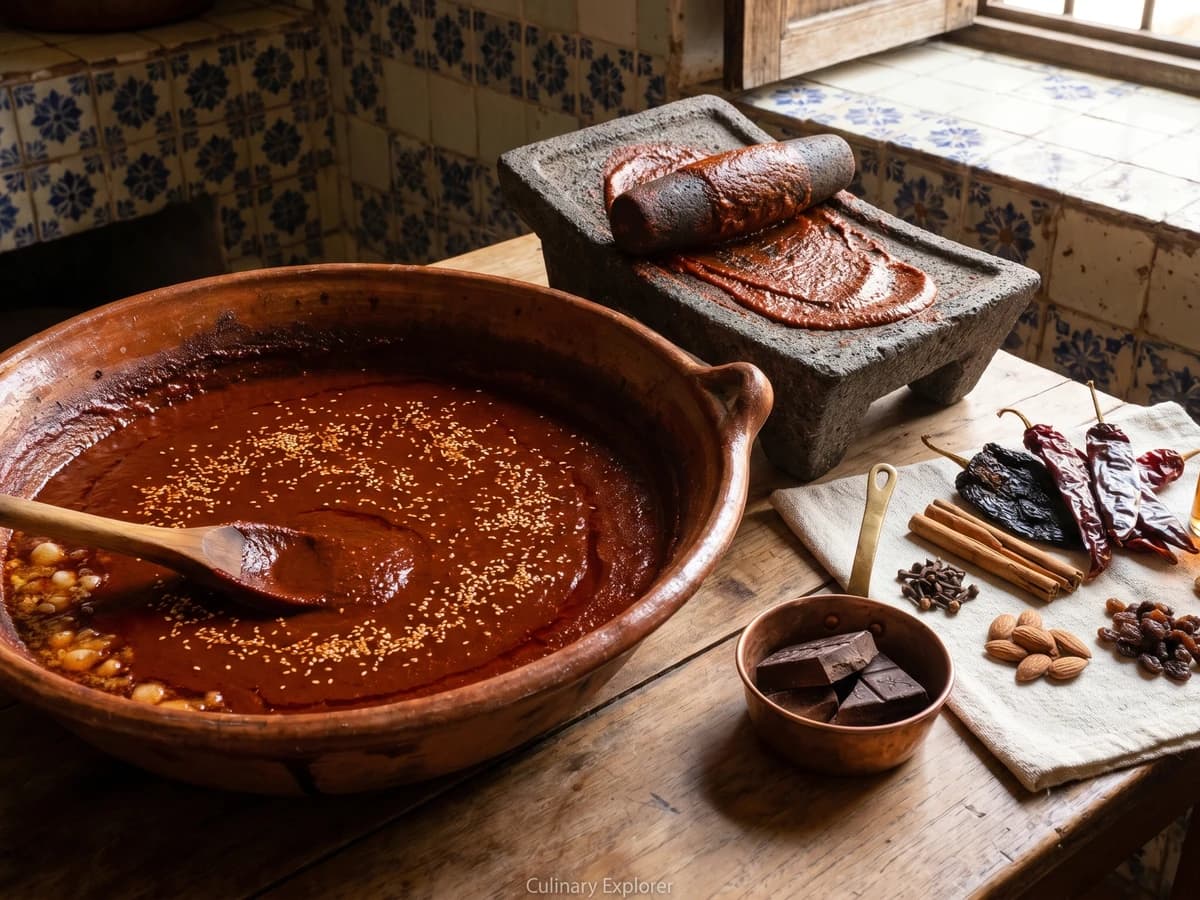
Zacatecas' wedding-table adobo, built from toasted guajillo and ancho, piloncillo, sour orange, chocolate, canela, clavo, almonds, sesame, and lard.

Chef Lupita
Puebla's convent kitchens built this adobo with ancho, guajillo, jerez, almonds, raisins, clove, and lard, a baroque marinade that stains pork loin and finishes as the sauce.