
Chef Dean
Bacon Egg and Cheese on a Roll
The iconic New York bodega breakfast: shattering-crisp bacon, a golden-yolked fried egg, and molten American cheese tucked into a soft kaiser roll. This is the sandwich that built a city.
A cooking platform built around craft, culture, and the stories behind what we eat.

Created by
Paper-thin ribeye sizzled until caramelized, draped with molten cheese, and tucked into a hoagie roll with a crackling crust and pillowy crumb. This is Philadelphia on a plate, no pretension required.
The cheesesteak was born in 1930 when Pat Olivieri, a hot dog vendor in South Philadelphia, threw some chopped beef on his flat-top and stuffed it into an Italian roll. A passing cabbie smelled it, demanded one for himself, and an American icon was born. Within a decade, Pat's King of Steaks had a permanent location, and the cheesesteak had claimed its rightful place in the American culinary canon.
Forget everything you've eaten at airport food courts and suburban strip malls. A proper cheesesteak requires three things done right: ribeye sliced so thin it practically dissolves on the griddle, a roll with structural integrity and honest crust, and cheese applied with purpose. The rest is just noise.
I've watched tourists argue about Cheez Whiz versus provolone as if theology were at stake. Here's the truth: Pat and Harry Olivieri added cheese in the 1940s, and Whiz became popular in the 1950s for its meltability. Provolone is the choice for those who want something resembling actual cheese. American splits the difference. Pick your side and defend it, but don't let anyone tell you there's only one way. The sandwich predates all of them.
Quantity
1 1/2 pounds
partially frozen for slicing
Quantity
2 tablespoons
Quantity
1 large
thinly sliced
Quantity
1 teaspoon
Quantity
1/2 teaspoon
freshly ground
Quantity
8 slices
Quantity
8 slices
Quantity
1/2 cup
Quantity
4 (6-8 inches each)
Quantity
2 tablespoons
softened
| Ingredient | Quantity |
|---|---|
| ribeye steakpartially frozen for slicing | 1 1/2 pounds |
| vegetable oil or beef tallow | 2 tablespoons |
| yellow onion (optional)thinly sliced | 1 large |
| kosher salt | 1 teaspoon |
| black pepperfreshly ground | 1/2 teaspoon |
| provolone cheese | 8 slices |
| white American cheese (optional) | 8 slices |
| Cheez Whiz (optional) | 1/2 cup |
| hoagie rolls | 4 (6-8 inches each) |
| unsalted buttersoftened | 2 tablespoons |
Place the ribeye in the freezer for 45 minutes to an hour, until firm but not frozen solid. You want resistance when you press it, not a rock. Using your sharpest knife, slice the meat against the grain as thin as humanly possible. We're talking translucent. If you can't read a newspaper through each slice, keep practicing. The slices should be no more than an eighth of an inch thick.
Heat a large cast iron skillet or flat griddle over medium-high heat until a drop of water sizzles and evaporates on contact. Add one tablespoon of oil and the sliced onions. Cook, stirring occasionally, until deeply caramelized and soft, about 8 to 10 minutes. The onions should be golden-brown and sweet, not pale and crunchy. Push them to one side of the pan or transfer to a bowl.
Add the remaining oil to the hot pan. Working in batches if necessary, spread the sliced beef in a single layer. Season immediately with salt and pepper. Let it sizzle undisturbed for about 30 seconds until the edges begin to brown, then use two spatulas to chop and flip the meat. The goal is small pieces with crispy, caramelized edges and tender centers. Total cooking time is 2 to 3 minutes per batch. The meat should sizzle aggressively. If it's steaming quietly, your pan isn't hot enough.
Using your spatulas, divide the cooked meat into four rough piles on the griddle, roughly the length of your rolls. If using onions, distribute them over each pile now. For provolone or American, drape two slices over each mound and let the residual heat melt them, about 30 seconds. For Cheez Whiz, warm it gently in a small saucepan or microwave until pourable, then ladle it directly onto the meat piles.
Split the hoagie rolls lengthwise, leaving one edge intact as a hinge. Spread softened butter on the cut surfaces. Toast them cut-side down in a clean area of the griddle, or in a 400°F oven for 2 to 3 minutes, until the edges are golden and slightly crisp but the interior remains soft. The roll must be sturdy enough to contain the filling without becoming armor.
Here's the Philadelphia method: hold the opened roll inverted over each meat-and-cheese pile, then use your spatula to scoop everything up and into the bread in one motion. The roll comes to the meat, not the other way around. This keeps the filling intact and the cheese from sliding. Press gently to compact. Wrap the bottom half in foil or butcher paper if eating on the go.
A cheesesteak waits for no one. The roll is absorbing moisture, the cheese is setting, the window of perfection is narrow. Eat it standing at the counter if you must. That's tradition too. Have plenty of napkins ready. If you finish without grease on your chin, you weren't doing it right.
1 serving (about 340g)
Culinary guides, cultural storytelling, and the editorial depth that makes cooking meaningful.
Discover Culinary ExplorerChef Dean
The iconic New York bodega breakfast: shattering-crisp bacon, a golden-yolked fried egg, and molten American cheese tucked into a soft kaiser roll. This is the sandwich that built a city.

Chef Dean
Buffalo's proudest sandwich: silky rare roast beef mounded on a crusty roll showered with caraway and coarse salt, the top dipped in warm jus, the whole thing demanding horseradish and a cold beer.

Chef Dean
Shatteringly crisp beer-battered halibut piled on a buttery bun with tangy homemade tartar sauce and crunchy coleslaw. This is the Pacific Northwest on a plate, the kind of sandwich worth driving to the coast for.
Chef Dean
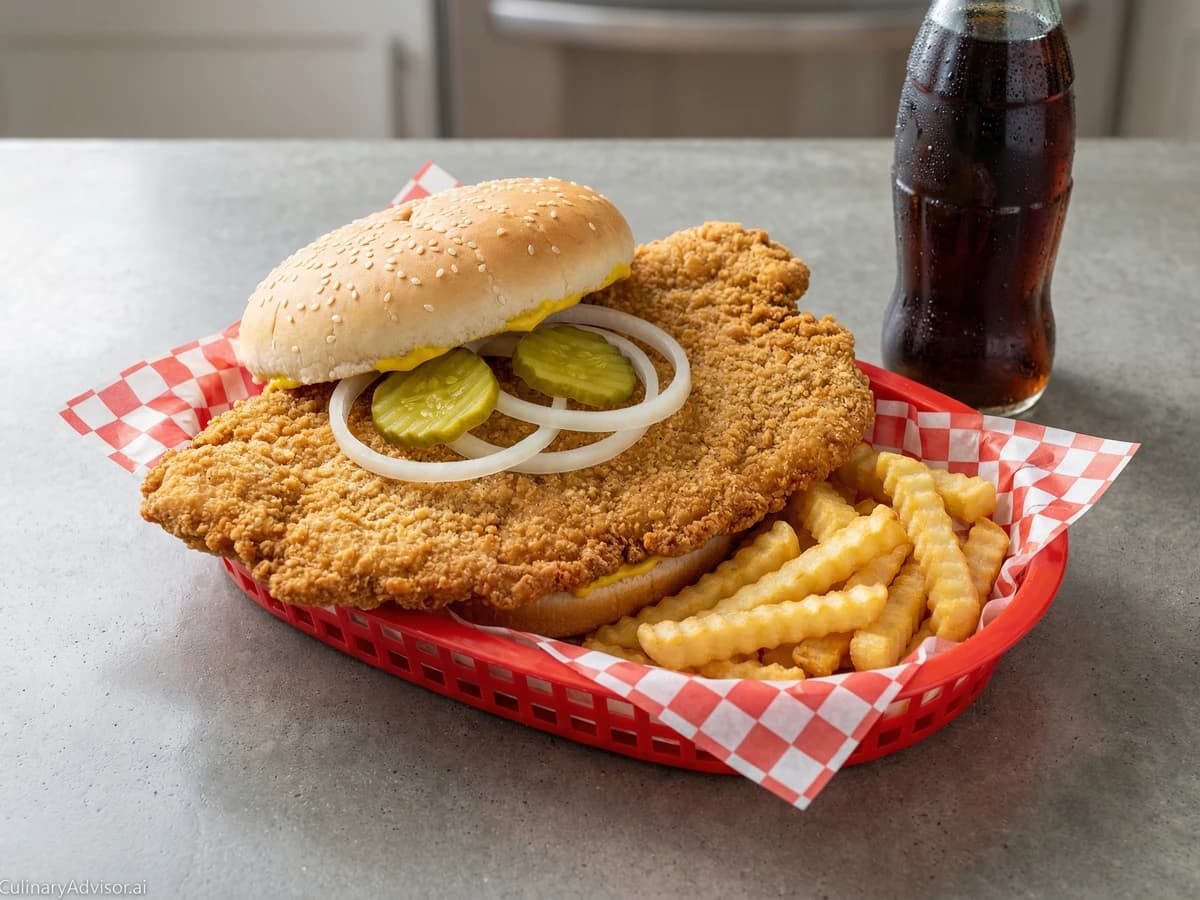
A pork cutlet pounded thin as a playing card, coated in seasoned cracker crumbs, and fried until it sprawls gloriously past the edges of its bun. This is Indiana on a plate.