
Chef Dean
Classic Pastrami on Rye
A towering stack of peppery, garlicky pastrami on honest seeded rye, slathered with spicy brown mustard and served with a crisp dill pickle. This is the sandwich that built empires on the Lower East Side.
A cooking platform built around craft, culture, and the stories behind what we eat.
Created by
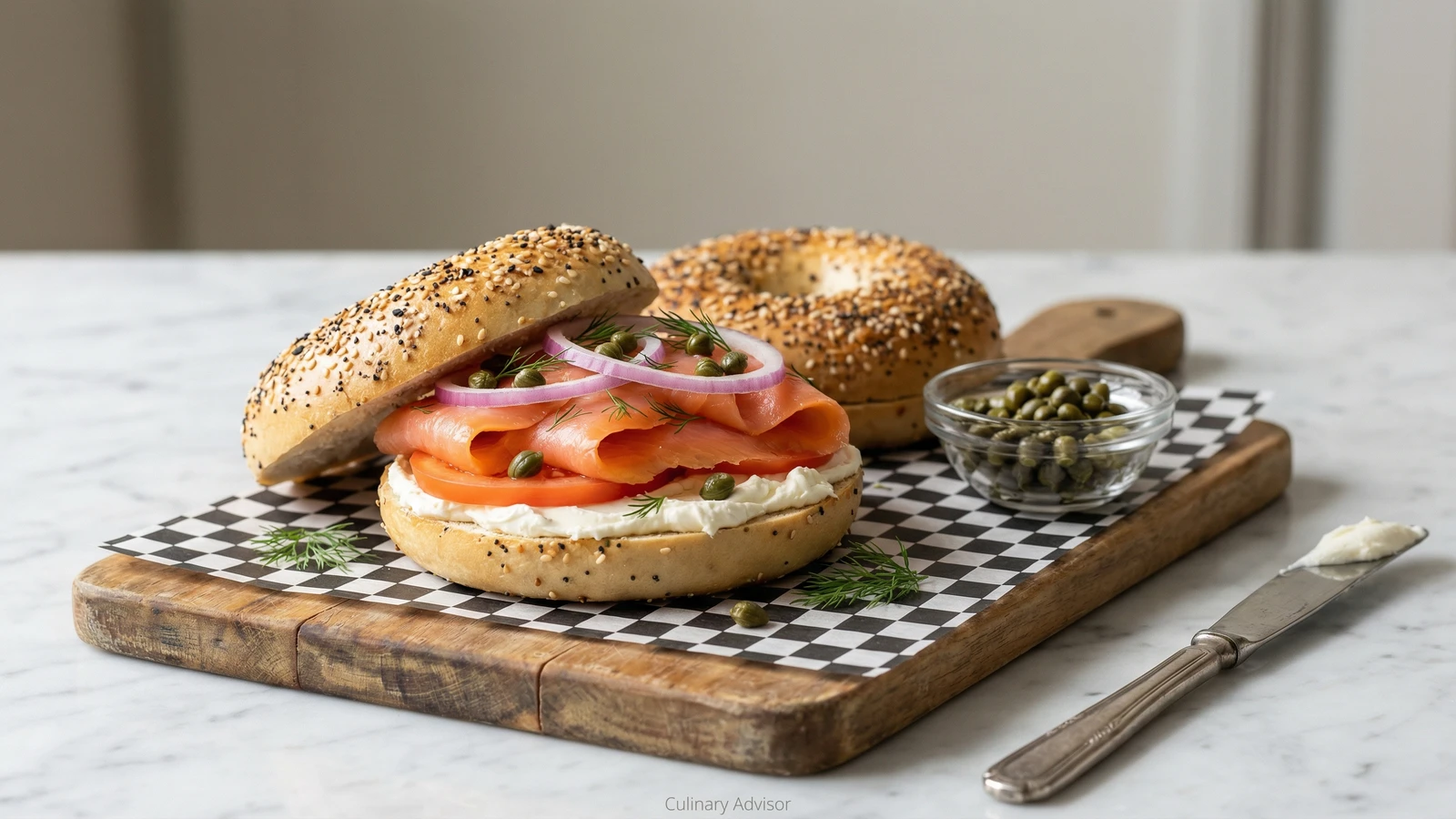
New York's definitive breakfast: hand-sliced lox layered over schmeared cream cheese on a properly chewy bagel, crowned with paper-thin onion, ripe tomato, and briny capers. This is the sandwich that built a culinary tradition.
There is no more perfect union in American food than lox and cream cheese on a proper bagel. Jewish immigrants brought this combination to New York in the late nineteenth century, and it became as essential to the city's identity as the Brooklyn Bridge. The dish is deceptively simple. Five or six ingredients. No cooking. And yet most versions fail because people forget that assembly is its own form of technique.
The bagel must be fresh and dense, with a shiny crust that resists your teeth before yielding to a chewy interior. Supermarket bagels puffed with air and soft as sandwich bread will not do. The cream cheese should be full-fat and spreadable, never the whipped variety that disappears into nothing. And the lox—silky, coral-pink, cold-smoked salmon—must be sliced thin enough to drape but thick enough to taste.
I've eaten this sandwich in delis from the Lower East Side to Los Angeles, and the great ones share a common philosophy: respect the ingredients and get out of their way. The onion is sliced thin because thick rings overwhelm. The capers are scattered sparingly because their brine should accent, not dominate. The tomato appears only when summer provides specimens worth eating. This is not a recipe that rewards improvisation. It rewards restraint.
Quantity
2
plain, everything, or sesame
Quantity
6 ounces
thinly sliced
Quantity
6 ounces
softened slightly
Quantity
1/4 small
sliced paper-thin
Quantity
2 tablespoons
drained
Quantity
1
sliced 1/4-inch thick
Quantity
for garnish
Quantity
to taste
freshly cracked
| Ingredient | Quantity |
|---|---|
| fresh bagelsplain, everything, or sesame | 2 |
| cold-smoked salmon (lox)thinly sliced | 6 ounces |
| full-fat cream cheesesoftened slightly | 6 ounces |
| red onionsliced paper-thin | 1/4 small |
| capersdrained | 2 tablespoons |
| ripe beefsteak tomatosliced 1/4-inch thick | 1 |
| fresh dill fronds (optional) | for garnish |
| black pepperfreshly cracked | to taste |
Using a serrated knife, slice each bagel horizontally through its equator. A proper bagel resists the blade slightly before the serrations catch. If your knife glides through like butter, you have bread masquerading as a bagel. Set the halves cut-side up on your work surface.
Spread a generous layer of cream cheese across each bagel half, using the back of a spoon or an offset spatula. The schmear should be about a quarter-inch thick, covering the surface evenly to the edges. This layer serves as both foundation and mortar, holding everything together. The ratio matters: too little and the salmon overwhelms, too much and you taste only fat.
Drape the salmon slices over the cream cheese on the bottom halves, folding and ruffling them slightly rather than laying them flat. This creates texture and visual appeal while making each bite more interesting. Use about three ounces per bagel, enough to cover the surface with gentle overlapping folds. The salmon should look abundant but not excessive.
Scatter the paper-thin onion rings over the salmon, separating them into individual rings as you go. Follow with the drained capers, distributing them evenly so each bite contains one or two. These briny little spheres should accent the salmon, not compete with it. A dozen per bagel half is plenty.
If your tomato is worthy—ripe, red, and fragrant—lay one or two slices over the onions. Season with several grinds of black pepper. Add a few dill fronds if you like, though traditionalists will argue this is gilding the lily. The top half of the bagel goes on last, cream cheese side down, pressing gently to marry the layers.
Slice each assembled bagel in half if you prefer easier handling, or serve whole and let people wrestle with it as New Yorkers have for generations. Place on plates with any remaining capers and onion scattered alongside. A bagel with lox waits for no one. The cream cheese warms, the bagel softens, the moment passes.
1 serving (about 325g)
Culinary guides, cultural storytelling, and the editorial depth that makes cooking meaningful.
Discover Culinary ExplorerChef Dean
A towering stack of peppery, garlicky pastrami on honest seeded rye, slathered with spicy brown mustard and served with a crisp dill pickle. This is the sandwich that built empires on the Lower East Side.
Chef Dean
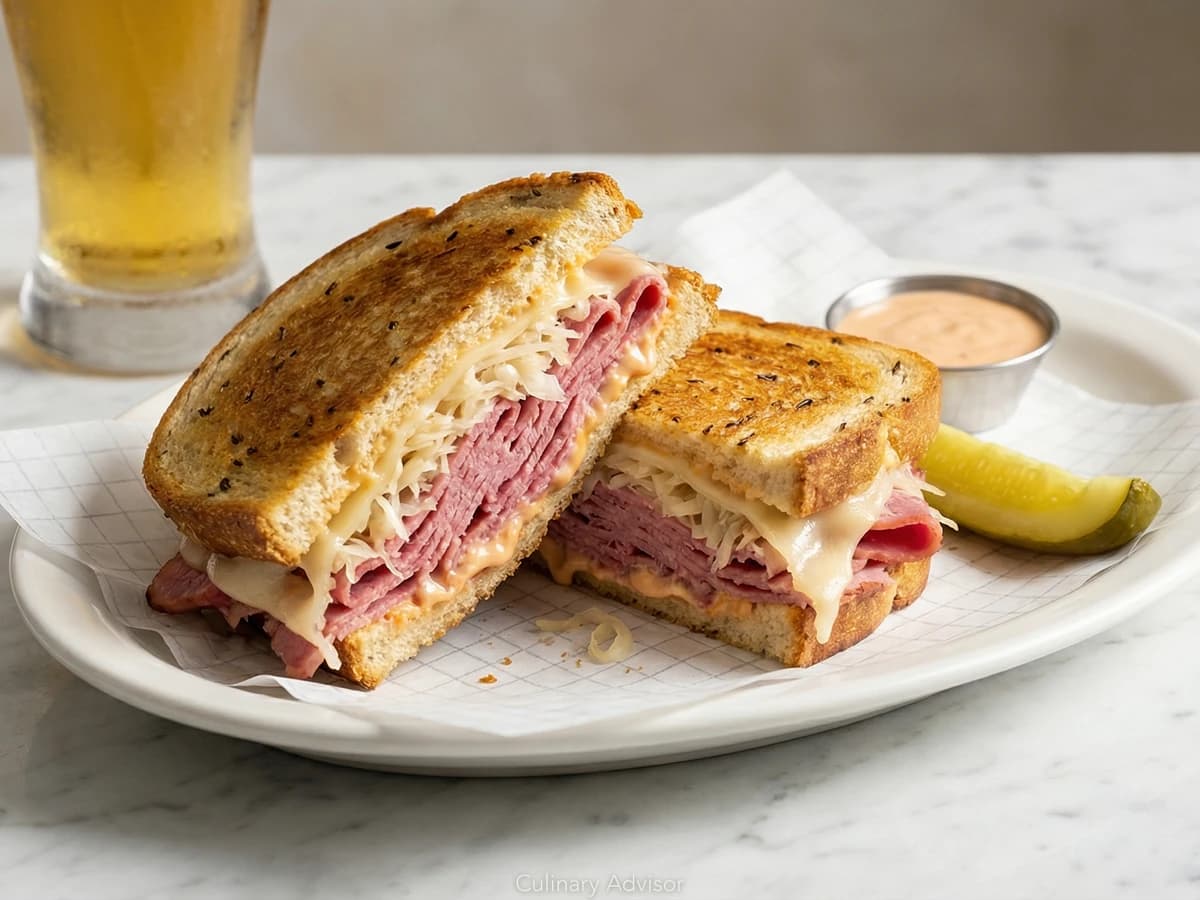
The quintessential Jewish deli sandwich: piles of warm corned beef, tangy sauerkraut, and molten Swiss cheese pressed between slices of seeded rye until golden and crisp, dressed with homemade Russian dressing that ties every layer together.

Chef Juliette
Five classical fillings between bread buttered to every edge, cut into tidy rectangles and held under a light weight: a French buffet lesson in softness, proportion, and restraint.
Chef Juliette
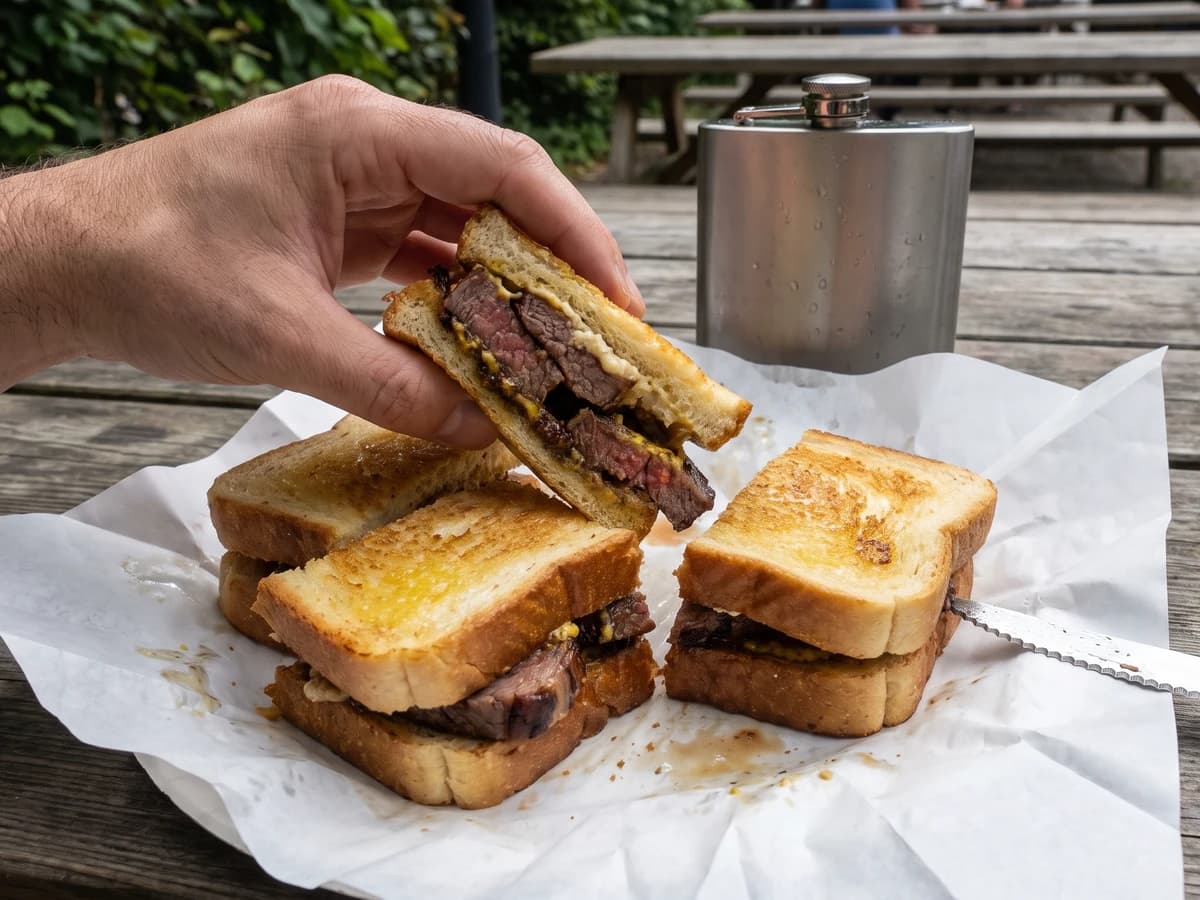
Steak grilled dark at the edges, cooled, sharpened with horseradish and mustard, then pressed between buttered loaf heels until the crumb catches every juice: a race-day sandwich substantial enough to be supper.