
Chef Dean
Bacon Egg and Cheese on a Roll
The iconic New York bodega breakfast: shattering-crisp bacon, a golden-yolked fried egg, and molten American cheese tucked into a soft kaiser roll. This is the sandwich that built a city.
A cooking platform built around craft, culture, and the stories behind what we eat.
Created by
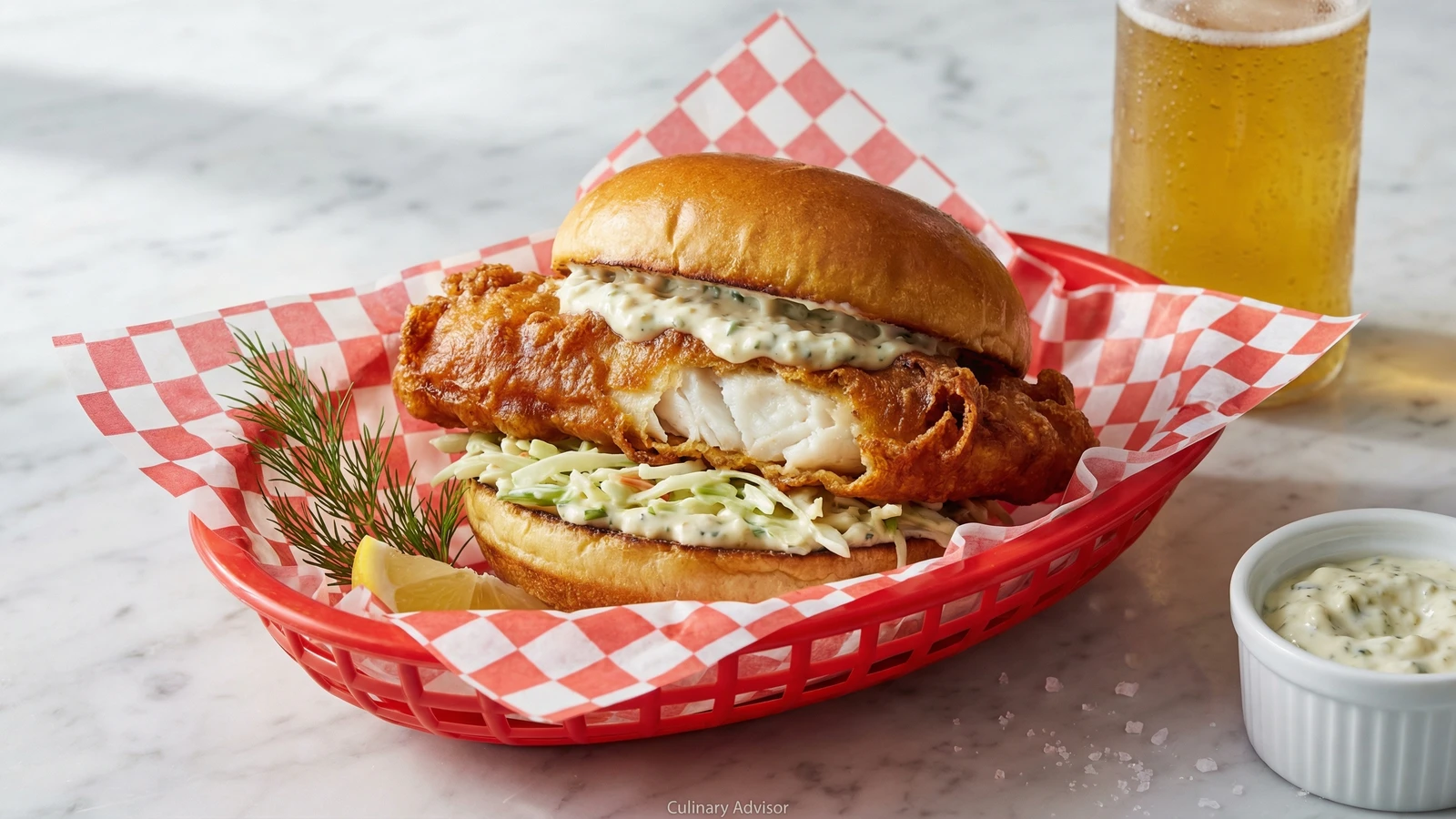
Shatteringly crisp beer-battered halibut piled on a buttery bun with tangy homemade tartar sauce and crunchy coleslaw. This is the Pacific Northwest on a plate, the kind of sandwich worth driving to the coast for.
The halibut sandwich belongs to the Pacific Northwest the way the lobster roll belongs to Maine. Walk the docks of Seattle or Astoria and you'll find shacks serving this exact sandwich: a thick fillet of local halibut, dipped in beer batter, fried until the coating crackles when you bite through. The fish inside stays moist and sweet, flaking in great white sheets against the golden armor that protects it.
I grew up eating halibut pulled from cold Pacific waters. My mother would buy it straight off the boats, and we'd have it three ways before the week was out. But the sandwich version holds a special place. It transforms a pristine fillet into something you can eat standing up, paper napkin tucked into your collar, watching the boats come in.
The batter is the thing. Beer provides lift and flavor, the carbonation creating thousands of tiny air pockets that puff and crisp in hot oil. Use a lager or pilsner, something clean and cold. Save your craft IPAs for drinking. The fish needs a neutral canvas that lets its sweetness shine through.
Quantity
1 1/2 pounds
skinned and cut into 4 portions
Quantity
1 1/2 cups total
1 cup for batter, 1/2 cup for dredging
Quantity
1/2 cup
Quantity
1 teaspoon
Quantity
1 teaspoon
Quantity
1/2 teaspoon
freshly ground
Quantity
1/4 teaspoon
Quantity
1 cup
Quantity
about 2 quarts
for frying
Quantity
4
Quantity
2 tablespoons
softened
Quantity
1/2 cup
Quantity
2 tablespoons
Quantity
1 tablespoon
drained and roughly chopped
Quantity
1 tablespoon
Quantity
1 teaspoon
Quantity
1 tablespoon
minced
Quantity
2 cups
finely shredded
Quantity
1/4 cup
Quantity
1 tablespoon
Quantity
1/2 teaspoon
Quantity
for serving
| Ingredient | Quantity |
|---|---|
| halibut filletskinned and cut into 4 portions | 1 1/2 pounds |
| all-purpose flour1 cup for batter, 1/2 cup for dredging | 1 1/2 cups total |
| cornstarch | 1/2 cup |
| baking powder | 1 teaspoon |
| kosher salt | 1 teaspoon |
| black pepperfreshly ground | 1/2 teaspoon |
| cayenne pepper | 1/4 teaspoon |
| cold lager beer | 1 cup |
| vegetable or peanut oilfor frying | about 2 quarts |
| brioche or potato buns | 4 |
| unsalted buttersoftened | 2 tablespoons |
| mayonnaise (for tartar sauce) | 1/2 cup |
| dill pickle relish | 2 tablespoons |
| capersdrained and roughly chopped | 1 tablespoon |
| fresh lemon juice | 1 tablespoon |
| Dijon mustard | 1 teaspoon |
| fresh dillminced | 1 tablespoon |
| green cabbagefinely shredded | 2 cups |
| mayonnaise (for slaw) | 1/4 cup |
| apple cider vinegar | 1 tablespoon |
| celery seed | 1/2 teaspoon |
| lemon wedges | for serving |
Stir together the mayonnaise, pickle relish, chopped capers, lemon juice, Dijon mustard, and minced dill in a small bowl. Taste it. Adjust the lemon or add a pinch of salt if needed. This should be tangy enough to cut through the richness of fried fish. Refrigerate while you prepare everything else.
Toss the shredded cabbage with the mayonnaise, cider vinegar, and celery seed. Season with salt and pepper. The slaw should be lightly dressed, not swimming. It needs to stay crisp on the sandwich, providing contrast to the soft bun and tender fish. Set aside at room temperature.
Pat your halibut portions completely dry with paper towels. Moisture is the enemy of crisp batter. Each piece should be roughly the size and shape of your bun, about three-quarters of an inch thick. If your fillets are uneven, pound the thicker end gently with your palm to even them out. Season lightly with salt on both sides.
Pour oil into a heavy Dutch oven or deep skillet to a depth of three inches. Attach a deep-fry thermometer and heat over medium-high until the oil reaches 375 degrees. This takes longer than you expect. Be patient. The temperature will drop when you add the fish, so starting hot is essential.
While the oil heats, whisk together the flour, cornstarch, baking powder, salt, black pepper, and cayenne in a medium bowl. Make a well in the center and pour in the cold beer. Whisk from the center outward, incorporating flour gradually until you have a smooth batter the consistency of heavy cream. A few small lumps are fine. Do not overmix.
Place the half cup of flour for dredging in a shallow dish. Working with one piece at a time, dredge the halibut in flour, shaking off the excess. The flour coating helps the batter adhere. Dip the floured fish into the batter, letting the excess drip back into the bowl for a count of three.
Carefully lower the battered fish into the hot oil, laying it away from you to prevent splashing. Fry two pieces at a time to avoid crowding and dropping the oil temperature. Cook for four to five minutes, turning once halfway through, until the batter is deeply golden and the fish is cooked through. The coating should sound hollow when tapped with tongs.
Transfer fried fish to a wire rack set over a sheet pan. Season immediately with a pinch of salt while the coating is still hot and can absorb it. Let rest for two minutes. This brief rest allows the internal steam to escape and the crust to firm up. A paper towel-lined plate traps steam and makes the bottom soggy.
While the second batch fries, split the buns and spread the cut sides with softened butter. Toast in a dry skillet over medium heat until golden brown, about one minute. The butter creates a moisture barrier that prevents the tartar sauce from making the bun soggy.
Spread a generous tablespoon of tartar sauce on the bottom bun. Pile a mound of coleslaw over the sauce. Set the hot fried halibut directly on the slaw, allowing the slaw to cushion and support it. Add another dollop of tartar sauce to the top bun if you like. Close the sandwich. Serve immediately with lemon wedges alongside.
1 sandwich (about 430g)
Culinary guides, cultural storytelling, and the editorial depth that makes cooking meaningful.
Discover Culinary ExplorerChef Dean
The iconic New York bodega breakfast: shattering-crisp bacon, a golden-yolked fried egg, and molten American cheese tucked into a soft kaiser roll. This is the sandwich that built a city.

Chef Dean
Buffalo's proudest sandwich: silky rare roast beef mounded on a crusty roll showered with caraway and coarse salt, the top dipped in warm jus, the whole thing demanding horseradish and a cold beer.
Chef Dean
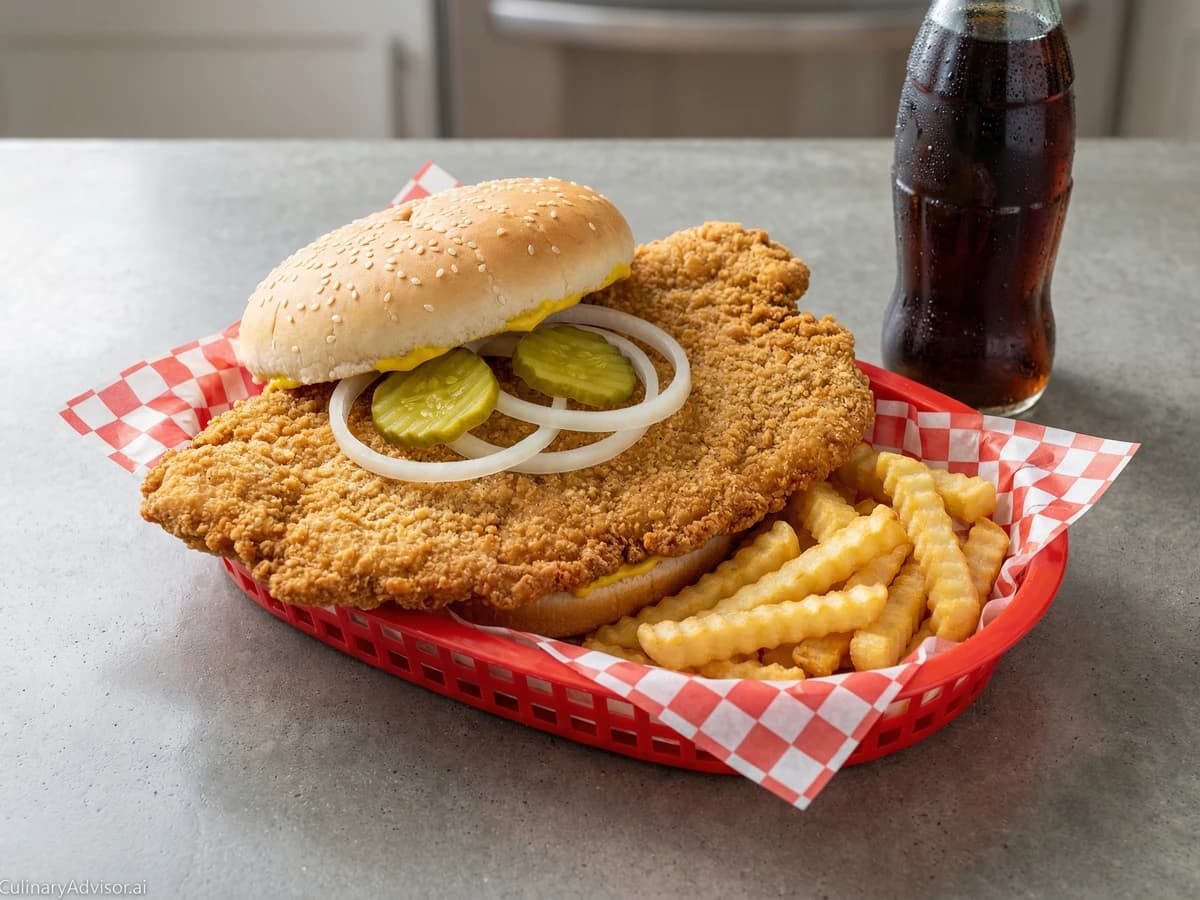
A pork cutlet pounded thin as a playing card, coated in seasoned cracker crumbs, and fried until it sprawls gloriously past the edges of its bun. This is Indiana on a plate.

Chef Dean
An all-beef frankfurter loaded with mustard, neon relish, onion, tomato, pickle, and fiery sport peppers on a steamed poppy seed bun. This is Chicago's gift to American street food, assembled with precision and eaten with pride.