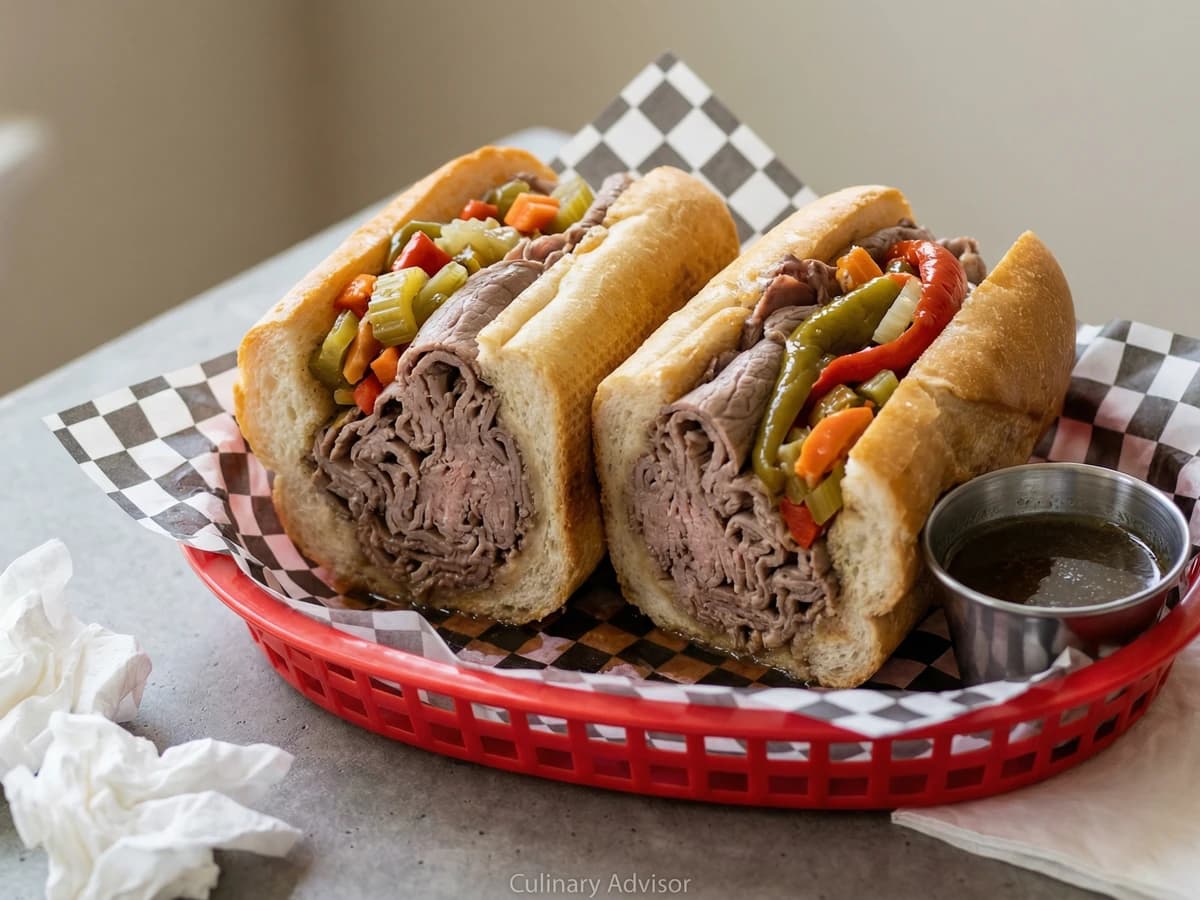
Fork-tender roast pork piled onto a seeded Italian roll with sharp provolone and garlicky broccoli rabe, finished with a splash of porky jus. The sandwich that locals choose when tourists aren't watching.
Sandwiches & Wraps
Italian
Weeknight
Comfort Food
45 min
Active Time
4 hr 30 min cook•5 hr 15 min total
Yield8 sandwiches
Philadelphia has two great sandwiches. Tourists line up for one. Locals know better.
The roast pork Italian emerged from the Italian Market neighborhood, where butchers and bakers worked side by side and nothing went to waste. Pork shoulder, rubbed with garlic and fennel and rosemary, roasted until it surrenders to the gentlest pressure. Broccoli rabe, blanched to tame its bitterness then sautéed with enough garlic to keep vampires out of South Philly. Sharp provolone, not that rubbery mild stuff, but cheese with actual character. All of it piled onto a seeded roll with the proper ratio of tender crumb to slight crust.
The bread matters more than any ingredient except the pork itself. A proper Italian roll from Philadelphia has a thin, yielding crust scattered with sesame seeds and an interior soft enough to absorb the jus without disintegrating. If you cannot find the genuine article, seek out a quality sub roll with seeds and toast it briefly to approximate that texture.
This is a project sandwich. The pork needs hours of slow roasting. The broccoli rabe requires blanching and sautéing. But every step rewards you with something no deli counter, however beloved, can replicate: the smell of that roast filling your kitchen, the first bite still warm from assembly, the satisfaction of having done the thing properly.
The technique, the tradition, and the story behind every dish.
long hot peppers or cherry peppers (optional)sliced
to taste
Equipment Needed
•Roasting pan with rack
•Instant-read thermometer
•Fat separator or measuring cup
•Large pot for blanching
•12-inch skillet
Instructions
1
Prepare the pork rub
Combine the minced garlic, crushed fennel seeds, rosemary, salt, pepper, and olive oil in a small bowl. Mash everything together with the back of a spoon until you have a coarse paste. The fennel and rosemary should be well coated with oil and garlic. This is your flavor foundation.
Crush fennel seeds in a mortar and pestle or under the flat of a chef's knife. You want them cracked open, not powdered, so they release their anise flavor slowly during roasting.
2
Season the pork
Pat the pork shoulder thoroughly dry with paper towels. Score the fat cap in a crosshatch pattern, cutting about a quarter inch deep. This allows the rub to penetrate and helps the fat render properly. Massage the herb paste all over the meat, working it into every crevice and into the scored fat. Place the pork on a rack set in a roasting pan, cover loosely with plastic wrap, and refrigerate for at least four hours or overnight. The longer the better.
Overnight seasoning transforms this dish. The salt draws moisture to the surface, which dissolves the salt, which then gets reabsorbed along with all those aromatics. Patience rewards you.
3
Begin the roast
Remove the pork from the refrigerator one hour before cooking to take the chill off. Preheat your oven to 325 degrees. Pour the wine and chicken stock into the bottom of the roasting pan, beneath the rack. These liquids will catch the drippings and become your jus while keeping the oven humid enough to prevent the exterior from drying before the interior cooks through.
4
Slow-roast until tender
Roast the pork uncovered for three and a half to four hours, until an instant-read thermometer inserted into the thickest part reads 190 to 195 degrees and the meat offers no resistance when pierced with a fork. The exterior should be deeply golden brown, the fat cap rendered and crisp in spots. Check the liquid level every hour, adding more stock if the pan threatens to run dry.
5
Rest and make the jus
Transfer the pork to a cutting board, tent loosely with foil, and let rest for twenty to thirty minutes. Pour the pan juices through a fine-mesh strainer into a fat separator or measuring cup. Let the fat rise, then pour or spoon off the clear jus beneath. You want about one cup of liquid. Taste it. Season if needed. Keep warm.
Don't discard that rendered pork fat. Strained and refrigerated, it's liquid gold for frying potatoes or starting a pot of beans.
6
Blanch the broccoli rabe
Bring a large pot of generously salted water to a boil while the pork rests. Trim the tough bottom stems from the broccoli rabe, about two inches worth. Plunge the greens into the boiling water and cook for two minutes, just until the stems are barely tender and the bitterness is tempered. Drain immediately and spread on a sheet pan to cool. Do not shock in ice water. You want these warm for the next step.
7
Sauté with garlic
Heat three tablespoons of olive oil in your largest skillet over medium heat. Add the sliced garlic and red pepper flakes, stirring constantly until the garlic turns golden at the edges, about ninety seconds. The moment you smell that sweet garlic perfume, add the blanched broccoli rabe. Toss to coat with the garlicky oil, season with salt, and cook just until heated through and glossy, another two minutes. The greens should be tender but still have presence.
8
Slice the pork
Slice the rested pork against the grain into pieces about a quarter inch thick. They should fall apart slightly at the edges. This is not deli meat. This is roast pork with character. Keep the slices piled together to stay warm.
9
Prepare the rolls
Split the seeded rolls lengthwise, leaving one edge attached as a hinge. If your rolls are soft, a brief toast cut-side down in a dry skillet gives them structure without turning them crusty. Authenticity demands a roll that compresses slightly when you bite down but holds together through the last morsel.
10
Assemble the sandwiches
Layer sharp provolone on the bottom half of each roll. Pile warm sliced pork generously over the cheese. Top with a tangle of garlicky broccoli rabe. Add sliced long hots if you like heat. Drizzle a spoonful of warm jus over everything, letting it soak into the bread. Close the sandwich and press gently to marry the components. Serve immediately with extra jus for dipping.
The ratio matters: enough pork to be substantial, enough rabe to cut the richness, enough jus to moisten without making the roll soggy. About four ounces of pork per sandwich is the target.
Chef Tips
•Sharp provolone is not negotiable. The aged, assertive cheese stands up to the rich pork and bitter greens. Mild provolone contributes nothing but calories.
•Seek out a proper seeded Italian roll from a bakery if possible. The hoagie rolls sold in supermarket bread aisles are too soft and too sweet. A quality sub roll with sesame seeds works if that's your only option.
•Long hots are traditional but not required. These are the long, pale green Italian frying peppers with unpredictable heat. Some are mild, some will clear your sinuses. Cherry peppers packed in vinegar offer a tamer, tangy alternative.
•This sandwich does not reheat well. The roll absorbs the jus and loses its texture. Make only what you'll eat immediately, keeping components separate if serving later.
Advance Preparation
•The pork can be seasoned up to 24 hours ahead and refrigerated. Longer seasoning produces more flavorful meat.
•Roasted pork keeps refrigerated for up to 4 days. Slice cold, then reheat gently in the warm jus before assembling sandwiches.
•Blanch broccoli rabe up to a day ahead and refrigerate. Sauté with garlic just before serving.
•For transporting to a tailgate or picnic, keep components separate: sliced pork and warm jus in a thermos or insulated container, broccoli rabe at room temperature, cheese and rolls in a bag. Assemble on site.
Frequently Asked Questions
Nutrition Information
1 serving (about 385g)
Calories
1135 calories
Total Fat
60 g
Saturated Fat
21 g
Trans Fat
0 g
Unsaturated Fat
35 g
Cholesterol
165 mg
Sodium
3767 mg
Total Carbohydrates
52 g
Dietary Fiber
4 g
Sugars
3 g
Protein
68 g
Where cooking meets culture.
Culinary guides, cultural storytelling, and the editorial depth that makes cooking meaningful.