Chef Graziella
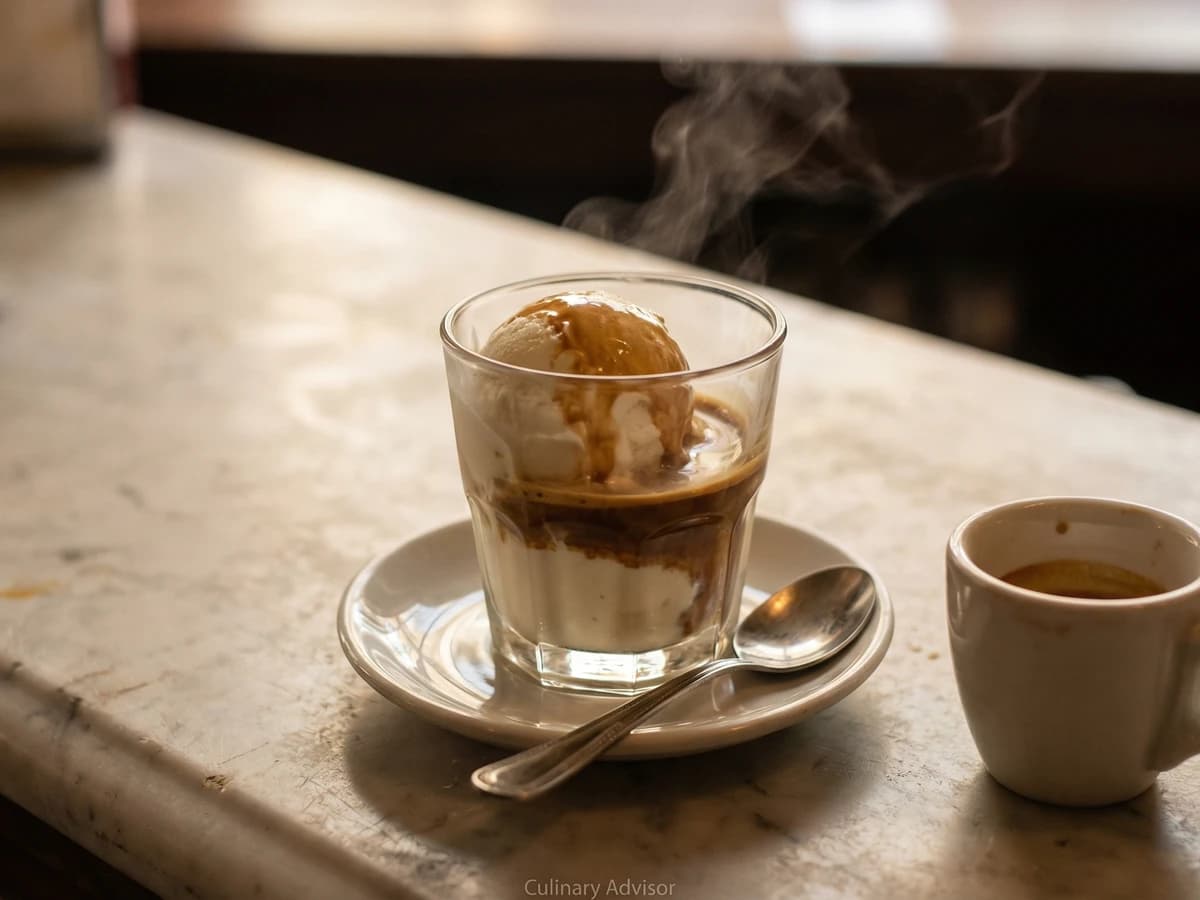
Affogato al Caffè
Three ingredients, no cooking, pure theater. The espresso must be fresh, the gelato must be cold, and the moment of pouring must happen at the table where everyone can watch.
A cooking platform built around craft, culture, and the stories behind what we eat.

Created by
The singular cup that built a coffee culture. Twenty-five seconds of precision, a layer of golden crema, and the discipline to drink it standing at the bar as Italians have done for over a century.
Espresso is not strong coffee. It is not bitter. It is not a vehicle for milk and flavored syrups. Espresso is the purest expression of the coffee bean, extracted under pressure in half a minute, drunk in three sips while standing at the bar. This is how Italians have taken their morning coffee for generations, and there is no improving upon it.
The word itself reveals the method: espresso means 'pressed out,' referring to the pressure that forces hot water through finely ground coffee. What emerges is not merely concentrated but transformed. The oils emulsify, the crema forms, and flavors appear that no other brewing method can produce. When you see that thick, tiger-striped layer of golden-brown foam floating on the surface, you know the extraction was correct.
Americans order espresso and let it sit while they finish a conversation. This is wrong. The crema begins to dissipate within seconds. The temperature drops. The flavors flatten. In Italy, the barista slides the cup across the bar and you drink it immediately, in two or three swallows. Then you pay, you nod, and you leave. The entire ritual takes less than five minutes. This is not rudeness. This is respect for the coffee.
Angelo Moriondo of Turin patented the first espresso machine in 1884, but it was Luigi Bezzera and Desiderio Pavoni of Milan who refined it into the rapid-extraction method we know today. By the 1940s, Achille Gaggia introduced the lever-driven machine that created true crema for the first time, and the modern Italian espresso was born.
Quantity
7 grams (1 level tablespoon)
finely ground
Quantity
30 milliliters (1 fluid ounce)
Quantity
to taste
| Ingredient | Quantity |
|---|---|
| espresso-roast coffeefinely ground | 7 grams (1 level tablespoon) |
| filtered water | 30 milliliters (1 fluid ounce) |
| sugar (optional) | to taste |
Turn on your espresso machine and allow it to heat fully. This takes 15 to 25 minutes depending on the machine. The group head, the portafilter, and the cup must all be hot. Run a blank shot of water through the group head to purge any stale water and preheat the portafilter. Place your espresso cup on top of the machine to warm.
Grind whole beans immediately before brewing. The grind must be fine, like table salt or slightly finer, but not powdery. Dose exactly 7 grams for a single shot into the portafilter basket. Level the grounds by tapping the portafilter gently against your palm.
Hold the tamper like a doorknob and press straight down with 30 pounds of pressure. The surface should be level and polished. An uneven tamp creates channels where water rushes through too quickly, producing weak, watery espresso with no crema. Wipe any stray grounds from the rim of the portafilter.
Lock the portafilter firmly into the group head. Place your warm cup beneath. Begin extraction immediately. The espresso should begin flowing in 3 to 5 seconds. It will start dark, then lighten to a rich caramel color. The entire extraction should take 25 to 30 seconds. Stop when you have approximately 30 milliliters in the cup.
Proper espresso has a layer of crema 2 to 3 millimeters thick covering the entire surface. The color should be golden-brown with darker tiger stripes. The crema should persist for at least two minutes without breaking. If your crema is thin, pale, or disappears immediately, something is wrong: stale beans, incorrect grind, poor extraction, or a dirty machine.
This is the only instruction that truly matters. Do not let the espresso sit. Do not wait for it to cool. Do not take a photograph. Stir once to integrate the crema, add sugar if you wish, and drink it in two or three swallows while standing. The entire experience should take less than one minute. This is how Italians drink espresso. This is correct.
1 serving (about 30g)
Culinary guides, cultural storytelling, and the editorial depth that makes cooking meaningful.
Discover Culinary ExplorerChef Graziella
Three ingredients, no cooking, pure theater. The espresso must be fresh, the gelato must be cold, and the moment of pouring must happen at the table where everyone can watch.
Chef Graziella
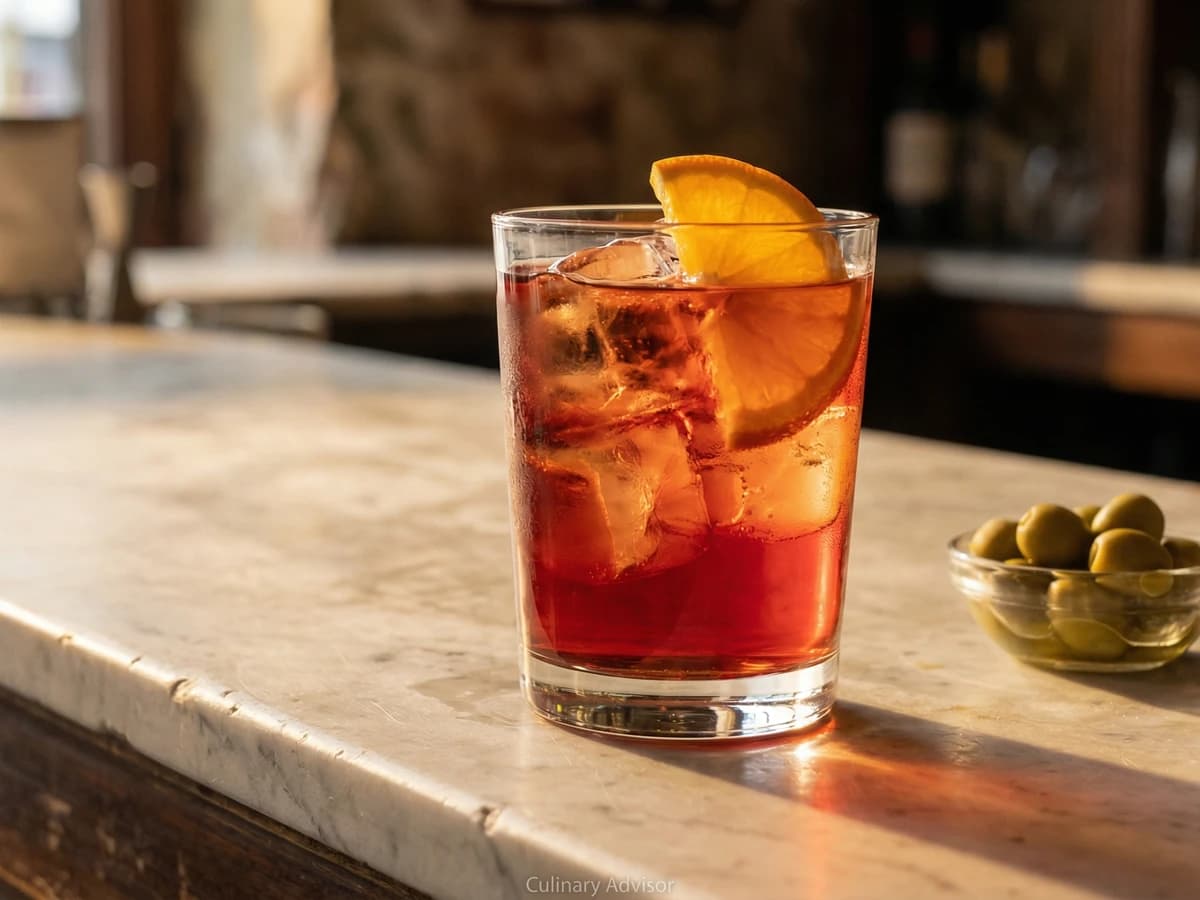
The original aperitivo of the Risorgimento era, when bitter Campari from Milan met sweet vermouth from Turin. Before someone added gin and called it a Negroni, this was the drink of Italian sophistication.
Chef Graziella
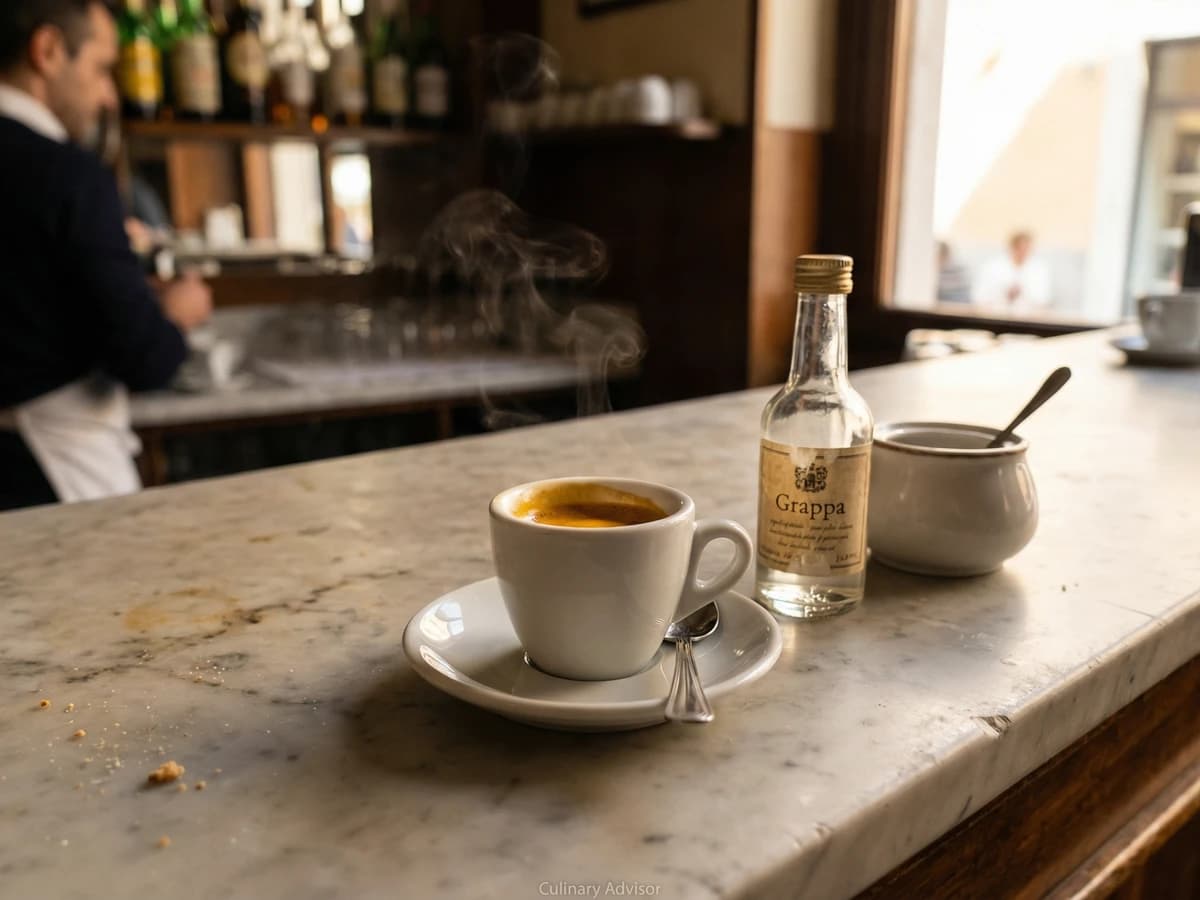
The Italian coffee that needs no apology: a shot of espresso fortified with grappa, sambuca, or brandy. Some mornings demand correction.

Chef Graziella
The only iced coffee worth drinking in summer. Hot espresso, cold ice, violent shaking, and a foam that proves you did it right. This is what Italians drink when Americans are ordering frappuccinos.