
Chef Graziella
Acquacotta Maremmana
The humblest soup in Tuscany, born from the wild Maremma where shepherds and charcoal burners transformed water, onions, stale bread, and an egg into sustenance. Proof that poverty teaches better than plenty.
A cooking platform built around craft, culture, and the stories behind what we eat.
Created by
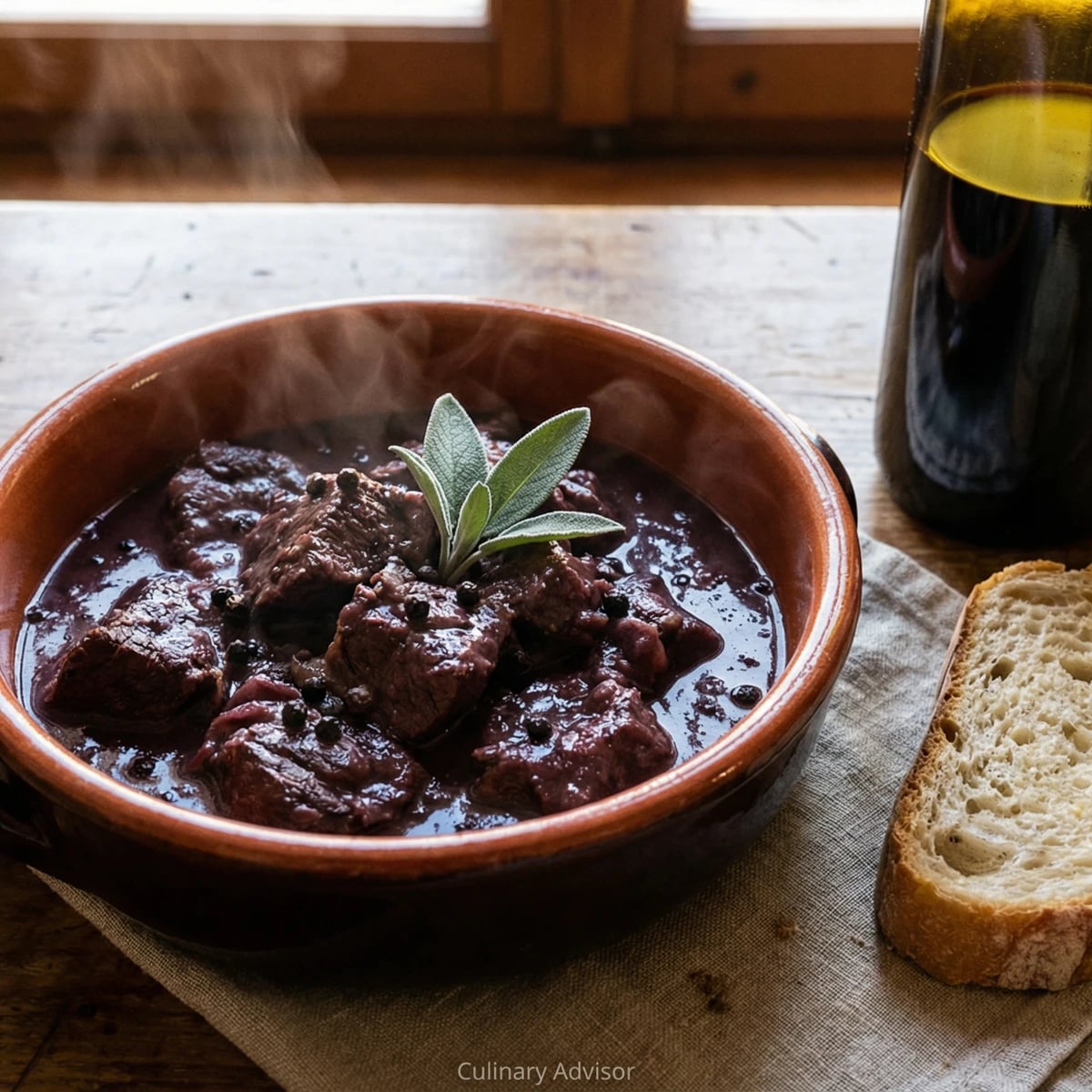
Beef braised in a river of Chianti with a startling quantity of black pepper. The dish that Brunelleschi's workers ate while building the dome of Florence. Five ingredients. Five hours. Nothing else.
This is not a stew you cook. It is a stew you assemble and forget. Terracotta workers in Impruneta would place an earthenware pot beside the kiln at dawn, filled with nothing but beef, wine, garlic, and an amount of pepper that seems reckless until you taste the result. By evening, after hours in the residual heat of dying coals, they had dinner.
There is no browning, no fond, no soffritto. The method violates everything I usually teach about building flavor from the bottom. And yet it works, because the wine does the work that technique would otherwise accomplish. Two full bottles submerge the meat, and over five hours they reduce into something concentrated and magnificent.
The pepper is not optional, and the quantity is not negotiable. Three tablespoons of whole peppercorns sounds like a mistake. It is not. The long cooking softens their bite while preserving their warmth. What emerges is pepper transformed, no longer sharp but deep and almost sweet. The Florentines call this dish peposo for a reason. If you are timid about pepper, cook something else.
The workers who supplied terracotta tiles for Brunelleschi's dome of the Florence Cathedral in the 15th century are credited with inventing peposo. They placed their pots at the mouths of the kilns where temperatures hovered around 180 degrees Fahrenheit, the heat too gentle to boil but sufficient to braise meat over an entire workday. The dish has not changed since.
Quantity
3 pounds
cut into 3-inch pieces, bone-in
Quantity
2 bottles (1.5 liters)
Quantity
3 tablespoons
Quantity
12
peeled and left whole
Quantity
6
Quantity
4 sprigs
Quantity
2 sprigs
Quantity
1 can (14 ounces)
crushed by hand
Quantity
1 tablespoon
| Ingredient | Quantity |
|---|---|
| beef shankcut into 3-inch pieces, bone-in | 3 pounds |
| Chianti or dry Tuscan red wine | 2 bottles (1.5 liters) |
| whole black peppercorns | 3 tablespoons |
| garlic clovespeeled and left whole | 12 |
| whole cloves | 6 |
| fresh sage | 4 sprigs |
| fresh rosemary | 2 sprigs |
| San Marzano tomatoescrushed by hand | 1 can (14 ounces) |
| kosher salt | 1 tablespoon |
Place the beef pieces in a heavy terracotta pot or Dutch oven. Add the whole peppercorns, garlic cloves, whole cloves, sage, and rosemary. Pour in the crushed tomatoes. There is no browning. There is no soffritto. You do not sauté anything. This is the entire method: everything goes in together, raw.
Pour in both bottles of wine. The meat should be completely submerged. If it is not, add more wine. Do not substitute broth. Do not add water. The wine is the cooking liquid, the sauce, and the soul of this dish. Sprinkle the salt over everything.
Cover the pot tightly. If using terracotta, seal the lid with a paste of flour and water to prevent steam from escaping. Place in a cold oven. Set the temperature to 275 degrees Fahrenheit. Walk away. The stew will cook for at least 5 hours, possibly 6. Do not open the pot to check. Do not stir.
After 5 hours, remove the lid. The meat should be deeply dark, nearly purple from the wine, and falling from the bone at the slightest touch of a fork. The liquid will have reduced by half or more, becoming thick and glossy. If the meat still resists, cover and return to the oven for another hour.
Taste the sauce. It should be intensely peppery, almost aggressive. This is correct. The pepper mellows as the dish rests but should remain assertive. Remove the herb sprigs. Serve in wide bowls with thick slices of unsalted Tuscan bread to soak up the dark, winey sauce. The peppercorns are meant to be eaten. They will be soft from the long cooking.
1 serving (about 220g)
Culinary guides, cultural storytelling, and the editorial depth that makes cooking meaningful.
Discover Culinary Explorer
Chef Graziella
The humblest soup in Tuscany, born from the wild Maremma where shepherds and charcoal burners transformed water, onions, stale bread, and an egg into sustenance. Proof that poverty teaches better than plenty.

Chef Graziella
A whole piece of beef, surrendered to Barolo wine and patience, until the tannins transform into velvet and the meat falls apart at the suggestion of a fork. This is Piedmont on a plate.

Chef Graziella
The storied fish stew of Ancona, where up to thirteen varieties of Adriatic fish simmer gently in a broth sharpened with vinegar and gilded with saffron. Every port town claims theirs is authentic.

Chef Graziella
The fish stew of my home coast, where fishermen brought whatever the Adriatic offered and their wives made it into something that needed nothing more than good bread and an appetite.