Chef Lupita
Acúmara Tatemada al Comal
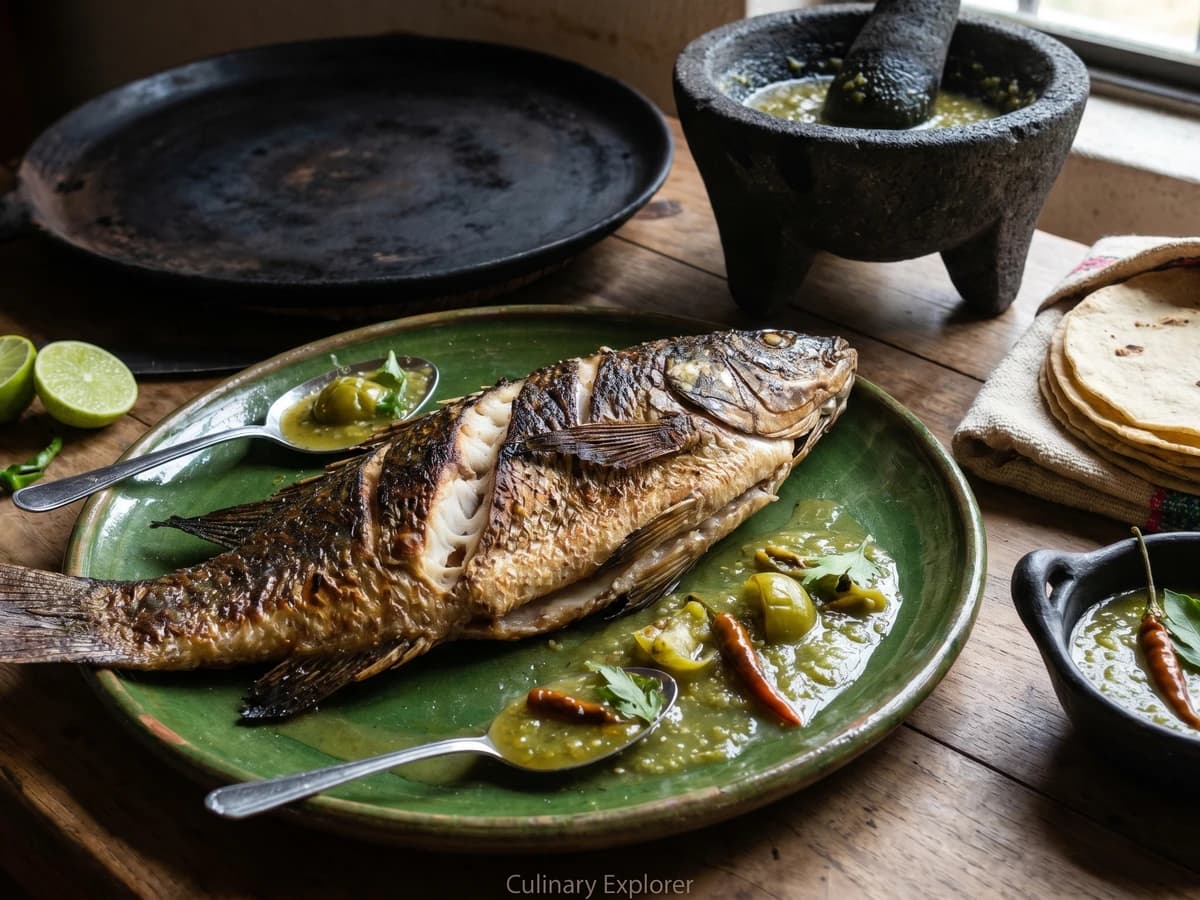
Michoacán's Lake Pátzcuaro acúmara, a whole kurucha from the lago tatemada on a comal de leña and served with chile perón atápakua, corn tortillas, and P'urhépecha discipline.
A cooking platform built around craft, culture, and the stories behind what we eat.

Created by
Chiapa de Corzo's ceremonial Fiesta Grande beef, salt-cured tasajo folded into a thick pepita sauce with toasted rice, achiote, and lard, built for January tables and served from clay.
Chiapas, Chiapa de Corzo, in the Depresion Central beside the Grijalva River: that is where pepita con tasajo stands. During Fiesta Grande in January, when the Parachicos fill the streets, this is not a casual beef dish. It is comida grande, food for devotion, family, and the kind of table where the cazuela arrives before anyone sits.
The sauce belongs to the south: pepita de calabaza, achiote, toasted rice, a little chile ancho for color and dried-fruit depth, all ground until thick enough to hold to the tasajo. It is not hot. People who think every Mexican dish should burn are telling you they have not eaten enough Mexico. This is a 32-state cuisine.
In Chiapa de Corzo, the women who make this well know the fire better than the clock. Pepita burns fast. Rice thickens fast. Manteca carries the flavor and keeps the sauce generous. My mother did not cook this dish, she was from Jalisco, but in my notebook from Chiapa de Corzo I wrote exactly what a señora near the plaza told me: keep the fire low after the pepita goes in, because the sauce can split before you finish your sentence. La cocina no es decoración, es trabajo.
Pepita con tasajo is tied to Chiapa de Corzo's Fiesta Grande, held each January for the Señor de Esquipulas, San Antonio Abad, and San Sebastián Mártir; the Parachicos of this festival were inscribed by UNESCO in 2010. The sauce joins Mesoamerican seed-thickened cooking, especially pumpkin seed grinding, with colonial cattle culture through tasajo, the salt-cured beef that could travel and keep in a hot climate. Achiote, native to tropical America and deeply rooted in southern Mexican and Maya-area cooking, gives the dish its brick-orange color without making it a chile-heavy stew.
Quantity
2 1/2 pounds
sliced across the grain into 1/4-inch-thick strips for tasajo
Quantity
2 tablespoons, plus more only if needed
for curing
Quantity
8 cups, plus more as needed
Quantity
1 medium
halved, divided between broth and sauce
Quantity
7
4 peeled for broth, 3 unpeeled for roasting
Quantity
2 cups
unsalted
Quantity
1/3 cup
Quantity
2 large
stemmed and seeded
Quantity
3
Quantity
1 1/2 tablespoons
preferably without vinegar
Quantity
6
Quantity
2
Quantity
1/2-inch piece
Quantity
1/4 teaspoon
Quantity
1/3 cup
Quantity
for serving
warmed
| Ingredient | Quantity |
|---|---|
| beef flank steak or top roundsliced across the grain into 1/4-inch-thick strips for tasajo | 2 1/2 pounds |
| coarse sea saltfor curing | 2 tablespoons, plus more only if needed |
| water | 8 cups, plus more as needed |
| white onionhalved, divided between broth and sauce | 1 medium |
| garlic cloves4 peeled for broth, 3 unpeeled for roasting | 7 |
| raw hulled pumpkin seeds (pepitas)unsalted | 2 cups |
| long-grain white rice | 1/3 cup |
| dried chile anchostemmed and seeded | 2 large |
| ripe Roma tomatoes (jitomates) | 3 |
| achiote pastepreferably without vinegar | 1 1/2 tablespoons |
| black peppercorns | 6 |
| whole cloves | 2 |
| Mexican cinnamon stick | 1/2-inch piece |
| cumin seed | 1/4 teaspoon |
| manteca de cerdo (pork lard) | 1/3 cup |
| hand-pressed corn tortillas (optional)warmed | for serving |
Lay the beef strips on a rack set over a sheet pan. Sprinkle the coarse sea salt over both sides and refrigerate uncovered for 12 to 18 hours. In Chiapa de Corzo the meat would already be tasajo, salted and dried by someone who knows the trade. In your kitchen, the refrigerator does the safe work. If you bought true tasajo de res, do not salt it again. Soak it in cold water for 20 to 40 minutes, until it tastes salty but not punishing.
Rinse the cured beef quickly under cold water and pat it dry. Put it in a heavy pot with 8 cups water, half the white onion, and the 4 peeled garlic cloves. Bring to a gentle simmer and cook for 45 to 60 minutes, until the meat is tender but still holds its shape. Skim the surface during the first 10 minutes. Lift out the meat and reserve at least 4 cups of the broth. That broth is the backbone of the sauce.
Heat a dry comal or heavy skillet over medium-low heat. Toast the pepitas in a single layer, stirring constantly, until they puff slightly, turn speckled gold, and smell nutty, 4 to 6 minutes. Do not let them go dark. Burned pepita turns the whole cazuela bitter, and no amount of achiote will rescue it.
On the same comal, toast the rice until it turns pale gold and smells lightly roasted, about 4 minutes. Move it constantly. Toast the peppercorns, cloves, cinnamon, and cumin seed for 30 seconds, just until fragrant. The rice thickens the sauce. If it tastes raw, the sauce tastes chalky. This is why you toast it.
Toast the chile ancho pieces on the hot comal for 15 to 20 seconds per side, just until flexible and fragrant. Place them in a bowl and cover with hot water for 15 minutes. Hot water, not boiling. The ancho gives dried-fruit depth and color, not aggressive heat. Not every Mexican dish is trying to burn your mouth.
Roast the tomatoes, the remaining half onion, and the 3 unpeeled garlic cloves on the comal until blistered in spots. Turn them with tongs so the tomatoes soften and the onion picks up browned edges. Peel the garlic. This roasted base keeps the pepita sauce from tasting flat.
Drain the soaked chile ancho. In a blender, combine the toasted pepitas, toasted rice, toasted spices, drained chiles, roasted tomatoes, roasted onion, peeled roasted garlic, achiote paste, and 2 cups of the reserved beef broth. Blend for a full 2 minutes, scraping as needed, until the sauce is very smooth and thick like atole. A metate gives the finest texture. A blender works if you do not get lazy.
Melt the manteca de cerdo in a wide clay cazuela or heavy Dutch oven over medium-low heat. Pour in the pepita mixture carefully. It will sputter. Stir with a wooden spoon for 8 to 10 minutes, scraping the bottom and corners, until the color deepens to brick orange and tiny beads of orange fat appear at the edge. La manteca es el sabor. This frying step wakes up the achiote and gives the pepita body.
Add the cooked tasajo strips to the cazuela and stir until every piece is coated. Add 1 to 2 more cups reserved broth, enough for a thick sauce that moves slowly around the spoon. Simmer gently for 20 to 25 minutes, stirring often because pepita and rice like to catch on the bottom. Taste for salt only at the end. The tasajo has already spoken.
Take the cazuela off the heat and let it rest for 15 minutes. The sauce will settle, thicken, and cling to the beef the way it should. Serve from the cazuela with warm corn tortillas. No crema, no cheese, no lettuce. If someone asks for flour tortillas, remind them that those belong to the north, not this table. Cada estado, su propia cocina.
1 serving (about 350g)
Culinary guides, cultural storytelling, and the editorial depth that makes cooking meaningful.
Discover Culinary ExplorerChef Lupita
Michoacán's Lake Pátzcuaro acúmara, a whole kurucha from the lago tatemada on a comal de leña and served with chile perón atápakua, corn tortillas, and P'urhépecha discipline.

Chef Lupita
Puebla's weekday adobo of pork shoulder braised in a thick guajillo and ancho sauce sharpened with vinegar, cumin, and clove. The deep red of a market spice stall, the dish a poblana cooks without thinking.

Chef Lupita
Loreto's pit-roasted clams, planted hinge-up in beach sand and tatemadas under a fast fire of dried romerillo brush, the resinous Baja desert shrub that gives this dish its smoke.

Chef Lupita
Oaxaca's eighth mole, the silky, almond-and-cinnamon almendrado, served over poached chicken. Mild, sweet, restrained, and a quiet rebuttal to anyone who thinks Mexican food has to be hot to be Mexican.