
Chef Dimitra
Aegean Island Chtapodi me Kritharaki (Χταπόδι με Κριθαράκι)
Aegean island octopus, tomato, red wine, and toasted kritharaki share one pot, so the pasta drinks the briny sauce and stays glossy instead of turning heavy.
A cooking platform built around craft, culture, and the stories behind what we eat.
Created by
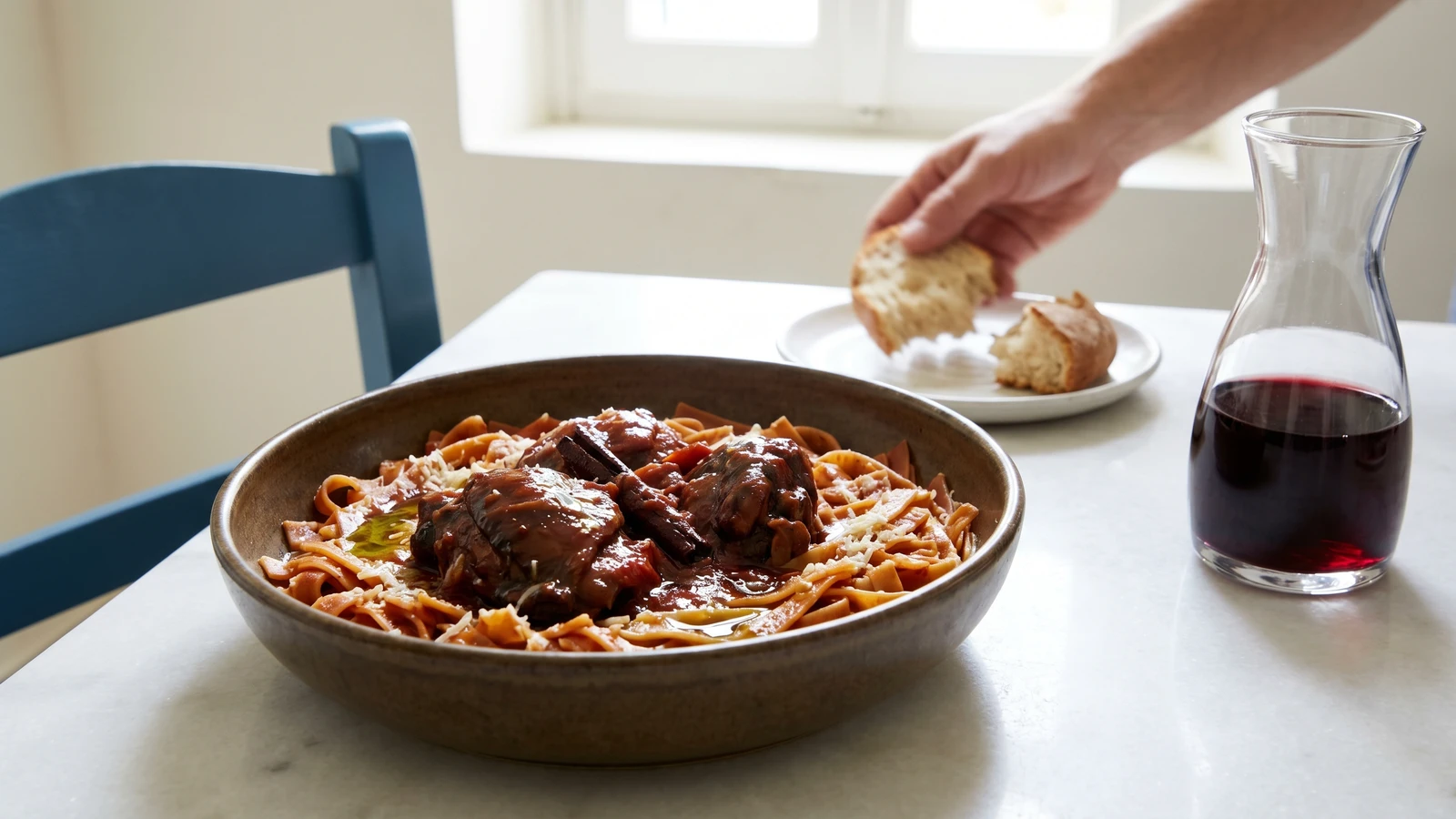
Peloponnesian kokoras krasatos is the Sunday rooster, browned well, braised low in red wine, tomato, and cinnamon, then spooned over hilopites.
Kokoras krasatos belongs to the Peloponnesian Sunday table: rooster browned in olive oil, then braised in red wine, tomato, cinnamon, and bay until the sauce turns dark enough to stain the hilopites beneath it. The region is the dish's surname here, especially when the wine comes from Nemea and the pasta is the little egg square Greeks call hilopites.
The whole dish depends on patience after the wine goes in. Let the wine bubble hard for a few minutes before the tomato joins it, so the raw edge cooks away and the sauce becomes deep rather than sharp. Then lower the flame and leave the bird alone. A mature rooster needs time to surrender, often two hours, and there's no clever way around that.
I use rooster when I can find it, and an older free-range chicken when I can't. Λίγα και καλά, a few things, and good ones. Brown meat, honest wine, ripe tomato, and the cinnamon used with restraint. That is enough. My grandmother Despina would have served this with pasta on a cold Sunday, the pot already on before the house had fully woken.
Kokoras krasatos is a rural mainland braise tied to households that kept chickens long past the tender age of a spring bird. In the Peloponnese, red wine from wine-growing areas such as Nemea gave the sauce its depth, while hilopites made from eggs and flour turned the braise into a full Sunday meal. The dish records a practical older kitchen: mature birds were not wasted, they were cooked slowly until strength became flavor.
Quantity
1, about 1.8kg
cut into 8 pieces
Quantity
10g
Quantity
3g
Quantity
80ml
Quantity
2 large, about 300g
finely chopped
Quantity
3
sliced
Quantity
2 tablespoons
Quantity
500ml
Quantity
400g
grated if fresh
Quantity
1
Quantity
2
Quantity
3
Quantity
250ml
plus more if needed
Quantity
500g
Quantity
20g
Quantity
30g
for serving
| Ingredient | Quantity |
|---|---|
| rooster or mature free-range chickencut into 8 pieces | 1, about 1.8kg |
| fine sea salt | 10g |
| freshly ground black pepper | 3g |
| extra virgin Koroneiki olive oil | 80ml |
| yellow onionsfinely chopped | 2 large, about 300g |
| garlic clovessliced | 3 |
| tomato paste | 2 tablespoons |
| dry red wine, preferably Agiorgitiko from Nemea | 500ml |
| ripe tomatoes or canned crushed tomatoesgrated if fresh | 400g |
| cinnamon stick | 1 |
| bay leaves | 2 |
| allspice berries | 3 |
| hot water or light chicken stockplus more if needed | 250ml |
| hilopites (Greek egg pasta squares) | 500g |
| unsalted butter (optional) | 20g |
| grated kefalotyri or aged mizithra (optional)for serving | 30g |
Pat the rooster very dry and season it all over with the salt and pepper. Let it stand while you chop the onions. A farm bird has flavor because it has worked, so don't treat it like a soft supermarket chicken and expect it to forgive haste.
Warm the olive oil in a wide heavy pot over medium-high heat. Brown the rooster in batches, skin side down first, until the pieces are deep gold on all sides, about 8 minutes per batch. Take your time here. Pale meat gives a pale sauce.
Lower the heat to medium. Add the onions to the same pot and cook for 10 minutes, scraping the browned bits from the bottom, until the onions soften and turn honey-colored at the edges. Add the garlic and tomato paste, and stir for 2 minutes until the paste darkens.
Pour in the red wine and let it bubble firmly for 5 minutes, scraping the pot again. The sharp edge of the wine must cook off before the tomato goes in, or the sauce stays thin and sour instead of turning round and dark. This is the step that decides the dish.
Return the rooster to the pot with any juices. Add the grated tomatoes, cinnamon stick, bay leaves, allspice, and hot water or stock. Bring to a low simmer, cover partly, and cook for about 2 hours, turning the pieces once or twice, until the meat gives easily when pierced and the sauce is glossy and brick-red.
Lift the rooster pieces to a warm platter. Simmer the sauce uncovered for 10 to 15 minutes if it looks loose, until it coats a spoon. Taste for salt. Remove the cinnamon, bay leaves, and allspice berries.
Boil the hilopites in well-salted water until just tender, usually 6 to 8 minutes. Drain them and toss with the butter if you use it, then spoon over enough sauce to stain the pasta red. Set the rooster on top and finish with grated kefalotyri or mizithra if your table likes it.
Let the pot stand for 10 minutes before serving. The sauce settles, the oil rises in a green-gold gloss, and the hilopites drink just enough of the wine and tomato. This is Sunday food, not nervous food.
1 serving (about 500g)
Culinary guides, cultural storytelling, and the editorial depth that makes cooking meaningful.
Discover Culinary ExplorerChef Dimitra
Aegean island octopus, tomato, red wine, and toasted kritharaki share one pot, so the pasta drinks the briny sauce and stays glossy instead of turning heavy.

Chef Dimitra
Aegean coast psari plaki is the quiet whole-fish bake: onions and tomato softened first, fish laid on top, and olive oil doing its slow work until the bones release cleanly.

Chef Dimitra
Astakomakaronada is the Aegean islands' celebration pasta: spiny lobster, tomato, olive oil, and long noodles cooked in the shell broth, never drowned in cream or cheese.

Chef Dimitra
Aegean Easter goat on the spit, lean and full-flavored, turned slowly over charcoal and basted with lemon, oregano, garlic, and good olive oil.