Culinary Explorer

A cooking platform built around craft, culture, and the stories behind what we eat.
Discover Culinary Explorer
Gourounopoulo Roumeliotiko (Γουρουνόπουλο Ρουμελιώτικο)

Gourounopoulo Roumeliotiko (Γουρουνόπουλο Ρουμελιώτικο)

Created by

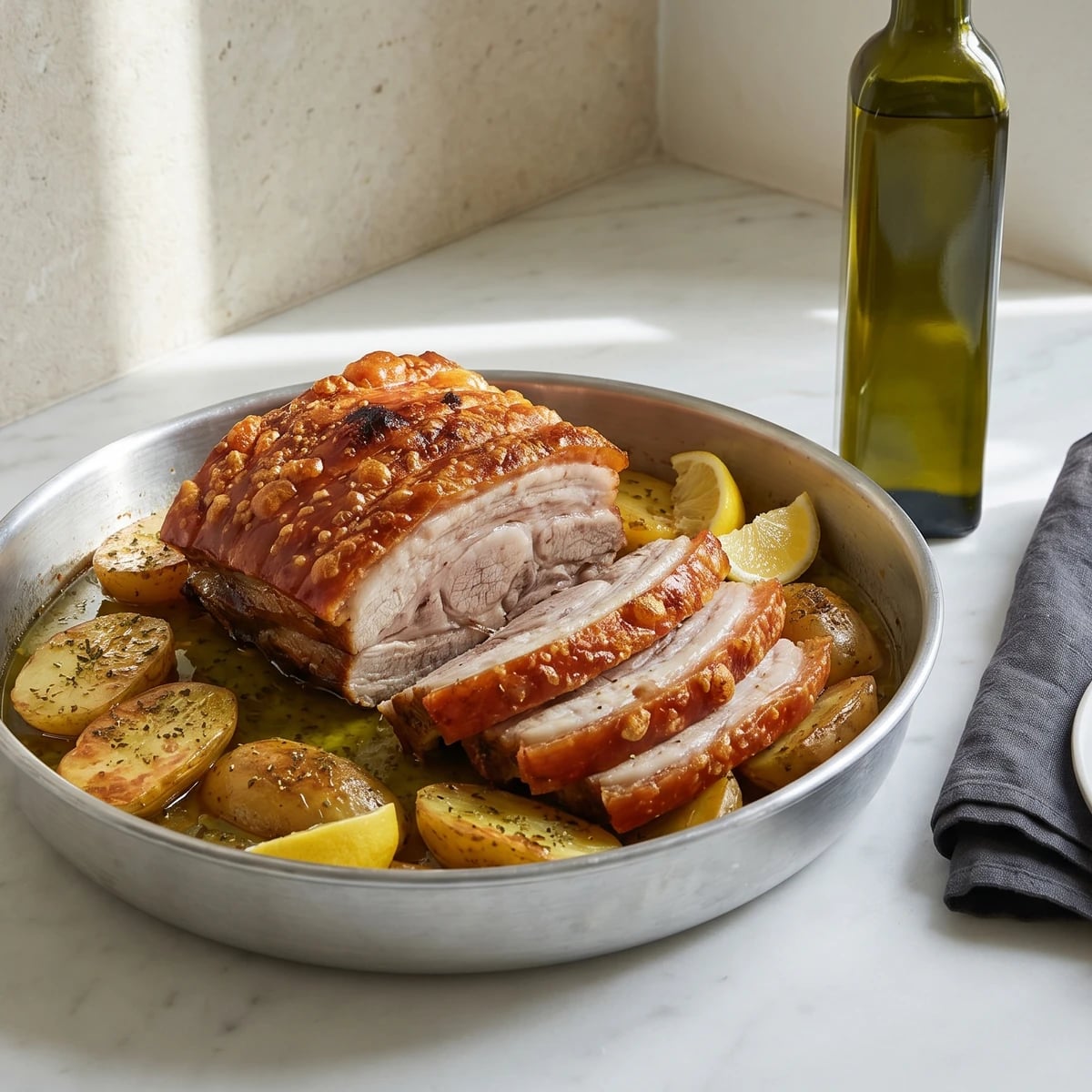
Roumeli's festival pork is all rind, fat, potatoes, and patience: skin-on pork salted overnight, roasted slowly, then finished hot until the crackling answers the knife.

Main Dishes
Greek
Special Occasion
Celebration
Comfort Food
35 min
Active Time
3 hr 15 min cook3 hr 50 min total
Yield6 servings

Gourounopoulo Roumeliotiko is Central Greece's celebration pork: a young pig when there is a crowd, or a skin-on shoulder for the home oven, roasted over potatoes that drink the fat. The region is the dish's surname. In Roumeli, this is the meat you smell near a feast day, at a name-day table, or at a village panigyri when the cook has planned properly.

The whole dish depends on the skin. Salt it the night before and leave it uncovered in the refrigerator, so the surface dries and tightens. Then it can blister into crisp crackling. If you cover it, baste it, or start with damp rind, it steams under its own fat and stays tough. Good olive oil, and patience, but first a dry skin.

The potatoes are not a side thought. They sit under the pork with wine, lemon, oregano, and bay, catching the rendered fat until their edges brown and their centers turn soft. I don't invent this. I find it, I test it, I write it down. This version keeps the feast within reach of a normal kitchen, without pretending a shoulder is a whole village pig.

In Roumeli and wider Central Greece, gourounopoulo belongs to feast cooking, especially winter slaughter days, name days, and local panigyria where young pork was roasted whole or in large pieces. The mainland custom connects to choirosfagia, the household pig slaughter before Christmas, when fresh pork, sausages, rendered fat, and preserved meat carried families through winter. Potatoes entered the Greek table in the 19th century, after independence, and eventually became the pan beneath the roast, catching what older cooks would never waste.

The technique, the tradition, and the story behind every dish.

Discover Culinary Explorer

Ingredients

skin-on pork shoulder or leg

Quantity

2.4kg

bone-in if possible

fine sea salt

Quantity

22g

for the pork

fine sea salt

Quantity

8g

for the potatoes

freshly ground black pepper

Quantity

1 tsp

dried Greek oregano

Quantity

1 tbsp

garlic cloves

Quantity

4

sliced

waxy potatoes

Quantity

1.5kg

peeled and cut into large wedges

extra virgin Koroneiki olive oil

Quantity

80ml

dry white wine

Quantity

120ml

water

Quantity

120ml

fresh lemon juice

Quantity

60ml

sweet paprika

Quantity

1 tsp

bay leaves

Quantity

2

Equipment Needed

  • large heavy roasting pan or metal tapsi, about 35cm
  • wire rack that fits inside the roasting pan
  • instant-read meat thermometer
  • very sharp knife or clean utility blade for scoring rind

Instructions

  1. 1

    Salt the rind

    The night before, pat the pork very dry. Score the skin in shallow parallel cuts, cutting through the rind but not deep into the meat. Rub 22g salt over the whole piece, pushing a little into the cuts, then set it skin-side up on a rack over a tray in the refrigerator, uncovered. This is the step that decides the dish. Dry, salted skin blisters into crackling. Damp skin steams and stays chewy, no matter how loudly the oven is asked to work.

    If your butcher can score the rind neatly, let him. If you do it yourself, use a very sharp knife and shallow cuts.
  2. 2

    Temper the pork

    Take the pork out of the refrigerator 1 hour before roasting. Heat the oven to 220C. Tuck the garlic slices into small cuts in the meat side, not into the skin, then rub the meat side with pepper, oregano, and paprika. Leave the rind plain except for its salt.

  3. 3

    Start the potatoes

    Put the potatoes in a large tapsi or heavy roasting pan. Toss with the olive oil, wine, water, lemon juice, 8g salt, and bay leaves. Spread them in one layer if you can. They should sit under the pork, where the fat can drip down and season them properly.

  4. 4

    Roast it hot

    Set the pork on a rack over the potatoes, skin-side up. Roast for 30 minutes at 220C, until the rind starts to tighten and the edges take color. Don't baste the skin. Basting is kind to meat and cruel to crackling.

  5. 5

    Roast it slow

    Lower the oven to 160C and roast for 2 hours 15 minutes to 2 hours 30 minutes, turning the potatoes once or twice and adding a splash of water only if the pan goes dry. The pork is ready when the meat pulls easily at the bone and a thermometer pushed into the thickest part reads about 88C to 92C.

  6. 6

    Finish the crackling

    Lift the pork to a board and raise the oven to 240C or turn on the grill. Return only the pork, skin-side up, for 8 to 12 minutes, watching closely, until the rind bubbles and crisps all over. If one patch is slow, shield the dark parts with foil and give it another minute.

  7. 7

    Rest and serve

    Rest the pork for 20 minutes before cutting. Leave the potatoes in the warm oven while the meat rests, so their edges stay browned and the juices thicken around them. Break the crackling into pieces, slice the pork thickly, and serve with the potatoes and pan juices spooned over the meat.

Chef Tips

  • Ask the butcher for skin-on pork shoulder or leg with a good cap of fat. Boneless supermarket pork with the rind trimmed away will give you roast meat, not gourounopoulo.
  • Don't put lemon directly on the rind. Lemon belongs in the potatoes and pan juices. The skin wants salt and dry air, nothing more.
  • Serve it with something sharp and plain: cabbage salad, horta with lemon, or pickled peppers. The pork is rich. The table needs a little bite beside it.

Advance Preparation

  • Salt and dry the pork rind uncovered in the refrigerator 12 to 24 hours ahead; the crackling depends on it.
  • Peel and cut the potatoes up to 4 hours ahead, then keep them covered in cold water and dry them well before roasting.

Frequently Asked Questions

Nutrition Information

1 serving (about 490g)

Calories
965 calories
Total Fat
60 g
Saturated Fat
18 g
Trans Fat
0 g
Unsaturated Fat
39 g
Cholesterol
220 mg
Sodium
2200 mg
Total Carbohydrates
46 g
Dietary Fiber
6 g
Sugars
2 g
Protein
61 g

Note: Chef personas and recipes are created with AI assistance. Cook with care: follow safe food-handling practices, check doneness with a thermometer when needed, and adapt for allergies and your kitchen.

Where cooking meets culture.

Culinary guides, cultural storytelling, and the editorial depth that makes cooking meaningful.

Discover Culinary Explorer

More from Greek Pork & Poultry

Browse the full collection