
Chef Dimitra
Aegean Island Chtapodi me Kritharaki (Χταπόδι με Κριθαράκι)
Aegean island octopus, tomato, red wine, and toasted kritharaki share one pot, so the pasta drinks the briny sauce and stays glossy instead of turning heavy.
A cooking platform built around craft, culture, and the stories behind what we eat.
Created by
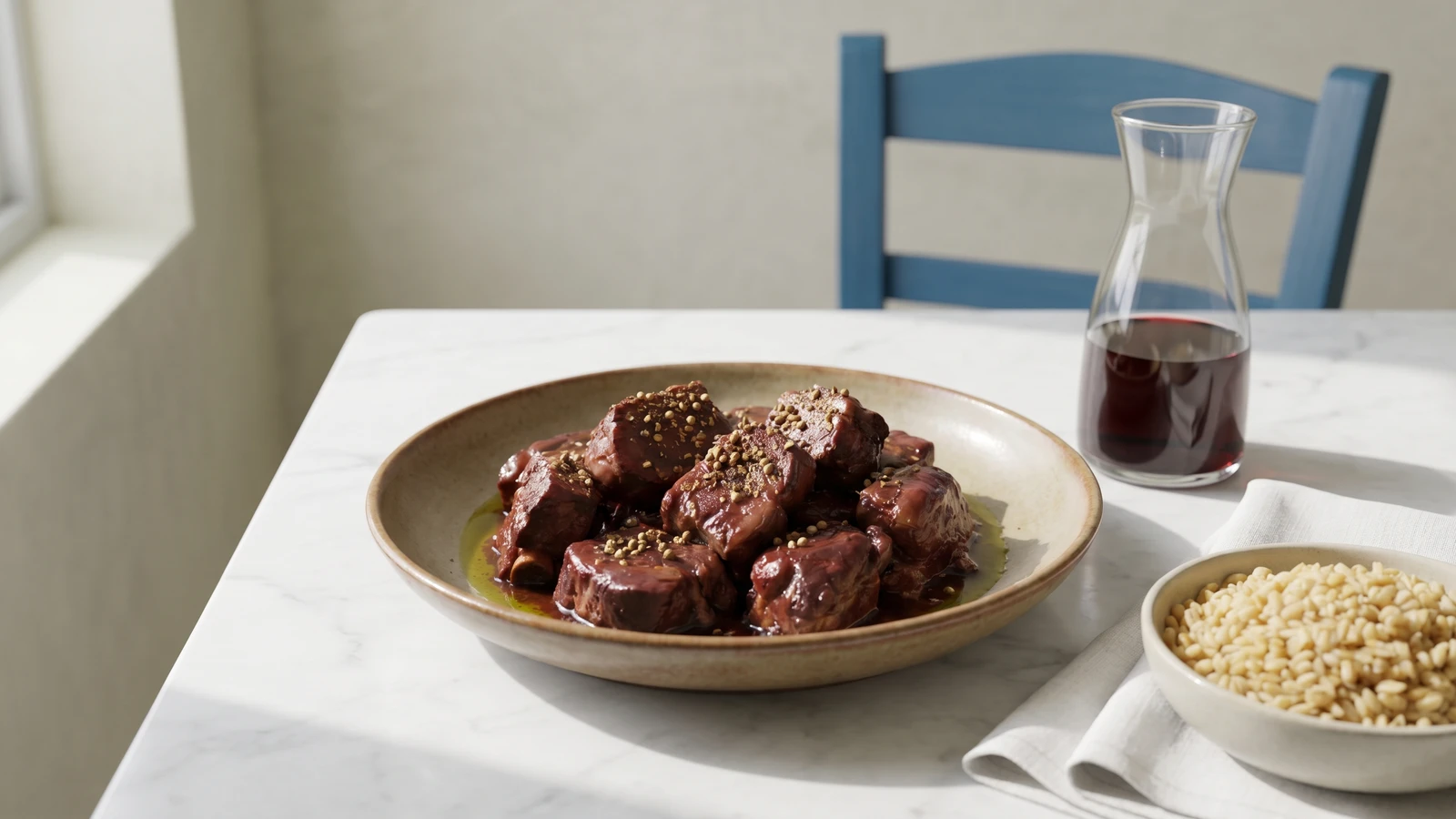
Afelia is Cyprus by surname: pork shoulder, dry red wine, and coriander seeds cracked fresh so their resinous perfume survives the long, dark braise.
Afelia belongs to Cyprus, and the dish is wonderfully plain about itself: pork, dry red wine, and coriander seeds cracked just before they meet the meat. The sauce is not meant to be abundant. It clings, dark and glossy, with the wine cooked down until the pork tastes of the island's old wine jars and spice cupboards.
The coriander decides the dish. Use whole seeds and crush them coarsely, never powder, because powder turns flat and dusty in the pot. Cracked seeds release their warm citrus resin slowly into the wine, and you still feel a little grain of them under the tooth. That is afelia. Leave that out and you've made pork in wine, which is fine, but not this.
Brown the drained pork patiently, then return the wine marinade and let it simmer until the meat is tender and the sauce has reduced to a spoon-coating shine. I serve it with pourgouri, Cypriot bulgur pilaf, or fried potatoes if the table is hungry and impatient. Good olive oil, and patience. The region is the dish's surname.
Afelia is one of the defining pork dishes of Cyprus, where wine and coriander have been paired with meat for centuries through the island's long history of viticulture. Coriander seed has been cultivated and traded around Cyprus since antiquity, and in this dish it marks the Cypriot register more clearly than garlic or tomato would. The sauce is traditionally reduced almost dry, closer to a glossy braise than a stew.
Quantity
1.2kg
cut into 4cm pieces
Quantity
500ml
Quantity
18g
coarsely crushed just before using
Quantity
2
Quantity
8g
Quantity
1/2 tsp
Quantity
45ml
Quantity
120ml
only if needed during braising
| Ingredient | Quantity |
|---|---|
| pork shouldercut into 4cm pieces | 1.2kg |
| dry red wine | 500ml |
| whole coriander seedscoarsely crushed just before using | 18g |
| bay leaves | 2 |
| fine sea salt | 8g |
| freshly ground black pepper | 1/2 tsp |
| extra virgin olive oil | 45ml |
| water (optional)only if needed during braising | 120ml |
Put the pork in a nonreactive bowl with the wine, crushed coriander seeds, bay leaves, salt, and black pepper. Turn the meat well, cover, and refrigerate overnight, or at least 8 hours. The pork should be stained deep red at the edges by morning.
Lift the pork from the marinade and set the marinade aside. Pat the pieces dry with kitchen paper. Dry meat browns. Wet meat stews in its own liquid first, and afelia needs that browned edge before the wine returns.
Heat the olive oil in a wide heavy pot over medium-high heat. Brown the pork in two batches, turning until the pieces are well colored on several sides, 8 to 10 minutes per batch. Do not crowd the pot. Move the browned meat to a plate as you go.
Lower the heat to medium. Pour the reserved marinade into the pot and scrape up the browned bits from the bottom. Return the pork and any juices to the pot. The liquid should come about halfway up the meat, not drown it.
Cover the pot with the lid slightly ajar and simmer gently for 1 hour, turning the pork once or twice. If the pot dries before the meat is tender, add a splash of water, no more than needed. The pork is ready when a fork slides in without argument.
Uncover and simmer 15 to 25 minutes more, until the wine has reduced to a dark glossy sauce and the oil begins to shine at the edges. Taste for salt. Let the afelia rest 10 minutes before serving so the sauce settles back onto the meat.
1 serving (about 190g)
Culinary guides, cultural storytelling, and the editorial depth that makes cooking meaningful.
Discover Culinary ExplorerChef Dimitra
Aegean island octopus, tomato, red wine, and toasted kritharaki share one pot, so the pasta drinks the briny sauce and stays glossy instead of turning heavy.

Chef Dimitra
Aegean coast psari plaki is the quiet whole-fish bake: onions and tomato softened first, fish laid on top, and olive oil doing its slow work until the bones release cleanly.

Chef Dimitra
Astakomakaronada is the Aegean islands' celebration pasta: spiny lobster, tomato, olive oil, and long noodles cooked in the shell broth, never drowned in cream or cheese.

Chef Dimitra
Aegean Easter goat on the spit, lean and full-flavored, turned slowly over charcoal and basted with lemon, oregano, garlic, and good olive oil.