Chef Lupita
Acúmara Tatemada al Comal
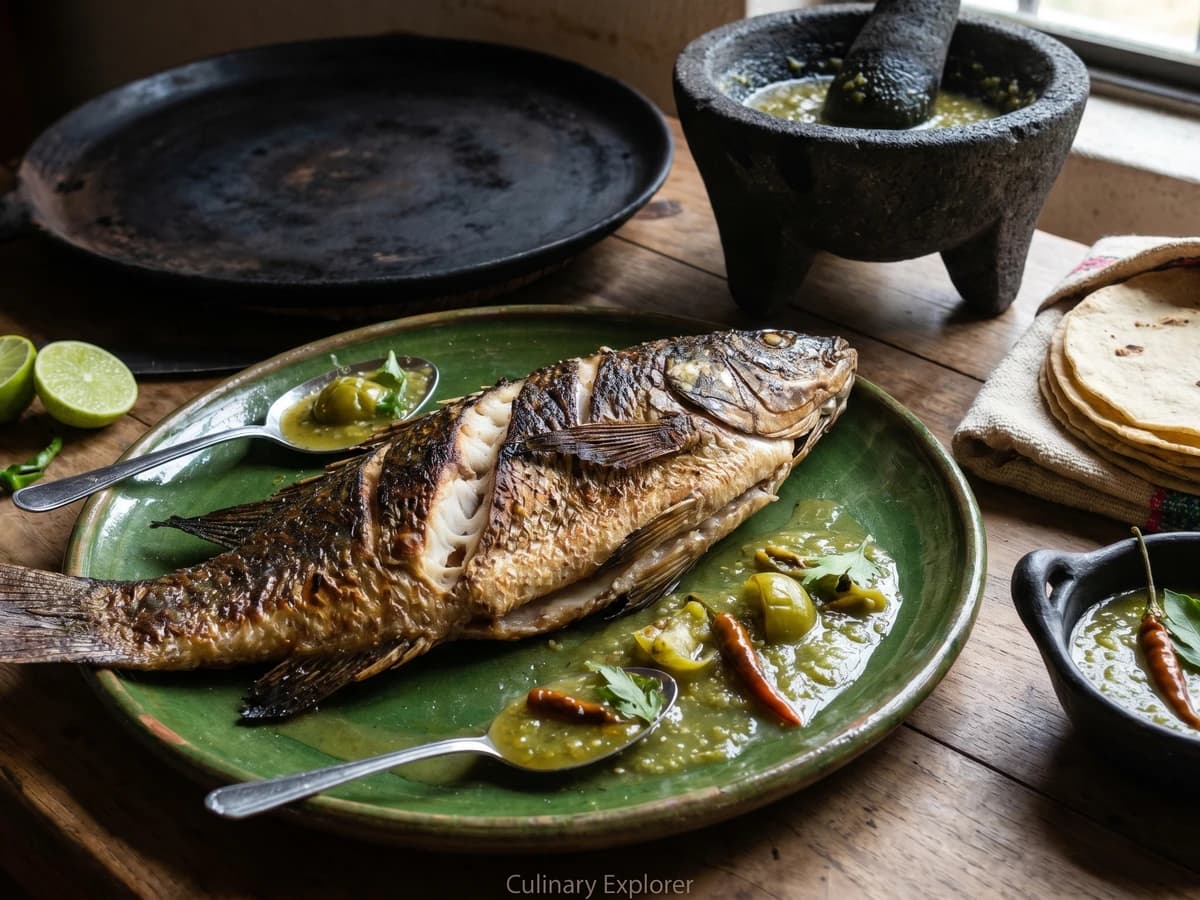
Michoacán's Lake Pátzcuaro acúmara, a whole kurucha from the lago tatemada on a comal de leña and served with chile perón atápakua, corn tortillas, and P'urhépecha discipline.
A cooking platform built around craft, culture, and the stories behind what we eat.
Created by
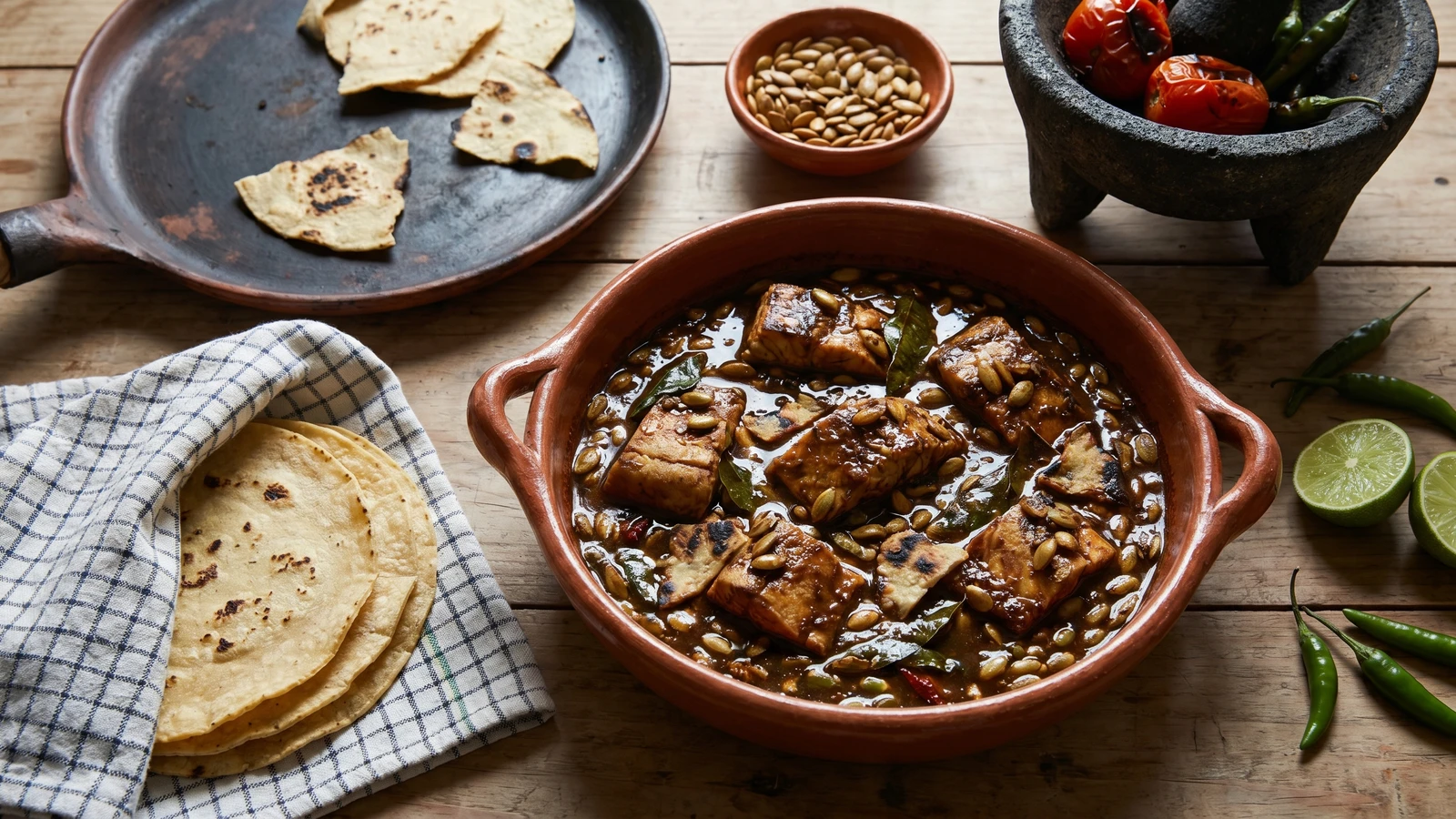
Tabasco's river fish cooked in a black Chontal chirmol, thickened with burned tortilla and toasted pumpkin seed, sharpened with chile amashito, and finished with hoja de momo.
Tabasco, especially the wetlands and river towns around Nacajuca, Centla, and Villahermosa, owns pejelagarto. This fish belongs to the Grijalva and Usumacinta waters, to the Chontal Maya kitchens where the comal is black from use and the sauce is built before the fish ever touches the cazuela.
Chirmol tabasqueño is not mole poblano and it is not chocolate sauce. Here the darkness comes from burned tortilla, toasted pumpkin seed, charred tomato, chile amashito, and patience. The tortilla is burned on purpose, not forgotten. That bitter edge gives the sauce its spine. The pepita gives body. The chile amashito gives a clean Tabasco heat, sharp but not loud.
I learned a version of this from a señora near Nacajuca who roasted the pejelagarto first, then laid it into the sauce so the flesh stayed firm. She served it in a clay cazuela with thick corn tortillas and no decoration beyond lime and chile on the table. La cocina no es decoración, es trabajo. Cada estado, su propia cocina.
Pejelagarto, a tropical gar native to the Gulf lowlands, has been eaten in Tabasco since pre-Columbian times and remains one of the state's most recognizable river foods. Chirmol belongs to the broader Maya family of dark roasted sauces, related in technique to Yucatecan chilmole but distinct in its Tabasco use of chile amashito, pumpkin seed, and hoja de momo. In Chontal Maya communities, the sauce reflects a wetland pantry: river fish, corn tortillas, squash seeds, local chiles, and aromatic leaves gathered close to home.
Quantity
1, about 3 pounds
cleaned, scaled, and cut into 6 pieces
Quantity
2 1/2 pounds
only if pejelagarto is unavailable
Quantity
2 teaspoons, divided
Quantity
2 tablespoons
Quantity
6 medium
Quantity
1 small
unpeeled and halved
Quantity
4
unpeeled
Quantity
2
one burned black and one toasted until dry
Quantity
3/4 cup
Quantity
6 to 8
Quantity
2
only if chile amashito is unavailable
Quantity
1
stemmed and seeded
Quantity
1
stemmed and seeded
Quantity
3 tablespoons
Quantity
3 cups
Quantity
2 large
torn into large pieces
Quantity
1 sprig
Quantity
1 teaspoon
Quantity
for serving
Quantity
for serving
| Ingredient | Quantity |
|---|---|
| whole pejelagartocleaned, scaled, and cut into 6 pieces | 1, about 3 pounds |
| firm white fish steaks (optional)only if pejelagarto is unavailable | 2 1/2 pounds |
| kosher salt | 2 teaspoons, divided |
| fresh lime juice | 2 tablespoons |
| Roma tomatoes | 6 medium |
| white onionunpeeled and halved | 1 small |
| garlic clovesunpeeled | 4 |
| corn tortillasone burned black and one toasted until dry | 2 |
| raw hulled pumpkin seeds | 3/4 cup |
| fresh chile amashito | 6 to 8 |
| fresh chile habanero (optional)only if chile amashito is unavailable | 2 |
| dried chile anchostemmed and seeded | 1 |
| dried chile guajillostemmed and seeded | 1 |
| manteca de cerdo | 3 tablespoons |
| fish stock or water | 3 cups |
| hoja de momo leaves, also called hoja santa or acuyotorn into large pieces | 2 large |
| epazote | 1 sprig |
| dried Mexican oregano | 1 teaspoon |
| warm hand-pressed corn tortillas (optional) | for serving |
| lime halves (optional) | for serving |
Rub the pejelagarto pieces with 1 teaspoon salt and the lime juice. Let them rest while you build the chirmol. Pejelagarto has firm flesh and a strong river character. The salt and lime clean the flavor without hiding the fish. If you are using another fish, choose something firm, not delicate fillets that fall apart in the cazuela.
Heat a dry comal over medium-high heat. Roast the tomatoes, onion halves, and garlic until the skins blacken in spots and the tomatoes soften, about 12 to 15 minutes. Peel the garlic. Do not scrape away every charred bit from the tomatoes. That roasted bitterness is part of the chirmol's backbone.
Place one tortilla directly on the comal and let it burn until blackened and brittle, turning once. Toast the second tortilla until dry and golden. The burned tortilla gives color and a controlled bitterness. The toasted tortilla gives body without making the sauce taste like ashes. There is a difference. Pay attention.
Toast the pumpkin seeds on the dry comal, stirring often, until they puff slightly and smell nutty, 3 to 4 minutes. Toast the chile ancho and chile guajillo for about 20 seconds per side, just until fragrant. Soak the dried chiles in hot water for 15 minutes, then drain. Burned chile turns bitter in the wrong way, and no, the burned tortilla does not give you permission to be careless.
In a blender, combine the roasted tomatoes, peeled garlic, onion flesh, burned tortilla, toasted tortilla, pumpkin seeds, soaked ancho and guajillo, chile amashito, 1 cup fish stock, oregano, and 1 teaspoon salt. Blend until very smooth. This sauce should be thick, dark, and speckled from the pepita. If your blender struggles, add a little more stock. Just enough. You are making chirmol, not soup.
Melt the manteca de cerdo in a wide clay cazuela or heavy pot over medium heat. Pour in the blended chirmol carefully. It will sputter. Cook, stirring often, for 8 to 10 minutes, until the sauce darkens, thickens, and the fat begins to shine at the edges. La manteca es el sabor. This frying step wakes up the chile and pepita. Skip it and the sauce tastes raw.
Stir in the remaining 2 cups fish stock and bring the chirmol to a low simmer. Add the hoja de momo and epazote. Nestle the pejelagarto pieces into the sauce in one layer. Cover and cook gently for 18 to 22 minutes, turning once, until the flesh is firm and pulls from the bone. Keep the heat low. A hard boil breaks the fish and muddies the sauce.
Turn off the heat and let the cazuela rest for 10 minutes. Taste the sauce for salt. Remove the epazote stem and leave the hoja de momo in the pot for fragrance. Serve family-style with warm corn tortillas and lime halves. The sauce should cling to the fish, not run around the plate. Así se hace y punto.
1 serving (about 440g)
Culinary guides, cultural storytelling, and the editorial depth that makes cooking meaningful.
Discover Culinary ExplorerChef Lupita
Michoacán's Lake Pátzcuaro acúmara, a whole kurucha from the lago tatemada on a comal de leña and served with chile perón atápakua, corn tortillas, and P'urhépecha discipline.

Chef Lupita
Puebla's weekday adobo of pork shoulder braised in a thick guajillo and ancho sauce sharpened with vinegar, cumin, and clove. The deep red of a market spice stall, the dish a poblana cooks without thinking.

Chef Lupita
Loreto's pit-roasted clams, planted hinge-up in beach sand and tatemadas under a fast fire of dried romerillo brush, the resinous Baja desert shrub that gives this dish its smoke.

Chef Lupita
Oaxaca's eighth mole, the silky, almond-and-cinnamon almendrado, served over poached chicken. Mild, sweet, restrained, and a quiet rebuttal to anyone who thinks Mexican food has to be hot to be Mexican.