
Chef Dimitra
Aegean Island Chtapodi me Kritharaki (Χταπόδι με Κριθαράκι)
Aegean island octopus, tomato, red wine, and toasted kritharaki share one pot, so the pasta drinks the briny sauce and stays glossy instead of turning heavy.
A cooking platform built around craft, culture, and the stories behind what we eat.
Created by
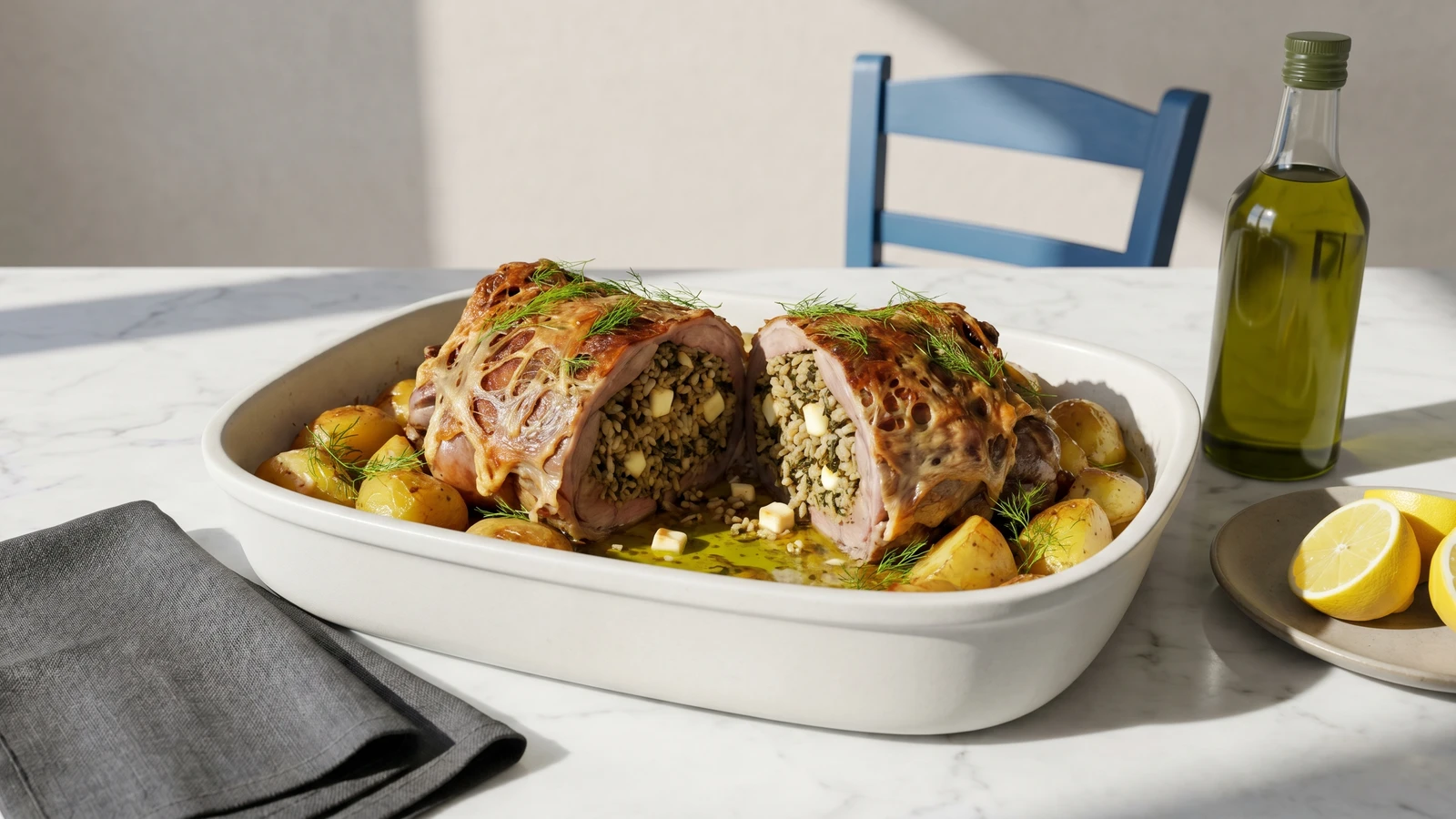
Naxos keeps Easter in this caul-wrapped lamb or kid, filled with rice, wild greens, and graviera, then baked slowly so the filling drinks the roast juices.
Patoudo Naxou is Naxos's Easter lamb or kid, stuffed with rice, spring greens, herbs, and graviera, then wrapped in caul fat and baked until the meat gives up its juices to the filling. The region is the dish's surname. On Naxos this is not a general roast with a little rice tucked inside, it is the island's festive answer to the end of Lent: young meat, spring greens, and the cheese the island is proud of.
The whole dish rests on the caul, bolia or skepi. It looks delicate, but in the oven it melts slowly over the meat like a self-basting cover, protecting the young lamb or kid while the rice swells inside. That is the method that decides it. Cover the pan first, brown it only at the end, and the stuffing comes out moist instead of dusty.
I write this for a home oven, with a shoulder or front quarter your butcher can pocket, because most of us are not sending a whole kid to the village oven anymore. I don't invent it. I find it, I test it, I write it down. Keep the caul, the greens, the rice, and the Naxos graviera, and the dish stays alive on the table, not trapped behind glass.
Patoudo belongs to the Easter table of Naxos, where families traditionally baked stuffed lamb or kid after the long Lenten fast and served it on Sunday. The stuffing records the island's economy: young animals from the hills, spring greens and fennel from the fields, rice carried through Cycladic trade, and hard local cheese from Naxos's dairy tradition. The caul wrap, called bolia or skepi in many Greek kitchens, is an older island method for keeping lean young meat moist in the oven before modern covered roasters became common.
Quantity
2.8-3kg
bone-in, with a stuffing pocket cut by the butcher
Quantity
27g
divided
Quantity
4g
Quantity
3g
divided
Quantity
1
zested and juiced
Quantity
300g
rinsed
Quantity
30ml
for soaking the caul
Quantity
90ml
divided, plus a little for finishing
Quantity
1 large, about 180g
finely chopped
Quantity
6
finely sliced
Quantity
250g
trimmed and finely chopped
Quantity
450g
washed well and chopped
Quantity
160g
rinsed
Quantity
250ml
Quantity
15g
chopped
Quantity
10g
chopped
Quantity
10g
chopped, plus a few torn fronds for finishing
Quantity
140g
cut into small dice or coarsely grated
Quantity
1.2kg
peeled and cut into thick wedges
Quantity
2
lightly crushed
Quantity
150ml
for the roasting pan
| Ingredient | Quantity |
|---|---|
| young lamb or kid shoulder or front quarterbone-in, with a stuffing pocket cut by the butcher | 2.8-3kg |
| fine sea saltdivided | 27g |
| freshly ground black pepper | 4g |
| dried Greek oreganodivided | 3g |
| lemonzested and juiced | 1 |
| lamb caul fat (bolia or skepi)rinsed | 300g |
| white wine vinegarfor soaking the caul | 30ml |
| extra virgin Koroneiki olive oildivided, plus a little for finishing | 90ml |
| dry onionfinely chopped | 1 large, about 180g |
| spring onionsfinely sliced | 6 |
| lamb or kid livertrimmed and finely chopped | 250g |
| mixed wild greens, chard, or spinachwashed well and chopped | 450g |
| medium-grain ricerinsed | 160g |
| hot water or light lamb broth | 250ml |
| fresh dillchopped | 15g |
| fresh mintchopped | 10g |
| wild fennel fronds or fennel bulb frondschopped, plus a few torn fronds for finishing | 10g |
| Naxos gravieracut into small dice or coarsely grated | 140g |
| waxy potatoespeeled and cut into thick wedges | 1.2kg |
| garlic cloveslightly crushed | 2 |
| hot waterfor the roasting pan | 150ml |
Ask the butcher to cut a deep pocket in the lamb or kid, without slicing through the outside. Rub the meat inside and out with 18g of the salt, the pepper, 2g oregano, and the lemon zest. Let it stand at room temperature for 45 minutes while you make the filling, or season it the night before and refrigerate it uncovered.
Put the caul fat in a bowl of lukewarm water with the vinegar for 20 minutes. Rinse it gently, then keep it in fresh cold water until you need it. It should open like a pale net. Tear it and you'll curse quietly, which is normal, but try not to.
Warm 50ml olive oil in a wide pan over medium heat. Add the dry onion and spring onions with 3g salt and cook for 6 to 8 minutes, until sweet and glossy. Add the chopped liver and cook for 3 minutes, just until it loses its raw color. Stir in the greens and cook until they collapse and their water has mostly evaporated.
Stir the rice into the greens and liver so every grain is coated. Add 250ml hot water or broth and simmer for 5 to 6 minutes, until the rice has swollen a little but still has a hard center. Take the pan off the heat and let the filling cool for 15 minutes, then fold in the dill, mint, fennel, and graviera. The filling should be damp, not soupy.
Heat the oven to 160C. Spoon the filling loosely into the pocket, filling it no more than two-thirds full, because the rice will swell in the oven. Sew the opening with a kitchen needle and twine, or close it well with skewers and twine. A tight stuffing splits the meat and wastes the good juices. Give it room.
Drain the caul and spread it on the work surface. Set the stuffed lamb on top and wrap the caul around it, overlapping the edges underneath. This is the step that makes Patoudo Naxou itself: the caul melts slowly, basting the lean young meat and keeping the rice filling moist through the long bake. Without it, you still have stuffed lamb, but not quite this Naxos Easter dish.
Toss the potatoes with 40ml olive oil, the lemon juice, the remaining 6g salt, 1g oregano, and the crushed garlic. Spread them in a large roasting pan and pour in 150ml hot water. Set the wrapped lamb on top, seam side down. Cover first with baking parchment, then tightly with foil or a lid.
Bake for 3 hours at 160C. Uncover, spoon the pan juices over the meat and potatoes, and raise the heat to 190C. Bake for another 35 to 50 minutes, until the caul has rendered into a thin bronze skin, the potatoes are tender at the edges, and the center of the stuffing reaches at least 74C. That last number matters because the filling contains liver.
Rest the Patoudo for 25 to 30 minutes before cutting the twine. Spoon the rice and greens onto a warm platter, carve the lamb in thick pieces, and pour the glossy pan juices over everything. Finish with a small thread of olive oil and a few torn fennel fronds if you have them. Serve with bitter greens, lemon, and a serious salad, because Easter meat asks for something sharp beside it.
1 serving (about 475g)
Culinary guides, cultural storytelling, and the editorial depth that makes cooking meaningful.
Discover Culinary ExplorerChef Dimitra
Aegean island octopus, tomato, red wine, and toasted kritharaki share one pot, so the pasta drinks the briny sauce and stays glossy instead of turning heavy.

Chef Dimitra
Aegean coast psari plaki is the quiet whole-fish bake: onions and tomato softened first, fish laid on top, and olive oil doing its slow work until the bones release cleanly.

Chef Dimitra
Astakomakaronada is the Aegean islands' celebration pasta: spiny lobster, tomato, olive oil, and long noodles cooked in the shell broth, never drowned in cream or cheese.

Chef Dimitra
Aegean Easter goat on the spit, lean and full-flavored, turned slowly over charcoal and basted with lemon, oregano, garlic, and good olive oil.