
Chef Dimitra
Aegean Island Chtapodi me Kritharaki (Χταπόδι με Κριθαράκι)
Aegean island octopus, tomato, red wine, and toasted kritharaki share one pot, so the pasta drinks the briny sauce and stays glossy instead of turning heavy.
A cooking platform built around craft, culture, and the stories behind what we eat.
Created by
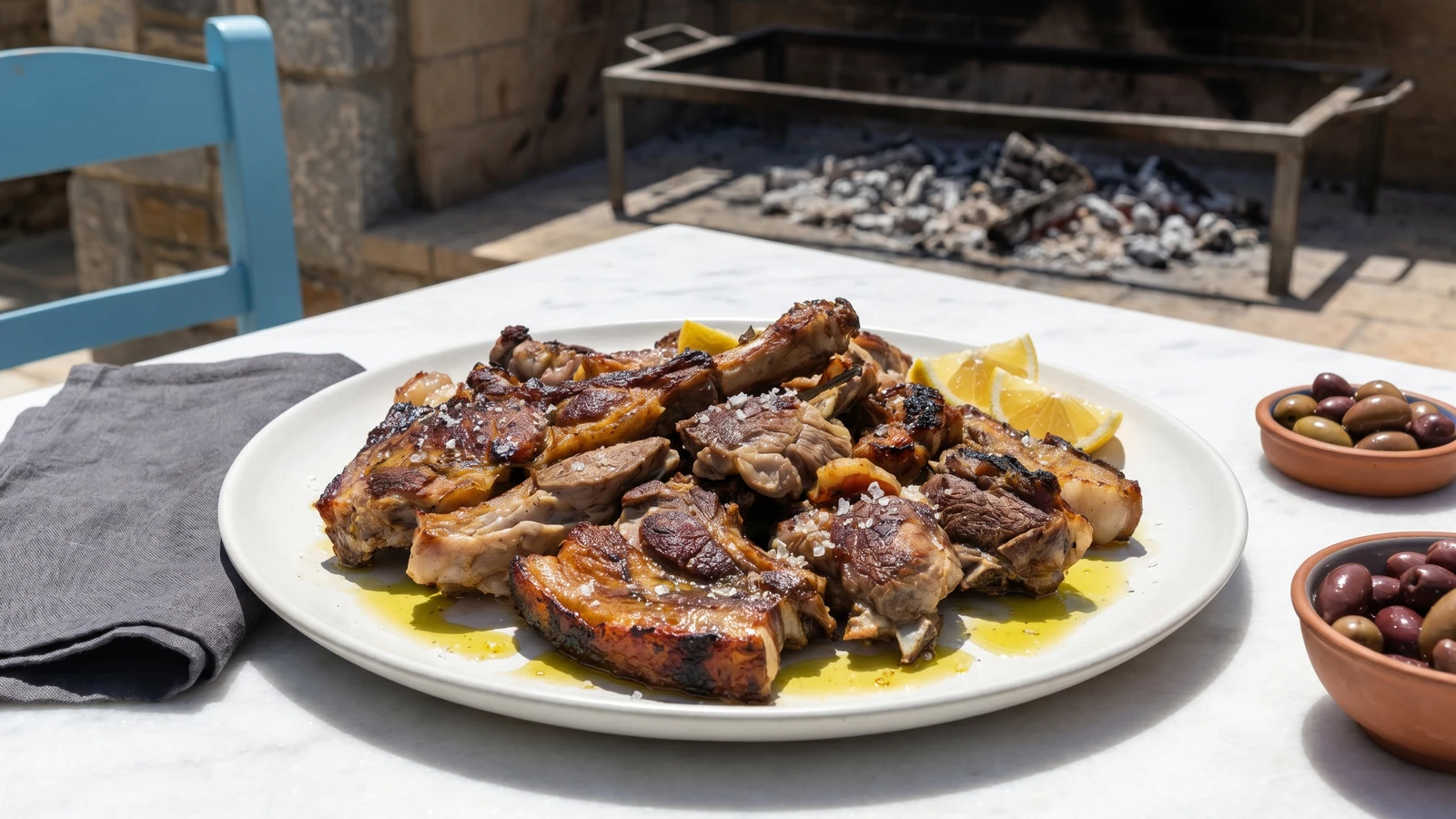
Crete's mountain shepherd roast is lamb or goat salted only, staked in a ring facing the embers until the fat melts slowly and the meat turns brown at the edges.
Cretan Antikristo is the roast of the mountain shepherds, especially around Psiloritis: lamb or goat cut large, salted, and set upright facing the embers. Not over them. That small difference is the dish's spine.
Antikristo belongs to the pastoral cooking of Crete, especially the mountain villages of Rethymno and Heraklion around Psiloritis. The name comes from the meat being set opposite the fire, anti-krista, facing the heat rather than lying above it. It suited shepherds because it needed little equipment, little seasoning, and enough time for a whole animal to feed a feast.
Quantity
3.5kg
shoulder, ribs, or leg, cut into 6 large pieces
Quantity
55g
Quantity
2 tablespoons
for rubbing the stakes or rack only
Quantity
enough for 4 hours
burned down to a steady ember bed
Quantity
as needed
| Ingredient | Quantity |
|---|---|
| bone-in young lamb or goat piecesshoulder, ribs, or leg, cut into 6 large pieces | 3.5kg |
| coarse sea salt | 55g |
| extra virgin Koroneiki olive oilfor rubbing the stakes or rack only | 2 tablespoons |
| dry hardwood or grapevine cuttingsburned down to a steady ember bed | enough for 4 hours |
| lemon wedges (optional) | as needed |
Pat the lamb or goat dry and salt it all over, using about 15g salt per kilo of meat. Let it stand uncovered in the refrigerator for at least 2 hours, or overnight if you have the time. Bring it out 1 hour before cooking so the chill leaves the bone.
Burn hardwood down until you have a broad, steady bed of embers with no tall flames. Antikristo is cooked beside the fire, not over it. This is the whole dish. The meat faces the heat, the fat melts slowly and bastes it, and nothing drips into flame to turn bitter.
Rub the metal stakes or antikristo rack lightly with olive oil. Fix the meat securely with the fatty side facing the embers and the thicker pieces lower, where the heat is stronger. Set the pieces in a half-ring around the fire, 45 to 60cm from the embers, leaning slightly inward.
Cook for 3 1/2 to 4 1/2 hours, turning each piece once or twice and feeding the fire from the side so the ember bed stays even. The outside should become deep brown with crisp edges, while the meat near the bone stays juicy. Do not baste with oil, wine, garlic, or herbs. Salt and good meat carry this.
Take the meat off the stakes and rest it on a warm platter for 20 minutes. Cut in generous pieces along the bone and serve with bread, lemon if you like, and whatever the table has earned beside it: olives, a sharp salad, or potatoes cooked in the ashes.
1 serving (about 245g)
Culinary guides, cultural storytelling, and the editorial depth that makes cooking meaningful.
Discover Culinary ExplorerChef Dimitra
Aegean island octopus, tomato, red wine, and toasted kritharaki share one pot, so the pasta drinks the briny sauce and stays glossy instead of turning heavy.

Chef Dimitra
Aegean coast psari plaki is the quiet whole-fish bake: onions and tomato softened first, fish laid on top, and olive oil doing its slow work until the bones release cleanly.

Chef Dimitra
Astakomakaronada is the Aegean islands' celebration pasta: spiny lobster, tomato, olive oil, and long noodles cooked in the shell broth, never drowned in cream or cheese.

Chef Dimitra
Aegean Easter goat on the spit, lean and full-flavored, turned slowly over charcoal and basted with lemon, oregano, garlic, and good olive oil.