
Chef Graziella
Acquacotta Maremmana
The humblest soup in Tuscany, born from the wild Maremma where shepherds and charcoal burners transformed water, onions, stale bread, and an egg into sustenance. Proof that poverty teaches better than plenty.
A cooking platform built around craft, culture, and the stories behind what we eat.
Created by
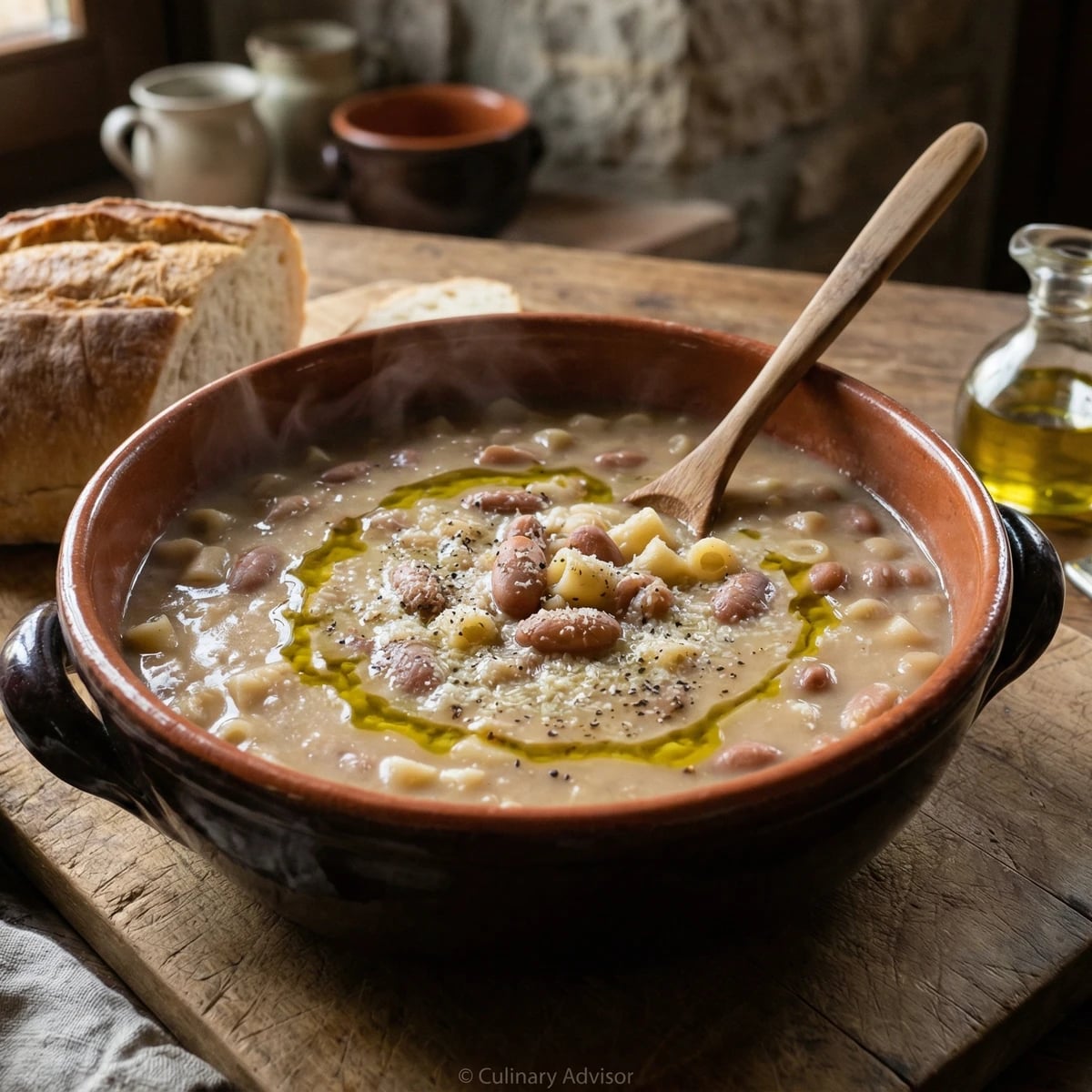
The bean soup of the Veneto, where borlotti beans simmer with pork rind until the broth turns creamy and the pasta drinks it all in. No tomatoes. No apologies.
The cooking of Venice is so distant from that of Naples, although they are both Italian cities, that not a single authentic dish from one is to be found on the other's table. This truth applies nowhere more clearly than to pasta e fagioli. The Neapolitan version is red with tomatoes. The Venetian version contains none. If you add tomatoes, you are no longer making Venetian food. You are making something else.
In the Veneto, this soup is white and creamy, thickened by the beans themselves. You cook borlotti until some of them dissolve into the broth while others hold their shape. You enrich it with pork rind or pancetta, which gives body and depth without announcing itself. The pasta is short and sturdy, something that will not fall apart as the soup rests and thickens.
This is peasant cooking. Contadini in the hills behind Venice and Verona made this with dried beans from the summer harvest, a scrap of pork saved from the slaughter, and whatever pasta was in the cupboard. They knew what we have forgotten: that the humblest ingredients, treated with respect and given time, become extraordinary.
Pasta e fagioli has fed the poor of the Veneto since beans arrived from the Americas in the 16th century. The Venetian version evolved distinctly from its southern cousins, reflecting the region's preference for cream-colored soups enriched with pork rather than the tomato-bright broths of Naples. Farm families in the provinces of Verona and Vicenza still argue about whether the pasta should be broken spaghetti or short tubes.
Quantity
1 pound
soaked overnight
Quantity
4 ounces
scraped clean and cut into 2-inch pieces
Quantity
3 ounces
diced fine
Quantity
1/3 cup, plus more for drizzling
Quantity
1 medium
diced fine
Quantity
1 medium
peeled and diced fine
Quantity
2
diced fine
Quantity
2
peeled and lightly crushed
Quantity
2 sprigs
Quantity
4
Quantity
8 cups
preferably homemade
Quantity
8 ounces
Quantity
to taste
Quantity
to taste
freshly ground
Quantity
for serving
freshly grated
| Ingredient | Quantity |
|---|---|
| dried borlotti beanssoaked overnight | 1 pound |
| pork rind (cotenna)scraped clean and cut into 2-inch pieces | 4 ounces |
| pancettadiced fine | 3 ounces |
| extra virgin olive oil | 1/3 cup, plus more for drizzling |
| yellow oniondiced fine | 1 medium |
| carrotpeeled and diced fine | 1 medium |
| celery stalksdiced fine | 2 |
| garlic clovespeeled and lightly crushed | 2 |
| fresh rosemary | 2 sprigs |
| fresh sage leaves | 4 |
| chicken brothpreferably homemade | 8 cups |
| short pasta | 8 ounces |
| kosher salt | to taste |
| black pepperfreshly ground | to taste |
| Parmigiano-Reggianofreshly grated | for serving |
If using pork rind, place it in a small pot, cover with cold water, and bring to a boil. Drain and repeat. This removes excess salt and impurities. Set aside. The rind will become silky and nearly dissolve into the soup, giving it body that no other ingredient can provide.
Drain the soaked beans and place them in a large pot with the blanched pork rind. Cover with fresh cold water by three inches. Bring to a gentle simmer over medium heat. Reduce heat to low and cook until the beans are completely tender, about one hour to one hour and fifteen minutes. The beans should crush easily between your fingers. Do not drain. Reserve the beans in their cooking liquid.
In a heavy pot or Dutch oven, warm the olive oil over medium heat. Add the diced pancetta and cook, stirring occasionally, until the fat renders and the pancetta begins to crisp at the edges, about 8 minutes. Add the onion, carrot, and celery. Cook slowly, stirring occasionally, until the vegetables are completely soft and the onion is golden, about 15 minutes. Add the crushed garlic, rosemary, and sage. Cook one minute more until fragrant. The garlic must not brown.
Remove the pork rind from the beans and cut it into small pieces. Set aside. Using a slotted spoon, transfer half of the beans to the soffritto. Add the chicken broth and bring to a simmer. Pass the remaining beans through a food mill or puree them with their cooking liquid, then add this puree to the pot. The combination of whole beans and pureed beans creates the proper texture: creamy but with substance.
Return the chopped pork rind to the pot. Simmer gently, uncovered, for 45 minutes. The soup will thicken as the starch from the pureed beans integrates. Stir occasionally to prevent sticking. Season with salt and pepper, remembering that the pancetta and broth contribute salt. Taste as you go.
Remove the rosemary sprigs. Add the pasta directly to the soup. Cook, stirring frequently, until the pasta is tender but retains pleasant resistance, following the package time as a guide but testing earlier. The pasta will continue to absorb liquid as it sits. If the soup becomes too thick, add more broth or water. It should be very thick, almost like a stew. A spoon should nearly stand upright.
Remove from heat and let rest for at least 15 minutes. The soup continues to thicken and the flavors meld. Ladle into warm bowls, drizzle generously with your best olive oil, and serve with grated Parmigiano-Reggiano at the table. The olive oil is not decoration. It is essential.
1 serving (about 450g)
Culinary guides, cultural storytelling, and the editorial depth that makes cooking meaningful.
Discover Culinary Explorer
Chef Graziella
The humblest soup in Tuscany, born from the wild Maremma where shepherds and charcoal burners transformed water, onions, stale bread, and an egg into sustenance. Proof that poverty teaches better than plenty.

Chef Graziella
A whole piece of beef, surrendered to Barolo wine and patience, until the tannins transform into velvet and the meat falls apart at the suggestion of a fork. This is Piedmont on a plate.

Chef Graziella
The storied fish stew of Ancona, where up to thirteen varieties of Adriatic fish simmer gently in a broth sharpened with vinegar and gilded with saffron. Every port town claims theirs is authentic.

Chef Graziella
The fish stew of my home coast, where fishermen brought whatever the Adriatic offered and their wives made it into something that needed nothing more than good bread and an appetite.