
Chef Lupita
Arroz a la Oaxaqueña
Oaxaca's red rice, stained with tomato and fried in lard, steamed with carrots, ejotes, black beans, and epazote. The side that anchors a Oaxacan family meal and earns its place beside the main.
A cooking platform built around craft, culture, and the stories behind what we eat.
Created by
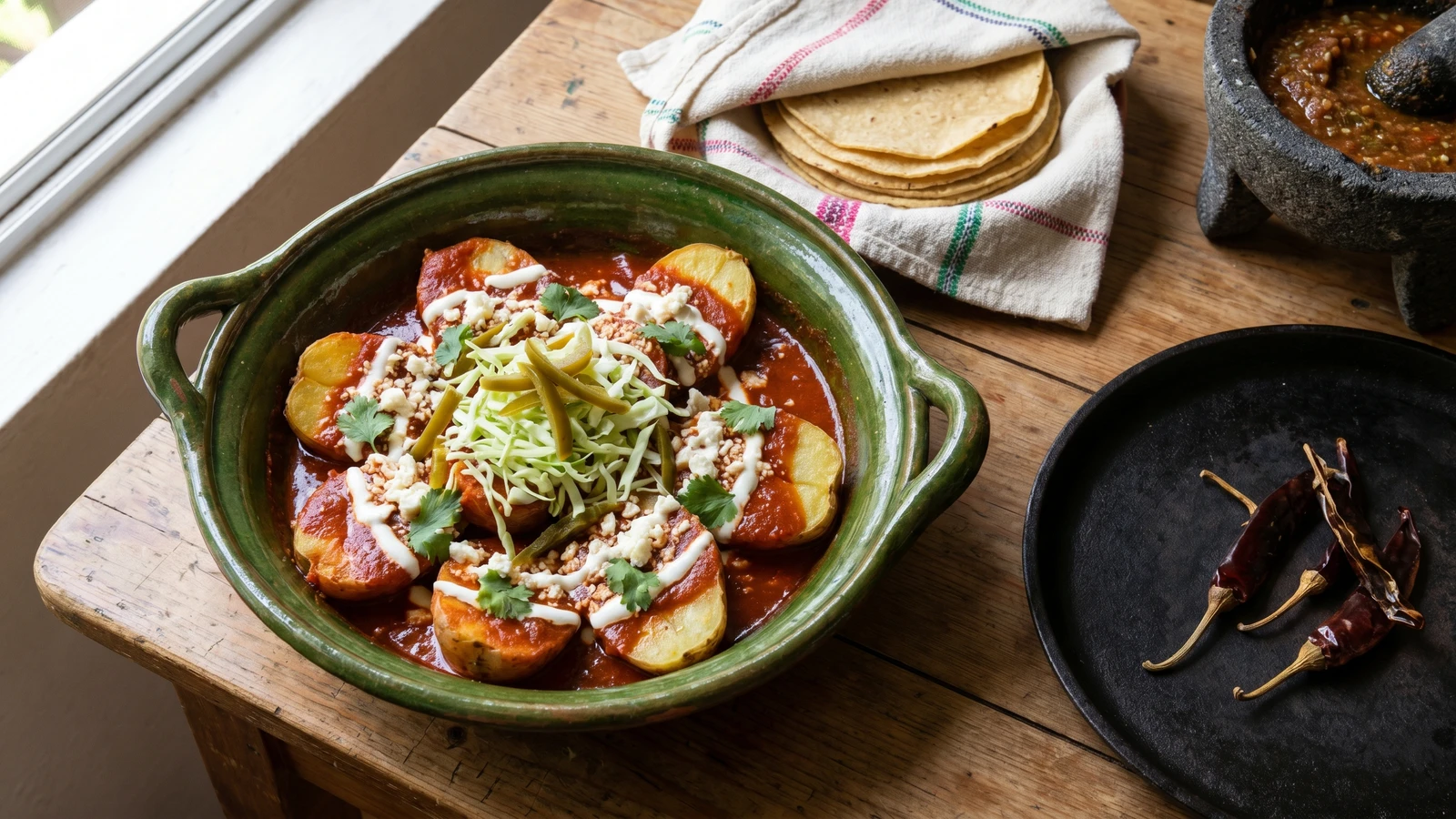
Michoacan's Zamora-style potatoes, tender small potatoes folded into tomato, guajillo, crema, and Cotija, served in green-glazed barro like a side dish that forgot to stay small.
This comes from Zamora, Michoacan, in the northwest of the state, where dairy, potatoes, and market food sit closer to the Bajio and the Cienega than to the coast. Do not flatten Michoacan into carnitas and call the work finished. Cada estado, su propia cocina, and inside each state, every region keeps its own appetite.
Papas zamoranas are not french fries with salsa. They are small potatoes cooked until tender, then dressed in a red tomato and chile guajillo salsa, softened with crema, sharpened with pickled jalapeno, and finished with Cotija. The cheese matters. Zamora is dairy country. Cotija from Michoacan has salt, age, and authority. Use it like you mean it.
I learned a version of these from a woman near Mercado Hidalgo in Zamora who served them from a wide cazuela, the potatoes sitting in a sauce the color of brick after rain. She told me the trick was not the chile. It was patience with the salsa. Fry it in manteca de cerdo until the raw tomato smell leaves. Then add the potatoes. No me vengas con atajos. The sauce has to cook before it can dress anything.
This is weeknight food, yes, but weeknight does not mean careless. The potatoes should hold their shape. The cabbage should stay crisp. The crema should loosen the salsa, not turn it into soup. Recetas probadas y garantizadas.
Zamora de Hidalgo became one of Michoacan's important dairy and market towns in the 19th and 20th centuries, and its cooking reflects that economy through frequent use of crema and aged cheeses from the surrounding region. Potatoes arrived in Mexico after Spanish colonial trade connected Andean crops with New Spain, then became common in central and western Mexican home kitchens as an inexpensive, filling ingredient. Papas zamoranas are often confused with generic potatoes in red sauce, but the Zamora identity comes from the balance of tomato-chile salsa, local dairy, pickled jalapeno, and the market-style serving in a cazuela.
Quantity
2 pounds
scrubbed
Quantity
1 tablespoon, plus more to taste
Quantity
4
stemmed and seeded
Quantity
1
stemmed and seeded
Quantity
1 1/2 pounds
Quantity
1/4 medium
Quantity
2
unpeeled
Quantity
2 tablespoons
Quantity
1/2 teaspoon
crumbled
Quantity
1/2 cup
Quantity
3/4 cup, plus more for serving
finely crumbled
Quantity
1 cup
finely shredded
Quantity
1/3 cup, plus 2 tablespoons pickling vinegar
Quantity
for serving
Quantity
for serving
Quantity
for serving
| Ingredient | Quantity |
|---|---|
| small waxy potatoesscrubbed | 2 pounds |
| kosher salt | 1 tablespoon, plus more to taste |
| dried chile guajillostemmed and seeded | 4 |
| dried chile anchostemmed and seeded | 1 |
| ripe Roma tomatoes | 1 1/2 pounds |
| white onion | 1/4 medium |
| garlic clovesunpeeled | 2 |
| manteca de cerdo | 2 tablespoons |
| dried Mexican oreganocrumbled | 1/2 teaspoon |
| Mexican crema | 1/2 cup |
| Cotija cheesefinely crumbled | 3/4 cup, plus more for serving |
| green cabbagefinely shredded | 1 cup |
| pickled jalapeno strips | 1/3 cup, plus 2 tablespoons pickling vinegar |
| fresh cilantro leaves (optional) | for serving |
| lime wedges (optional) | for serving |
| warm corn tortillas (optional) | for serving |
Put the potatoes in a pot and cover with cold water by one inch. Add 1 tablespoon salt. Bring to a steady simmer and cook until a knife slides into the center without breaking the potato apart, 18 to 25 minutes depending on size. Drain and let them cool until you can handle them. Halve the small ones and quarter any larger ones. The pieces should be generous, not chopped into little restaurant cubes.
Heat a dry comal over medium. Toast the chile guajillo and chile ancho for 20 to 30 seconds per side, pressing them flat with tongs. They should darken slightly and smell sweet, like raisins and warm earth. Do not blacken them. Burned chile turns bitter, and then the whole cazuela tastes like punishment.
Put the toasted chiles in a bowl and cover with hot water, not boiling water. Let them soften for 15 minutes. Hot water relaxes the chile flesh. Boiling water roughs up the skins and can make the salsa taste harsh. Drain the chiles and save 1/2 cup of the soaking water.
On the same comal, roast the tomatoes, onion, and unpeeled garlic until the tomatoes collapse in spots, the onion chars at the edges, and the garlic feels soft inside its skin, 8 to 12 minutes. Peel the garlic. This roasting gives the salsa its market flavor. Raw tomato in a blender is not the same thing. Preguntale a las senoras del mercado.
Blend the softened chiles, roasted tomatoes, onion, peeled garlic, Mexican oregano, and 1/4 cup of the reserved chile water until completely smooth. If the blender struggles, add a spoonful more chile water at a time. The salsa should pour like thick tomato puree, not like soup. Strain it if your blender leaves chile skins behind.
Melt the manteca de cerdo in a wide cazuela or heavy skillet over medium heat. Pour in the salsa carefully. It will sputter. Cook, stirring often, for 10 to 12 minutes, until the color deepens to brick red, the raw tomato smell disappears, and little beads of fat show at the edge. La manteca es el sabor. Oil will cook the salsa, yes. Manteca makes it taste like Michoacan home cooking.
Add the cooked potatoes to the fried salsa and fold gently with a wooden spoon until every piece is coated. Simmer for 5 minutes so the potatoes drink in the sauce. Stir in the crema, Cotija, pickled jalapeno strips, and pickling vinegar. Keep the heat low now. The sauce should turn creamy and cling to the potatoes, not split into grease and milk.
Taste for salt after the Cotija goes in because the cheese brings its own salt. Spoon the potatoes into a warm green-glazed Michoacan barro cazuela. Scatter the shredded cabbage over the top, then add more Cotija, cilantro leaves, and lime wedges on the side. Serve with warm corn tortillas. This is a side dish, but nobody at the table will treat it like one.
1 serving (about 315g)
Culinary guides, cultural storytelling, and the editorial depth that makes cooking meaningful.
Discover Culinary ExplorerChef Lupita
Oaxaca's red rice, stained with tomato and fried in lard, steamed with carrots, ejotes, black beans, and epazote. The side that anchors a Oaxacan family meal and earns its place beside the main.
Chef Lupita
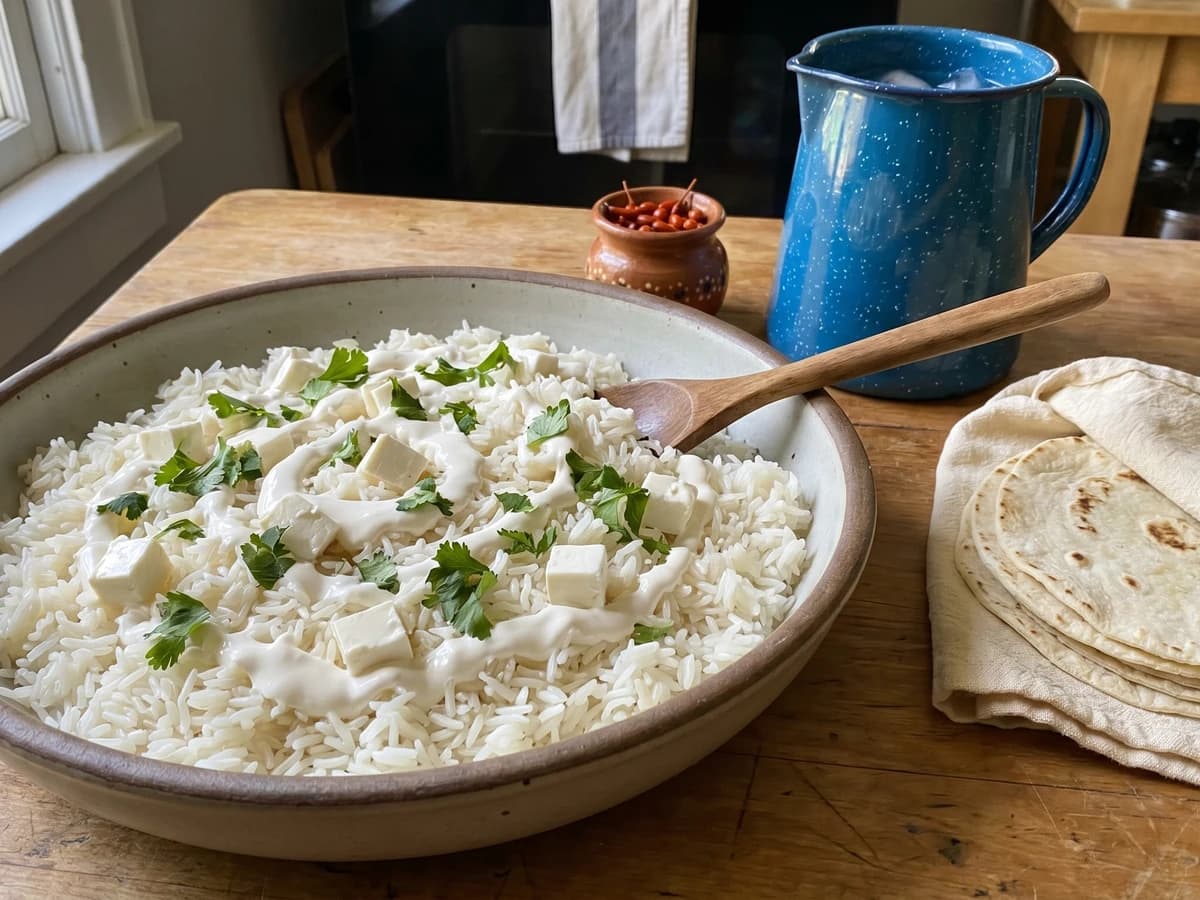
Sinaloa's home-cook white rice topped with cold cubes of cream cheese that soften into the warm grain, finished with crema and a sprinkle of chiltepin at the table. The trick that makes a side dish feel like a small luxury.
Chef Lupita
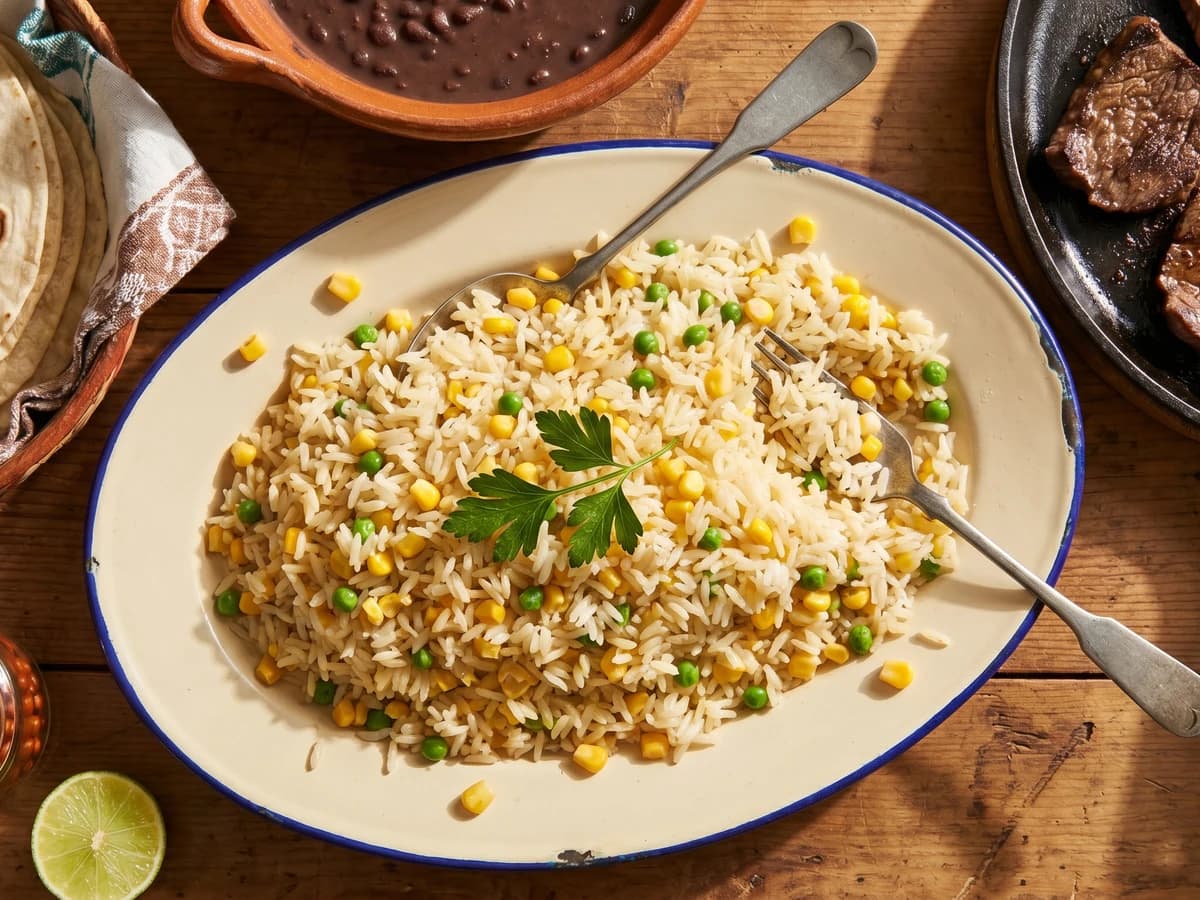
Sonora's white rice, toasted in butter and steamed with sweet corn and tender peas. The clean, quiet partner to a plate of carne asada, not the red rice of central Mexico.

Chef Lupita
Yucatán's white rice with sweet corn kernels, toasted in lard with garlic and onion. The quiet base that holds up against the peninsula's bold achiote-stained stews.