
Chef Lupita
Arroz a la Oaxaqueña
Oaxaca's red rice, stained with tomato and fried in lard, steamed with carrots, ejotes, black beans, and epazote. The side that anchors a Oaxacan family meal and earns its place beside the main.
A cooking platform built around craft, culture, and the stories behind what we eat.
Created by
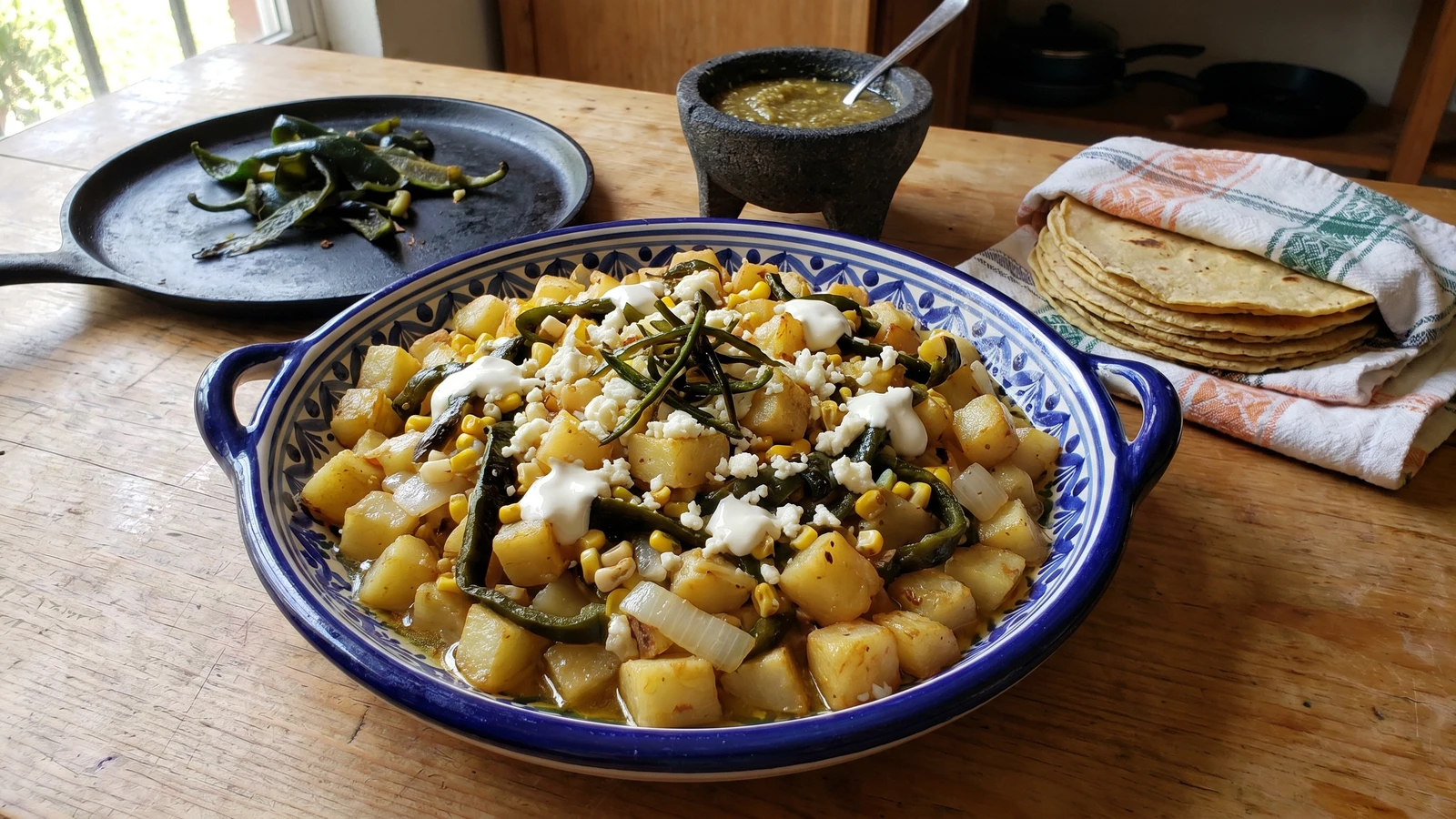
Puebla's central highland potatoes, cooked in manteca with roasted chile poblano, white onion, corn, and crema until the pan smells like a fonda at midday.
Puebla, the central highlands, chile poblano country. That is where this dish makes sense. Papas con rajas belongs to the same kitchen family as rajas con crema: roasted poblanos peeled by hand, cut into strips, folded into onion, corn, and potatoes until everything tastes like the comal and the pan.
The chile poblano defines the dish. Not jalapeño. Not canned green chile. A proper poblano is dark green, broad-shouldered, and mild enough that the flavor matters more than the heat. You blister it over a flame or on a comal, sweat it, peel it, and slice it into rajas. That work is small, but it is the difference between a dish with character and a pan of potatoes with green pieces in it.
I learned a version like this from a woman near the Mercado de Sabores Poblanos who used manteca de cerdo without asking permission from anyone. She was right. The lard browns the potatoes cleanly and carries the roasted chile flavor into the crema. La manteca es el sabor. If you want this for tacos, tuck it into warm corn tortillas. Flour tortillas are a northern tradition. Cada estado, su propia cocina.
The potato is native to the Andes, not Mexico, and entered Mexican kitchens through Spanish colonial agriculture after the 16th century. In Puebla and neighboring central highland states, it met the chile poblano, the thick-fleshed mild green chile that also defines chiles en nogada. Rajas con crema became a practical home and fonda preparation across central Mexico, and the potato version turns that same poblano technique into a filling, economical side dish.
Quantity
1 1/2 pounds
peeled and diced into 1/2-inch cubes
Quantity
4 large
Quantity
2 tablespoons
Quantity
1 medium
thinly sliced
Quantity
2
finely chopped
Quantity
1 cup
Quantity
1/2 teaspoon, plus more to taste
Quantity
1/4 teaspoon
Quantity
1/2 cup
Quantity
1/4 cup
crumbled
Quantity
for serving
| Ingredient | Quantity |
|---|---|
| waxy potatoespeeled and diced into 1/2-inch cubes | 1 1/2 pounds |
| fresh chile poblano | 4 large |
| pork lard (manteca de cerdo) | 2 tablespoons |
| white onionthinly sliced | 1 medium |
| garlic clovesfinely chopped | 2 |
| fresh corn kernels or thawed frozen corn | 1 cup |
| kosher salt | 1/2 teaspoon, plus more to taste |
| freshly ground black pepper | 1/4 teaspoon |
| Mexican crema | 1/2 cup |
| queso fresco (optional)crumbled | 1/4 cup |
| warm corn tortillas (optional) | for serving |
Place the chile poblano directly over a gas flame or on a hot dry comal. Turn them until the skins blister and blacken in patches on all sides. You are roasting the skin, not cooking the chile to mush. Put them in a bowl and cover for 10 minutes so the skins loosen.
Peel off the loosened skins with your fingers. Do not rinse the chiles under water. That washes away the roasted flavor you just worked for. Remove the stems and seeds, then slice the flesh into 1/2-inch strips. These are your rajas.
Put the diced potatoes in a saucepan, cover with cold water, and add a good pinch of salt. Bring to a simmer and cook 6 to 8 minutes, until the potatoes are barely tender at the edges but still hold their shape. Drain well. Wet potatoes do not brown. Let them sit in the colander for a few minutes.
Heat the manteca in a wide skillet or clay cazuela over medium heat. Add the drained potatoes in an even layer and let them brown before you start moving them around. Give them 6 to 8 minutes, turning once or twice, until the edges are golden. No me vengas con atajos. Pale potatoes taste boiled.
Add the sliced white onion and cook 5 minutes, stirring often, until it softens and turns sweet at the edges. Add the garlic and cook 30 seconds, just until it smells sharp and warm. Garlic burns fast, and burned garlic takes over the whole pan.
Stir in the poblano rajas, corn, salt, and black pepper. Cook 4 to 5 minutes, until the corn brightens and the rajas soften into the potatoes. The pan should smell roasted, sweet, and a little grassy from the poblano.
Lower the heat. Stir in the Mexican crema and cook 1 to 2 minutes, just until it coats the potatoes and gathers lightly at the edges of the pan. Do not boil it hard or it can split. Taste for salt. If using queso fresco, scatter it over the top right before serving.
Serve in the cazuela with warm corn tortillas on the side. It works as a side dish with eggs, beans, or grilled meat, and it makes a serious taco filling. This is weeknight food, but it still has rules. Así se hace y punto.
1 serving (about 310g)
Culinary guides, cultural storytelling, and the editorial depth that makes cooking meaningful.
Discover Culinary ExplorerChef Lupita
Oaxaca's red rice, stained with tomato and fried in lard, steamed with carrots, ejotes, black beans, and epazote. The side that anchors a Oaxacan family meal and earns its place beside the main.
Chef Lupita
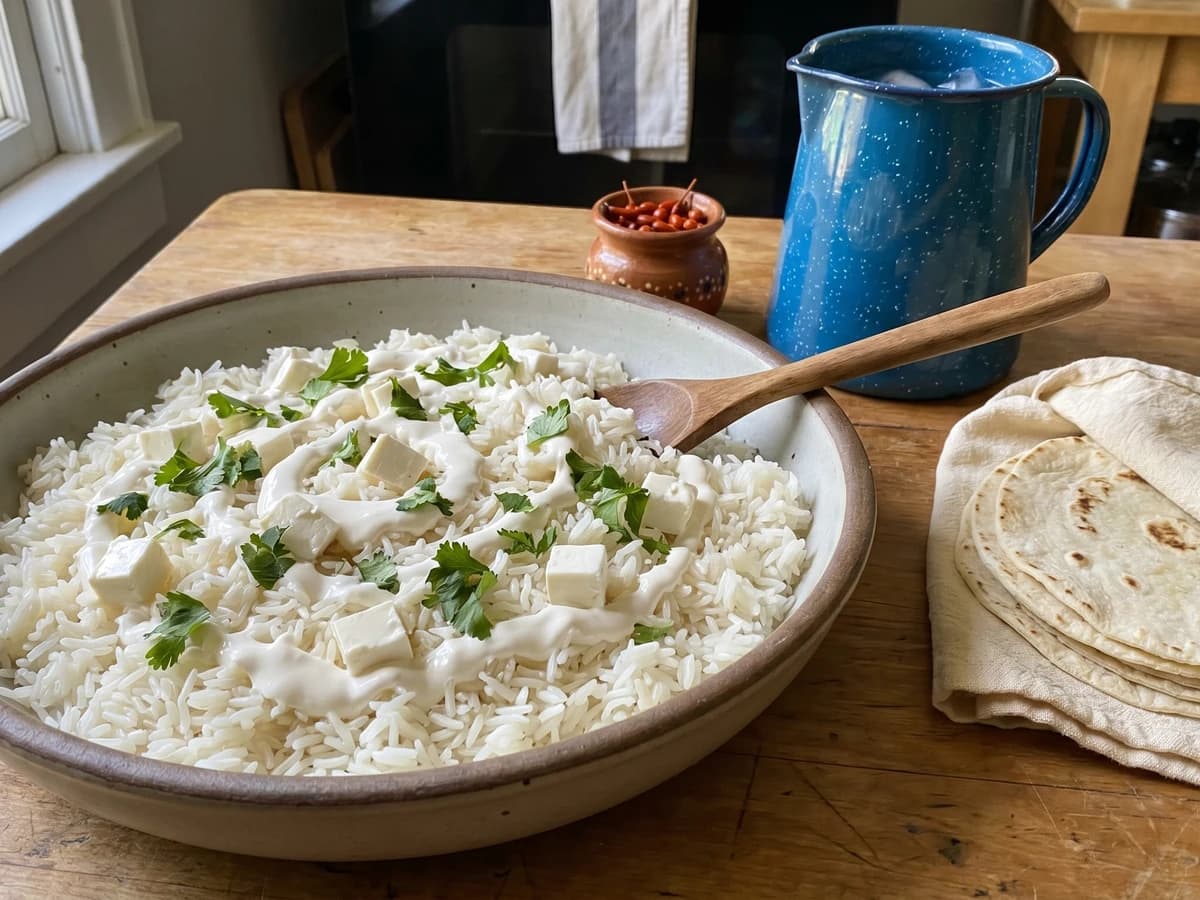
Sinaloa's home-cook white rice topped with cold cubes of cream cheese that soften into the warm grain, finished with crema and a sprinkle of chiltepin at the table. The trick that makes a side dish feel like a small luxury.
Chef Lupita
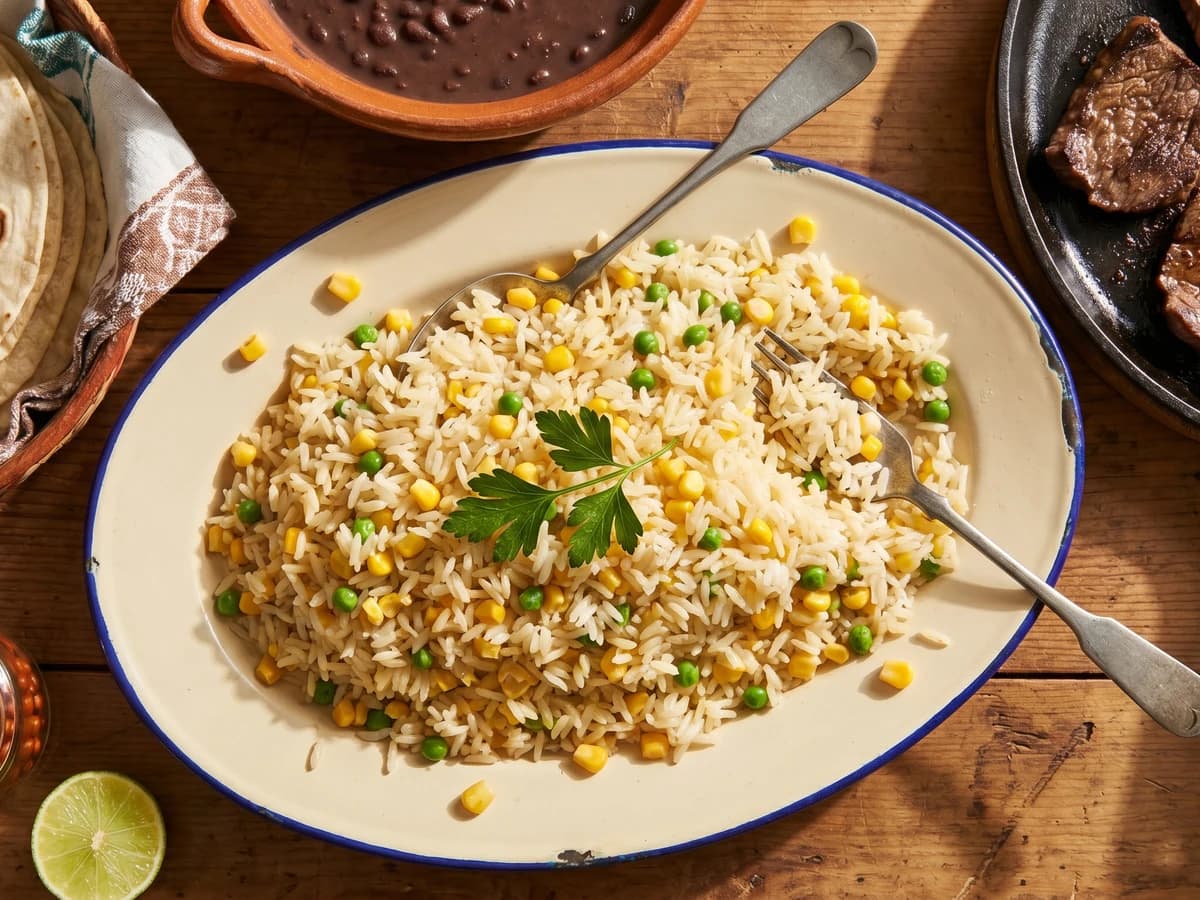
Sonora's white rice, toasted in butter and steamed with sweet corn and tender peas. The clean, quiet partner to a plate of carne asada, not the red rice of central Mexico.

Chef Lupita
Yucatán's white rice with sweet corn kernels, toasted in lard with garlic and onion. The quiet base that holds up against the peninsula's bold achiote-stained stews.