
Chef Graziella
Bonet Piemontese
The chocolate custard of Piedmont, dense with cocoa and crushed amaretti, crowned with bitter caramel. This is the dessert your Torinese grandmother made for feast days.
A cooking platform built around craft, culture, and the stories behind what we eat.
Created by
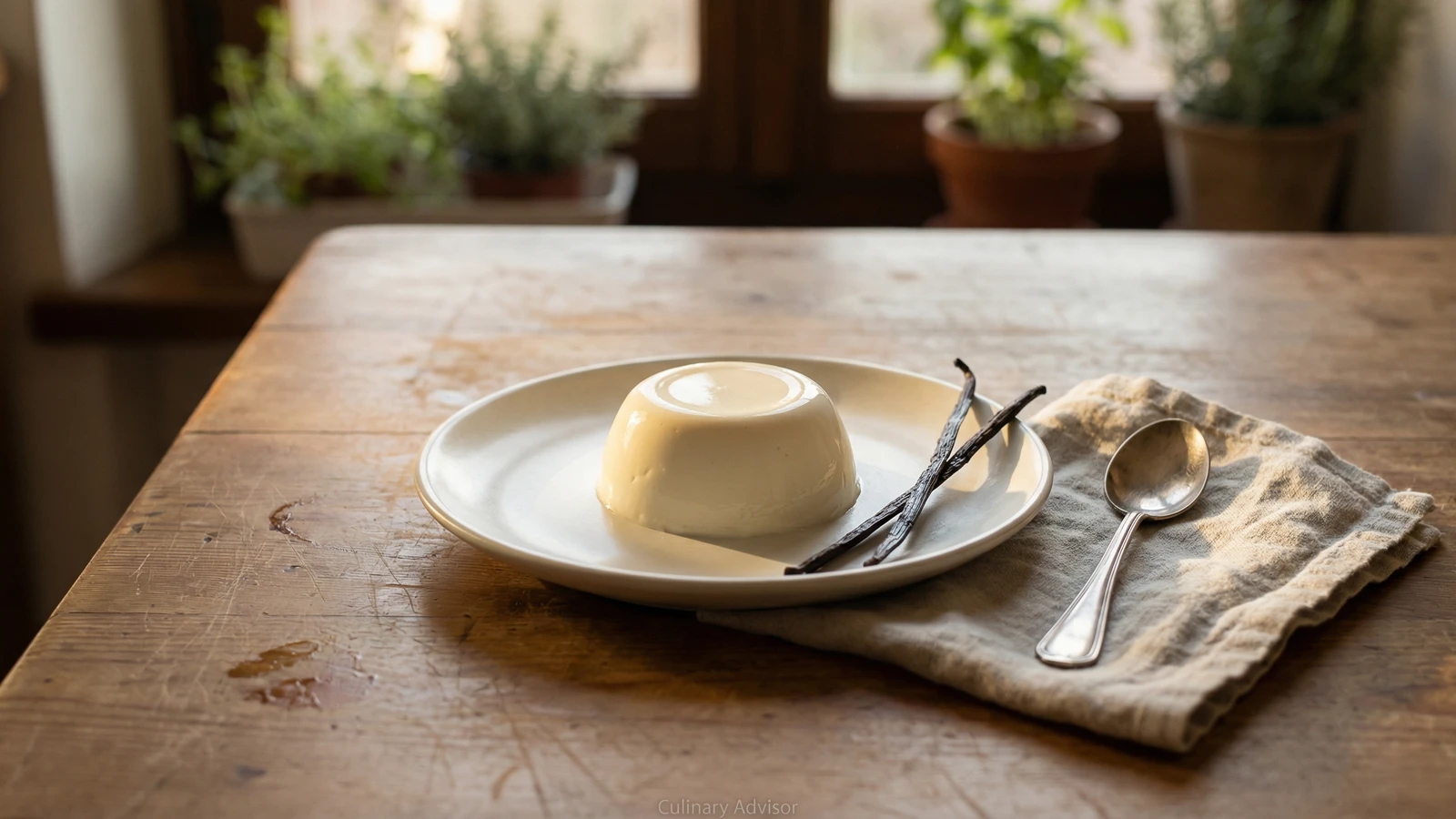
The trembling cream of Piedmont, set with just enough gelatin to hold its shape and nothing more. Four ingredients. No room for error. No place for excess.
Panna cotta means cooked cream, and that is precisely what it is. Cream, sugar, vanilla, and barely enough gelatin to convince it to hold a shape when unmolded. This is not a recipe that rewards creativity or improvement. What you keep out is as significant as what you put in.
The texture is everything. Proper panna cotta trembles when touched. It yields to the spoon with the gentlest pressure. If your panna cotta bounces, you have used too much gelatin. If it collapses into a puddle, too little. The margin between success and failure is measured in fractions of teaspoons.
I have watched restaurant chefs ruin this dessert with raspberry coulis, chocolate drizzles, and architectural arrangements of fruit. They miss the point entirely. A properly made panna cotta needs nothing. The cream itself, if it is good cream, provides all the flavor. The vanilla, if it is a real bean scraped into the mixture, provides the perfume. The sugar provides just enough sweetness to make you want another spoonful.
This is a test of your ingredients and your technique. There is nowhere to hide.
Panna cotta is firmly Piedmontese, though its precise origins remain disputed. Some food historians trace it to early 20th-century Langhe region, where dairy farmers had cream in abundance. Others claim it descends from medieval milk-based desserts set with fish bladder. What is certain: by the 1960s it had become the signature dessert of Piedmont's trattorias, and by the 1990s it had conquered the world, often in debased forms its creators would not recognize.
Quantity
2 cups
Quantity
1 cup
Quantity
1/2 cup
Quantity
1
split lengthwise
Quantity
2 1/4 teaspoons (one envelope)
Quantity
3 tablespoons
Quantity
pinch
Quantity
for molds
| Ingredient | Quantity |
|---|---|
| heavy cream | 2 cups |
| whole milk | 1 cup |
| granulated sugar | 1/2 cup |
| vanilla beansplit lengthwise | 1 |
| powdered gelatin | 2 1/4 teaspoons (one envelope) |
| cold water | 3 tablespoons |
| fine sea salt | pinch |
| flavorless oil | for molds |
Pour the cold water into a small bowl. Sprinkle the gelatin evenly over the surface. Do not stir. Do not dump it in a pile. Let it sit undisturbed for 5 minutes. The granules will absorb the water and become soft and spongy. This is called blooming. If you skip this step or rush it, your panna cotta will have rubbery lumps.
Lightly oil six 4-ounce ramekins or molds with flavorless oil. Use a paper towel to spread the thinnest possible film. Too much oil leaves a slick surface. The panna cotta should release cleanly but not taste of anything except itself.
Combine the cream, milk, and sugar in a medium saucepan. Scrape the seeds from the vanilla bean with the back of a knife and add both seeds and pod to the pan. Add the pinch of salt. Set over medium heat and stir occasionally until the sugar dissolves and the mixture is hot throughout. Small bubbles will appear at the edges. Do not let it boil. Boiled cream tastes flat and the texture suffers.
Remove the pan from heat. Add the bloomed gelatin and stir gently until it dissolves completely. This takes only a minute if the cream is properly hot. If the gelatin does not dissolve, your cream was not hot enough. Return it to low heat briefly, stirring constantly, until no granules remain. The mixture should be perfectly smooth.
Set a fine-mesh strainer over a spouted measuring cup or bowl. Pour the cream mixture through, pressing gently on the vanilla pod to extract every bit of flavor. Discard the pod. The straining removes any undissolved gelatin and ensures a texture like silk. Divide evenly among the prepared molds.
Let the filled molds cool at room temperature for 15 minutes, then cover with plastic wrap and refrigerate for at least 4 hours, or overnight. The panna cotta is set when it no longer ripples when you gently shake the mold. It should tremble like a nervous custard, not bounce like rubber.
Dip each mold briefly in hot water, no more than 5 seconds. Run a thin knife around the edge. Invert onto a serving plate and shake gently. The panna cotta should release with a soft wobble. If it resists, dip again briefly. If it collapses into a puddle, you have used too much heat or too little gelatin. Serve immediately, or within 30 minutes of unmolding.
1 serving (about 145g)
Culinary guides, cultural storytelling, and the editorial depth that makes cooking meaningful.
Discover Culinary ExplorerChef Graziella
The chocolate custard of Piedmont, dense with cocoa and crushed amaretti, crowned with bitter caramel. This is the dessert your Torinese grandmother made for feast days.

Chef Graziella
The legendary hazelnut chocolates of Turin, invented when Napoleon's blockades made cocoa precious. Piedmont's answer was to stretch it with their incomparable hazelnuts, and the result surpassed the original.

Chef Graziella
The baroque chestnut mountain of Piedmont, where sweet chestnut purée rises in delicate strands beneath drifts of whipped cream snow. A dessert that proves restraint and good ingredients require no decoration.

Chef Graziella
The quivering cream of Piedmont, set with just enough gelatin to hold its shape and not a grain more. Pure dairy, pure vanilla, pure restraint.