
Chef Graziella
Arancini alla Siciliana
Golden fried rice balls from Sicily, where Arab culinary influence meets Italian home cooking. The saffron-perfumed rice conceals a heart of slow-simmered ragù and sweet peas.
A cooking platform built around craft, culture, and the stories behind what we eat.
Created by
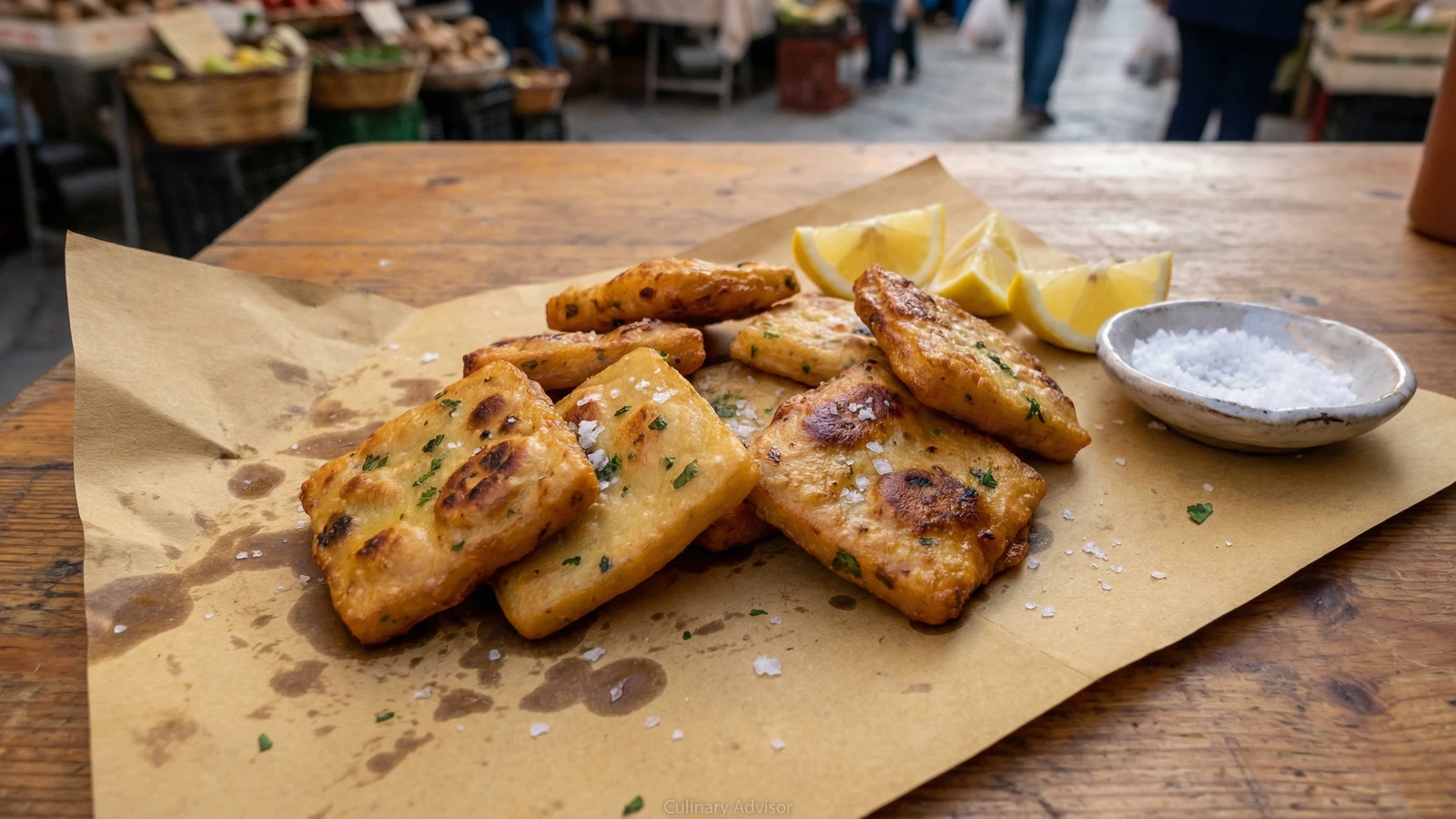
Chickpea fritters from the street carts of Palermo, where vendors have fried these thin, golden rectangles for centuries. Three ingredients. No shortcuts. The lemon is essential.
Panelle belong to the friggitorie of Palermo, the street stalls where men in white aprons have been frying since before anyone can remember. They are poor food: chickpea flour, water, salt. Nothing more. The parsley is a concession to color. The technique is everything.
The batter is cooked like polenta until it pulls from the pan, then spread impossibly thin on marble and left to set. Palermitani vendors spread theirs so thin you can see light through them. This thinness creates the defining quality: shatteringly crisp on the outside, creamy as custard within. Thick panelle are an abomination.
You must eat them hot, with lemon squeezed over the top. In Palermo they tuck them into soft sesame rolls called mafalde and sell them from carts near the markets. At home, they disappear from the plate before you can arrange them. This is correct. They are meant to be eaten immediately, standing up, burning your fingers and not caring.
Panelle arrived in Sicily with the Arabs, who ruled the island from 827 to 1091 and brought with them the cultivation of chickpeas and the technique of frying thin batters. Palermo's friggitorie, the street stalls that specialize in fried foods, have been serving panelle from the same locations for generations. The dish survived because it cost almost nothing to make and satisfied hunger completely.
Quantity
300g
Quantity
1 liter
Quantity
1 teaspoon
Quantity
2 tablespoons
chopped fine
Quantity
to taste
freshly ground
Quantity
for the pan
Quantity
about 2 cups
for frying
Quantity
2
cut into wedges
| Ingredient | Quantity |
|---|---|
| chickpea flour (farina di ceci) | 300g |
| cold water | 1 liter |
| fine sea salt | 1 teaspoon |
| flat-leaf parsleychopped fine | 2 tablespoons |
| black pepperfreshly ground | to taste |
| extra virgin olive oil | for the pan |
| vegetable oilfor frying | about 2 cups |
| lemonscut into wedges | 2 |
Pour the cold water into a heavy-bottomed saucepan. Sift the chickpea flour through a fine-mesh strainer directly into the water, whisking constantly as you add it. This prevents lumps. The mixture should be completely smooth before you turn on the heat. Add the salt and whisk once more.
Set the pan over medium heat. Stir constantly with a wooden spoon, reaching into the corners where the batter likes to stick. After about 15 minutes, the mixture will thicken dramatically and begin to pull away from the sides of the pan. It should have the consistency of thick polenta. When a spoon drawn through it leaves a clean trail that does not immediately fill back in, it is ready.
Remove the pan from heat. Stir in the chopped parsley and a generous grinding of black pepper. The parsley should be evenly distributed throughout. Work quickly; the batter sets as it cools.
Brush a large marble slab, wooden board, or sheet pan with olive oil. Turn the hot batter onto the surface. Using an oiled spatula or the back of a wet spoon, spread it into a thin, even layer, no more than 3 millimeters thick. Thinner is better. Street vendors in Palermo spread theirs so thin you can nearly see through them. Let it cool completely at room temperature, at least two hours.
When the batter has set firm, cut it into rectangles approximately 8 centimeters by 5 centimeters. Traditionally they are cut into rough rectangles or triangles; precision is not the point. The edges may be uneven. This is poor food, and it should look like it.
Pour vegetable oil into a deep skillet to a depth of about 2 centimeters. Heat until a small piece of batter sizzles immediately when dropped in, about 180°C (350°F). Fry the panelle in batches, without crowding, until deeply golden and crisp on both sides, about 2 minutes per side. They should puff slightly and develop blisters. Drain on paper towels.
Sprinkle with a little more salt while still hot. Serve immediately with lemon wedges alongside. The lemon is not optional. The acid cuts the richness and makes you want another. In Palermo, these would be stuffed into a soft sesame roll. At home, they are perfect on their own, eaten standing in the kitchen while they are still too hot to hold.
1 serving (about 85g)
Culinary guides, cultural storytelling, and the editorial depth that makes cooking meaningful.
Discover Culinary ExplorerChef Graziella
Golden fried rice balls from Sicily, where Arab culinary influence meets Italian home cooking. The saffron-perfumed rice conceals a heart of slow-simmered ragù and sweet peas.
Chef Graziella
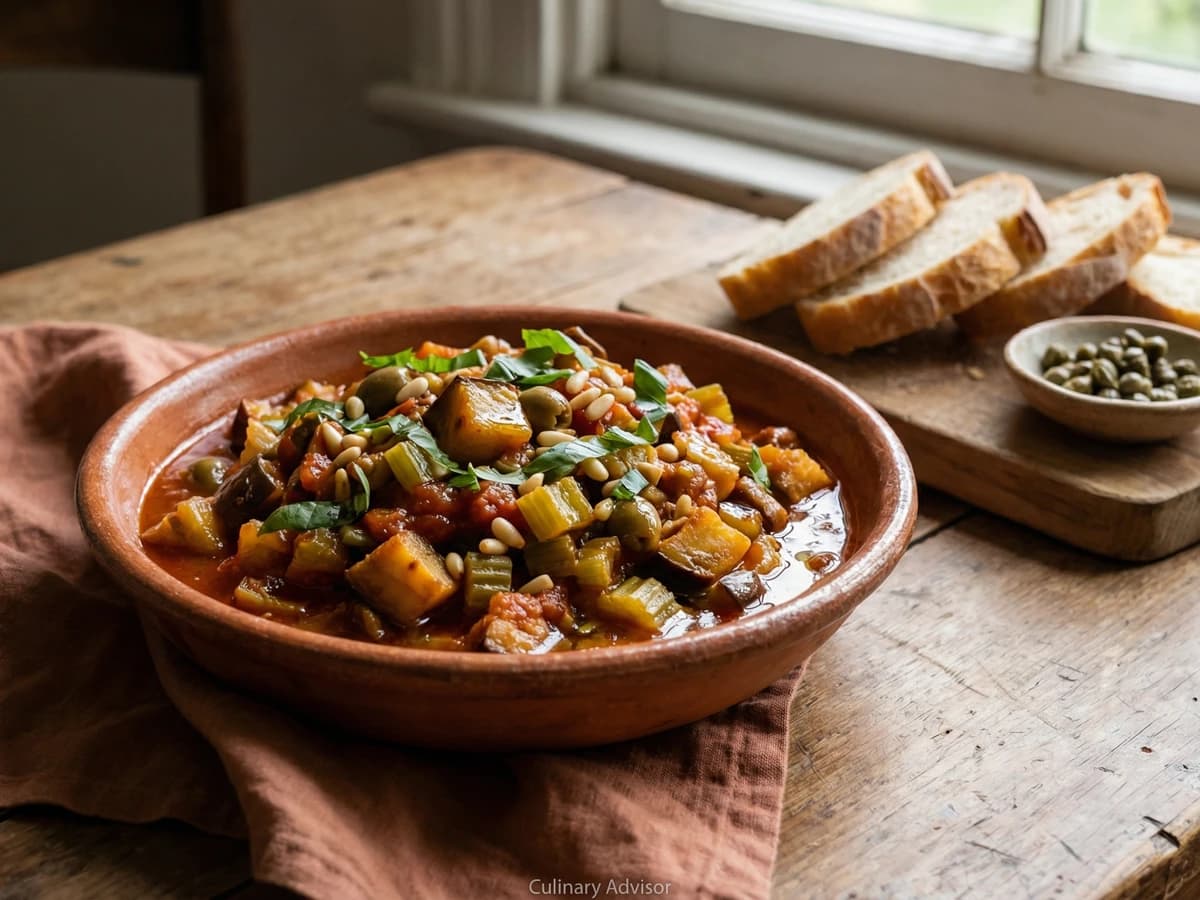
Sicily's celebrated sweet-sour eggplant, where Arab traders left their mark in the capers, vinegar, and sugar that transform humble vegetables into something unforgettable. Better tomorrow than today.

Chef Graziella
Silky grilled eggplant embracing sharp, salty ricotta and fragrant basil. Sicily's gift to the antipasto table, proving that restraint and quality ingredients need nothing more.

Chef Graziella
Eggplant halves from Sicily's Arab-influenced kitchen, stuffed with capers, green olives, pine nuts, and golden raisins, crowned with breadcrumbs and baked until the top shatters under your fork.