
Chef Graziella
Muffuletta Siciliana
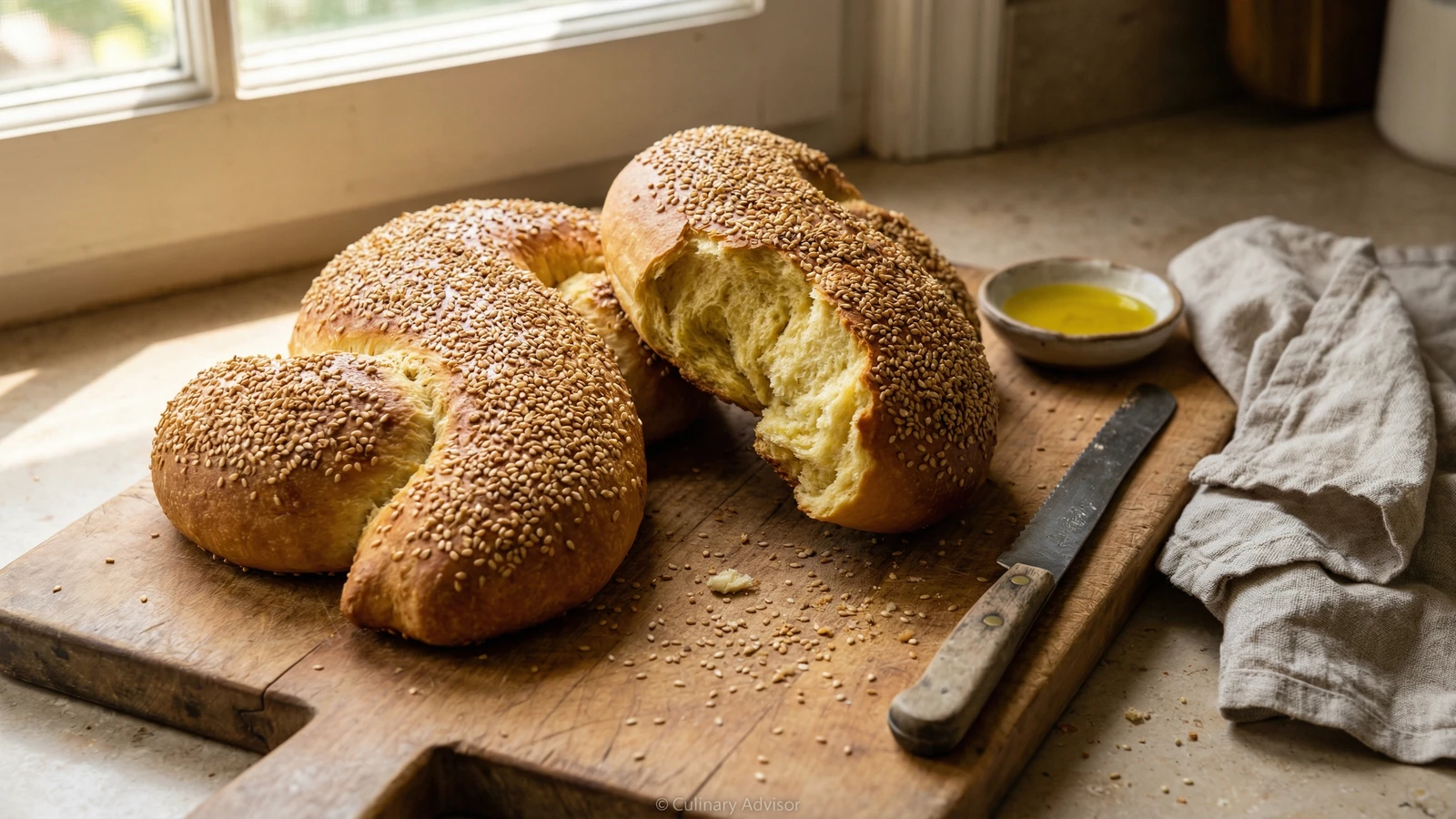
The sesame-crusted bread of Palermo, soft as a whisper and covered in seeds that toast golden in the oven. These are the rolls Sicilians break for their beloved dead and for their living families.
A cooking platform built around craft, culture, and the stories behind what we eat.
Created by
The sesame-crusted bread of Sicily, where Arab traders left their mark on Italian tables centuries ago. Golden semolina dough beneath a generous blanket of toasted seeds.
The first useful thing to know about Italian bread is that every region has its own, and they rarely travel. Sicilian bread belongs to Sicily. It is made with semolina flour because durum wheat grows on the island. It is covered with sesame seeds because Arab traders brought them a thousand years ago and Sicilians had the sense to adopt what was good.
This is not complicated bread. It requires no special equipment, no days-long fermentation, no sourdough starter demanding attention like a hungry pet. What it requires is proper flour, patience through two rises, and the confidence to coat the loaves so thoroughly in sesame that they look almost extravagant. They are not. This is simply how it is done.
The shape matters. The traditional S-curve, called mafalda, creates more crust and ensures even baking. It also looks like something, which matters when bread is the center of the table. Sicilians understand that bread is not a side dish. It is the foundation of the meal, torn and shared and used to push food onto forks and soak up sauces. Make it accordingly.
Arab rule in Sicily from the 9th to 11th centuries transformed the island's cuisine permanently. The Arabs brought sesame, along with citrus, almonds, and sugarcane. When Norman conquerors expelled the Arabs, they kept their ingredients. Pane con sesamo persisted through centuries of foreign rulers, a quiet reminder that conquest cannot erase what tastes good.
Quantity
300g
Quantity
200g
Quantity
10g
Quantity
7g
Quantity
2 tablespoons
Quantity
320ml
about 100°F
Quantity
100g
Quantity
1
lightly beaten
| Ingredient | Quantity |
|---|---|
| semola rimacinata | 300g |
| bread flour | 200g |
| fine sea salt | 10g |
| instant yeast | 7g |
| extra virgin olive oil | 2 tablespoons |
| warm waterabout 100°F | 320ml |
| sesame seeds | 100g |
| egg whitelightly beaten | 1 |
In a large bowl, whisk together the semola rimacinata, bread flour, salt, and instant yeast. The semolina gives this bread its characteristic golden color and slightly nutty flavor. Do not substitute all-purpose flour. The result would be pale and forgettable.
Make a well in the center of the dry ingredients. Add the olive oil and warm water. Stir with a wooden spoon until a shaggy dough forms. Turn out onto a clean work surface and knead for 10 to 12 minutes. The dough should become smooth, elastic, and slightly tacky but not sticky. It will feel different from bread flour dough, a bit more resistance, more tooth. This is the semolina.
Shape the dough into a ball and place it in a lightly oiled bowl, turning once to coat. Cover tightly with plastic wrap and let rise in a warm place until doubled in volume, about 1 hour and 30 minutes. The dough is ready when you press a finger into it and the indentation springs back slowly, not immediately.
Turn the risen dough onto a lightly floured surface and divide it in half. Working with one piece at a time, roll it into a rope about 20 inches long, keeping the thickness even. Form the rope into an S-shape, curling each end into a tight spiral that meets in the center. This is the traditional mafalda shape, though some bakers prefer a simple braid. Repeat with the second piece.
Spread the sesame seeds on a large plate or baking sheet. Brush each shaped loaf generously with beaten egg white, covering every surface. Roll and press each loaf into the sesame seeds, coating completely. The seeds should cover the bread so thoroughly that you barely see dough beneath. Sicilians are not timid about sesame. Place the coated loaves on a parchment-lined baking sheet, leaving several inches between them.
Cover the loaves loosely with a clean kitchen towel and let rise until nearly doubled, about 45 minutes. The sesame coating will crack slightly as the bread expands. This is correct. Meanwhile, preheat your oven to 425°F. Place a metal pan on the lowest rack for steam.
When the loaves are ready, pour one cup of hot water into the metal pan on the lower rack. This creates steam that helps form the crust. Immediately place the loaves in the oven on the middle rack. Bake for 15 minutes, then reduce the temperature to 375°F and continue baking until the loaves are deep golden and sound hollow when tapped on the bottom, 18 to 20 minutes more. The internal temperature should reach 200°F.
Transfer the loaves to a wire rack and let them cool completely before slicing. I know this is difficult. The bread smells extraordinary. But cutting into hot bread compresses the crumb and releases steam that should stay inside. Wait at least 30 minutes. The bread will still be warm. It will be better for your patience.
1 serving (about 53g)
Culinary guides, cultural storytelling, and the editorial depth that makes cooking meaningful.
Discover Culinary ExplorerChef Graziella
The sesame-crusted bread of Palermo, soft as a whisper and covered in seeds that toast golden in the oven. These are the rolls Sicilians break for their beloved dead and for their living families.

Chef Juliette
Pâte à brioche ordinaire teaches enriched dough properly: wake the leaven, build strength before the last egg, then work in pliable butter by stages and let one long fermentation do its quiet work.

Chef Juliette
Ordinary brioche takes one exact measure of butter and a patient rise in the mould, becoming so light and silken that it can cradle fruit without losing its tender crumb.

Chef Juliette
Pâte à brioche ordinaire, butter-rich yet firm, teaches the useful side of brioche: slow fermentation, disciplined mixing, and a dough that rolls cleanly for lining, wrapping, and every sturdy pastry job.