Culinary Explorer
A cooking platform built around craft, culture, and the stories behind what we eat.
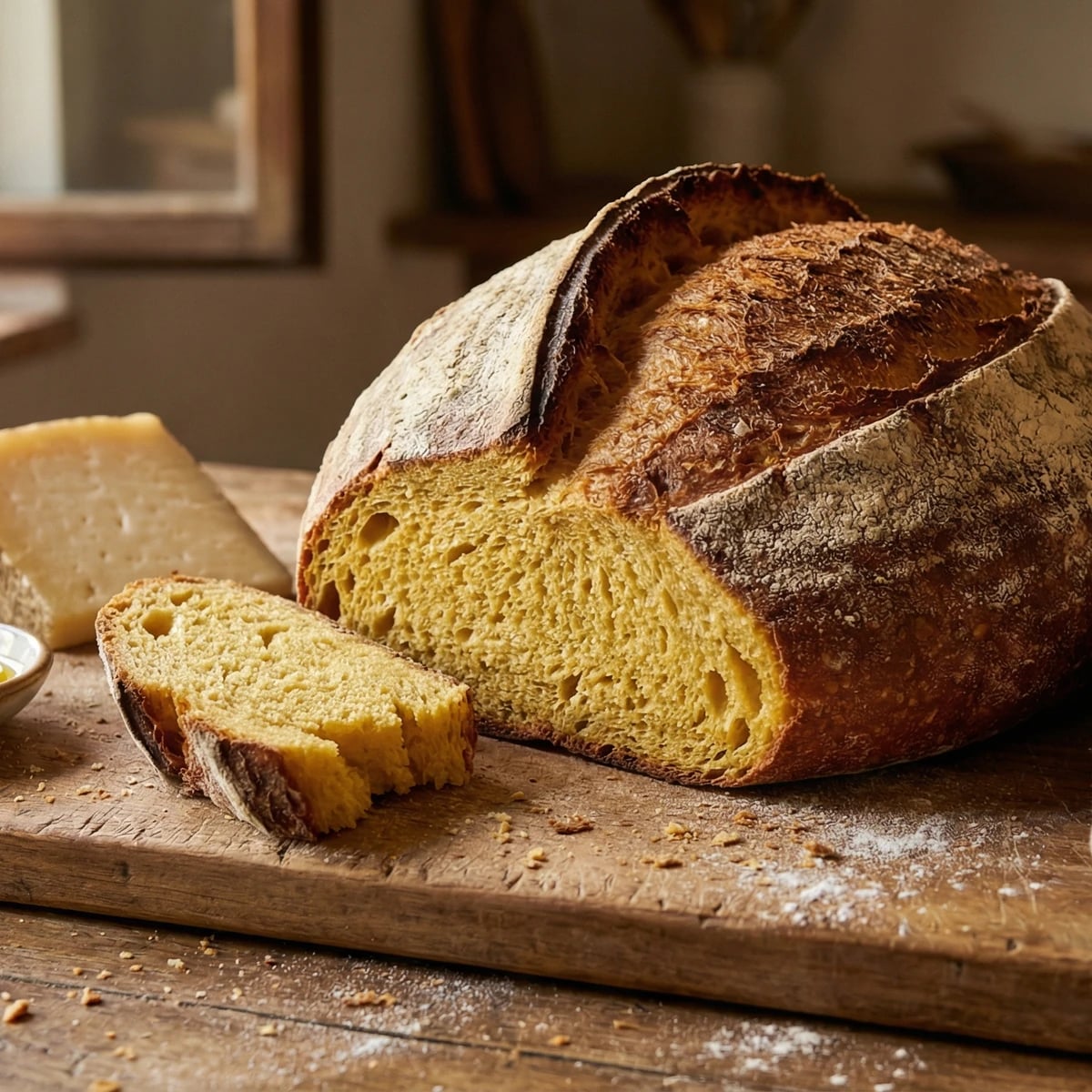
Civraxiu
Created by Chef Graziella
The great round loaf of Sardinia, built from golden semolina and baked until the crust turns nearly black. Shepherds carried this bread into the hills because it kept for weeks without staling.
Sardinia sits in the middle of the Mediterranean, and for centuries its people looked inward, not outward. The island developed its own bread traditions, distinct from the mainland, shaped by the needs of shepherds who spent months in the hills with their flocks. Civraxiu was their daily bread. It had to keep.
The name comes from the Latin *cibariu*, meaning food or sustenance. This is not a dinner roll or a baguette to be eaten fresh and forgotten. This is a bread meant to last. The thick crust, almost black from high heat, seals the crumb inside. The semolina, ground from the hard durum wheat that thrives in Sardinia's dry climate, resists staling far longer than soft wheat flour. A properly made civraxiu remains good for a week, acceptable for two.
The crumb is dense and golden, with an almost sweet, wheaty fragrance that soft bread cannot achieve. Sardinians slice it thick and use it as a foundation for their sharp pecorino, their cured meats, their olive oil. The bread does not compete with these flavors. It carries them.
Ingredients
semola rimacinata
Quantity
500g
bread flour
Quantity
100g
water
Quantity
400g
at room temperature
| Ingredient | Quantity |
|---|---|
| semola rimacinata | 500g |
| bread flour | 100g |
| waterat room temperature | 400g |
Where cooking meets culture.
Culinary guides, cultural storytelling, and the editorial depth that makes cooking meaningful.
Discover Culinary Explorer