
Chef Graziella
Filone Toscano
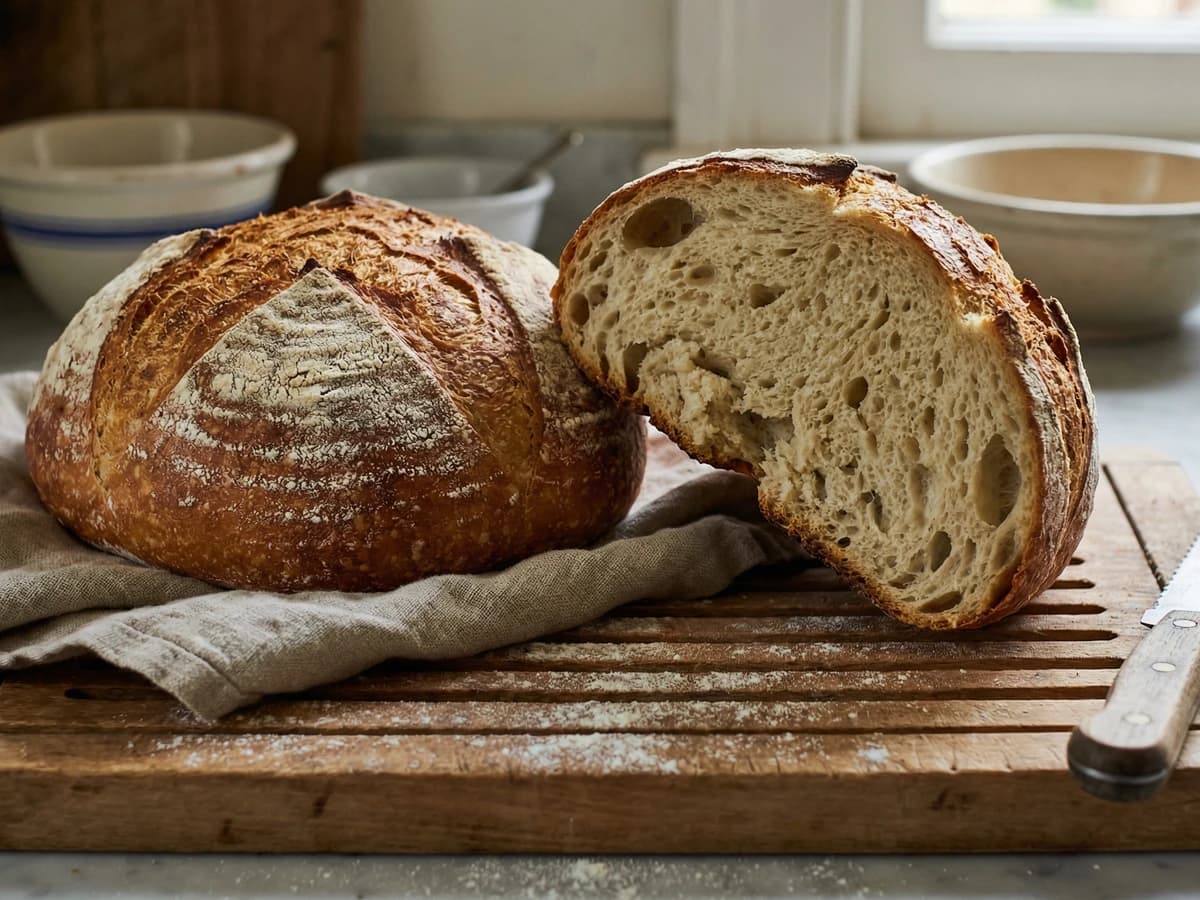
The saltless long loaf of Tuscany, shaped to maximize crust and designed to accompany the salty prosciutto, finocchiona, and pecorino that define the region's table.
A cooking platform built around craft, culture, and the stories behind what we eat.

Created by
The rosemary bread of Florence, studded with raisins plumped in vin santo, baked in homes across Tuscany on Holy Thursday as they have been for centuries.
Ramerino is the Tuscan word for rosemary. Pan di ramerino is therefore rosemary bread, and in Florence, it means one thing: small rounds studded with raisins and fragrant with the piney herb that grows wild on every Tuscan hillside. This is Easter bread, made on Giovedì Santo, Holy Thursday, when Florentine bakers would mark each bun with a cross before sliding them into wood-fired ovens.
The bread is enriched with olive oil, not butter. This is Tuscany, where olive trees outnumber dairy cows and the golden-green oil finds its way into everything. The raisins are soaked in vin santo, the amber dessert wine that every Tuscan household keeps for dipping biscotti. The rosemary is fresh, never dried, chopped fine so it distributes evenly through the soft crumb.
You will notice these buns are slightly sweet but not cloying. They sit at the threshold between bread and pastry, appropriate for a holy day that calls for something special but not frivolous. Florentines eat them plain, perhaps with a glass of the same vin santo that flavors the raisins. The combination is correct and needs nothing more.
Pan di ramerino appears in Florentine records as early as the Renaissance, when bakers prepared special breads for Holy Week. The tradition of marking the buns with a cross and selling them on Holy Thursday persisted in Florence until the mid-20th century, when small bakeries began closing. Today the bread is experiencing a revival, with Florentine bakers rediscovering what their grandmothers knew: some traditions deserve to survive.
Quantity
500g
Quantity
7g
Quantity
50g
Quantity
8g
Quantity
80ml, plus more for brushing
Quantity
280ml (about 38°C/100°F)
Quantity
100g
Quantity
80ml
Quantity
3 tablespoons
chopped fine
| Ingredient | Quantity |
|---|---|
| bread flour | 500g |
| instant yeast | 7g |
| granulated sugar | 50g |
| fine sea salt | 8g |
| extra virgin olive oil | 80ml, plus more for brushing |
| warm water | 280ml (about 38°C/100°F) |
| raisins | 100g |
| vin santo | 80ml |
| fresh rosemary leaveschopped fine | 3 tablespoons |
Place the raisins in a small bowl and pour the vin santo over them. Let them soak for at least 30 minutes, or up to several hours. The raisins will plump and absorb the wine's honeyed flavor. Drain before using, but save any remaining liquid to brush on the finished buns.
Strip the rosemary leaves from their woody stems. Chop them fine with a sharp knife. The pieces should be small enough to distribute evenly through the dough without creating pockets of intense flavor. You want rosemary in every bite, not a surprise attack in one.
In a large bowl, combine the flour, yeast, and sugar. Stir to distribute the yeast. Add the salt, keeping it away from direct contact with the yeast. Pour in the olive oil and warm water. Stir with a wooden spoon until a shaggy dough forms, then turn it out onto a clean work surface.
Knead the dough firmly for 10 minutes. Push it away with the heel of your hand, fold it back, turn it a quarter, repeat. The dough will transform from rough and sticky to smooth and elastic. When you poke it with a finger, it should spring back slowly. This is gluten development, and you cannot skip it.
Flatten the dough into a rough rectangle. Scatter the drained raisins and chopped rosemary over the surface. Roll the dough up, then knead it gently to distribute the additions throughout. The dough will become slightly lumpy from the raisins. This is correct.
Shape the dough into a ball and place it in a lightly oiled bowl. Cover with a damp kitchen towel or plastic wrap. Let it rise in a warm place until doubled in size, about 1 to 1½ hours. The timing depends on your kitchen's temperature. Watch the dough, not the clock.
Punch down the risen dough to release the gas. Turn it out onto a lightly floured surface. Divide the dough into 12 equal pieces, each about 75g. Shape each piece into a smooth round by cupping it under your palm and rolling it in a circular motion against the work surface. The surface tension creates the shape.
Place the shaped buns on two parchment-lined baking sheets, spacing them at least 5cm apart. They will spread as they rise. Cover loosely with a kitchen towel and let rise until puffy and nearly doubled, about 45 minutes to 1 hour.
Preheat your oven to 190°C (375°F). If following tradition, use a sharp knife to slash a cross into the top of each bun. Brush the tops generously with olive oil. The oil creates the characteristic golden, slightly crisp crust.
Bake for 20 to 25 minutes, rotating the pans halfway through for even browning. The buns are done when deeply golden on top and sound hollow when tapped on the bottom. Remove from the oven and brush immediately with any remaining vin santo soaking liquid or additional olive oil.
Transfer the buns to a wire rack. Let them cool for at least 15 minutes before eating, though they are also excellent at room temperature. The rosemary fragrance will fill your kitchen. This is how Florentine homes smell on Holy Thursday.
1 serving (about 85g)
Culinary guides, cultural storytelling, and the editorial depth that makes cooking meaningful.
Discover Culinary ExplorerChef Graziella
The saltless long loaf of Tuscany, shaped to maximize crust and designed to accompany the salty prosciutto, finocchiona, and pecorino that define the region's table.
Chef Graziella
The saltless bread of Tuscany, made as it has been for centuries. What seems like an absence is actually the point: this bread exists to balance the salty abundance of the Tuscan table.

Chef Juliette
Pâte à brioche ordinaire teaches enriched dough properly: wake the leaven, build strength before the last egg, then work in pliable butter by stages and let one long fermentation do its quiet work.

Chef Juliette
Ordinary brioche takes one exact measure of butter and a patient rise in the mould, becoming so light and silken that it can cradle fruit without losing its tender crumb.