
Chef Lupita
Acambaritas de Acámbaro
Guanajuato's daily bread from Acámbaro, a small glazed roll built on pata, enriched with manteca de cerdo, and baked until the top shines lightly for merienda.
A cooking platform built around craft, culture, and the stories behind what we eat.
Created by
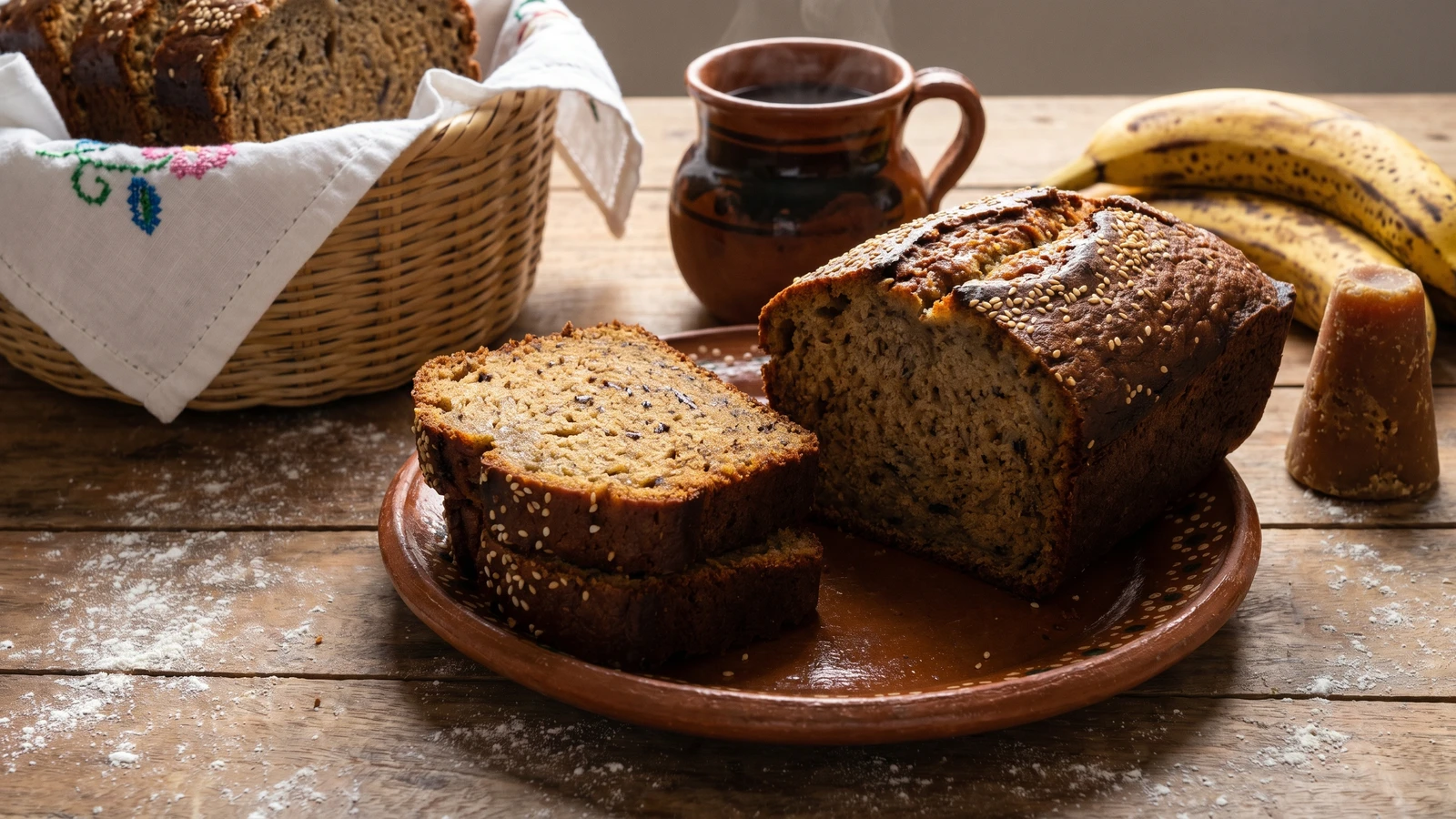
Nayarit's tropical coast turns ripe bananas into a dark, moist pan de platano with piloncillo, canela, and a tender crumb made for merienda with cafe de olla.
Nayarit, from San Blas down through the humid coastal plain toward Compostela, knows what to do with ripe bananas because the fruit is not decoration there. It is crop, breakfast, snack, dessert, and economy. When the platanos on the counter go black, a careful cook does not throw them away. She makes pan de platano.
This is not a yeast bread. No masa madre, no Guadalajara pata, no overnight proof. This is a quick bread built with harina de trigo, baking powder, ripe platano Tabasco or dominico, piloncillo, egg, and fat. In many Nayarit kitchens that fat is vegetable oil because the coast is hot and oil keeps the crumb moist for days. Butter tastes good, yes, but oil gives the texture home cooks want when the loaf sits on the table for merienda.
The flavor comes from patience before the bowl: let the bananas ripen until the peel is almost black and the flesh smells floral and sweet. Green bananas make a dry loaf. Pretty yellow bananas make a polite loaf. Black bananas make pan de platano. My mother used to write, 'wait one more day' beside fruit recipes in her notebook. She was right. Saber cocinar es saber vivir.
Bananas reached Mexico after the Spanish conquest through Caribbean and trans-Pacific trade routes, then took firm hold in the humid coastal states where the climate could support them. Nayarit's Pacific lowlands, especially the areas around San Blas, Santiago Ixcuintla, and Compostela, became important banana-growing zones in the 20th century, supplying fruit for local markets and regional trade. Pan de platano belongs to the modern Mexican home-baking tradition that expanded with baking powder, wheat flour, and domestic ovens, adapting a practical quick-bread method to a fruit the Nayarit coast had in abundance.
Quantity
3
peeled and mashed, about 1 1/2 cups
Quantity
1 3/4 cups
spooned and leveled
Quantity
3/4 cup
packed
Quantity
1/2 cup
Quantity
2
at room temperature
Quantity
1/4 cup
Quantity
1 teaspoon
Quantity
1 1/2 teaspoons
Quantity
1/2 teaspoon
Quantity
1 teaspoon
Quantity
1/2 teaspoon
Quantity
1/2 cup
Quantity
1 tablespoon
for the top
Quantity
1 tablespoon
for the top
| Ingredient | Quantity |
|---|---|
| very ripe platanos Tabasco or dominicopeeled and mashed, about 1 1/2 cups | 3 |
| harina de trigospooned and leveled | 1 3/4 cups |
| grated piloncillopacked | 3/4 cup |
| neutral vegetable oil | 1/2 cup |
| large eggsat room temperature | 2 |
| whole milk | 1/4 cup |
| Mexican vanilla extract | 1 teaspoon |
| baking powder | 1 1/2 teaspoons |
| baking soda | 1/2 teaspoon |
| ground canela | 1 teaspoon |
| fine sea salt | 1/2 teaspoon |
| chopped pecans or walnuts (optional) | 1/2 cup |
| sesame seeds (optional)for the top | 1 tablespoon |
| granulated sugar (optional)for the top | 1 tablespoon |
Heat the oven to 350F. Grease a 9 by 5 inch loaf pan and line it with a strip of parchment so you can lift the bread out cleanly. If you are baking in a horno de lena, wait until the fire has burned down and the oven floor holds steady, gentle heat. Quick bread needs even heat, not a fierce bread oven.
Peel the ripe platanos and mash them with a fork until mostly smooth, with a few soft lumps left. Do not use firm yellow bananas. The peel should be heavily spotted or nearly black, and the fruit should smell sweet before it touches the bowl. That ripeness is your moisture and your flavor.
In a medium bowl, whisk the harina de trigo, baking powder, baking soda, ground canela, and salt. Break up any lumps with your fingers. Baking powder and baking soda are the lift here. No yeast. No ferment. No masa madre. This is pan de platano, not birote, and birote is a sourdough, not a bolillo.
In a large bowl, whisk the grated piloncillo with the oil until the sugar darkens and looks like wet sand. Add the eggs one at a time, whisking well after each. Stir in the milk, vanilla, and mashed banana. Piloncillo brings a darker, mineral sweetness than white sugar. That is why the loaf bakes up deep brown instead of pale.
Add the dry ingredients to the banana mixture and fold with a spatula just until no dry streaks remain. If using nuts, fold them in now. Do not beat the batter. Harina de trigo builds gluten when you bully it, and then the bread turns tough. A few small lumps are fine. A tough loaf is not.
Scrape the batter into the prepared pan and smooth the top. Sprinkle with sesame seeds and a little granulated sugar if using. The sugar gives a thin crisp surface under your teeth, and the sesame belongs on many western Mexican breads. Keep it light. This is not a cake wearing too much jewelry.
Bake for 55 to 65 minutes, until the top is dark golden brown, the center springs back lightly, and a toothpick inserted into the middle comes out with moist crumbs but no wet batter. If the top browns too fast, tent it loosely with foil after 40 minutes. The loaf should smell of banana, piloncillo, and canela before you even open the oven.
Let the bread cool in the pan for 15 minutes, then lift it out and cool on a rack for at least 45 minutes before slicing. Hot quick bread crumbles if you rush it. Let the crumb set. Serve thick slices for merienda with cafe de olla. Recetas probadas y garantizadas.
1 serving (about 115g)
Culinary guides, cultural storytelling, and the editorial depth that makes cooking meaningful.
Discover Culinary ExplorerChef Lupita
Guanajuato's daily bread from Acámbaro, a small glazed roll built on pata, enriched with manteca de cerdo, and baked until the top shines lightly for merienda.

Chef Lupita
Michoacan's Tinguindin aguacatas are flat, leaf-scored sweet breads made with harina de trigo, piloncillo, anise, and manteca de cerdo, shaped by hand for the wood oven.

Chef Lupita
From Ajijic on Lake Chapala, Pan Tachihual is a lightly sweet wedding loaf built with harina de trigo, harina de maiz, piloncillo, manteca, anise, and the old Guadalajara pata.

Chef Lupita
Comitán's pan de yema shaped into little pigs, birds, and rabbits, a Chiapas bakery bread rich with egg yolks, manteca de cerdo, and anís, baked golden on hoja de plátano.