Culinary Explorer

A cooking platform built around craft, culture, and the stories behind what we eat.
Discover Culinary Explorer
Pan de Mujer Nayarita con Piloncillo

Pan de Mujer Nayarita con Piloncillo

Created by

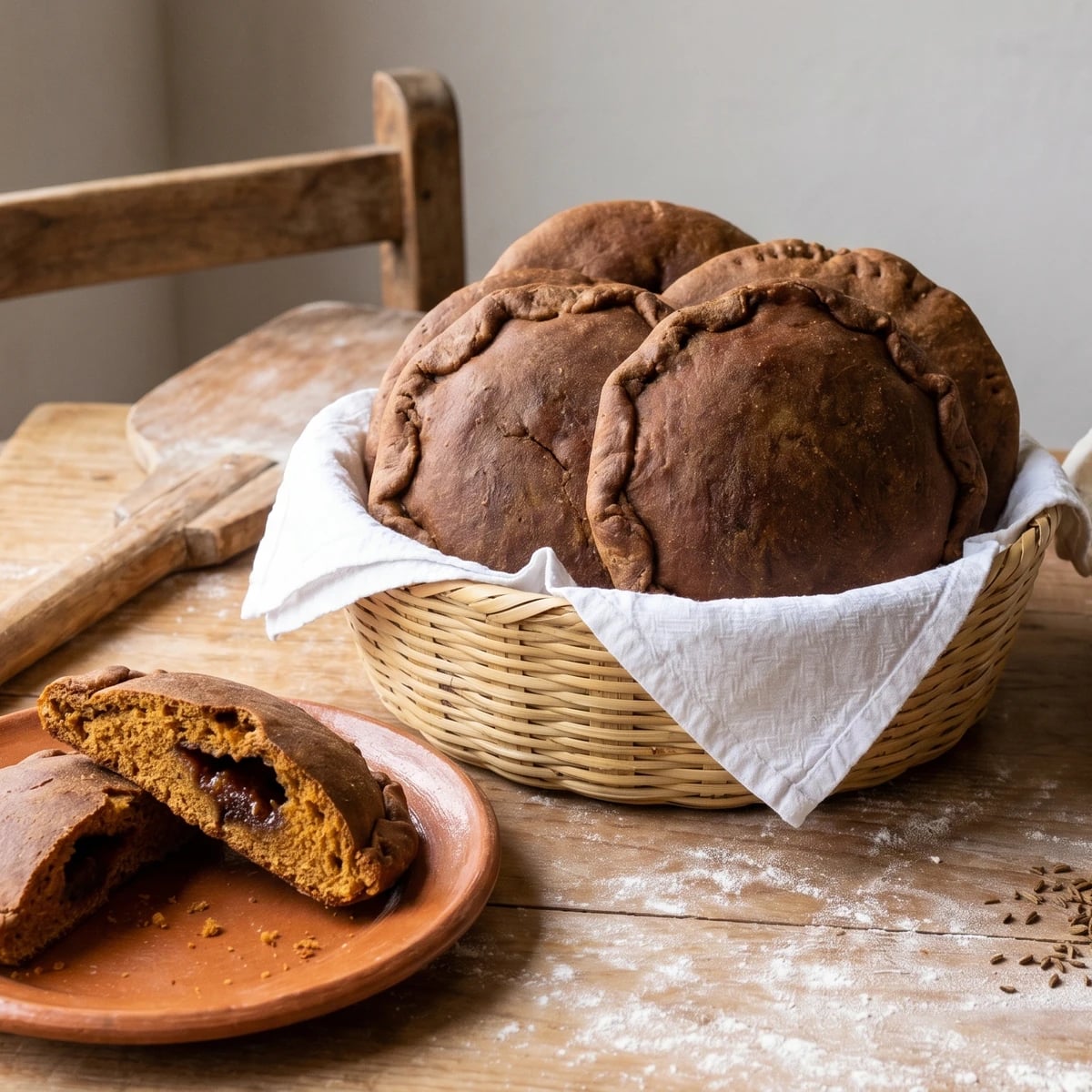
Nayarit's road bread, made without egg so it keeps, sweetened with piloncillo, worked with manteca de cerdo, and often filled with cheese, pumpkin, or guava.

Breads
Mexican
Make Ahead
Budget Friendly
Comfort Food
1 hr
Active Time
35 min cook14 hr 35 min total
Yield10 filled breads

Nayarit keeps pan de mujer in the western corridor between Tepic, Santiago Ixcuintla, and the towns that look toward the Pacific and the sierra at the same time. This is bread for travel, for selling from a basket, for carrying wrapped in cloth without it collapsing by noon. It is dense on purpose. Soft enough to tear, firm enough to survive the road.

The sweetness comes from piloncillo, not white sugar. The fat is manteca de cerdo. The dough is eggless because egg makes bread richer but also shorter-lived, and this bread was made by women who understood storage before anyone called it food science. Some fill it with fresh cheese, some with calabaza en tacha, some with guava paste. In Nayarit, the filling follows the season and the mercado. Pregúntale a las señoras del mercado.

The old bakers of western Mexico often work with pata, the Guadalajara-style old dough that carries flavor from one batch to the next. This is not a bolillo and it is not a concha wearing a regional costume. It is pan de mujer, pressed by hand, sealed tight, baked until the piloncillo darkens the crust and the kitchen smells like a panadería before dawn. Cada estado, su propia cocina.

Pan de mujer belongs to the broader western and northwestern Mexican family of durable filled breads made for travel, market sale, and rural household economy. Its eggless dough reflects a practical preservation logic common before refrigeration: breads with less dairy and no egg kept longer on the road and in hot coastal climates. In Nayarit, fillings such as fresh cheese, cooked pumpkin, and guava connect the bread to local dairy routes, seasonal squash cookery, and the fruit-growing zones that link the Pacific lowlands with the sierra.

The technique, the tradition, and the story behind every dish.

Discover Culinary Explorer

Ingredients

harina de trigo

Quantity

2 cups

for the pata

warm water

Quantity

3/4 cup

for the pata

active dry yeast

Quantity

1/4 teaspoon

for the pata

grated piloncillo

Quantity

1 teaspoon

for the pata

harina de trigo

Quantity

5 cups, plus more for dusting

piloncillo

Quantity

8 ounces

chopped

water

Quantity

1 cup

for the piloncillo syrup

cinnamon stick

Quantity

1 small

anise seeds

Quantity

1 teaspoon

fine sea salt

Quantity

1 1/2 teaspoons

active dry yeast

Quantity

2 teaspoons

manteca de cerdo

Quantity

3/4 cup

softened

warm water

Quantity

1/2 cup

as needed for the dough

queso fresco or queso panela

Quantity

10 ounces

crumbled, for cheese filling

thick calabaza en tacha

Quantity

1 1/4 cups

mashed and drained, for pumpkin filling

ate de guayaba

Quantity

10 ounces

sliced thin, for guava filling

harina de trigo

Quantity

2 tablespoons

for sealing wet fillings

melted manteca de cerdo

Quantity

1 tablespoon

for brushing

Equipment Needed

  • Large mixing bowl
  • Wooden table or sturdy kneading surface
  • Bench scraper
  • Heavy baking sheets or the floor of a clean horno de leña
  • Woven basket lined with a cotton servilleta

Instructions

  1. 1

    Make the pata

    The night before baking, mix 2 cups harina de trigo, 3/4 cup warm water, 1/4 teaspoon yeast, and 1 teaspoon grated piloncillo in a bowl until you have a rough dough. Knead it for two minutes, cover, and leave it at room temperature for 10 to 12 hours. By morning it should smell lightly fermented and sweet, not sour like vinegar. This is the pata, the old dough that gives western Mexican bread its backbone.

  2. 2

    Cook piloncillo syrup

    Put the chopped piloncillo, 1 cup water, cinnamon stick, and anise seeds in a small saucepan. Simmer gently until the piloncillo dissolves and the syrup smells dark and mineral, about 8 minutes. Strain and cool until warm, not hot. Hot syrup kills yeast. Warm syrup feeds it.

  3. 3

    Build the dough

    Tear the pata into pieces and put it in a large bowl. Add the 5 cups harina de trigo, salt, yeast, softened manteca de cerdo, and the warm piloncillo syrup. Mix with your hand until the flour hydrates. Add the extra warm water only if the dough feels dry and ragged. Nayarit's pan de mujer is not a loose bakery dough. It should feel firm, heavy, and willing to be shaped.

  4. 4

    Knead until strong

    Knead for 10 to 12 minutes on a lightly floured table. The dough will be dense because of the piloncillo and manteca, so do not expect it to float under your hands. It is ready when the surface turns smoother and the dough pushes back when pressed. No me vengas con atajos. Under-kneaded dough splits in the oven.

  5. 5

    Proof the dough

    Put the dough in a lightly greased bowl, cover with cloth, and let it rise until puffy and about doubled, 2 to 3 hours depending on the room. A wood-oven bakery before dawn is warm. A modern kitchen in winter is not. Watch the dough, not the clock.

  6. 6

    Prepare the fillings

    Choose one filling or make several. Crumble the queso fresco or queso panela and keep it dry. Drain the calabaza en tacha until it is thick enough to mound on a spoon, then dust it with a little harina de trigo if it weeps. Slice the ate de guayaba thin so it melts into the bread instead of sitting like a brick. The filling must be generous but not wet.

  7. 7

    Shape the breads

    Divide the dough into 10 equal pieces. Flatten each piece into a thick round with your hands, about 5 inches wide. Put 2 to 3 tablespoons filling in the center, gather the edges over it, and pinch hard to seal. Turn seam side down and press gently into a squat round. This bread should look touched by hands, not stamped by a machine.

  8. 8

    Proof again

    Set the breads on parchment-lined trays, leaving space between them. Cover with cloth and let them proof 45 to 60 minutes, until they look swollen but still sturdy. If a seam opens, pinch it closed now. Once it reaches the oven, the filling will find every weak place.

  9. 9

    Bake until dark

    Heat the oven to 375F. In a horno de leña, bake when the floor is hot enough to brown flour in seconds but not burn it black. Brush the tops with melted manteca de cerdo and bake 30 to 35 minutes, rotating once, until the crust is deep brown from the piloncillo and the bottoms sound hollow when tapped.

  10. 10

    Rest before eating

    Move the breads to a rack and let them rest at least 30 minutes. Eat one hot and the filling will burn your mouth while the crumb seems heavy. Let it settle and the bread firms into what it is meant to be: traveler's bread, sweet, dense, useful. Saber cocinar es saber vivir.

Chef Tips

  • Use real piloncillo, not brown sugar. Brown sugar gives sweetness. Piloncillo gives cane depth, mineral flavor, and the dark crust this bread needs.
  • Manteca de cerdo matters here. Butter makes the bread taste like a different tradition. Vegetable shortening gives texture but no memory. La manteca es el sabor.
  • If you keep a regular masa madre or old dough at home, use 1 1/2 cups of it in place of the overnight pata. It should be made from harina de trigo, not harina de maiz. Corn flour belongs to other breads, not this one.
  • For guava filling, use ate de guayaba from a Mexican market. Jam is too wet and will leak. A substitution is a compromise, not an upgrade.
  • This bread keeps well because it has no egg. Wrap cooled breads in a cotton cloth and hold them at room temperature for two days, or rewarm on a comal to wake the crust.

Advance Preparation

  • The pata must be made the night before. That overnight proof is where the bread gets flavor and strength.
  • The fillings can be prepared one day ahead. Keep cheese dry, pumpkin well drained, and guava sliced.
  • Baked pan de mujer keeps at room temperature for 2 days wrapped in cloth. Reheat on a comal or in a low oven until the crust softens and the piloncillo aroma returns.

Frequently Asked Questions

Nutrition Information

1 serving (about 235g)

Calories
765 calories
Total Fat
24 g
Saturated Fat
11 g
Trans Fat
0 g
Unsaturated Fat
13 g
Cholesterol
35 mg
Sodium
575 mg
Total Carbohydrates
121 g
Dietary Fiber
4 g
Sugars
47 g
Protein
15 g

Note: Chef personas and recipes are created with AI assistance. Cook with care: follow safe food-handling practices, check doneness with a thermometer when needed, and adapt for allergies and your kitchen.

Where cooking meets culture.

Culinary guides, cultural storytelling, and the editorial depth that makes cooking meaningful.

Discover Culinary Explorer

More from Occidente Breads

Browse the full collection