
Chef Juliana
Arroz-Doce de Festa Junina
You can make the pot your tia guards at every arraiá. Rice, milk, sugar, cloves, cinnamon, and patience turn into a creamy spoonful of June.
A cooking platform built around craft, culture, and the stories behind what we eat.
Created by
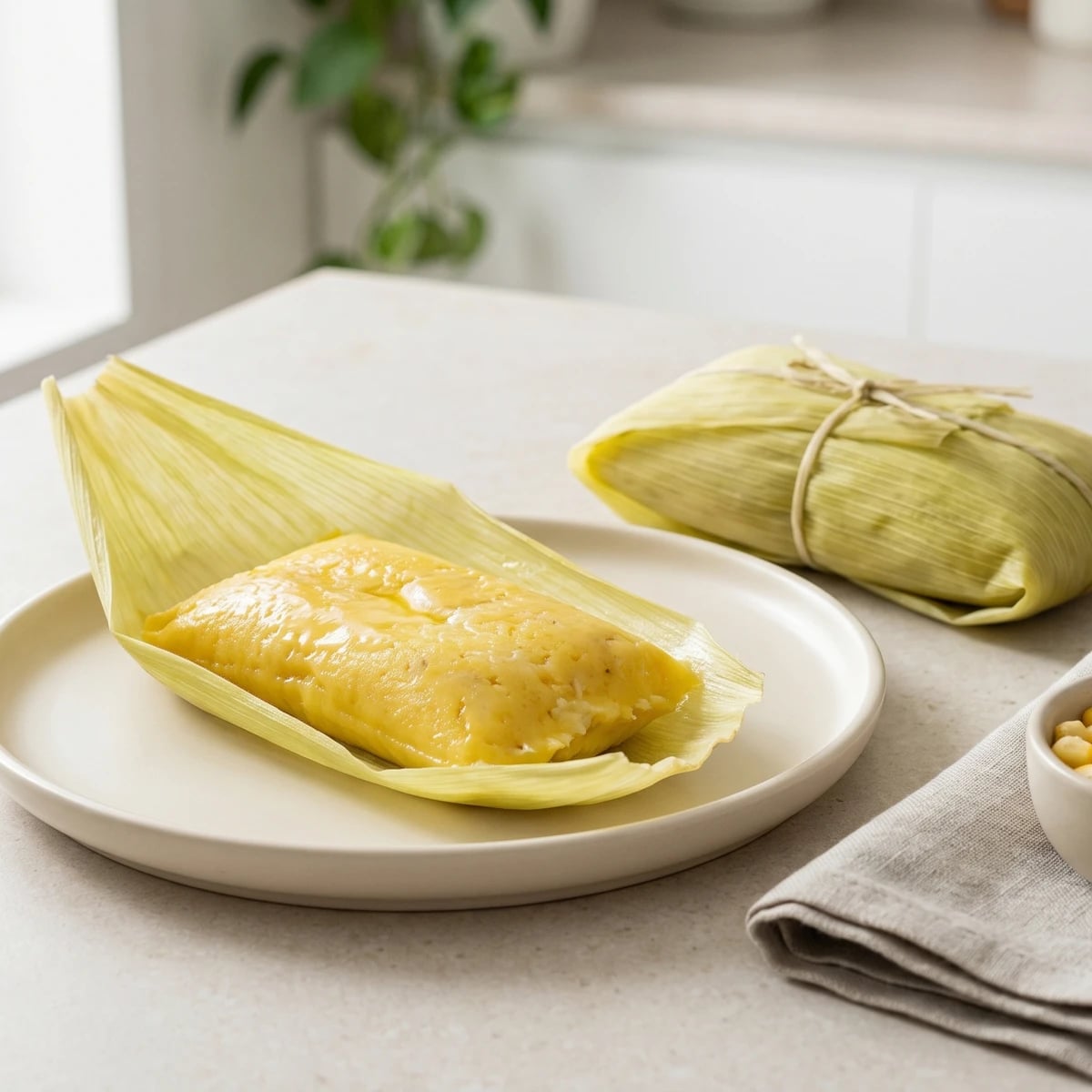
You think tying corn paste into husks is not for you. Good. We start there. Fresh corn, sugar, patience, and a little method turn into festa food you can actually make.
You see the husks, the string, the roadside memory, and that little voice starts: isso não é pra mim. I know. Food wrapped in its own leaves looks like something only a grandmother or a market lady is allowed to know. Nonsense. Cozinhar não é dom, é um aprendizado. A gente learns the fold the same way a gente learns rice: one clear step, then the next.
This is festa food, yes, but it still belongs to the same kitchen as the pê-efe. Rice, beans, a bit of meat or egg, something green, and then, when June arrives and corn is cheap and sweet, pamonha waiting on the counter. That's how comida de verdade works: it follows the season, feeds the table, and keeps the country tasting like itself without needing a packet to explain dinner.
The method is simple once you stop treating it like a secret. Use fresh corn because the starch in the cob milk is what helps the filling set. Soften the husks so they bend instead of cracking. Tie the parcels snugly, not like you're strangling them, just enough to hold the paste while the hot water does its work. Anota aí: the husk is not decoration. It's the cooking vessel.
By the end you'll open a warm little parcel and find a yellow, tender, sweet corn custard that tastes like roadside travel, festa junina, and someone who bothered to teach you properly.
Pamonha comes from Indigenous corn cookery in Brazil, with the name commonly traced to Tupi, connected to the idea of a sticky corn preparation wrapped and cooked in husks. It is especially tied to the corn harvest and Festa Junina, with sweet versions common in the Southeast and Center-West and savory versions, often with cheese or sausage, argued over with real seriousness in Goiás, Minas Gerais, and beyond. The wrapping is part of the technique, not a rustic flourish: the husk holds the grated fresh corn while its own starch sets into a firm, tender mass.
Quantity
10 large ears
Quantity
3/4 cup, plus 2 tablespoons more if needed
Quantity
1/2 cup
Quantity
3 tablespoons
melted
Quantity
1/2 cup
Quantity
1/2 teaspoon
Quantity
as needed
cut into 20 short lengths
| Ingredient | Quantity |
|---|---|
| fresh corn with clean green husks | 10 large ears |
| granulated sugar | 3/4 cup, plus 2 tablespoons more if needed |
| coconut milk or whole milk | 1/2 cup |
| unsalted buttermelted | 3 tablespoons |
| finely grated fresh coconut (optional) | 1/2 cup |
| fine salt | 1/2 teaspoon |
| kitchen twinecut into 20 short lengths | as needed |
Peel the corn carefully and keep the widest, cleanest husks whole. You need about 20 good pieces, two for each pamonha, plus a few backups because one will tear just to keep you humble. Rinse them, then cover them with very hot water for 10 minutes until they bend easily. A soft husk folds around the filling; a dry husk cracks, leaks, and makes you say words your grandmother pretended not to know.
Stand each ear of corn in a wide bowl and grate it on the coarse side of a box grater until the kernels become a wet yellow paste. Then scrape each cob with the back of a knife so the milky starch goes into the bowl too. That's not fussiness. That cob milk helps the pamonha set, and without it the filling can turn loose and watery.
Measure about 5 cups of corn paste into a bowl. Stir in the sugar, coconut milk or whole milk, melted butter, grated coconut if using, and salt. The mixture should look like thick corn porridge, spoonable but not runny. Taste a little. It should be sweet because the hot water will calm the sweetness, and the salt is there to make the corn taste more like itself.
Set two softened husks in a wide mug or small bowl, crossing them so the ends hang over the sides. Spoon in about 1/2 cup of filling. Fold one side over, then the other, then fold the top and bottom closed like a small package. Lift it out and tie it snugly around the middle and lengthwise with twine. Snug, not violent. You want the parcel closed enough to hold the paste while it cooks, but not squeezed so hard the filling runs out.
Bring a large pot of water to a strong boil, then lower the pamonhas in with tongs. The water should cover them by at least 1 inch. Once the water returns to a boil, adjust the heat so it bubbles steadily without tossing the parcels around, and cook for 35 to 40 minutes. Starting in boiling water helps the corn starch set quickly; a lazy warm bath lets the filling leak before it has a chance to firm up.
Lift the pamonhas from the pot and let them drain and rest for 10 minutes before opening. They should feel firm but tender when pressed through the husk. Open one and check: the filling should hold its shape like a soft corn custard, not pour out like batter. That rest matters because the starch keeps setting as it cools a little, and patience here saves the cook from panic.
Serve warm or at room temperature, still in the husk or unwrapped on a plate. No decoration needed. The point is the yellow corn, the soft set, the smell of the husk, and the small victory of having made the thing you thought was not for you.
1 serving (about 145g)
Culinary guides, cultural storytelling, and the editorial depth that makes cooking meaningful.
Discover Culinary Explorer
Chef Juliana
You can make the pot your tia guards at every arraiá. Rice, milk, sugar, cloves, cinnamon, and patience turn into a creamy spoonful of June.

Chef Juliana
You think a creamy cake needs a mixer and courage. It doesn't. A thin blender batter, real erva-doce, and patience in the oven give you cake on top, cream underneath.

Chef Juliana
You think a creamy corn cake is for someone else's kitchen. It's not. Cut the kernels, blend the batter, bake until the edges go gold and the center still gives a little.

Chef Juliana
You don't need a whole festa junina to make canjica. Soak the corn, cook it tender, then simmer it in spiced milk until the pot turns creamy.