
Chef Lupita
Acitrón de Cidra Conventual
Puebla's convent-style acitrón, made from cidra peel instead of endangered biznaga, built through repeated syrup soakings until the cubes turn firm, translucent, and ready for rosca or chiles en nogada.
A cooking platform built around craft, culture, and the stories behind what we eat.
Created by
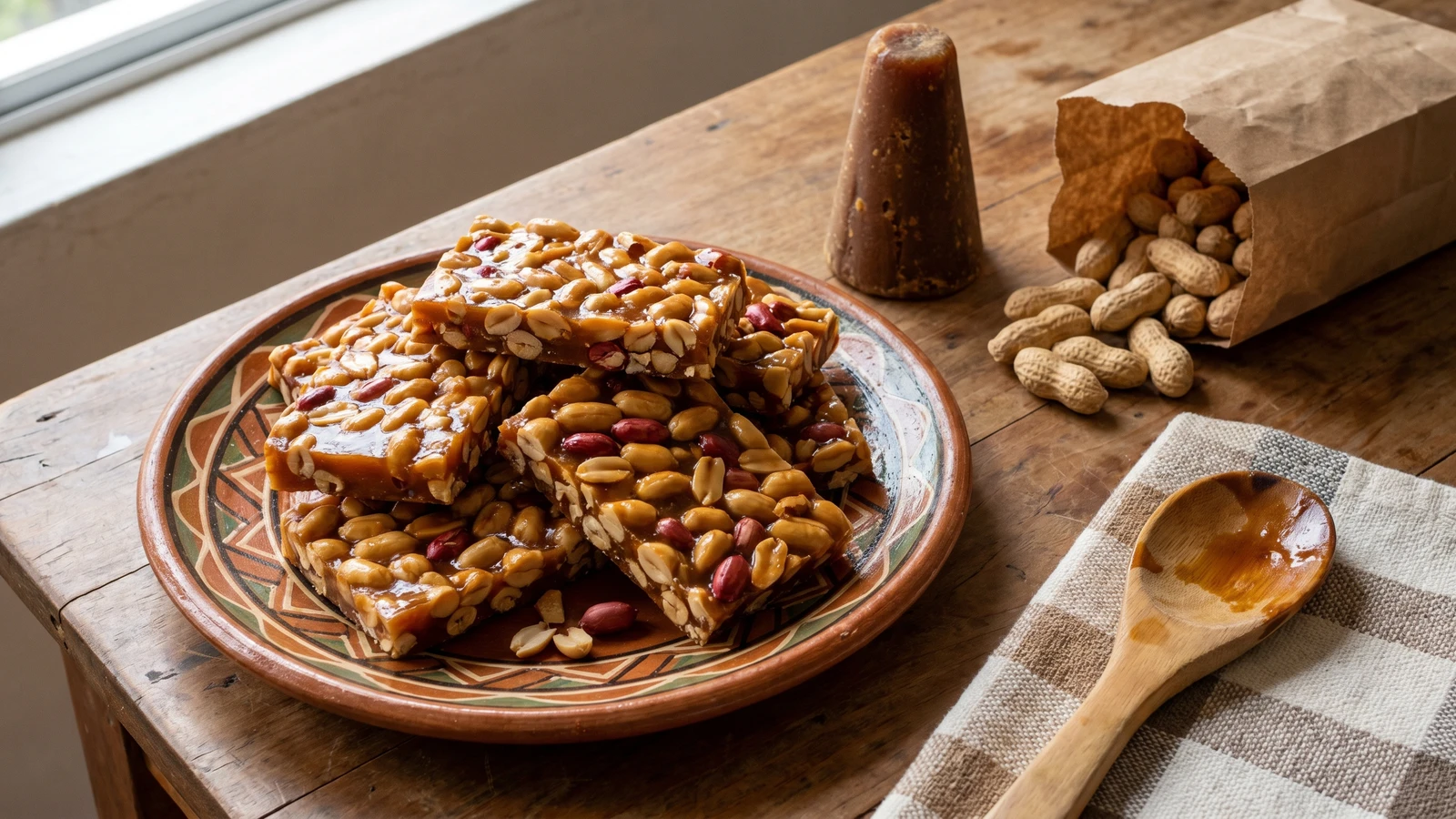
Hidalgo's feria brittle, built from toasted cacahuate, dark piloncillo, and a fast hand, the economical sweet that travels from Pachuca to Actopan wrapped in paper and snapped at the table.
Hidalgo's Comarca Minera and Valle del Mezquital sit north of Ciudad de México, between Pachuca, Actopan, Ixmiquilpan, and the road that climbs toward Real del Monte. That is where this palanqueta lives: on feria tables, in tianguis baskets, wrapped in paper next to alegrías, jamoncillo, higos cristalizados, and cones of piloncillo. This is not food from a single Mexico. Cada estado, su propia cocina.
The cacahuate belongs to the warmer side of the state, where the Huasteca Hidalguense sends peanuts, honey, citrus, and cane sweetness into the markets. The piloncillo does the real work here. It has to cook until it reaches hard crack, then it must be spread fast before it turns from flowing syrup into a sheet of amber glass. If you wait, it wins. Sugar has no patience for a distracted cook.
I learned this version from a señora in Actopan who cut the slab with an oiled knife while it was still warm enough to bend. She did not measure with a thermometer. She dropped a thread of syrup into a cup of water, snapped it between her fingers, and said, "ya está." My mother had the same lesson in her notebook: "no lo acaricies, extiéndelo y déjalo." Do not pet it. Spread it and leave it.
There is no butter here. There is no chile piquín dusted over the top to make it look louder than it is. This palanqueta is cacahuate, piloncillo, heat, and timing. Saber cocinar es saber vivir.
Palanqueta belongs to the central Mexican family of seed and nut sweets, with Hidalgo versions recorded as nuez, pepita de calabaza, or cacahuate bound in caramelized piloncillo honey. The older Mesoamerican habit of binding seeds with honey or aguamiel predates cane sugar, but the modern piloncillo palanqueta took shape after sugar cane entered New Spain in the 16th century. The word cacahuate comes from the Nahuatl tlalcacahuatl, often understood as "earth cacao," a market word that survived while the sweet-making technique absorbed colonial cane.
Quantity
1 pound
shelled, skinless or skins rubbed off after toasting
Quantity
12 ounces
grated or finely chopped
Quantity
1/2 cup
Quantity
1/3 cup
Quantity
2 tablespoons
preferably from the Huasteca Hidalguense
Quantity
1 teaspoon
Quantity
1/2 teaspoon
Quantity
1 teaspoon
for greasing the tray and spatula
| Ingredient | Quantity |
|---|---|
| raw unsalted cacahuatesshelled, skinless or skins rubbed off after toasting | 1 pound |
| piloncillograted or finely chopped | 12 ounces |
| granulated cane sugar | 1/2 cup |
| water | 1/3 cup |
| dark honeypreferably from the Huasteca Hidalguense | 2 tablespoons |
| fresh lime juice | 1 teaspoon |
| kosher salt | 1/2 teaspoon |
| neutral oilfor greasing the tray and spatula | 1 teaspoon |
Lightly oil a rimmed metal tray, a marble slab, or the back of a baking sheet. Oil a spatula and a rolling pin too. Keep them close. Once the caramel reaches its point, you will not have time to look for tools. Hot sugar burns badly, so move with discipline.
Heat a dry comal or heavy skillet over medium-low. Toast the cacahuates for 8 to 10 minutes, stirring often, until they smell deep and nutty and show golden spots. If they have red skins, rub them in a clean towel and shake off most of the skins. Leave the peanuts warm in a low oven or near the stove. Warm peanuts meet the caramel properly. Cold peanuts make the syrup seize.
Combine the grated piloncillo, cane sugar, water, honey, lime juice, and salt in a heavy saucepan or small copper cazo. Cook over medium heat, stirring only until the piloncillo dissolves. After that, leave it alone except for gently swirling the pan. Too much stirring invites crystals, and crystals make sandy candy.
Let the syrup boil until the bubbles tighten, the color turns dark amber, and the smell shifts from sweet cane to real caramel. At sea level, the thermometer should read 300F. In Pachuca or Real del Monte, the same hard-crack stage reads closer to 286F because of altitude. The old test still works anywhere: drop a little syrup into cold water. It should harden into brittle threads that snap cleanly.
Remove the pan from the heat. Immediately add the warm cacahuates and stir with a wooden spoon until every peanut is coated. This takes less than a minute. Do not add butter. Do not add baking soda. Those tricks make a different brittle. This Hidalguense palanqueta should be hard, glossy, and direct.
Scrape the mixture onto the oiled tray. Press it quickly with the oiled spatula or rolling pin into a slab about 1/3 inch thick. After 2 to 3 minutes, when it is no longer flowing but still warm, score it into rectangles with an oiled knife. If you wait until it is fully cold, you will have to break it into rough pieces. That is fine for the house, not for selling at the feria.
Let the palanqueta cool completely, 20 to 30 minutes. Break along the scored lines. The snap should be clean, not bendy. If it bends, the syrup was undercooked. Store in an airtight tin or wrap pieces in cellophane. Humidity is the enemy of palanqueta, more than children with sticky hands, and that is saying something.
1 serving (about 43g)
Culinary guides, cultural storytelling, and the editorial depth that makes cooking meaningful.
Discover Culinary ExplorerChef Lupita
Puebla's convent-style acitrón, made from cidra peel instead of endangered biznaga, built through repeated syrup soakings until the cubes turn firm, translucent, and ready for rosca or chiles en nogada.

Chef Lupita
Ciudad de México's Tulyehualco alegría is popped huautli folded into piloncillo honey, pressed with peanuts, pepitas, and raisins, then cut into the rectangular bars that built a pueblo's identity.

Chef Lupita
Oaxaca's pre-Columbian amaranth bar, popped on a hot comal and bound with piloncillo, honey, and the sacred Zapotec grain that the Spanish tried, and failed, to outlaw.

Chef Lupita
Querétaro's mercado candy of popped amaranto pressed with dark piloncillo syrup, pepitas, pecans, and cacahuate, a Bajío sweet that respects the seed before it decorates the table.