
Chef Joost
Beschuit met Muisjes
The airy Dutch rusk sold in rolls of thirteen, twice baked until crisp, then buttered and crowned with sugared aniseed for the birth of a child.
A cooking platform built around craft, culture, and the stories behind what we eat.
Created by
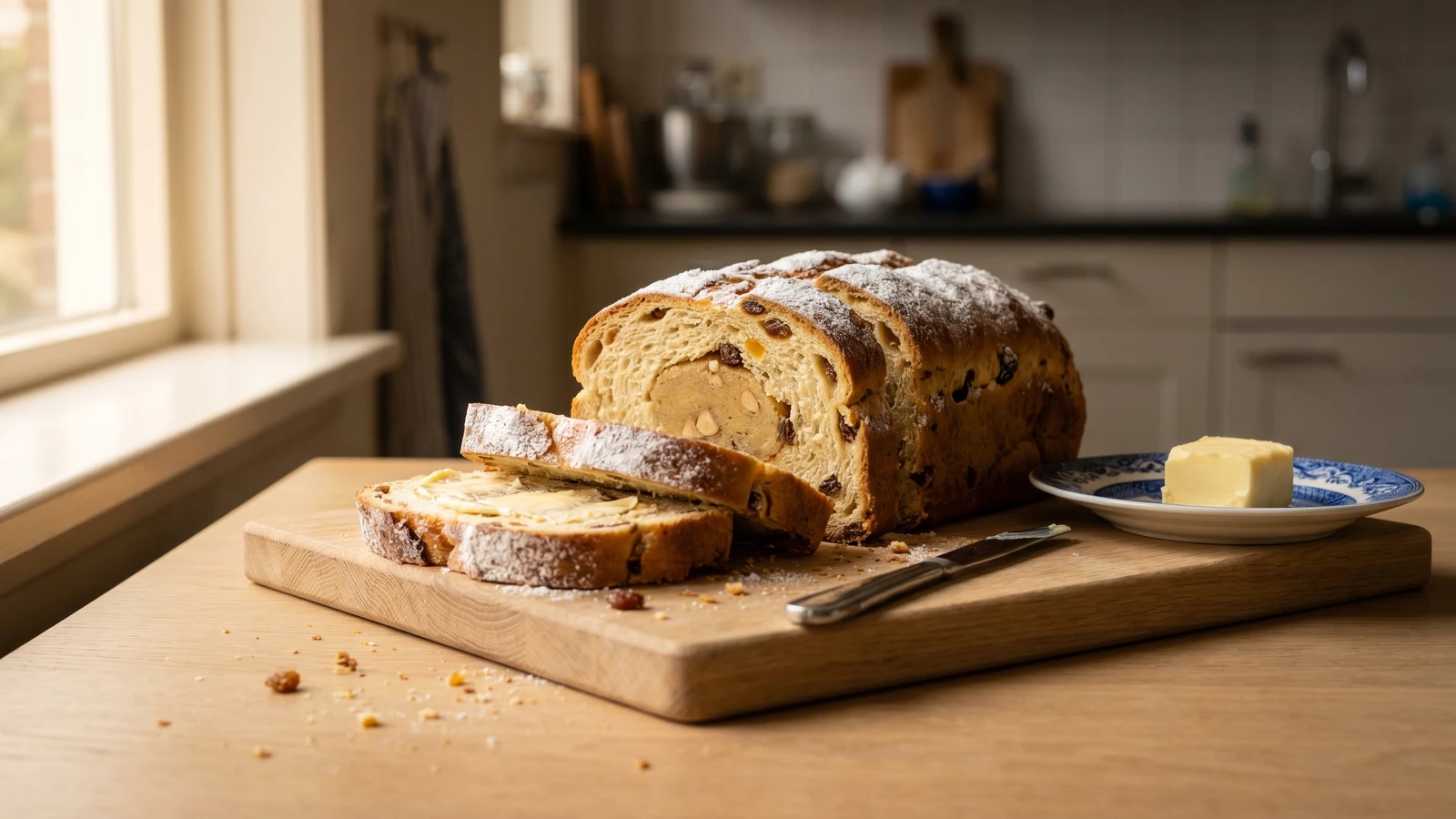
The Easter stol is the Christmas loaf's spring twin: butter-rich dough, raisins, citrus peel, almond spijs at the centre, and a dusting of sugar like the last snow leaving the fields.
The first Easter morning smell in many Dutch houses is not lamb, not eggs, not even coffee. It is butter, raisins, and almond paste warming inside a loaf that has been made ahead because the Paasbrunch, the Easter brunch, is a civilised institution and therefore suspiciously efficient. In my grandmother's second notebook, paasbrood sits beside kerststol with only a change of season between them. Same generous heart. Different light at the window.
The name already tells you more than it seems. Pasen, Easter, carries an older journey through church Latin and Greek from the Hebrew Pesach, Passover; brood is simply bread, the word every Dutch child knows before history gets its hands on it. But let me tell you a secret: this loaf is not plain at all. It is the Dutch feast table pretending to be modest while hiding almonds, citrus, raisins, butter, and spice inside one obedient slice.
What matters here is rest. The fruit must be soaked so it doesn't steal moisture from the dough, the almond spijs, almond paste, must be rolled firm enough to sit like a quiet seam through the middle, and the dough must rise slowly enough to become tender instead of merely inflated. Hou het altijd simpel, always keep it simple. Knead, wait, fold, wait, bake. Then cut thick slices and butter them at the table, because history and cookery, they cannot be separated, but neither should bread and butter.
Paasbrood belongs to the Dutch family of stollen-style feast breads, closely related to kerststol and to the older German fruit breads documented in cities such as Dresden by the fifteenth century. In the Netherlands, the Easter version became a bakery and home-table fixture as the Paasbrunch grew into a modern holiday meal, carrying the same almond spijs core into spring. The loaf shows a very Dutch kind of abundance: imported raisins, citrus peel, almonds, and warm spice folded into a bread that still arrives at the table as something practical enough to slice.
Quantity
500g
plus extra for dusting
Quantity
7g
Quantity
250ml
lukewarm
Quantity
75g
softened
Quantity
50g
Quantity
1
Quantity
8g
Quantity
1 teaspoon
Quantity
1/4 teaspoon
Quantity
250g
Quantity
75g
Quantity
50g
finely chopped
Quantity
50g
roughly chopped
Quantity
1 tablespoon
Quantity
2 tablespoons
Quantity
300g
Quantity
1
for loosening the almond paste
Quantity
25g
for brushing
Quantity
2 tablespoons
for dusting
| Ingredient | Quantity |
|---|---|
| strong white bread flourplus extra for dusting | 500g |
| instant yeast | 7g |
| whole milklukewarm | 250ml |
| unsalted buttersoftened | 75g |
| caster sugar | 50g |
| large egg | 1 |
| fine salt | 8g |
| ground cinnamon | 1 teaspoon |
| ground mace or nutmeg | 1/4 teaspoon |
| raisins | 250g |
| currants | 75g |
| candied citrus peelfinely chopped | 50g |
| blanched almondsroughly chopped | 50g |
| orange zest | 1 tablespoon |
| dark rum or warm tea | 2 tablespoons |
| almond paste (amandelspijs) | 300g |
| egg yolkfor loosening the almond paste | 1 |
| melted butterfor brushing | 25g |
| powdered sugarfor dusting | 2 tablespoons |
Put the raisins, currants, candied peel, chopped almonds, orange zest, and rum or warm tea in a bowl. Stir well and leave for at least 30 minutes, then drain off any excess liquid. This small patience matters: dry fruit steals water from bread dough, and a feast loaf should not punish you for being generous.
Mix the flour, yeast, milk, softened butter, sugar, egg, salt, cinnamon, and mace into a soft dough. Knead for 10 to 12 minutes, until smooth and elastic. It will feel rich and a little tender under the hand, as it should; butter makes dough slower to obey, but kinder when baked.
Flatten the dough slightly, scatter over the soaked fruit mixture, and fold and knead gently until the fruit is evenly tucked through. Do this with patience rather than force. If raisins tear through the surface, the loaf will look wounded before it has even met the oven.
Place the dough in a lightly buttered bowl, cover, and let it rise in a warm place for 1 to 1 1/2 hours, until puffed and nearly doubled. Enriched dough is not a marching soldier; it takes its time. Judge the dough, not the clock.
Knead the egg yolk into the almond paste until smooth, then roll it into a log about 28cm long. It should be soft enough to slice neatly later, but firm enough to hold its line through the loaf. That almond seam is the little treasure map inside every slice.
Tip the risen dough onto a lightly floured surface and press it into an oval about 30cm long. Lay the almond paste log slightly off centre, fold the dough over it, and press the seam closed with the side of your hand. Place the loaf seam-side down on a lined baking tray.
Cover the shaped loaf loosely and let it prove for 45 to 60 minutes, until visibly puffy. Heat the oven to 180C. The loaf is ready when a gentle fingertip press leaves a shallow dent that slowly fills back in; if it springs back at once, give it more time.
Bake for 35 to 40 minutes, until deep golden and the underside sounds hollow when tapped. Brush the hot loaf with melted butter, then let it cool fully before dusting with powdered sugar. Cut too soon and the almond paste smears; wait, and every slice shows the quiet pale centre properly.
1 serving (about 130g)
Culinary guides, cultural storytelling, and the editorial depth that makes cooking meaningful.
Discover Culinary ExplorerChef Joost
The airy Dutch rusk sold in rolls of thirteen, twice baked until crisp, then buttered and crowned with sugared aniseed for the birth of a child.

Chef Joost
The Dutch square loaf baked under a lid, with a quiet crumb, a disciplined crust, and exactly the right shape for the tosti pan.

Chef Joost
Before bread came from a packet of yeast, it came from yesterday: flour, water, salt, and a living desem starter carrying one loaf into the next.

Chef Joost
A round raisin bread for Driekoningen, Three Kings' Day, with a hidden bean, a star in the crust, and one ordinary eater crowned king for a day.