
Chef Isabel
Almussafes Valenciano
Almussafes is Valencian bar-counter food: a crusty roll filled with sobrasada, cheese, and onion, then pressed on the plancha until the bread crisps and the filling runs together.
A cooking platform built around craft, culture, and the stories behind what we eat.
Created by
Pa amb oli is Mallorcan, not Catalan pa amb tomàquet by another name: dense brown bread, ramellet tomato, good olive oil, salt, and the topping the table can afford.
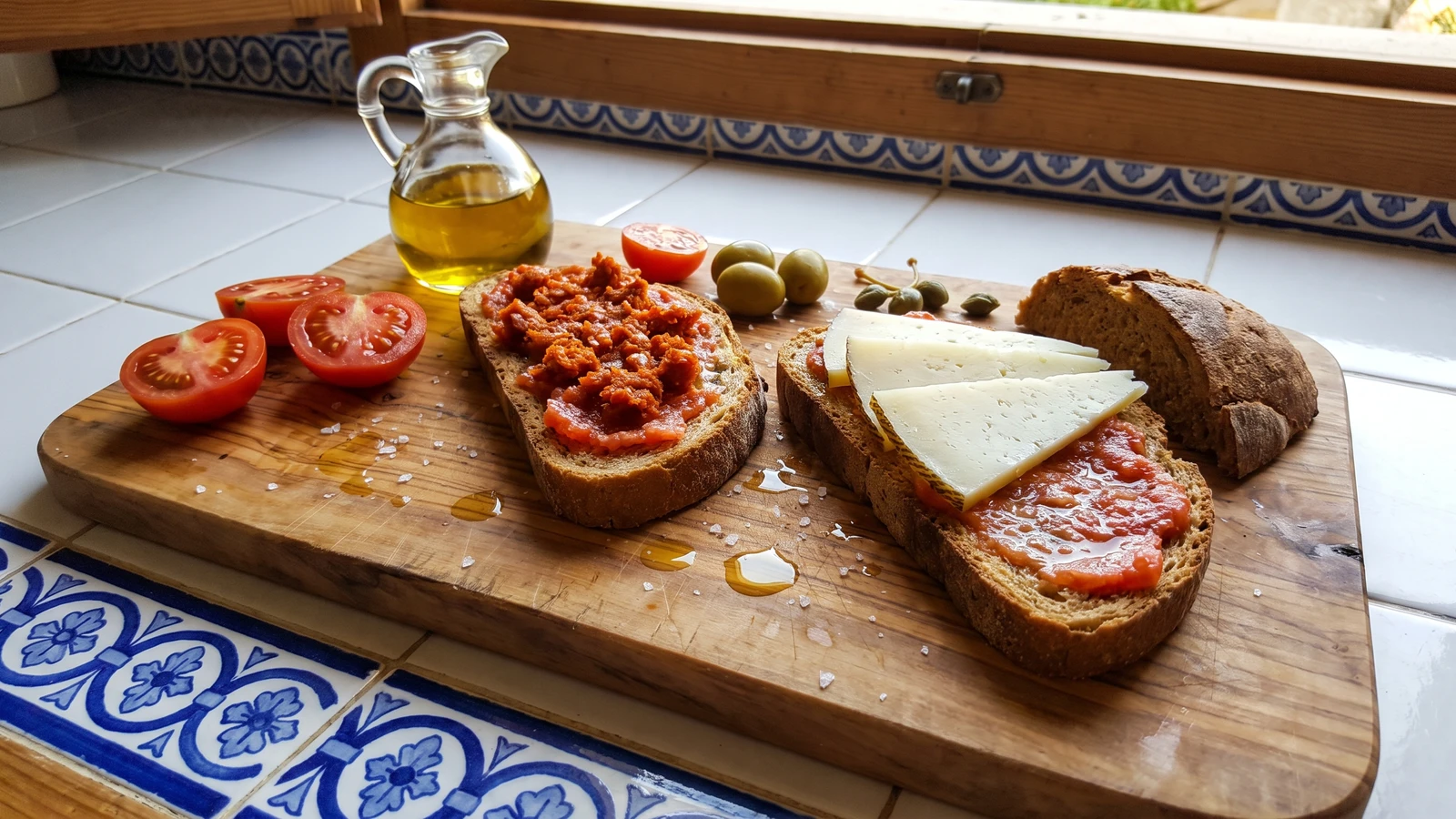
Pa amb oli Mallorquí belongs to Mallorca: dense pa moreno, tomàtiga de ramellet rubbed straight into the crumb, olive oil, salt, and often cheese, olives, sobrassada, or whatever the island table sets beside it. It looks simple because it is simple. That doesn't mean vague. The bread must have body, the tomato must be juicy enough to stain it, and the oil must taste of olives, not of nothing.
The method that decides it is the rubbing. Don't slice the tomato prettily and lay it on top. Cut it across its belly and scrub the cut side over the bread until the crumb blushes red and drinks the pulp. Then oil, then salt. If you oil first, the tomato skates over the surface and never enters the bread. Small thing, whole dish.
If you can't find pa moreno where you are, use a dense country loaf or a good whole-wheat sourdough with a tight crumb, not soft sandwich bread. If there is no ramellet tomato, use the ripest small tomato you can find, or grate a good ripe tomato and spoon on only the pulp. In winter, when tomatoes taste of the fridge, make it with sobrassada and a little oil, or wait. Sourcing wins here. Siempre sale, si lo sigues.
Pa amb oli is one of Mallorca's everyday table foods, built from the island's brown bread, preserved tomatoes, and olive oil rather than from a formal recipe. The tomàtiga de ramellet is prized because it can be hung in clusters and kept beyond the main tomato season, giving households a rubbing tomato when fresh garden tomatoes are gone. It is related to Catalonia's pa amb tomàquet, but Mallorca's version is its own meal, usually made on pa moreno and served with local cheese, olives, cured meats, or sobrassada.
Quantity
4 thick slices, about 320g total
cut 1.5 to 2cm thick
Quantity
3, about 180g total
halved across the middle
Quantity
60ml
Quantity
4g
Quantity
120g
thinly sliced
Quantity
120g
sliced or spread in small pieces
Quantity
80g
to serve
Quantity
30g
| Ingredient | Quantity |
|---|---|
| pa moreno or dense country breadcut 1.5 to 2cm thick | 4 thick slices, about 320g total |
| tomàtigues de ramellet or small ripe tomatoeshalved across the middle | 3, about 180g total |
| extra virgin olive oil | 60ml |
| flaky sea salt or coarse salt | 4g |
| Mahón-Menorca cheese or firm sheep's cheesethinly sliced | 120g |
| sobrassada de Mallorcasliced or spread in small pieces | 120g |
| Mallorcan or green olivesto serve | 80g |
| capers or pickled green peppers (optional) | 30g |
Lay out the bread in thick slices. Leave it untoasted if it is fresh and firm, as it usually is in Mallorca for pa amb oli. If your loaf is too soft or a day old, toast it very lightly, only enough to steady the crumb, not enough to make it hard and brittle.
Cut the tomatoes across the middle, not from stem to tip. Rub the cut face firmly over each slice until the bread is stained red and the tomato skin is almost empty in your hand. This is the step. The pulp must enter the bread before the oil goes on, or the dish tastes like bread with wet tomato sitting on top.
Spoon or drizzle 15ml olive oil over each slice, letting it catch in the tomatoed crumb. Sprinkle each with about 1g salt. Taste one corner. If the tomato is shy, add a little more salt; if the oil is peppery and strong, leave it alone. Pésalo, no lo adivines the first time, then your hand will learn.
Top two slices with cheese and two with sobrassada, or set both on the table and let each person build their own. Keep the toppings plain and good. This is not a piled sandwich; the bread, tomato, and oil still have to be the thing you taste.
Serve with olives and, if you like, capers or pickled green peppers. Eat it soon after rubbing, while the bread is juicy at the surface but still has chew underneath. Tal como se hace allí: simple, exact, and not trying to be clever.
1 serving (about 225g)
Culinary guides, cultural storytelling, and the editorial depth that makes cooking meaningful.
Discover Culinary ExplorerChef Isabel
Almussafes is Valencian bar-counter food: a crusty roll filled with sobrasada, cheese, and onion, then pressed on the plancha until the bread crisps and the filling runs together.

Chef Isabel
The Murcian bicicleta is the anchovy-free cousin of the marinera: ensaladilla rusa mounded on a crisp rosquilla de pan. Keep the salad cold and the bread dry until the last minute.

Chef Isabel
The Barcelona bikini is Catalan bar food at its plainest: white bread, jamón dulce, melting cheese, butter, and gentle heat until the crust crisps and the middle runs.

Chef Isabel
This is the bocadillo of the northern pantry: good tuna in olive oil, sweet piquillo peppers from Navarra, and a crusty barra that stays clean if you drain the tin properly.