
Chef Juliana
Açaí com Farinha de Tapioca
You don't need a blender trick or a sweet shop bowl. Thick unsweetened açaí, crunchy farinha de tapioca, and the discipline to read the label solve this Belém spoon plate.
A cooking platform built around craft, culture, and the stories behind what we eat.
Created by
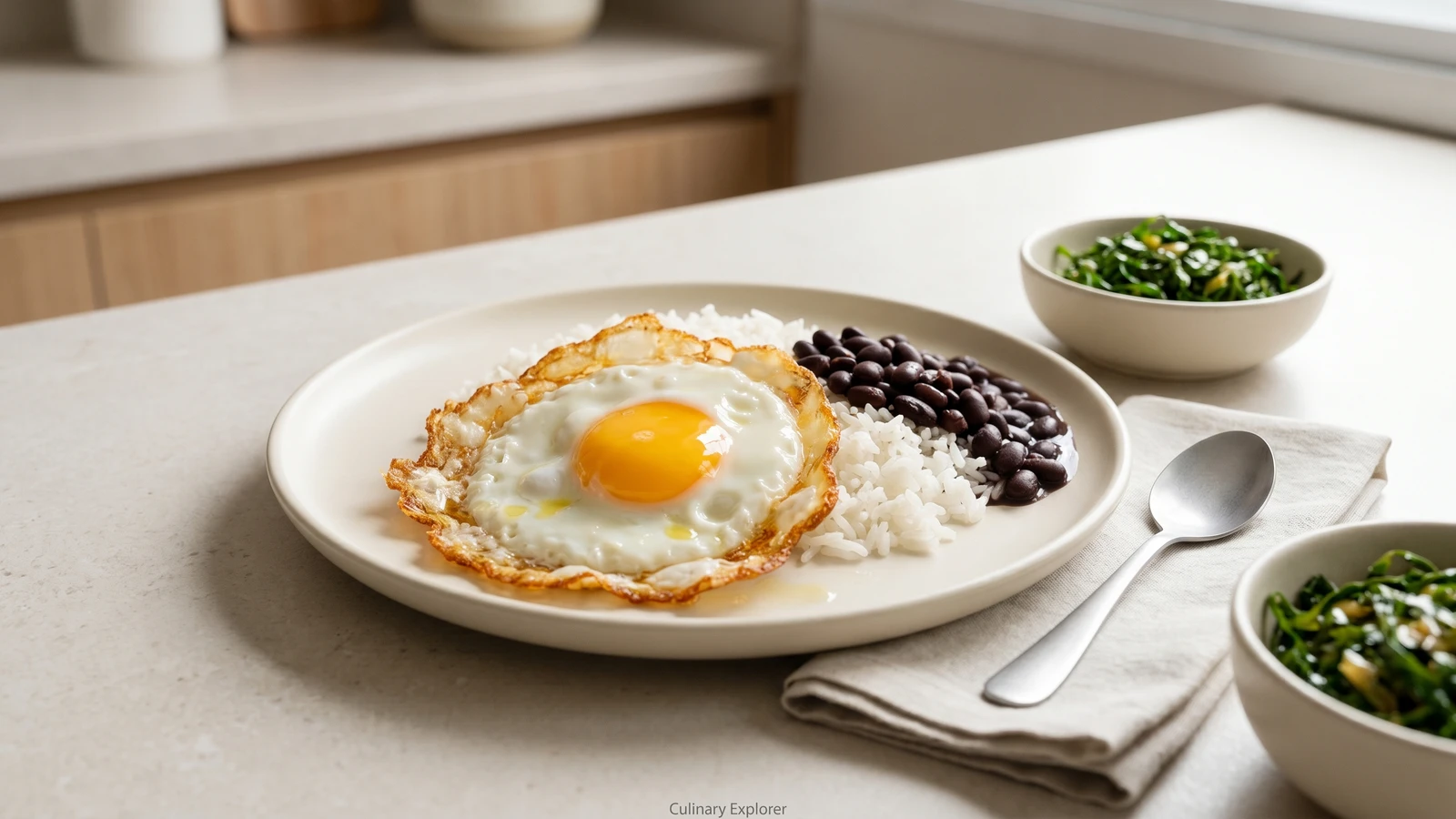
You think frying an egg doesn't need teaching until the white turns rubbery and the yolk gives up. Hot oil, one egg, and a pan you trust: dinner is closer than you think.
You, standing there with an egg in your hand, already hearing that little voice: isso não é pra mim. For an egg. See how silly that lie gets when we say it out loud? Cozinhar não é dom, é um aprendizado. Even the egg gets learned.
I ruined plenty of eggs before I learned to stop being timid with the pan. Too cold and the egg spreads pale and sad. Too hot and the bottom burns before the white sets. The method is simple, but simple isn't the same as vague. A receita que funciona tells you the sound, the shine, the moment to stop.
This is comida de verdade at its fastest. Put it over arroz soltinho, let the yolk run into feijão, add couve or any green you have, and the pê-efe is no longer an idea. It's dinner. Cheap, honest, complete without turning into a lecture.
Anota aí: hot fat, fresh egg, a spoon, and your eyes on the white. That's the whole school. By the end, you'll have crisp edges, a tender top, and the cook's tax sitting right in the pan.
Fried eggs have sat on Brazilian everyday plates for generations because they are cheap, quick, and available, especially when meat is scarce or the day has already spent your patience. In Brazil, ovo frito is just as likely to land on rice and beans at lunch or dinner as it is on a breakfast plate. The beloved version with crisp edges comes from hot fat and quick cooking, a home technique more than a regional dish.
Quantity
1
Quantity
1 tablespoon
Quantity
1 pinch
Quantity
to taste
| Ingredient | Quantity |
|---|---|
| large egg | 1 |
| oil, lard, or butter | 1 tablespoon |
| salt | 1 pinch |
| freshly ground black pepper (optional) | to taste |
Crack the egg into a small cup first, not straight into the pan. Look for a yolk that holds round and a white that isn't watery. This tiny pause saves dinner from shell pieces, surprise bad eggs, and panic over hot oil.
Put an 8-inch skillet over medium-high heat and add the oil, lard, or butter. Wait until the oil shimmers, the lard looks glossy, or the butter foams and smells nutty. The fat has to be hot before the egg arrives, because that's what makes the edge lace up instead of lying there pale and floppy.
Lower the cup close to the pan and slide the egg into the hot fat. It should sizzle right away, a busy little crackle, not a violent spit. If it stays quiet, the pan was too cool and the white will spread before it sets.
Tilt the pan slightly and spoon the hot fat over the loose white, staying away from the yolk if you want it runny. Watch the clear white turn opaque and firm while the edge gets golden and crisp. Basting sets the top without flipping, because flipping is where many good yolks go to die.
Season with a pinch of salt when the white is set and the yolk still jiggles when you shake the pan. Slide the egg out with a thin spatula right away. Leave it too long and carryover heat keeps cooking the yolk, and then you have a hard yolk pretending this was the plan.
Put the egg over hot rice, beside beans, with something green if you've got it. Break the yolk at the table and let it run into the rice and feijão. That's not garnish, that's the sauce you made in three minutes.
1 serving (about 60g)
Culinary guides, cultural storytelling, and the editorial depth that makes cooking meaningful.
Discover Culinary ExplorerChef Juliana
You don't need a blender trick or a sweet shop bowl. Thick unsweetened açaí, crunchy farinha de tapioca, and the discipline to read the label solve this Belém spoon plate.

Chef Juliana
You don't need a shop to make a thick açaí bowl. You need real frozen pulp, a ripe banana, and the discipline to stop blending before it becomes juice.

Chef Juliana
You don't need boxed cereal to get breakfast on the table. Fine cassava farinha, milk, salt, and steady stirring turn into a warm Amazonian bowl that actually carries you.

Chef Juliana
If you think two ingredients can't feed you, anota aí. Good farinha d'água, cold water, and salt make a bowl that's plain, Brazilian, and smarter than the packet.