Chef Makoa
Ika i te Lolo (Tokelauan Fish Simmered in Coconut Cream)
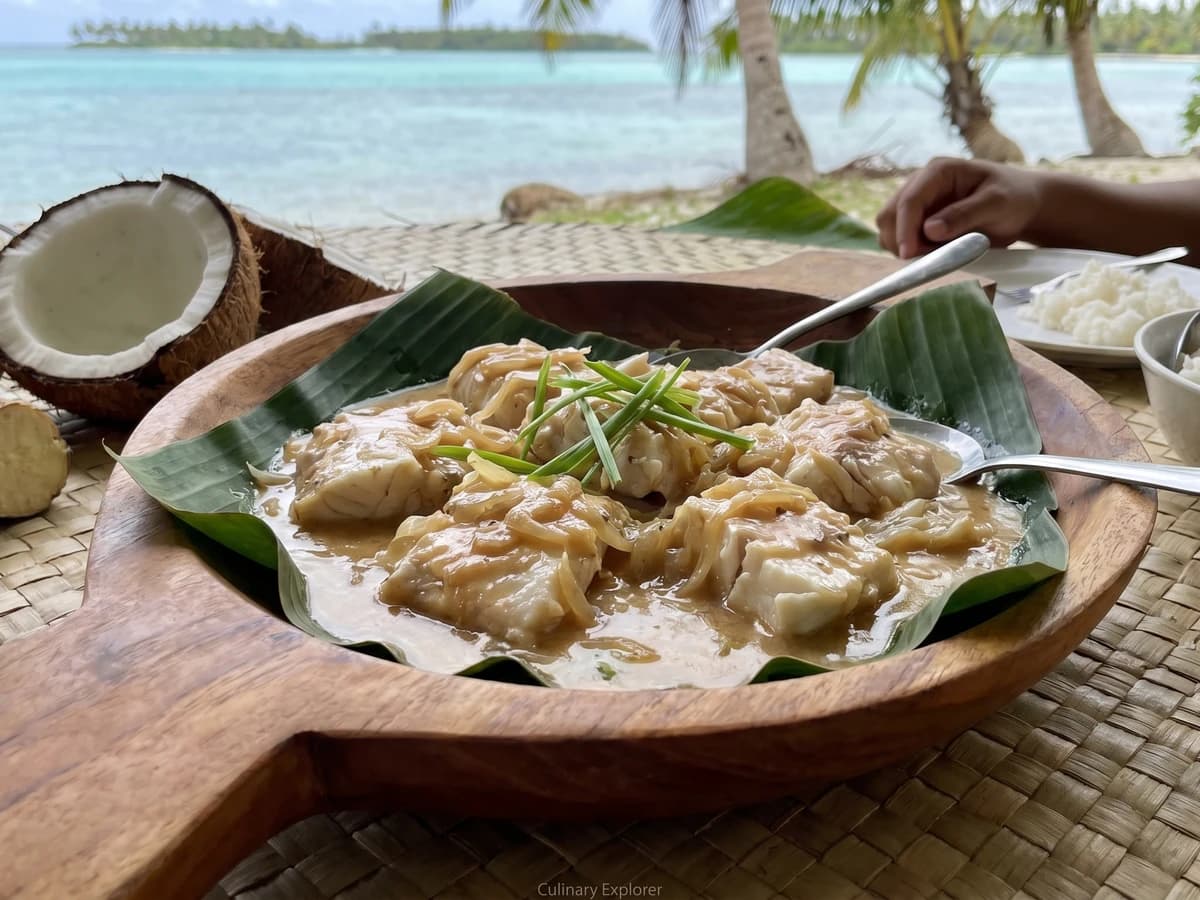
Tokelau's ika i te lolo, reef fish held gently in coconut cream and onion until the sauce turns rich and the fish flakes soft. Lagoon food, coral-soil food, weeknight food.
A cooking platform built around craft, culture, and the stories behind what we eat.
Created by
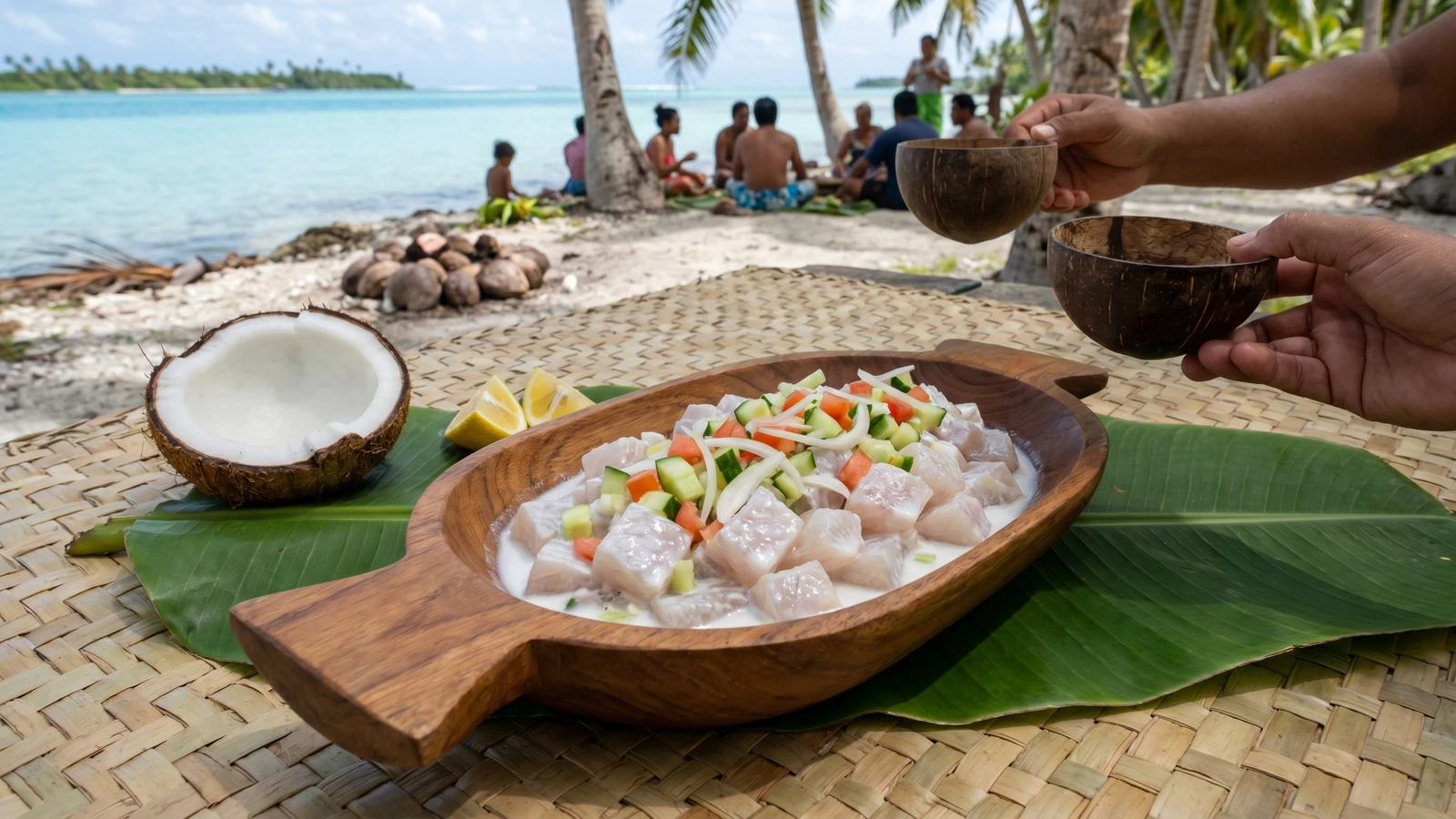
Reef fish cut clean, glossed with lemon and fresh coconut cream, and eaten close to the lagoon. Tokelau calls it ota: same fish, atoll bowl.
Pulaka comes first in Tokelau, that giant swamp taro hauled from pits dug down into coral, because even on a low atoll the people keep a root in the ground and a name for home. The sea feeds the rest. Tokelau is not Tuvalu, and Tuvalu is not Tokelau, even when both know that coral soil, the coconut tree, the lagoon, and the barge all decide what goes on the table.
Ota belongs to Tokelau's hand: raw reef fish cut small, touched with lemon, then folded through fresh coconut cream. Same fish, different bowl. Sāmoa has oka iʻa, Tonga has ʻota ʻika, Tahiti has ʻia ota, the Cook Islands have ika mata, and back home in Hawaiʻi we make poke with limu and ʻinamona. One ocean, one canoe, one root, but never one nameless plate.
For this dish, the fish has to be clean enough you'd eat it plain. The coconut cream goes in close to the table, not half the day before, because acid and salt will pull the fish to water if you let them sit too long. Squeeze the coconut fresh if you can. A can will carry you on a weeknight, no shame, but the fresh cream is where the atoll tells you who it is.
I cook this open-handed because Tokelau's elders and aunties own the deep telling, not me. Ask them about the pulaka pits going salty, the toddy tapped from the tree, the coconut crab taken few and rarely, and the corned beef and rice off the barge. Food on a barge is the wound. Feeding the island from its own ground and lagoon is the repair.
Tokelau's food world is shaped by three low coral atolls, Atafu, Nukunonu, and Fakaofo, where pulaka pits, coconut, pandanus, fish, and preserved or imported foods have long carried daily life. Ota sits in the raw-fish-in-coconut family across the Triangle, beside Sāmoan oka iʻa, Tongan ʻota ʻika, Tahitian ʻia ota, Cook Islands ika mata, and Hawaiian poke, but the Tokelauan bowl belongs to its own lagoon and its own people. Today, rising seas and saltwater intrusion threaten pulaka pits in Tokelau and in Tuvalu next door, making this old balance of reef, coconut, and root crop more fragile than it should be.
Quantity
1 pound
cut into 1/2-inch cubes
Quantity
2 lemons or 3 limes
juiced
Quantity
1 cup
squeezed from grated mature coconut, or thick canned coconut cream
Quantity
1 small
thinly sliced
Quantity
1 medium
seeded and diced
Quantity
1
seeded and diced
Quantity
to taste
Quantity
1 small
thinly sliced
| Ingredient | Quantity |
|---|---|
| very fresh sashimi-grade firm reef fish, tuna, or mahi-mahicut into 1/2-inch cubes | 1 pound |
| lemons or limesjuiced | 2 lemons or 3 limes |
| fresh coconut creamsqueezed from grated mature coconut, or thick canned coconut cream | 1 cup |
| sweet onionthinly sliced | 1 small |
| cucumberseeded and diced | 1 medium |
| ripe tomatoseeded and diced | 1 |
| sea salt | to taste |
| fresh chile (optional)thinly sliced | 1 small |
Smell the fish before the knife touches it. It should smell like clean ocean and almost nothing else, with flesh that looks bright and holds its shape. If it smells strong or feels tired, no make it raw. Cook it instead and eat well anyway.
Cut the fish into even half-inch cubes and keep it cold while you work. Small pieces take the lemon quickly, so don't cut them tiny. You want tender fish with a little chew, not fish paste.
Toss the fish with the lemon or lime juice and a good pinch of salt. Let it sit 5 to 8 minutes, just until the outside turns pale and glossy while the center still looks fresh. The citrus is waking it up, not cooking it to death.
Pour off most of the sharp citrus juice so the ota doesn't turn watery. Fold in the onion, cucumber, tomato, and chile if you're using it. The vegetables should still snap under your teeth, like they came to the bowl at the last minute.
Pour in the fresh coconut cream and fold gently until every piece of fish carries that white, glossy coat. Taste for salt and lemon. Tokelau's ota should feel rich from the coconut and clean from the reef, with no one part shouting over the fish.
Serve the ota immediately, family-style, with taro, pulaka if you have access through Tokelauan hands, breadfruit, or plain rice. Eat what you have. The dish waits for no one once the citrus and coconut meet the fish.
1 serving (about 300g)
Culinary guides, cultural storytelling, and the editorial depth that makes cooking meaningful.
Discover Culinary ExplorerChef Makoa
Tokelau's ika i te lolo, reef fish held gently in coconut cream and onion until the sauce turns rich and the fish flakes soft. Lagoon food, coral-soil food, weeknight food.
Chef Makoa
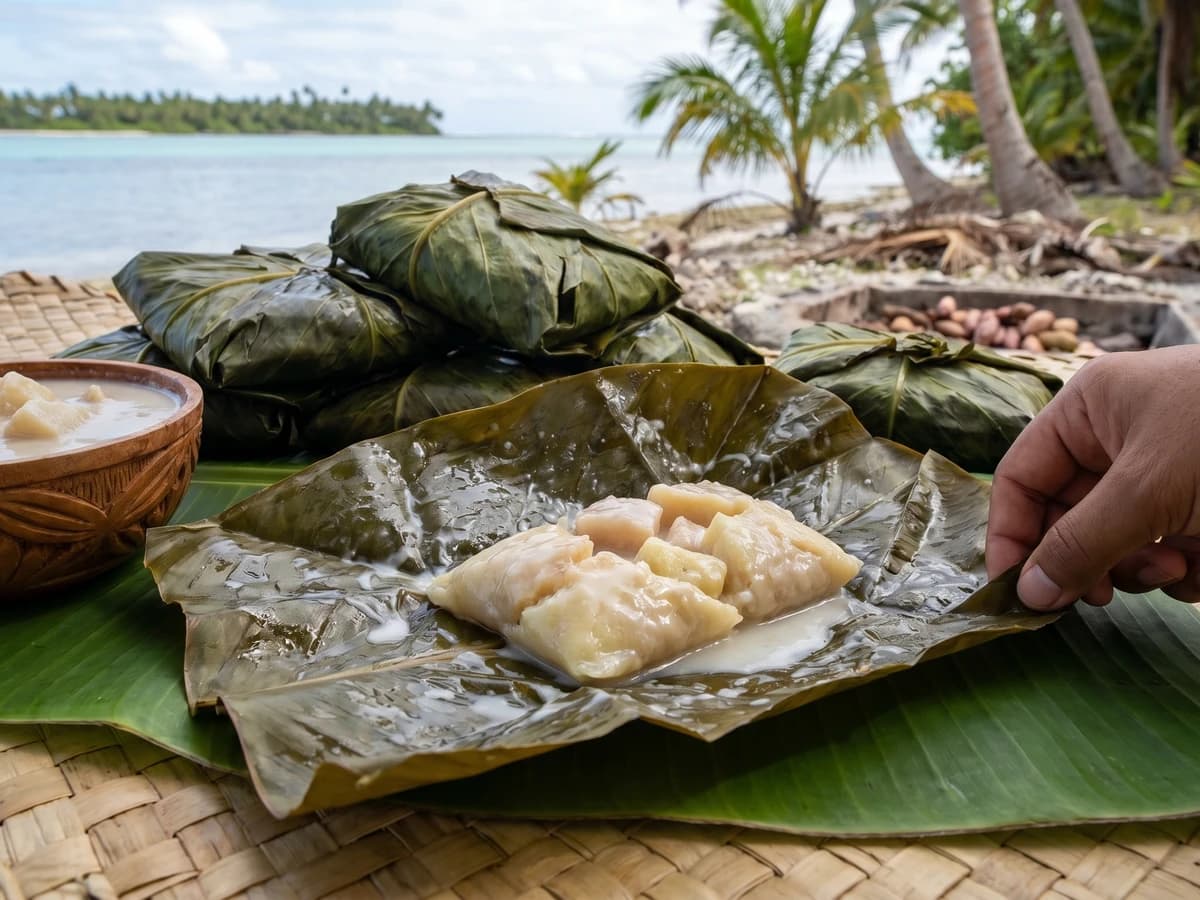
Tokelau's taro-leaf parcel, young leaves folded around coconut cream and cooked until dark and silky, cousin to Sāmoan palusami, Tongan lū, Cook Islands rukau, and Hawaiian laulau.

Chef Juliette
John Dory has the delicacy of sole and the firmness of turbot. A light flouring, a quick butter sauté, and nut-brown beurre noisette show exactly why looks never mattered.

Chef Juliette
Fresh haddock proves its delicacy in the meunière pan: a fine flour crust, moist pearly flakes, and beurre noisette sharpened with lemon and parsley, ready from one skillet in half an hour.